THE COMPLETE BOOK · FREE TO READ
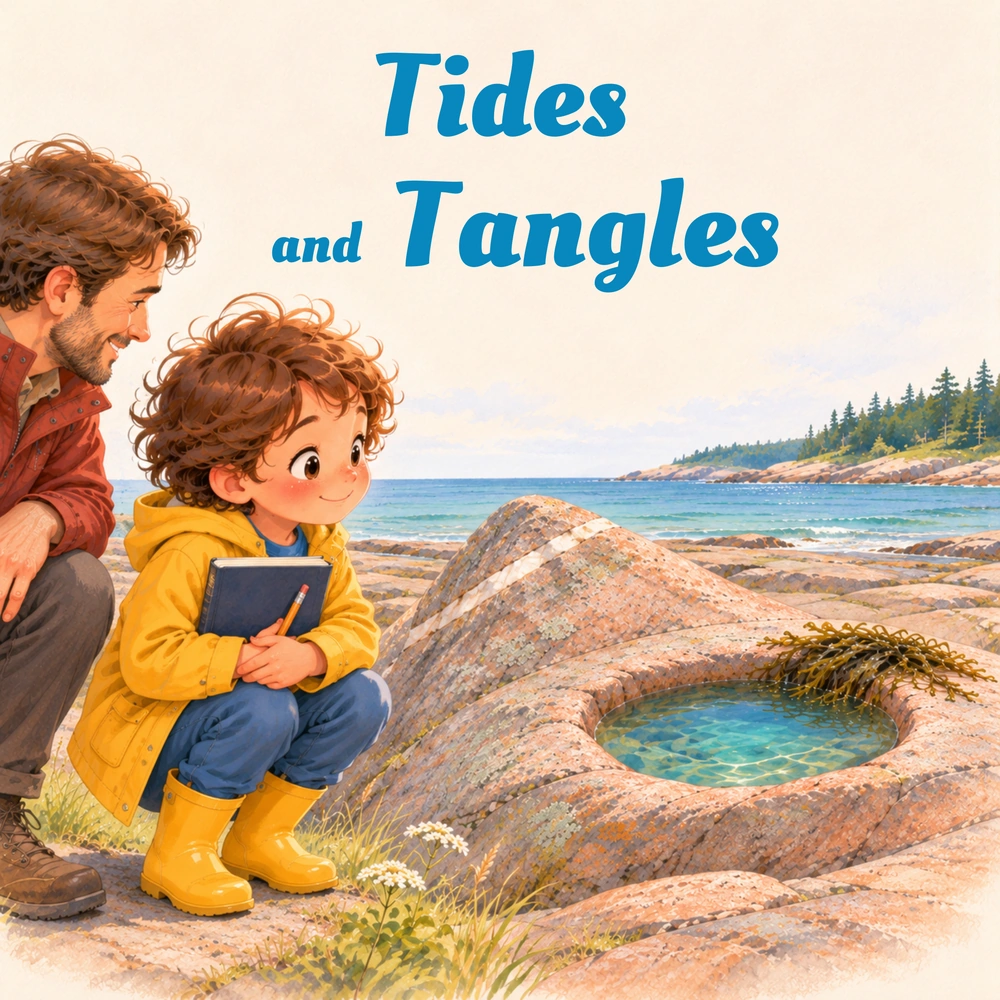
Tides and Tangles
Vince sets out to draw one stripe on a rock. Read the morning and afternoon pictures side by side to see how the tide uncovers a pool, where a sea snail crawls under a tangle of rockweed.
Turn the pagesOr scroll to readA stripe to draw
Pages 1–2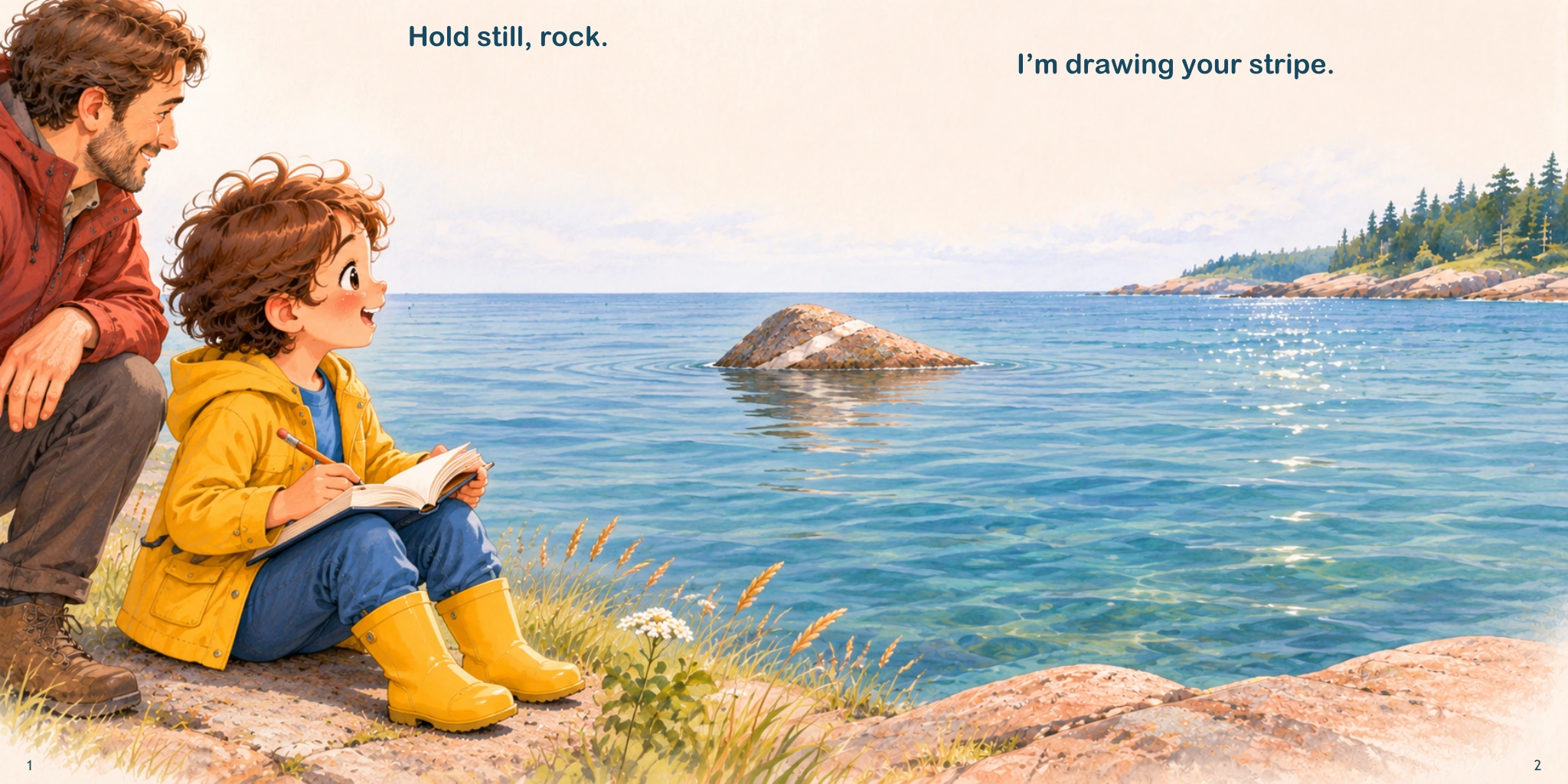
Hold still, rock. I’m drawing your stripe.
Explore together · A fixed landmark
Vince sits beside his grown-up with a pencil and an open notebook. A pale stripe crosses the rock tip above the water. The stripe marks a spot you can find again, even when the water reaches a different part of the rock.
Ask together: What would you draw so you could recognize this rock again?
More rock after lunch
Pages 3–4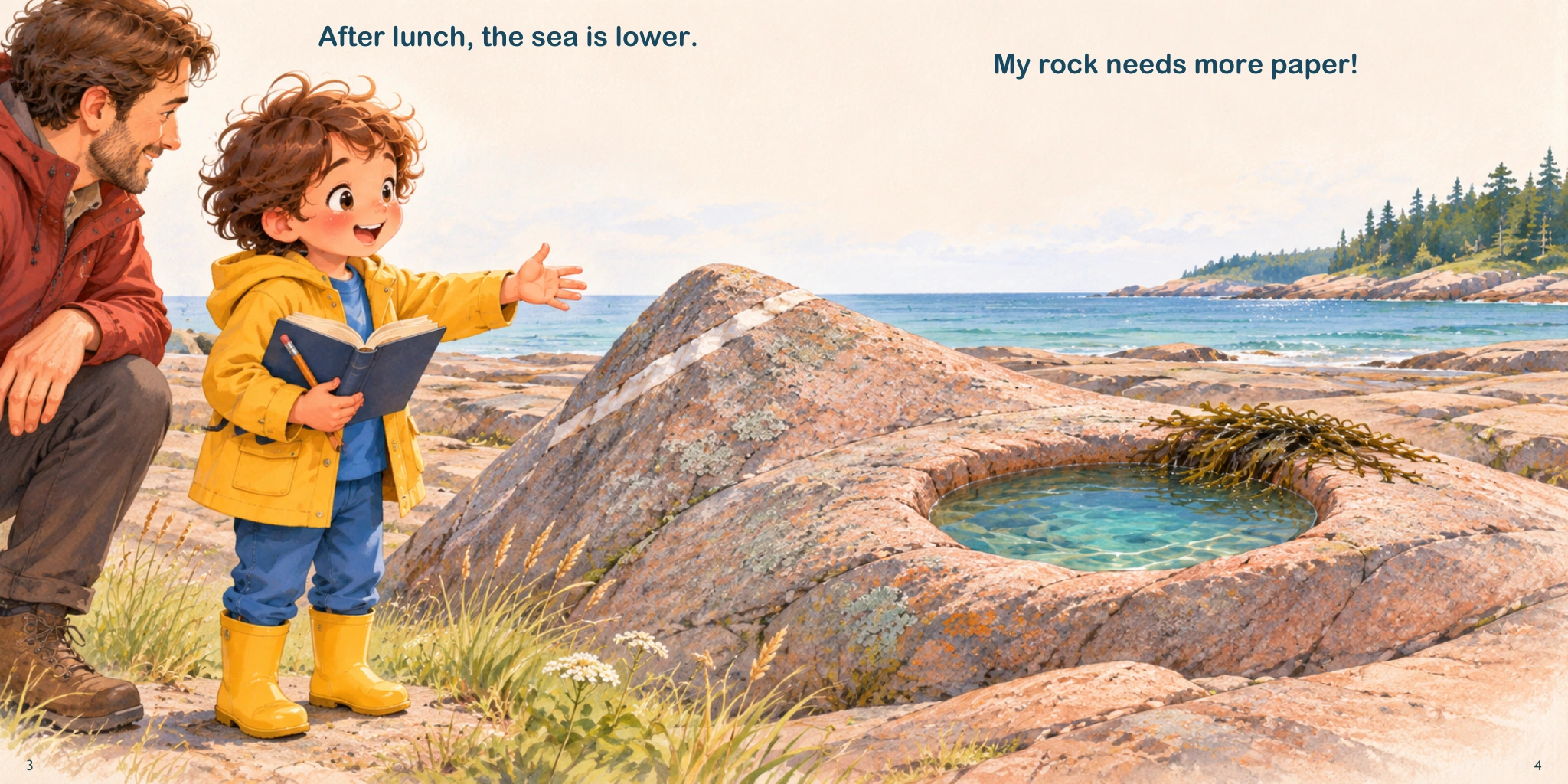
After lunch, the sea is lower. My rock needs more paper!
Explore together · Falling tide
Vince opens his arm toward a broad ledge. The pale stripe is still there, with much more stone below it. As the sea level falls, more of the same rock is exposed.
Ask together: Where does the water meet the rock in your two pictures?
A pocket of sea
Pages 5–6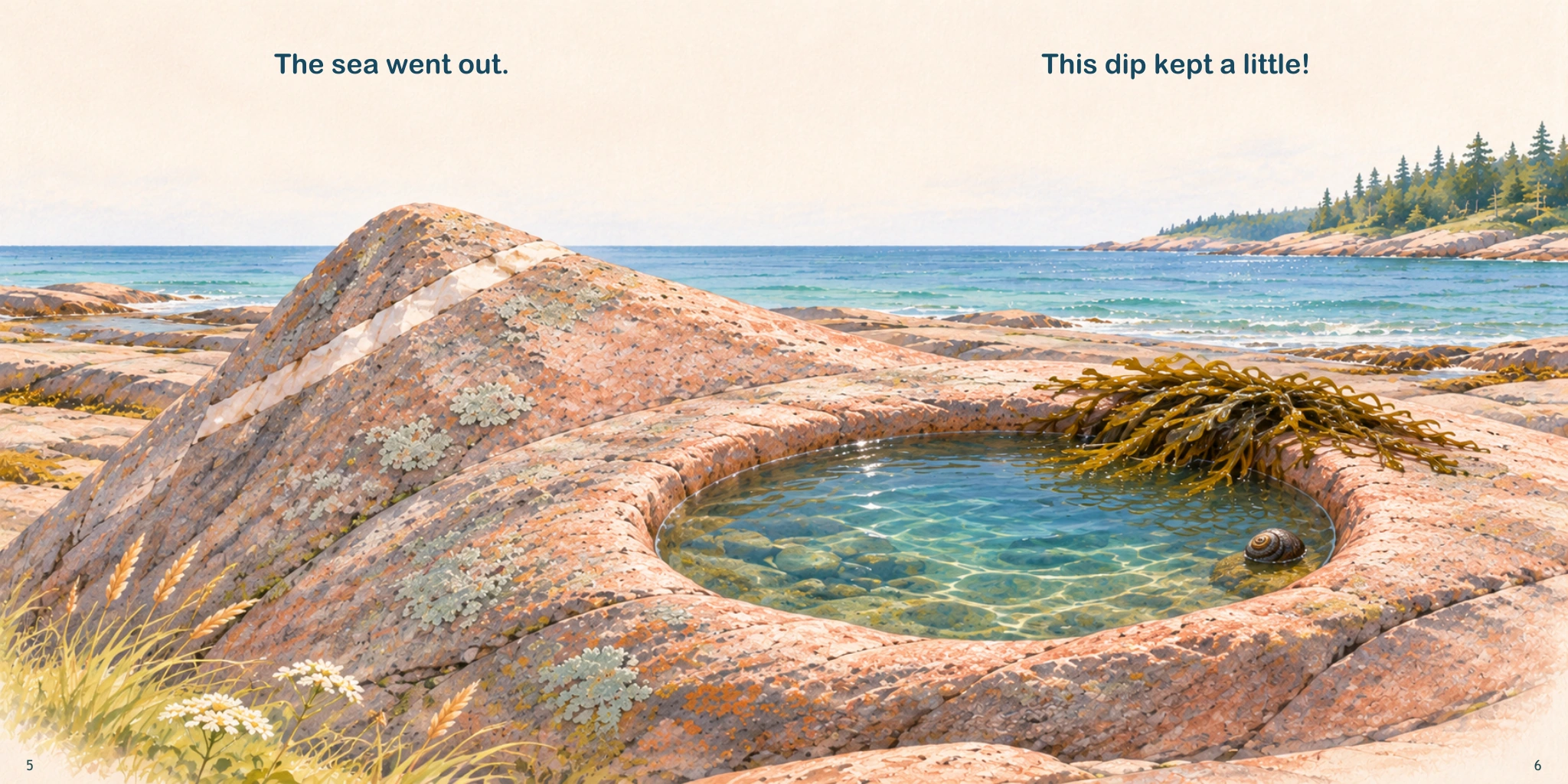
The sea went out. This dip kept a little!
Explore together · A tide pool
A raised rim surrounds a blue pool in the ledge. Beyond it, the open sea is farther away. The hollow can hold seawater after the outside sea drops below its rim.
Ask together: Where can your finger follow the edge of the water?
A shell on the move
Pages 7–8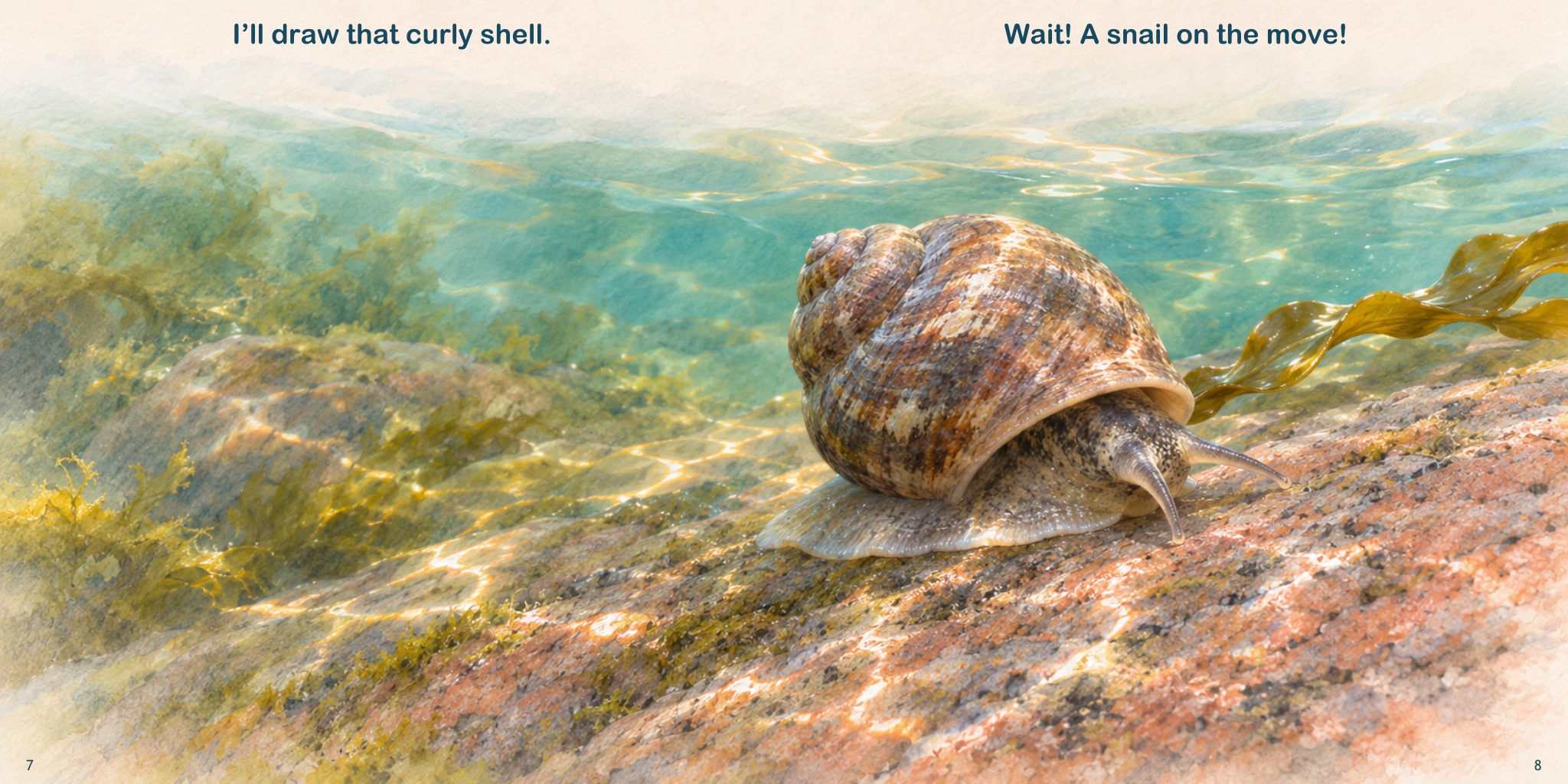
I’ll draw that curly shell. Wait! A snail on the move!
Explore together · A crawling sea snail
Underwater, a snail stretches out from its spiral shell with its broad foot against the stone. A periwinkle is a sea snail. Its foot helps it crawl along the rock.
Ask together: What can you see that tells you this shell has a living animal inside?
Under the tangle
Pages 9–10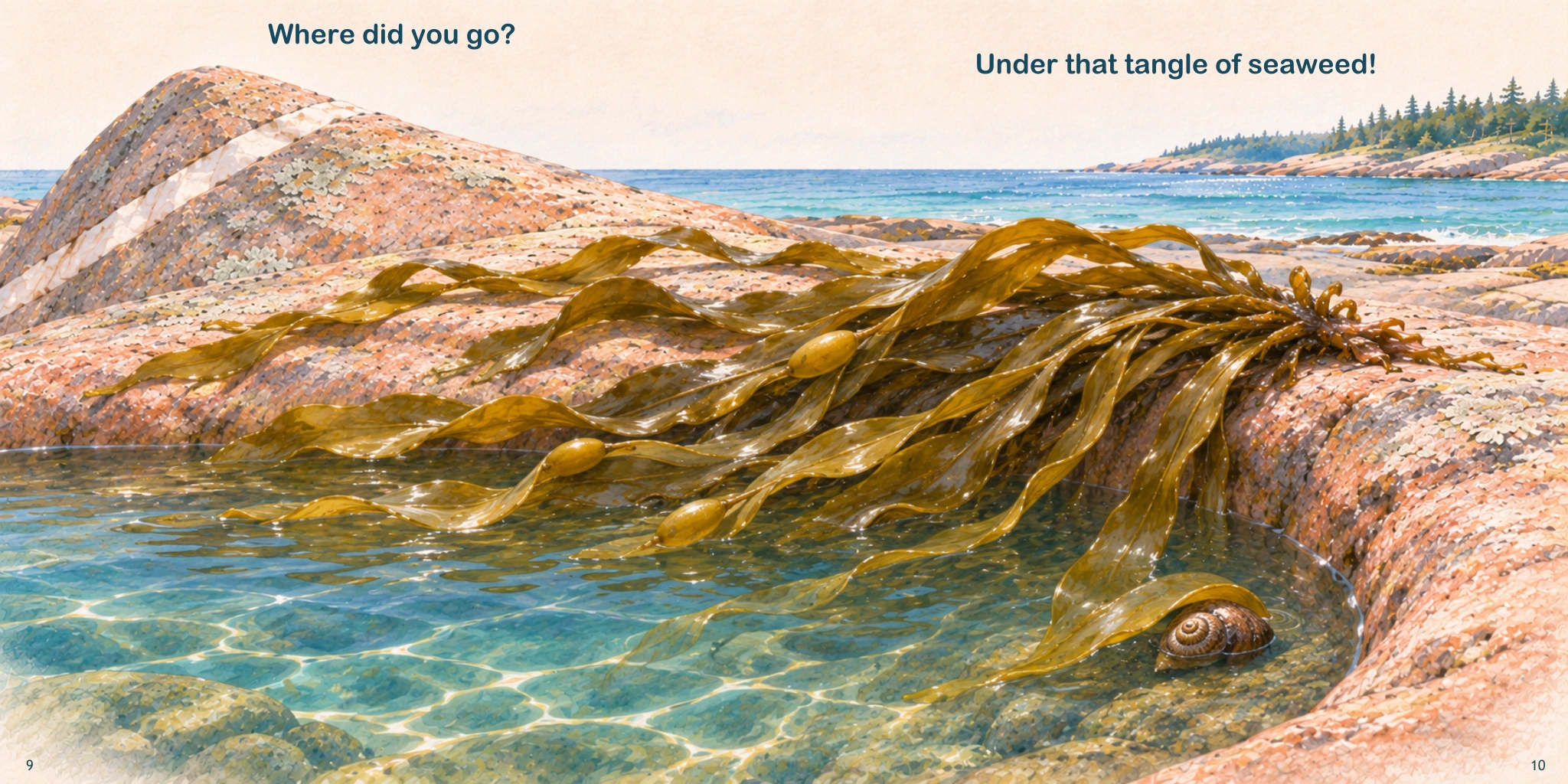
Where did you go? Under that tangle of seaweed!
Explore together · Rockweed shelter
Brown fronds drape across the pool’s edge. Part of the snail’s spiral peeks out beneath one frond. At low water, attached rockweed can lie against the ledge and shelter small animals.
Ask together: Where would you look for that spiral next?
The fronds lift
Pages 11–12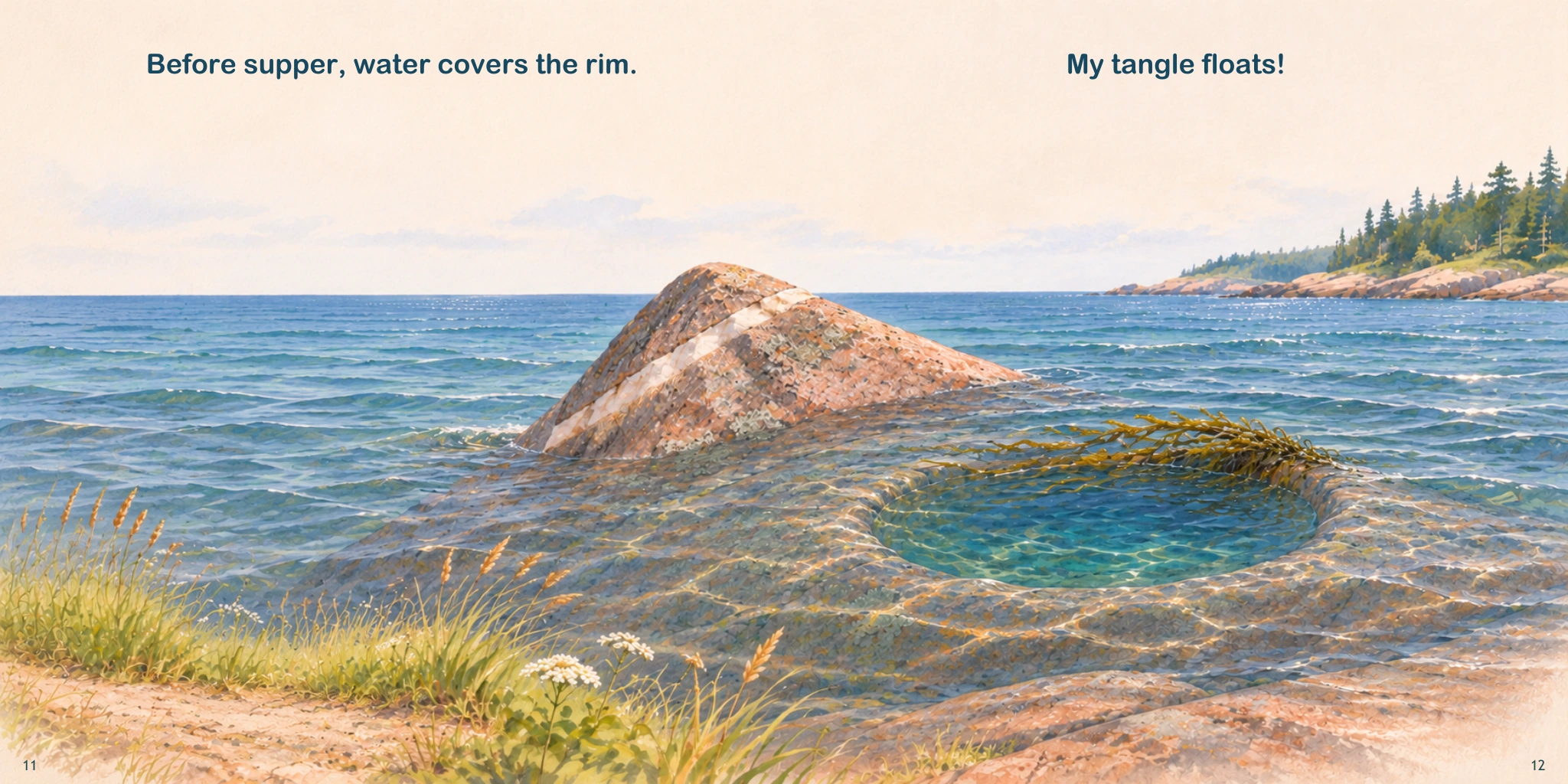
Before supper, water covers the rim. My tangle floats!
Explore together · Returning tide
Water ripples across the pool rim. The branches fan out from the same place on its far edge. As water returns, gas-filled bladders help lift the rockweed’s fronds while its base stays attached.
Ask together: Which part of the seaweed looks as though it stayed in the same place?
The striped tip returns
Pages 13–14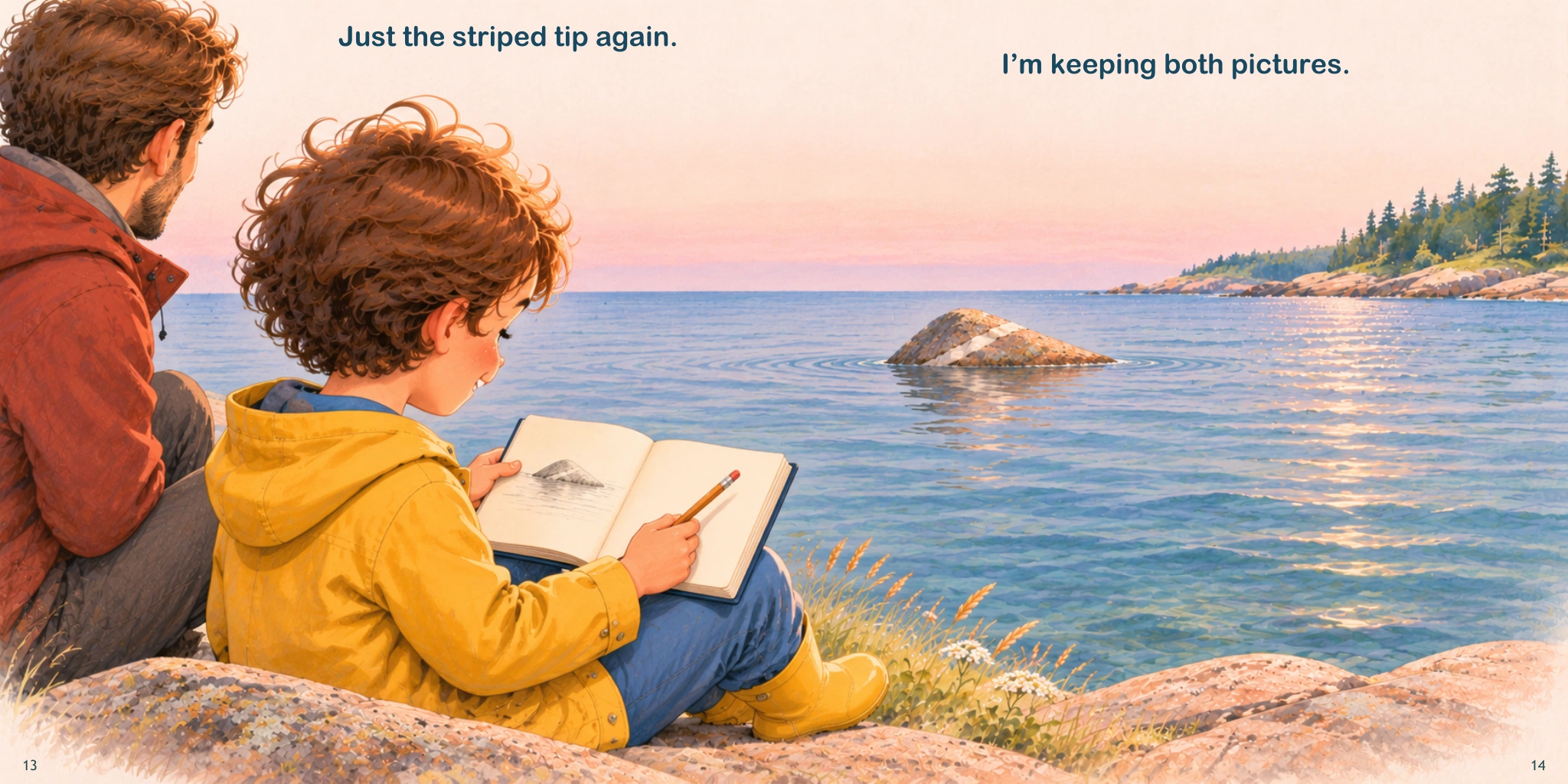
Just the striped tip again. I’m keeping both pictures.
Explore together · Two waterlines
At evening, Vince holds his notebook open. The small striped tip sticks out of the sea again. Rising water covers the ledge and leaves less of the rock showing. The small tip and broad ledge belong to one rock.
Ask together: Which part of the afternoon drawing would still be above water now?
Two drawings to keep
Pages 15–16
For grown-ups
Pages 17–18
For Grown-Ups Vince keeps finding new things to draw on the same piece of shore. The pale stripe stays in place. Everything around it tells him where the sea has been. 1–4 and 13–14 Find the stripe Tides raise and lower coastal water levels over hours. As the sea falls, more of the sloping rock shows. Rising water covers it again. Local tides differ in timing and height. Where does the water meet the rock in each picture? 5–8 A pocket of sea The tide falls below a raised stone rim. Seawater inside the hollow can stay behind, making a tide pool. A periwinkle, a small sea snail, crawls on the rock beneath the water. Can you trace the rim with your finger on the page? 9–12 Follow the seaweed This brown seaweed is called rockweed. It stays attached to stone. In air its branches drape against the rock. As water comes back over the rim, little gas-filled bladders help its branches float up. Draw the same rock twice Look at the striped tip in the morning and after lunch. Draw the rock on two scraps of paper. Add the water where you see it in each view. Which picture has room for the snail? If you visit a rocky shore Check the local tide chart and surf conditions. Stay together on secure footing, away from waves. Leave the low shore before the water rises. Watch living things where you find them. Explore further with NOAA Ocean Service, Acadia National Park and the University of Maine’s coastal field guides.
Open these pages in the readerSources and evidence
The water level at this rocky shore falls and rises over hours, uncovering and covering different parts of the same rock.
How many high tides are there per day?
The timing and height of high and low water vary by place and day.
A hollow in rock can hold seawater as the tide falls below its rim. A higher tide can reconnect it to the sea.
The Life of a Tide Pool in Acadia
Hollows hold water when it has no lower route out. Waves can splash water into the pool before the tide covers the rim.
A living periwinkle can crawl on rock beneath the water in a tide pool.
A shell can also be empty. Notice the outstretched foot in this picture.
Rockweed can drape over exposed stone. As water rises, buoyant fronds can lift while the base stays attached.
The brown rockweed here has gas-filled bladders and a base attached to rock.
Consult local tide and surf information before visiting a rocky shore. Stay together on secure footing and leave living things where you find them.
Use the printed morning and afternoon pictures for the drawing activity. On a shore visit, watch the waves and leave the low shore before the water rises.
A story worth keeping?
Read it here as often as you like. The physical edition is coming soon.