THE COMPLETE BOOK · FREE TO READ
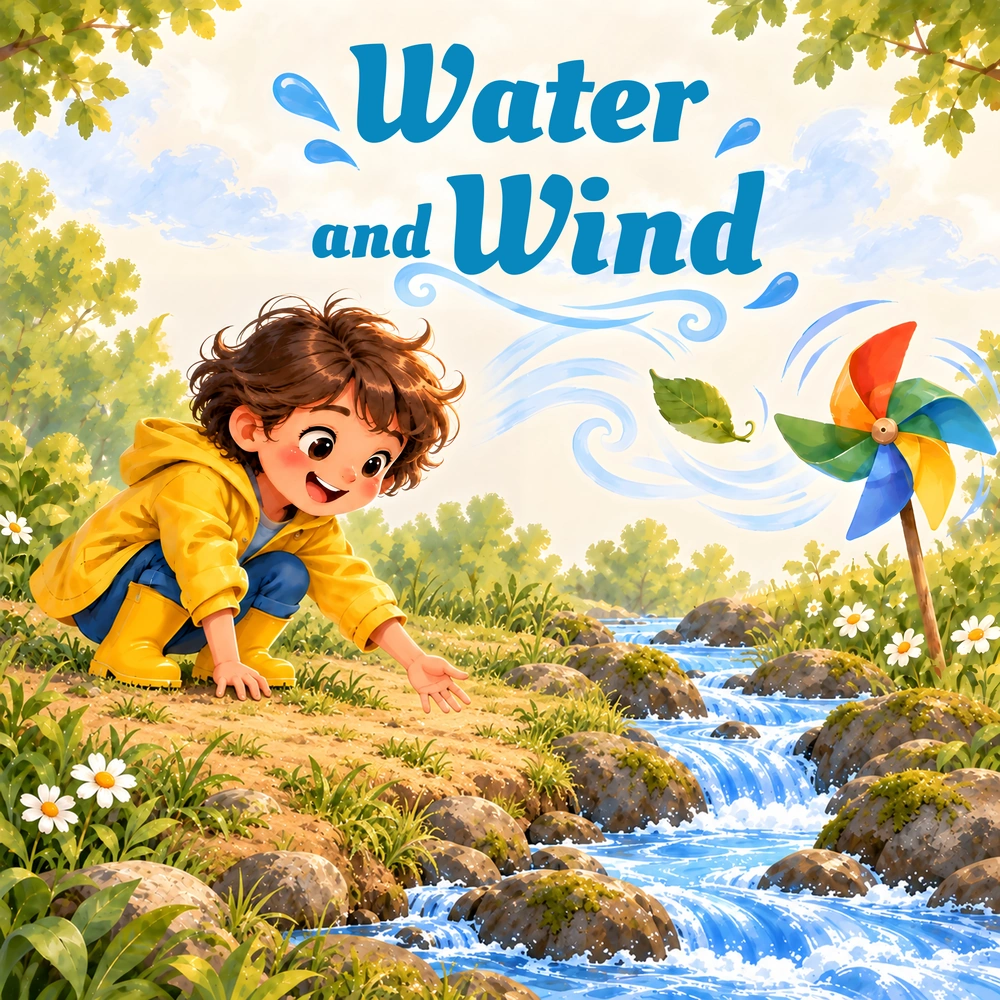
Water and Wind
Vince’s everyday discoveries invite children to notice, compare and ask why. A turning pinwheel, bobbing duck, water strider and gliding plane introduce how water and air move and exert forces.
Turn the pagesOr scroll to readA breeze you can feel
Pages 1–2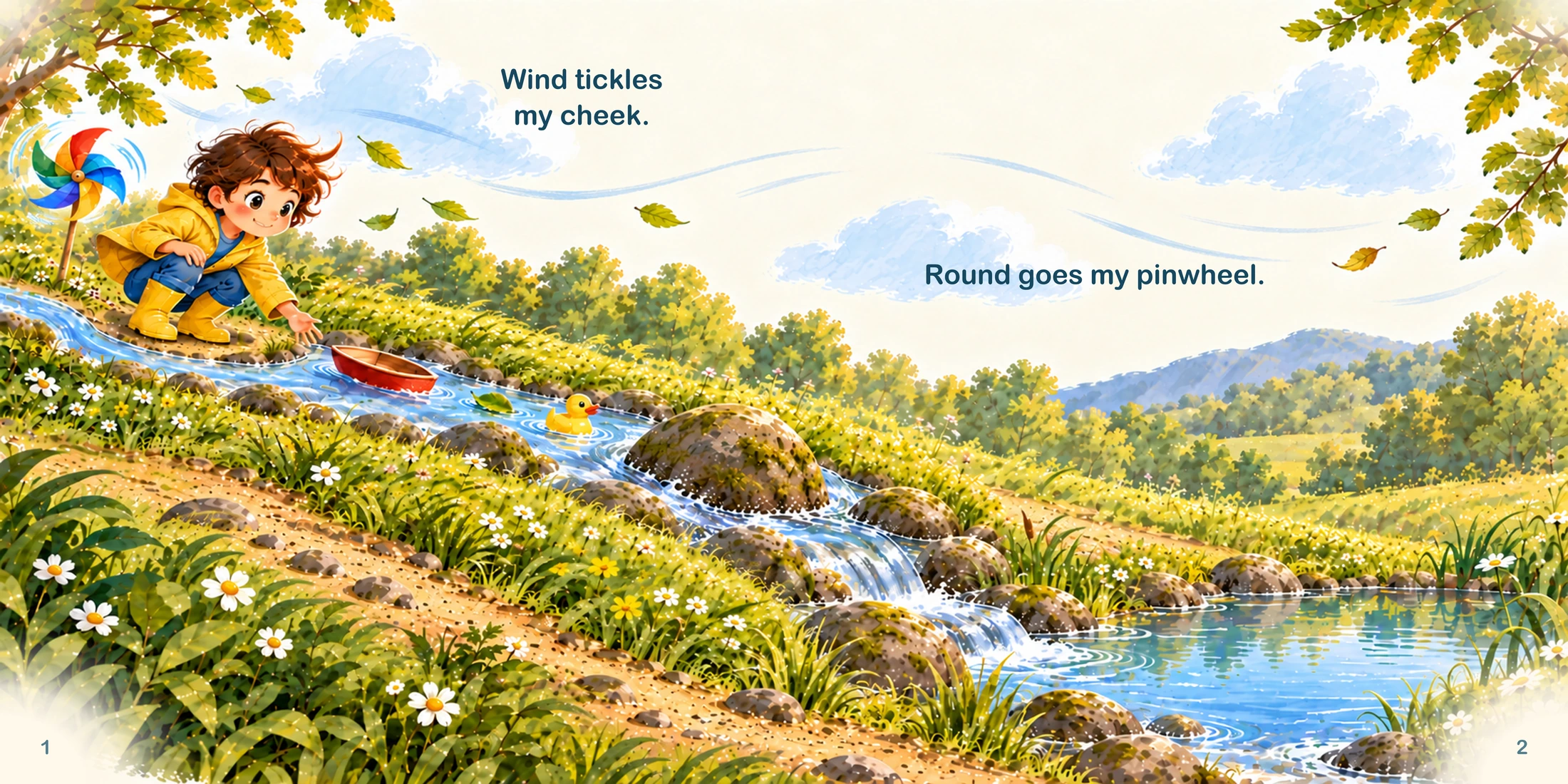
Wind tickles my cheek. Round goes my pinwheel.
Explore together · Wind & forces
Wind moves the pinwheel. Wind is moving air. Vince feels it on his cheek and sees it push the pinwheel's angled blades.
Ask together: What tells you that the air is moving?
Water around a rock
Pages 3–4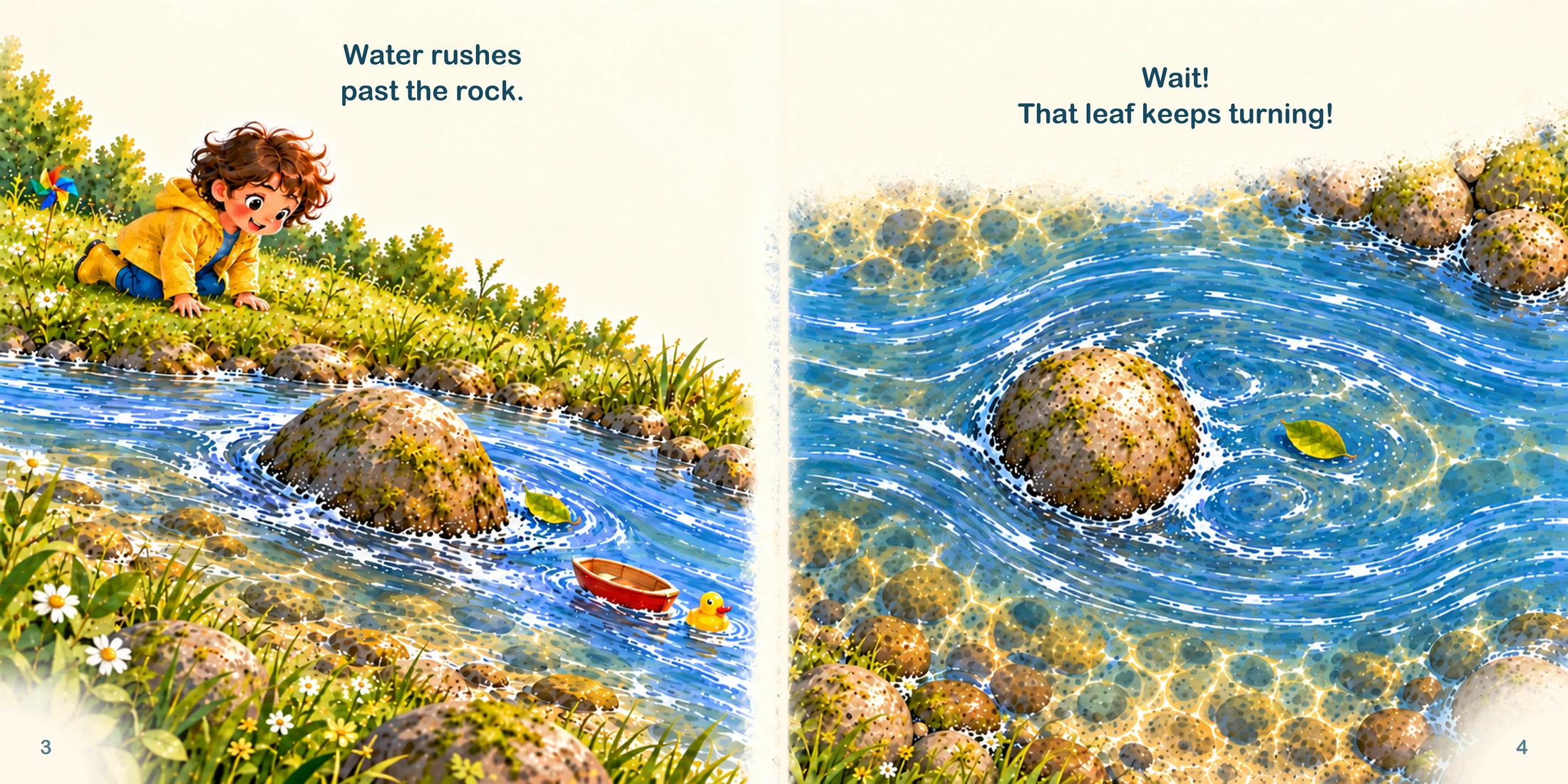
Water rushes past the rock. Wait! That leaf keeps turning!
Explore together · Currents & eddies
Water passes the rock. A leaf circles behind it. Most water passes the rock; some circles back in an eddy. Laminar flow is orderly; turbulence is irregular, mixing motion. A swirl alone cannot distinguish them.
Ask together: How does the leaf move compared with the water passing the rock?
Waves carry energy
Pages 5–6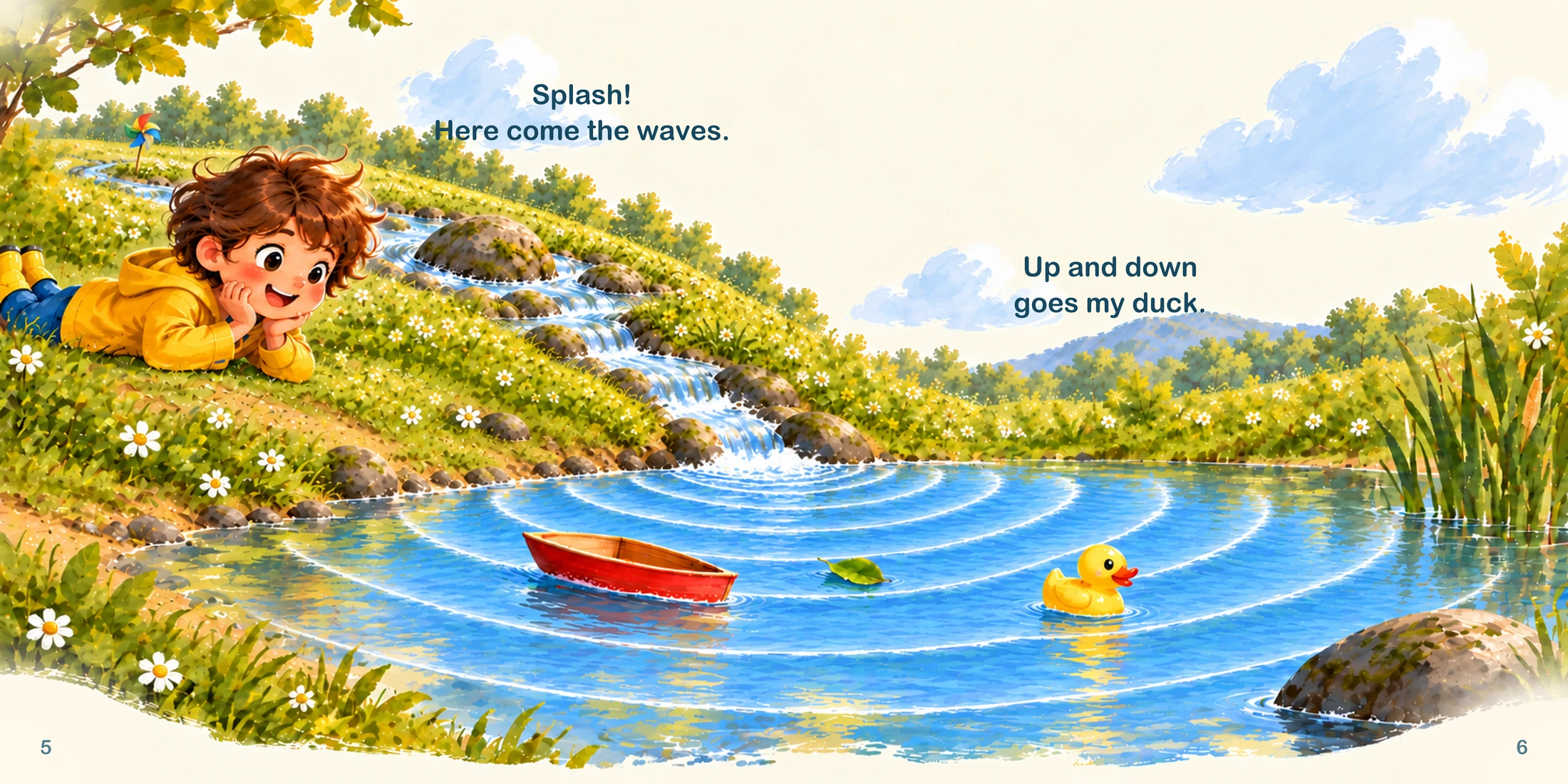
Splash! Here come the waves. Up and down goes my duck.
Explore together · Waves & energy
Waves spread from the stream. The duck bobs. The falling stream makes waves that carry energy outward and make the toys bob. The stream's current also carries toys along. Bobbing and drifting are different motions.
Ask together: What moves up and down? What moves along the pond?
The pebble and the duck
Pages 7–8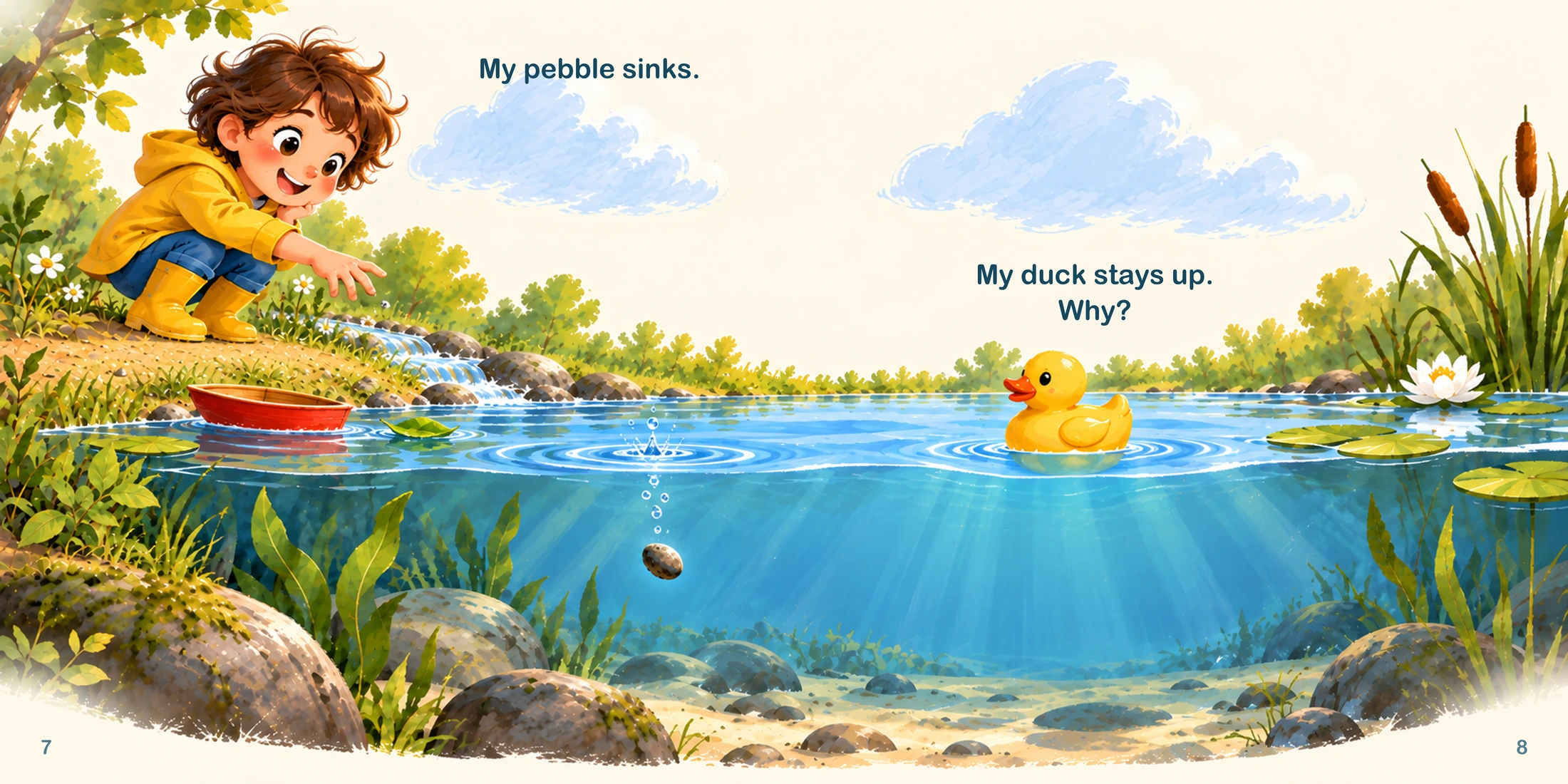
My pebble sinks. My duck stays up. Why?
Explore together · Buoyancy
A duck floats. A pebble sinks. Water pushes upward on both objects. This buoyancy balances the duck's weight, but not the pebble's. The pebble's splash makes the rings on the next spread.
Ask together: Where is each object compared with the surface?
When waves meet
Pages 9–10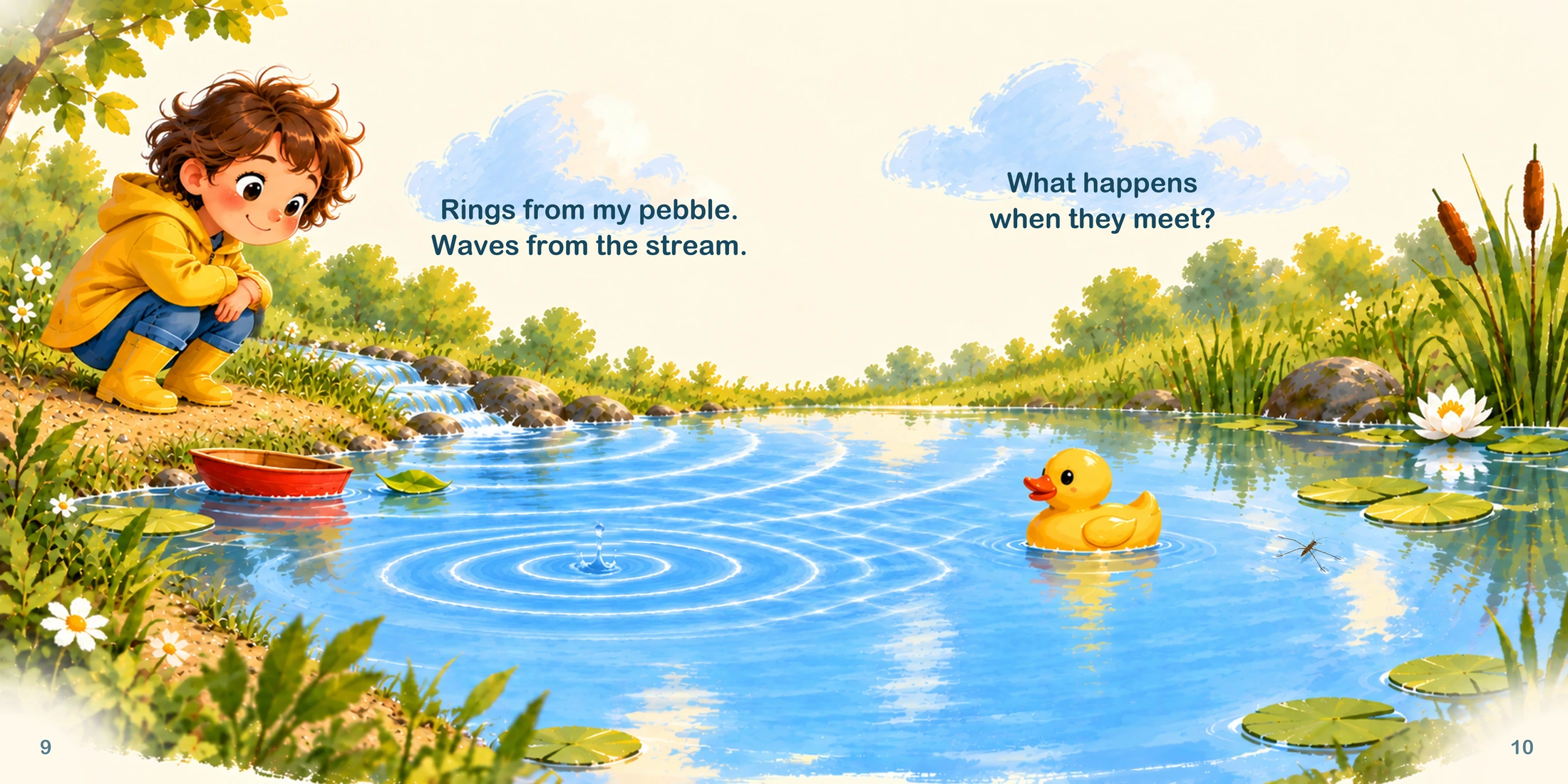
Rings from my pebble. Waves from the stream. What happens when they meet?
Explore together · When waves meet
Two wave patterns approach one another. When gentle waves overlap, their heights add, briefly raising or lowering the surface. This interference does not erase the waves; they continue through one another.
Ask together: What might happen where the two patterns meet?
Feet on the surface
Pages 11–12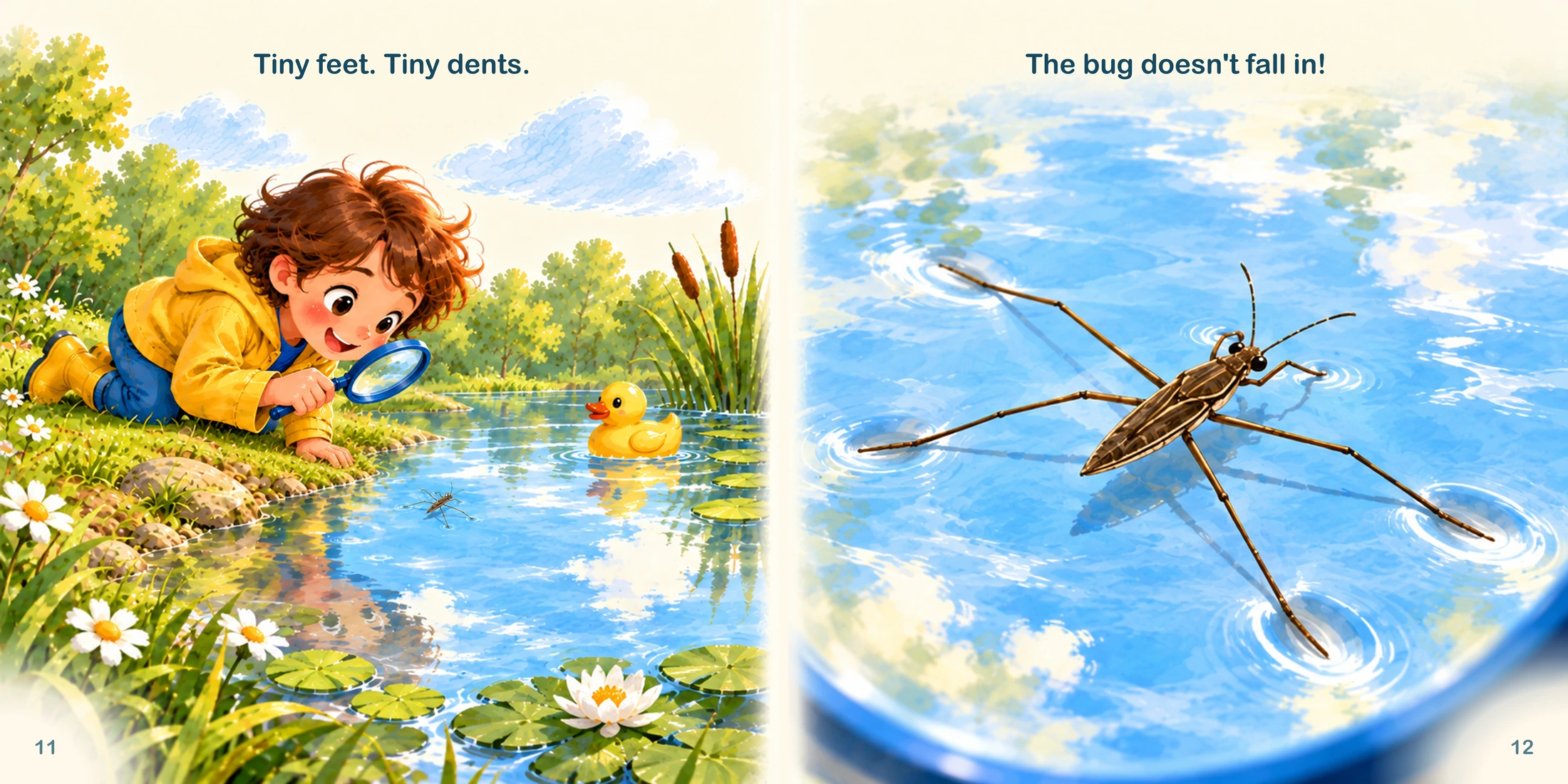
Tiny feet. Tiny dents. The bug doesn't fall in!
Explore together · Surface tension
Tiny dents appear beneath the strider’s legs. Surface tension helps support the strider where its water-repellent legs dent the water. The duck floats mainly by displacing water.
Ask together: What do you notice where its legs meet the water?
Suction and pressure
Pages 13–14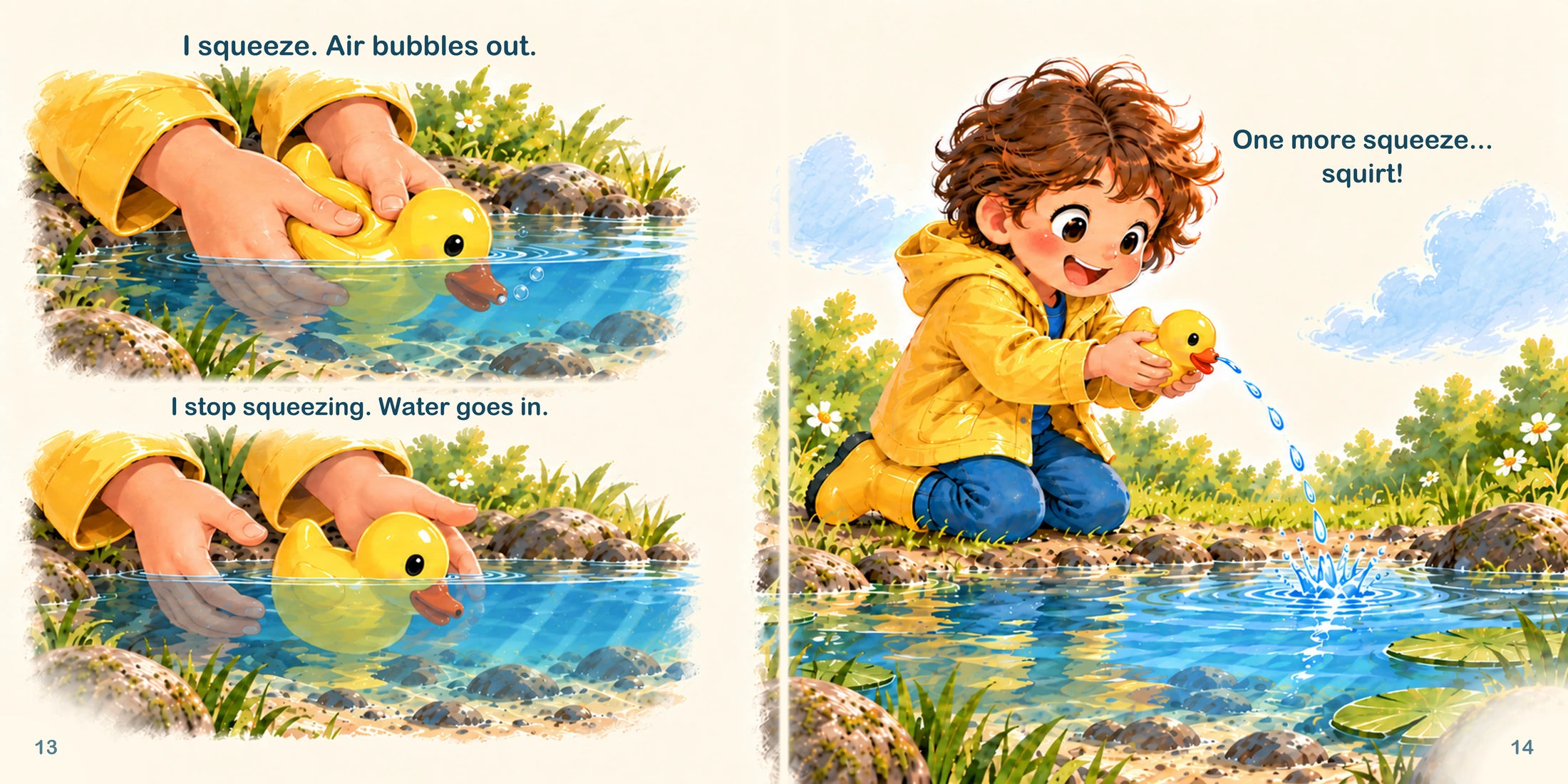
I squeeze. Air bubbles out. I stop squeezing. Water goes in. One more squeeze... squirt!
Explore together · Suction & pressure
The duck bubbles, fills and squirts. Squeeze underwater: air bubbles out. Release with the opening submerged: the elastic duck springs back, lowering pressure inside. The surrounding water pressure pushes water in. Squeeze above water: water exits through that same opening.
Ask together: What changes when Vince squeezes and then lets go?
A paper plane glides
Pages 15–16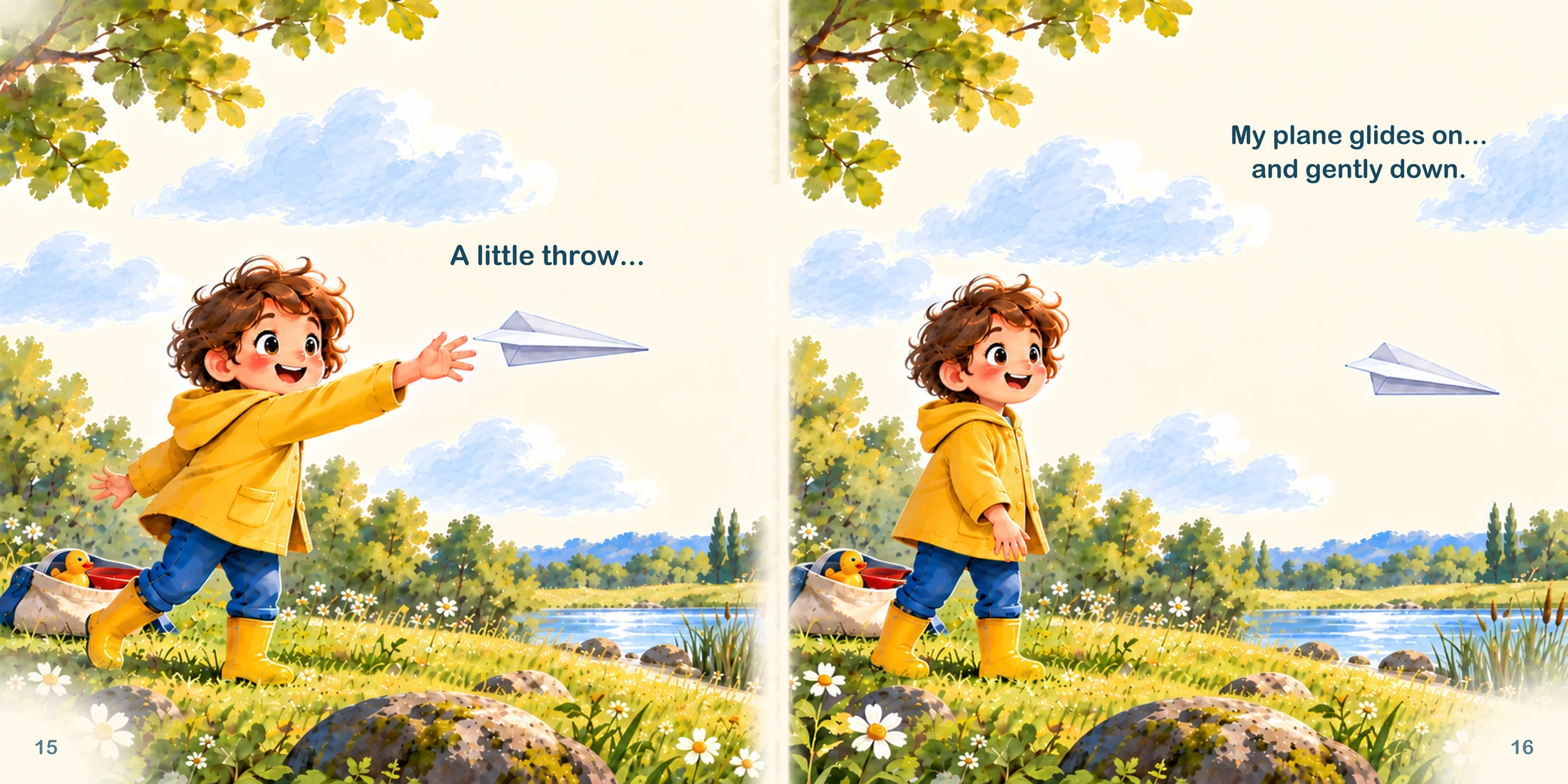
A little throw... My plane glides on... and gently down.
Explore together · Lift & gravity
A paper plane glides forward and down. The throw starts the plane moving. Airflow around its wings produces lift and turns air downward. Gravity pulls down; drag resists motion. In still air, the plane glides forward and gradually descends.
Ask together: Where might the plane go next?
Milk and honey
Pages 17–18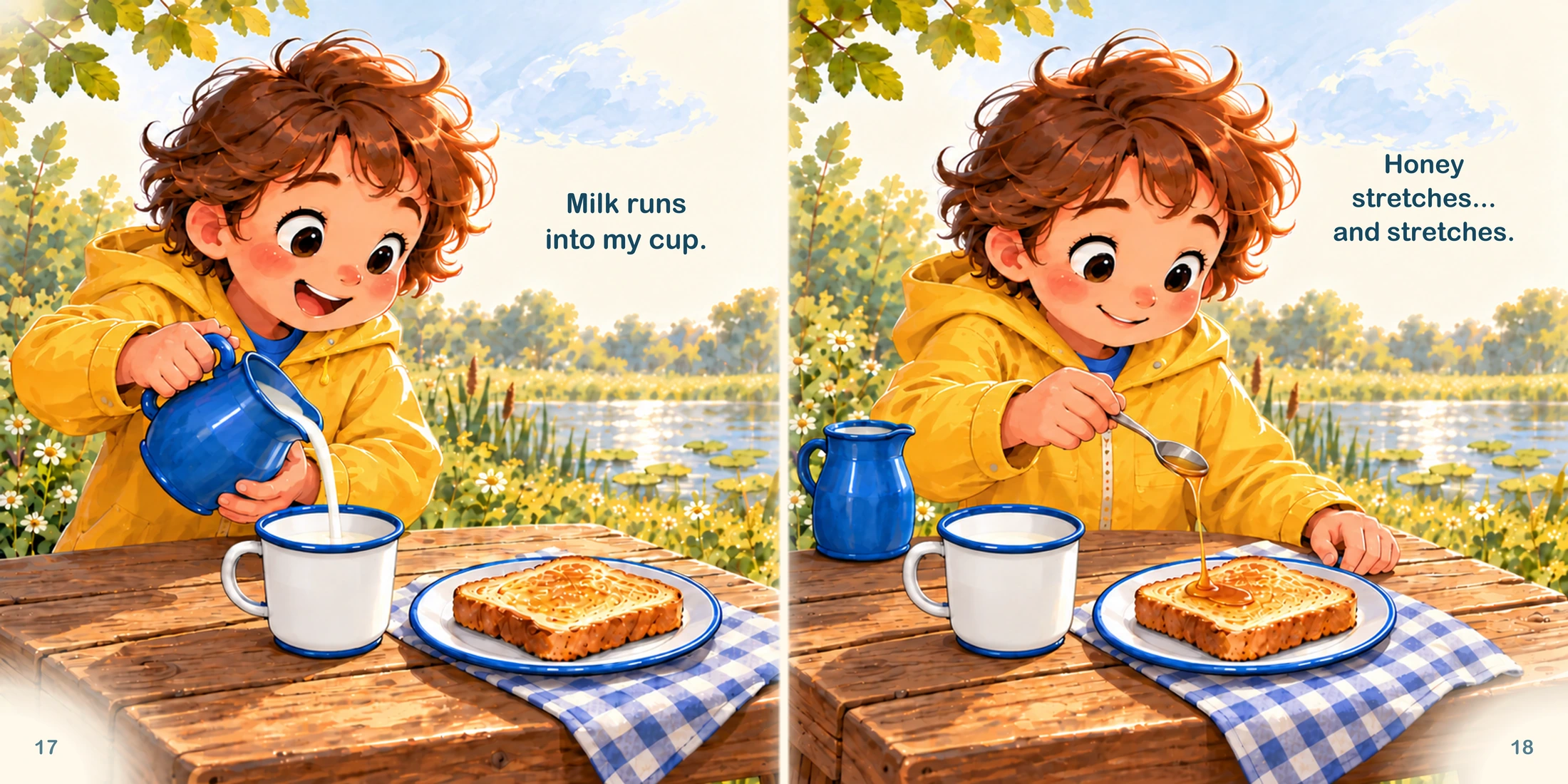
Milk runs into my cup. Honey stretches... and stretches.
Explore together · Viscosity
Milk runs. Honey stretches into a thread. Honey's greater viscosity means greater resistance to flow. It makes a slow thread while milk runs readily. Temperature and pouring method also matter; this snack is an observation, not a controlled test.
Ask together: How do the milk and honey move differently?
The bath drains
Pages 19–20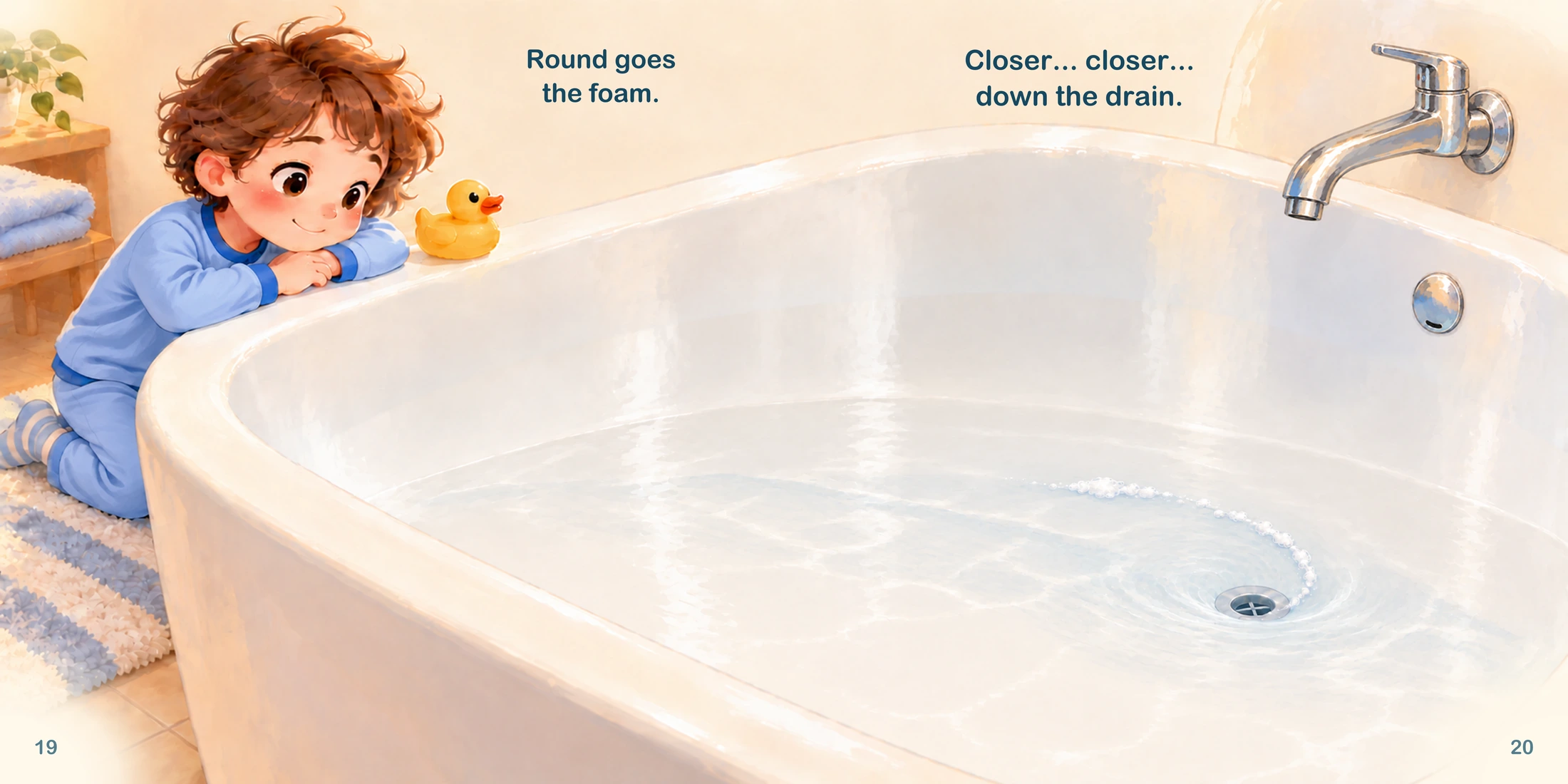
Round goes the foam. Closer... closer... down the drain.
Explore together · Draining & swirling
Foam curves inward toward the drain. Gravity drives water through the drain. Existing turning motion can become a curved inward flow, traced by foam. Here water travels to the outlet, unlike waves crossing the pond. Not every drain swirls.
Ask together: Can you follow the foam toward the drain?
Remembering
Pages 21–22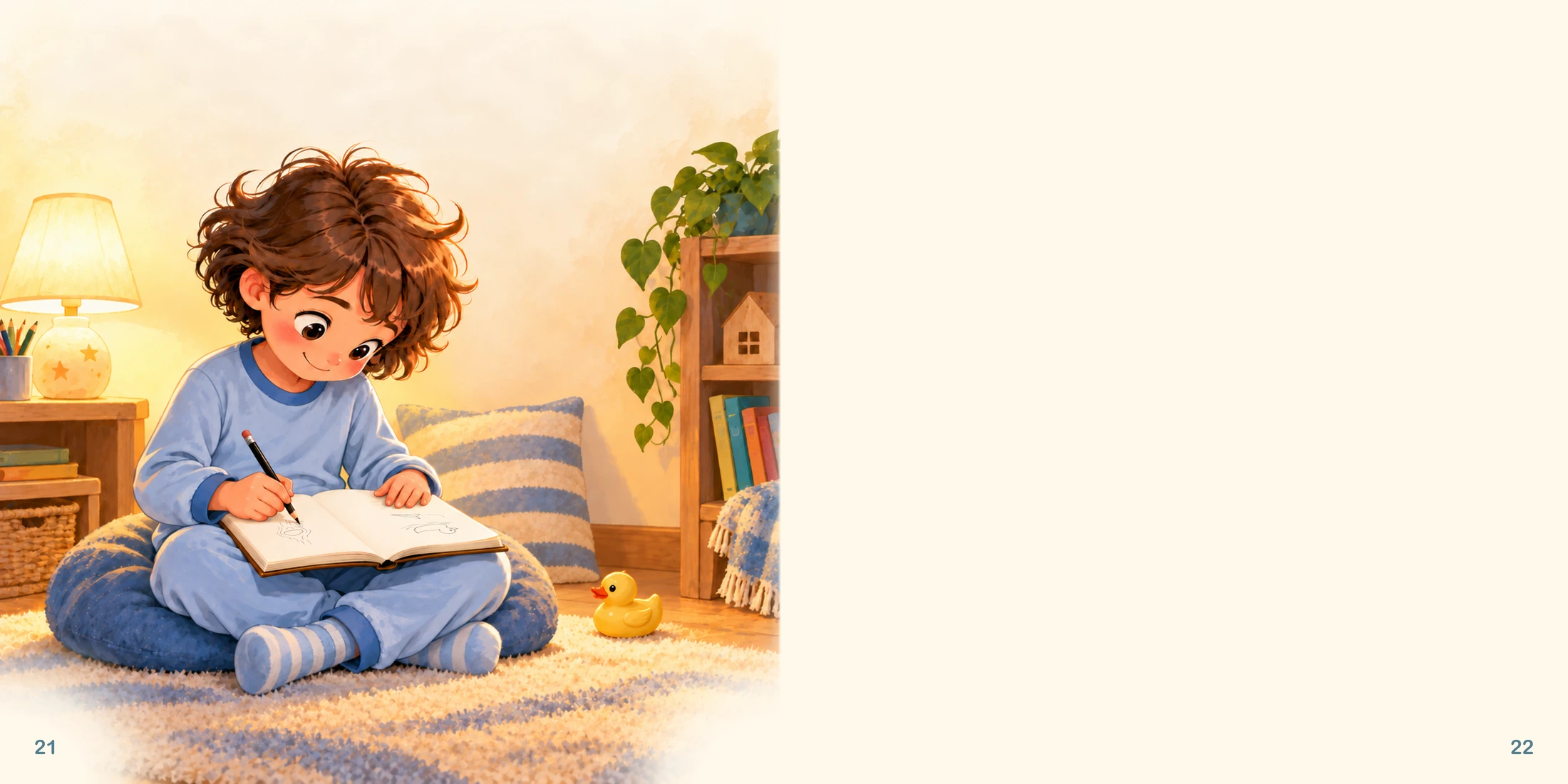
Explore together · Scientific observation
Vince sketches what he noticed. Vince records something he noticed. Drawings, marks or words let him return to an observation. He does not need all the answers.
Ask together: Which earlier picture matches one of his drawings?
For Grown-Ups
Pages 23–24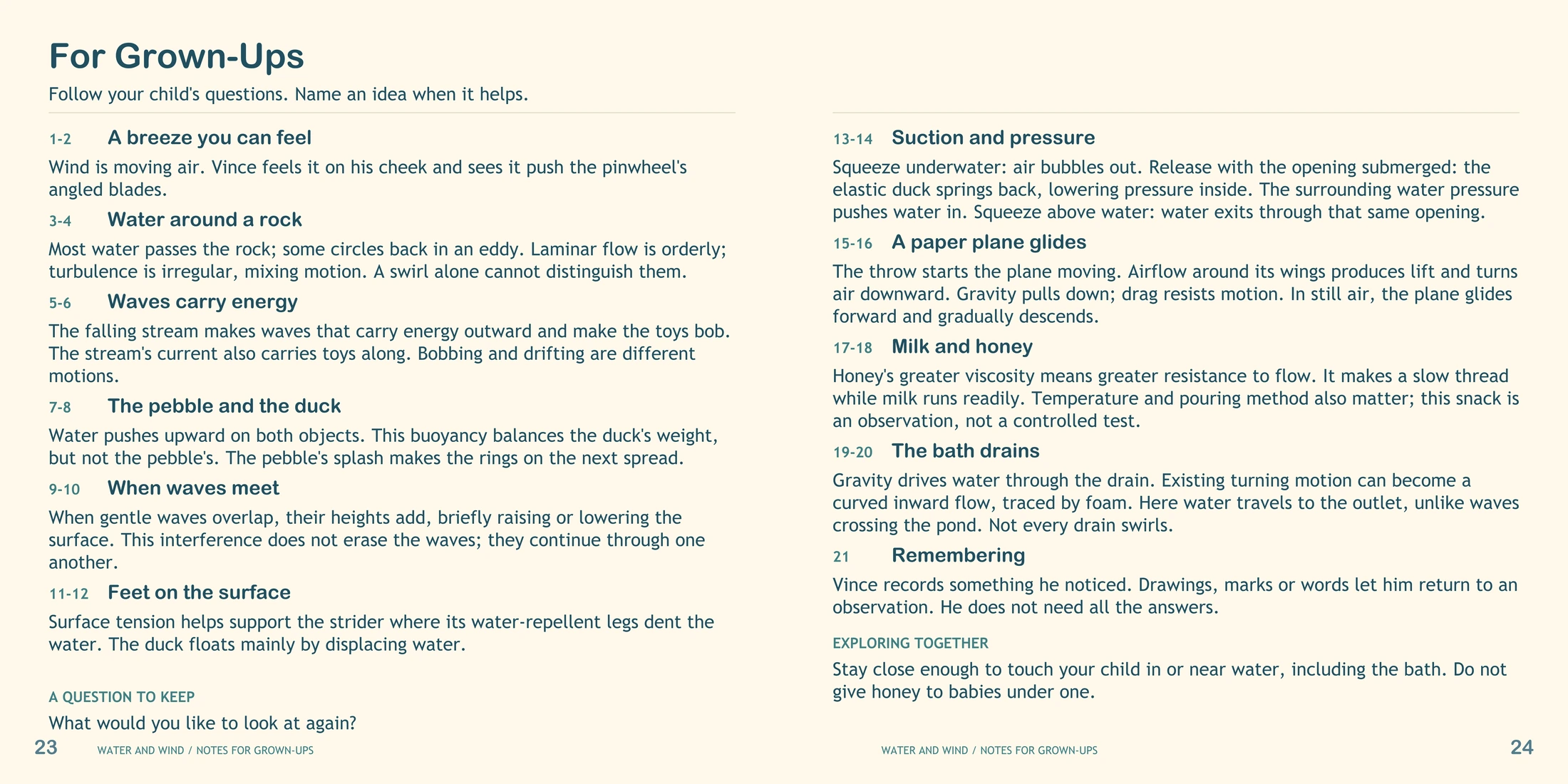
For Grown-Ups Follow your child's questions. Name an idea when it helps. 1-2 A breeze you can feel Wind is moving air. Vince feels it on his cheek and sees it push the pinwheel's angled blades. 3-4 Water around a rock Most water passes the rock; some circles back in an eddy. Laminar flow is orderly; turbulence is irregular, mixing motion. A swirl alone cannot distinguish them. 5-6 Waves carry energy The falling stream makes waves that carry energy outward and make the toys bob. The stream's current also carries toys along. Bobbing and drifting are different motions. 7-8 The pebble and the duck Water pushes upward on both objects. This buoyancy balances the duck's weight, but not the pebble's. The pebble's splash makes the rings on the next spread. 9-10 When waves meet When gentle waves overlap, their heights add, briefly raising or lowering the surface. This interference does not erase the waves; they continue through one another. 11-12 Feet on the surface Surface tension helps support the strider where its water-repellent legs dent the water. The duck floats mainly by displacing water. 13-14 Suction and pressure Squeeze underwater: air bubbles out. Release with the opening submerged: the elastic duck springs back, lowering pressure inside. The surrounding water pressure pushes water in. Squeeze above water: water exits through that same opening. 15-16 A paper plane glides The throw starts the plane moving. Airflow around its wings produces lift and turns air downward. Gravity pulls down; drag resists motion. In still air, the plane glides forward and gradually descends. 17-18 Milk and honey Honey's greater viscosity means greater resistance to flow. It makes a slow thread while milk runs readily. Temperature and pouring method also matter; this snack is an observation, not a controlled test. 19-20 The bath drains Gravity drives water through the drain. Existing turning motion can become a curved inward flow, traced by foam. Here water travels to the outlet, unlike waves crossing the pond. Not every drain swirls. 21 Remembering Vince records something he noticed. Drawings, marks or words let him return to an observation. He does not need all the answers. A QUESTION TO KEEP What would you like to look at again? EXPLORING TOGETHER Stay close enough to touch your child in or near water, including the bath. Do not give honey to babies under one.
Open these pages in the readerA story worth keeping?
Read it here as often as you like. The physical edition is coming soon.