THE COMPLETE BOOK · FREE TO READ
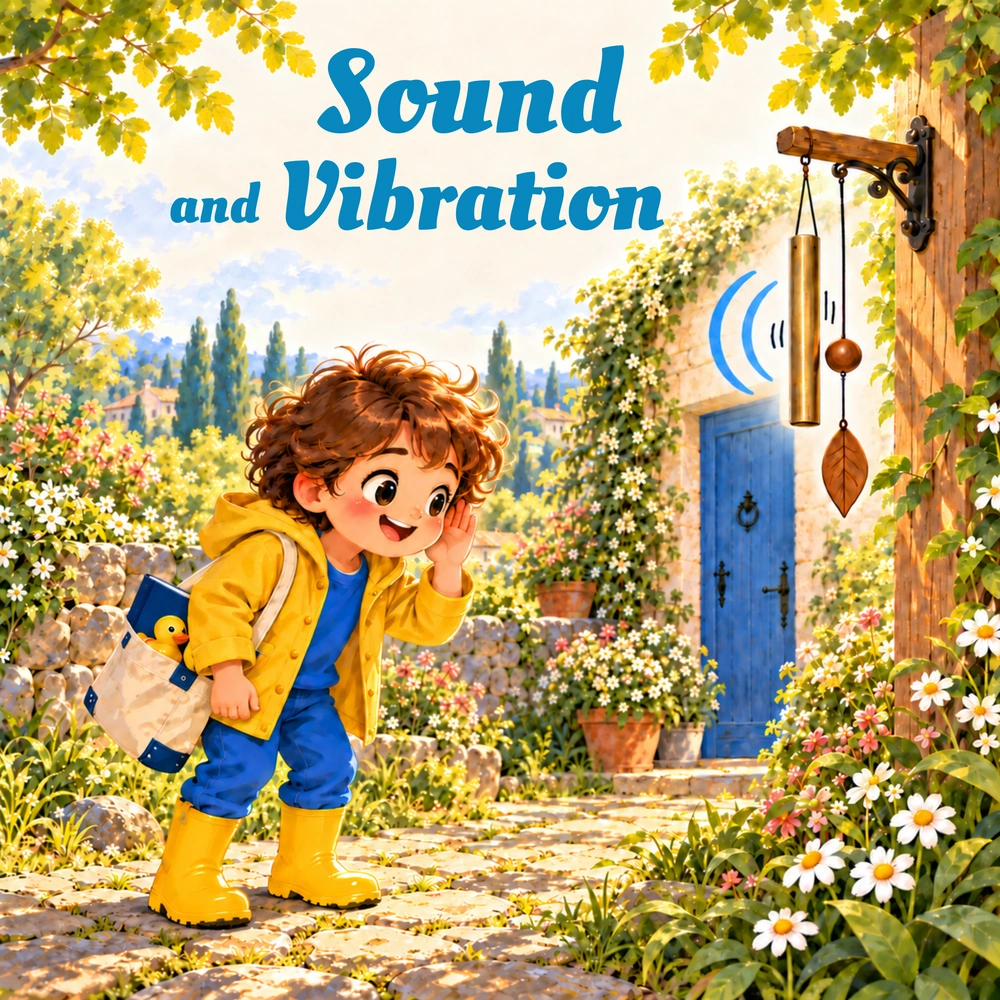
Sound and Vibration
Follow a ringing chime through Vince’s day. Crunching footsteps, a returning clap, jumping rice and rippling water invite children to connect sounds with things that move and tremble.
Turn the pagesOr scroll to readA ring from outside
Pages 1–2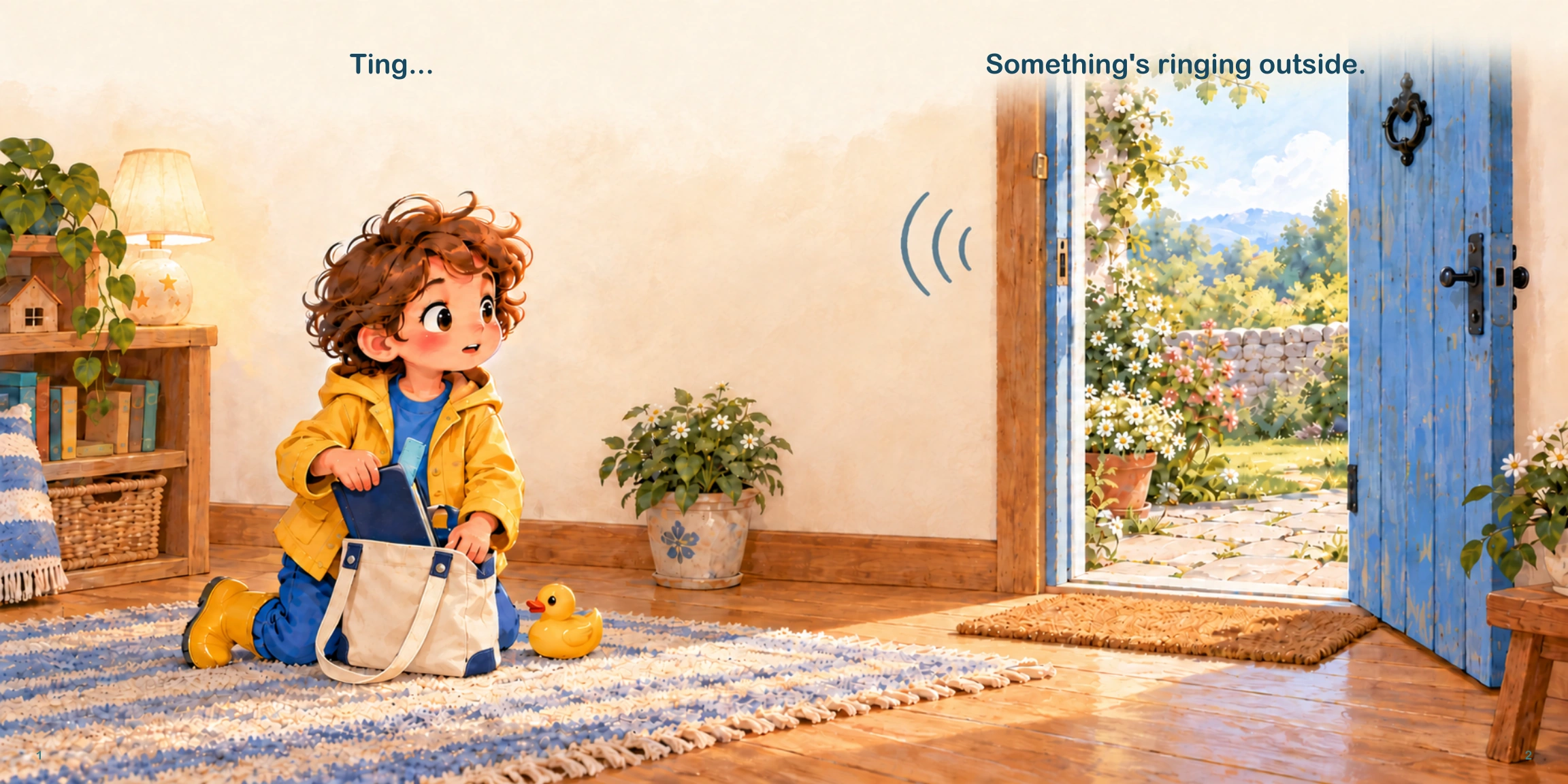
Ting... Something's ringing outside.
Explore together · Sound through air
Vince hears a ring while the ringing object is still outside. Sound travels through air and can reach us before we see what made it. Sound is invisible; the blue curves in these pictures are symbols that help us follow it.
Ask together: What makes Vince turn toward the door?
A little knock and a long ring
Pages 3–4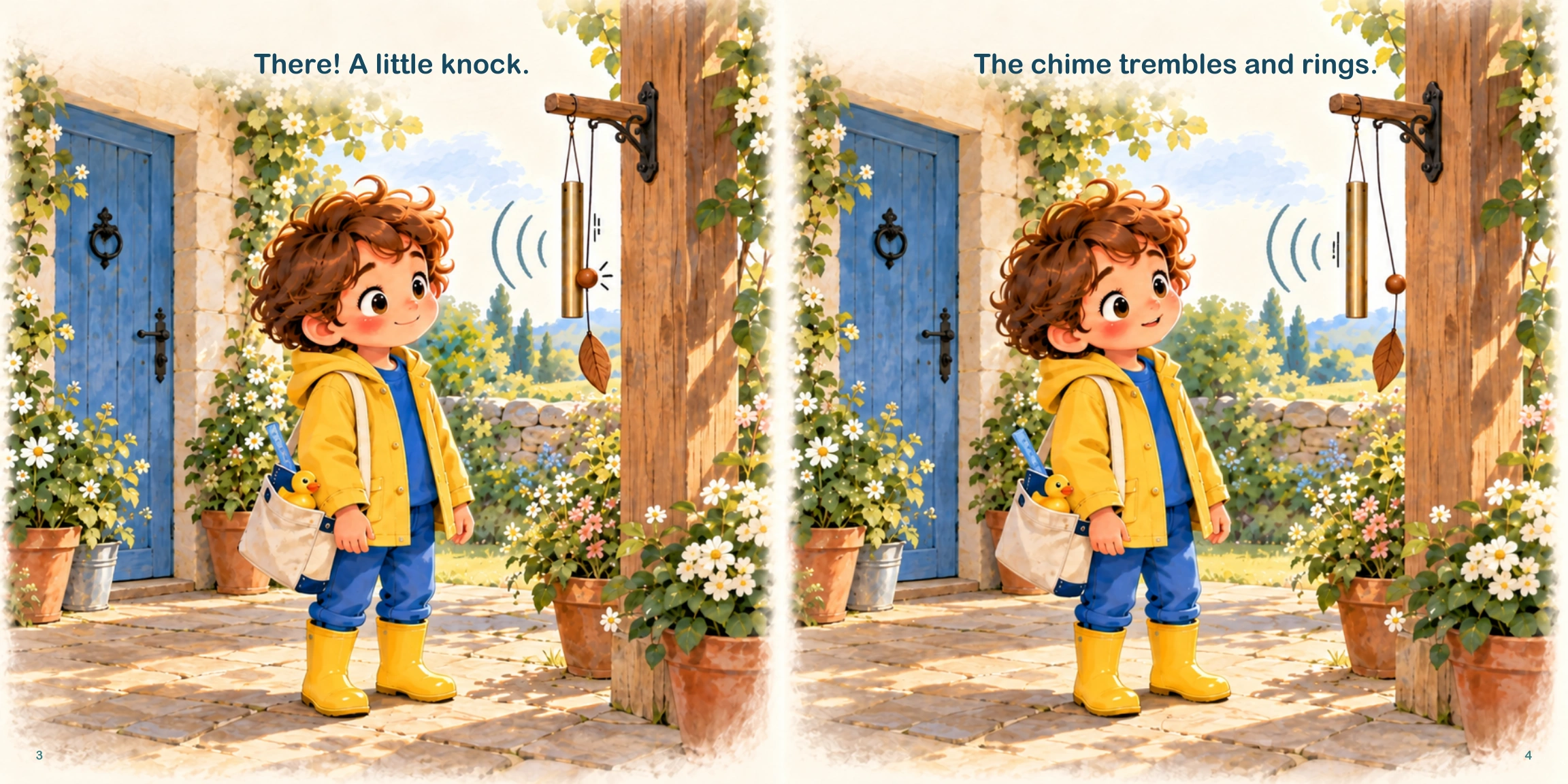
There! A little knock. The chime trembles and rings.
Explore together · Vibration
A small striker knocks the metal chime, then moves away while the chime keeps ringing. The knock makes the metal vibrate: move back and forth very quickly. This vibration makes the ring. The slow swing of the whole chime is a different movement.
Ask together: What touches the chime before it rings?
His hand makes a difference
Pages 5–6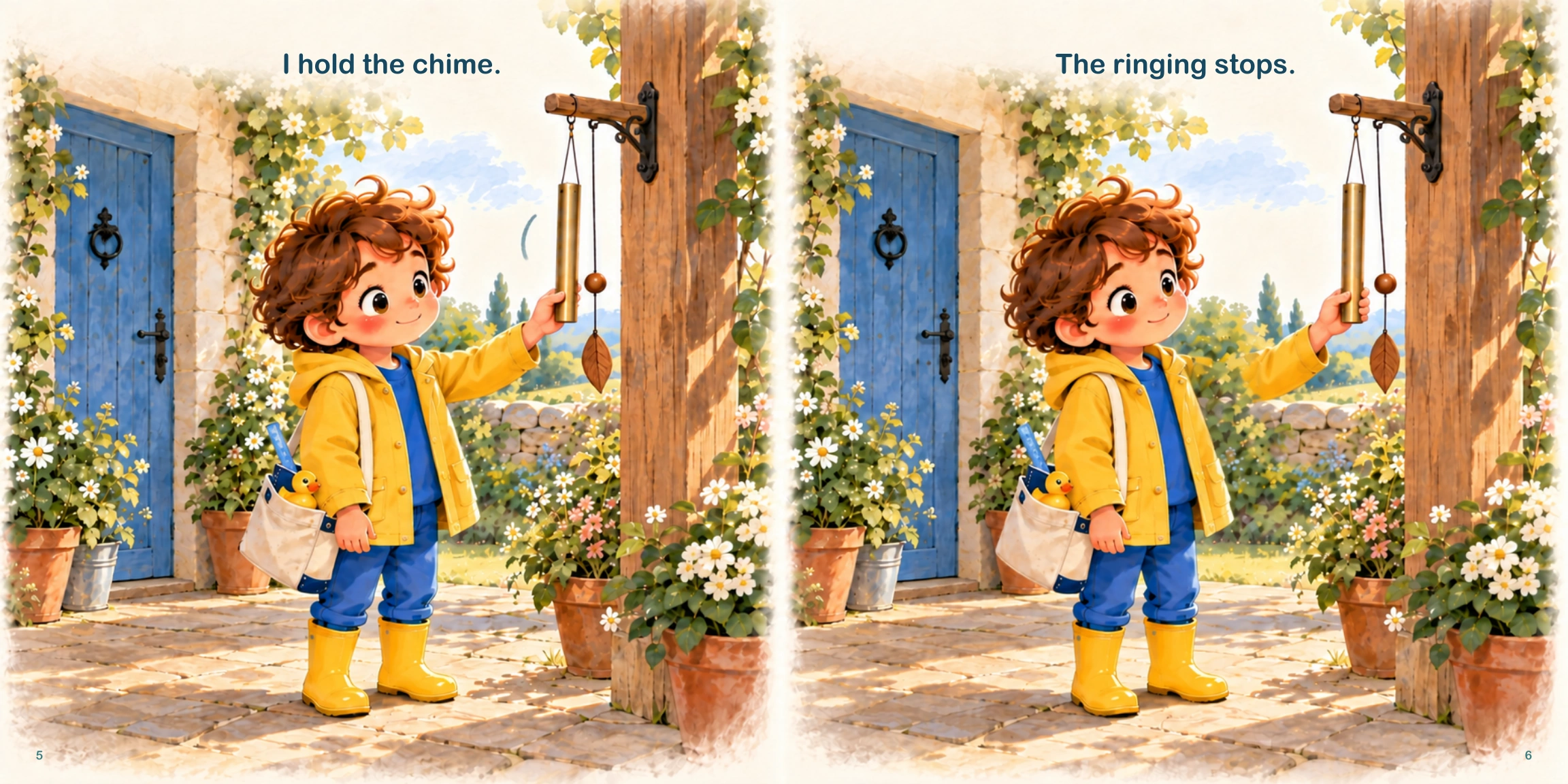
I hold the chime. The ringing stops.
Explore together · Quieting a vibration
Vince holds the metal tube, and the ringing stops. His hand reduces the metal’s vibration, so the ring dies away quickly. He touches the tube itself.
Ask together: Which part does Vince touch?
The same boots make different sounds
Pages 7–8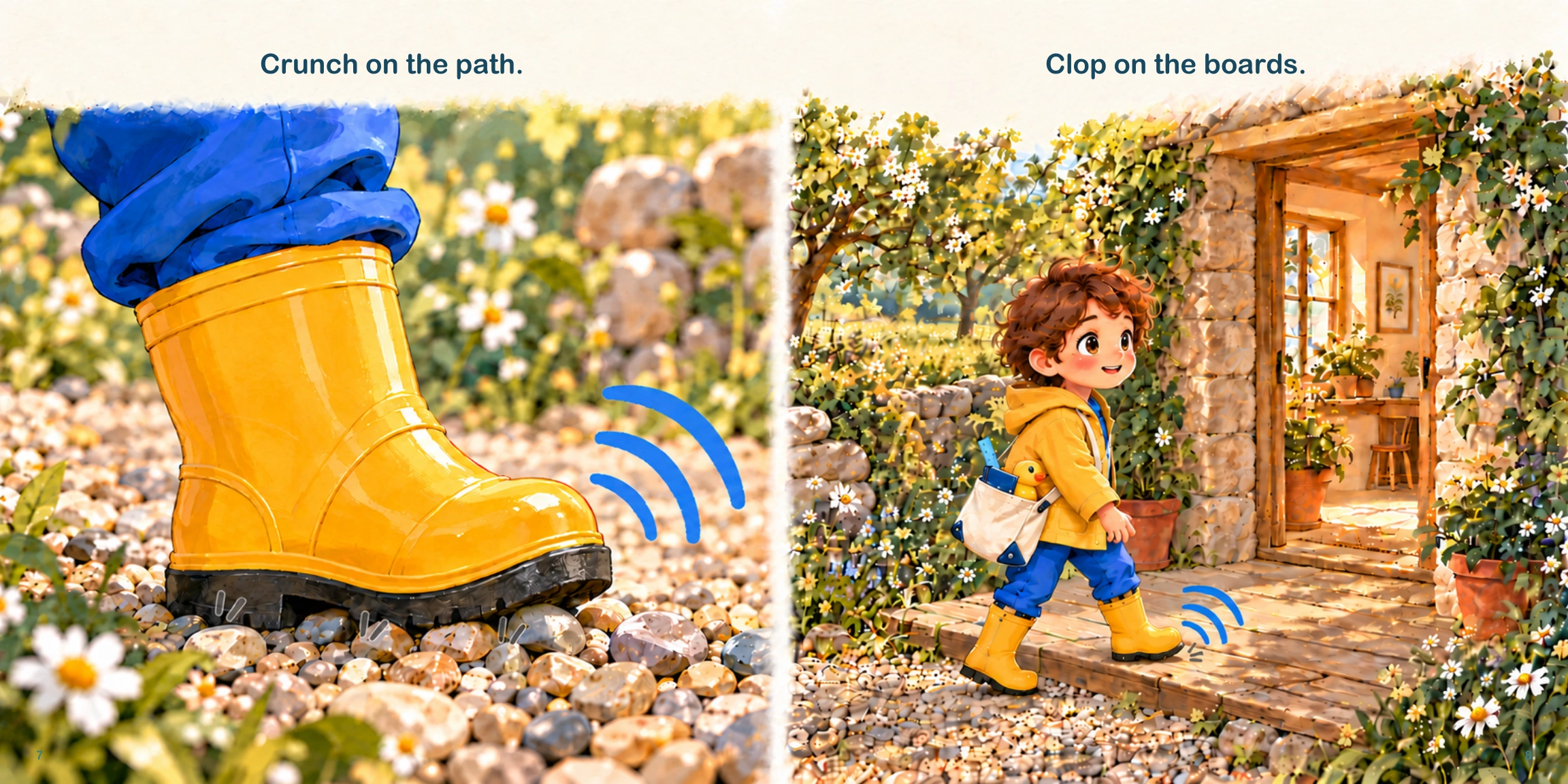
Crunch on the path. Clop on the boards.
Explore together · Different surfaces, different sounds
The same yellow boot presses small stones on the path and then lands on wooden boards. The stones knock and scrape against one another and the boot, making vibrations and sound. On the boards, the boot and wood vibrate. Both the surface and the step affect what Vince hears.
Ask together: What changes beneath his boots?
A clap comes back
Pages 9–10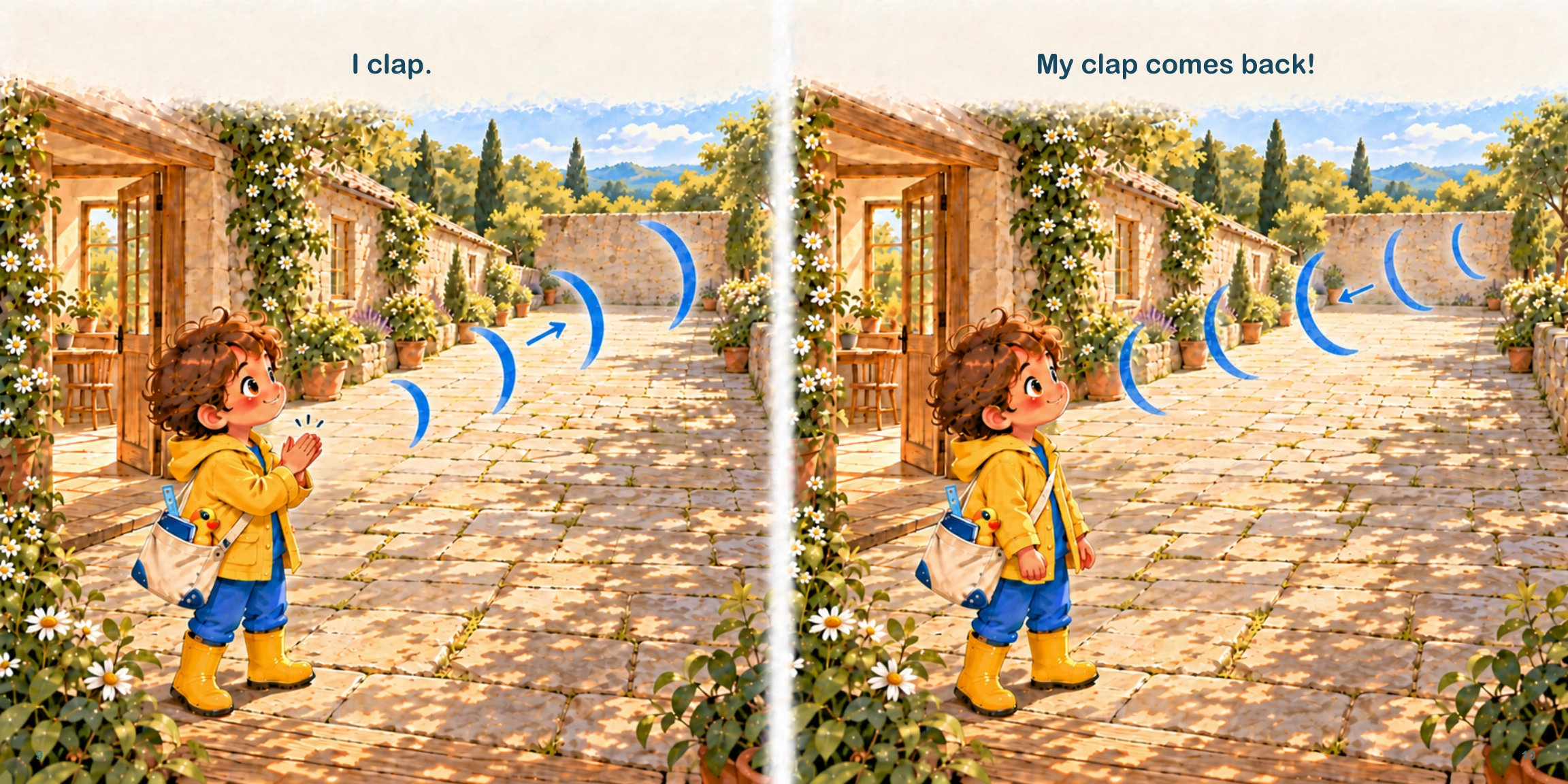
I clap. My clap comes back!
Explore together · Echo
Vince claps once, then listens as the clap comes back from the far stone wall. Some sound reflects from the wall and returns after a short pause: an echo. The arrows help us follow its direction. A nearby wall can reflect sound without a separate echo.
Ask together: Can you follow the sound to the wall and back?
The drum makes the grains jump
Pages 11–12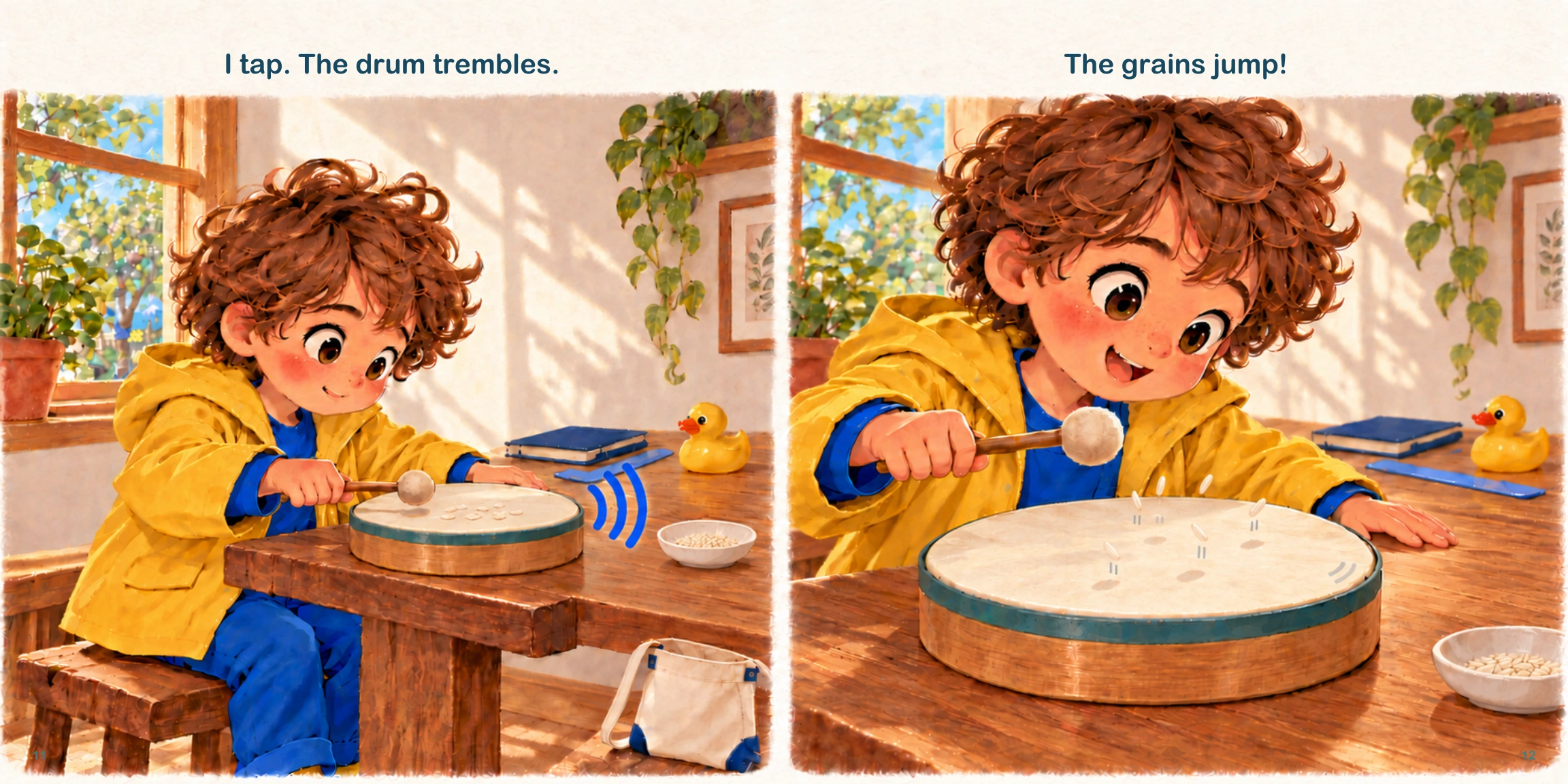
I tap. The drum trembles. The grains jump!
Explore together · Seeing movement
Vince taps the drum and lifts the beater away. Rice grains jump on the drumhead. The tap makes the drumhead vibrate. Contact with the moving head pushes the grains up; sound in the air does not lift them. A grown-up handles loose rice.
Ask together: What moves after Vince taps?
One trembling bowl, two discoveries
Pages 13–14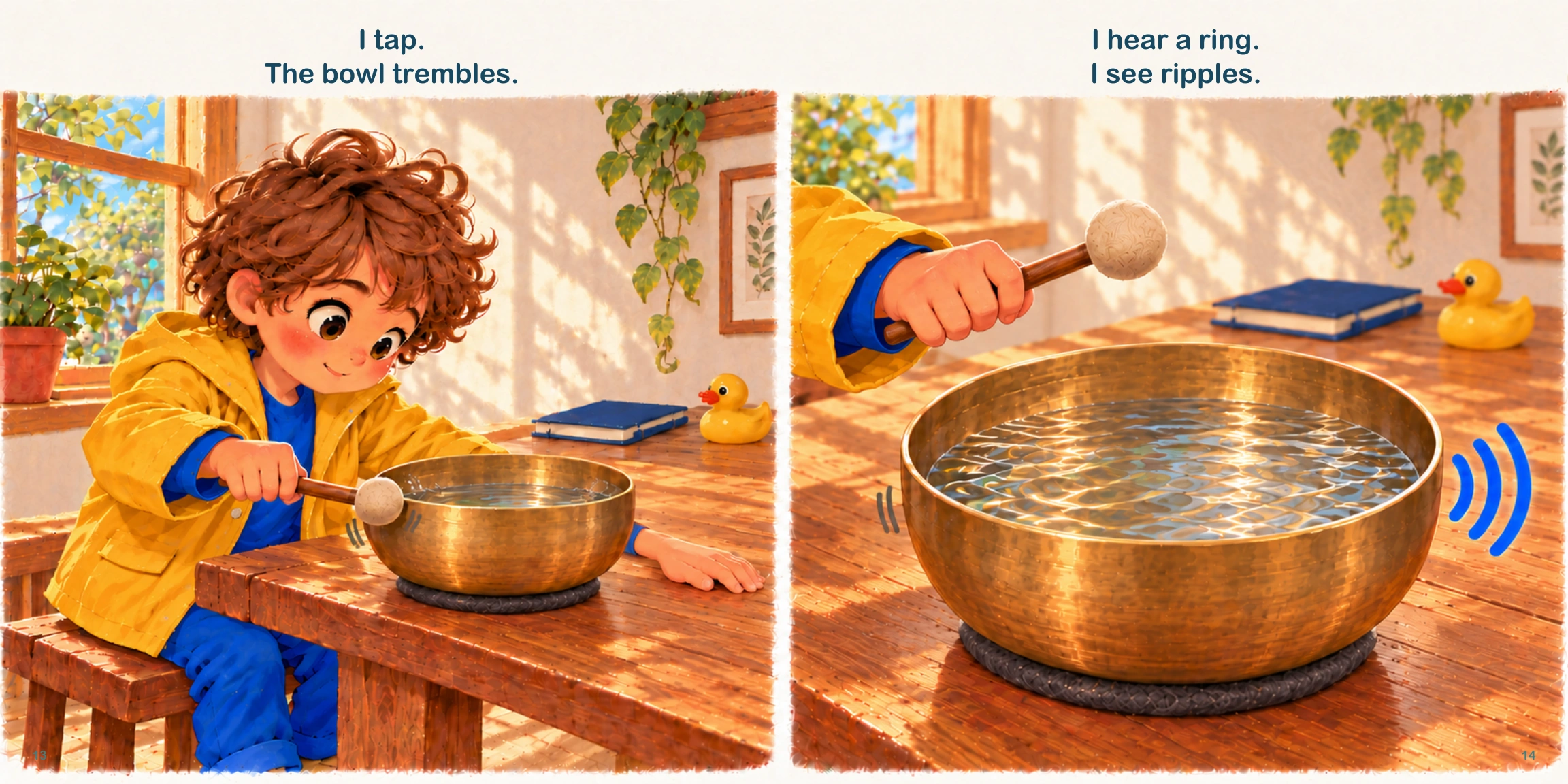
I tap. The bowl trembles. I hear a ring. I see ripples.
Explore together · One vibration, two effects
Vince taps a metal bowl. He hears a ring and sees ripples on the water. The bowl’s trembling wall makes sound in the air and moves the water touching it. Visible water ripples and invisible sound in air are different waves. Results depend on the bowl, its support, the water level and the tap.
Ask together: What can Vince hear? What can he see?
He hums, then stops
Pages 15–16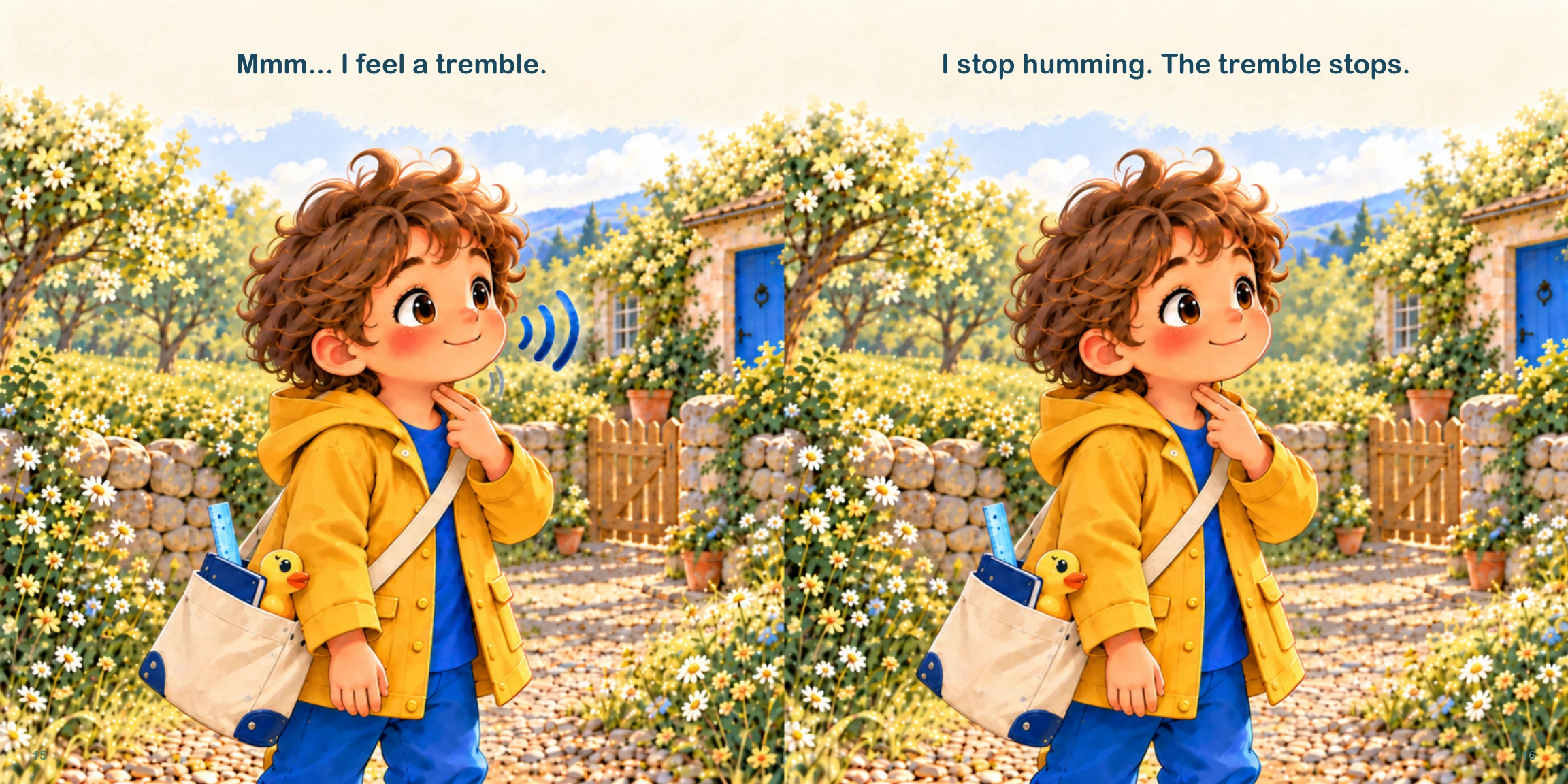
Mmm... I feel a tremble. I stop humming. The tremble stops.
Explore together · Feeling a vibration
Vince keeps his fingers lightly in place as he hums, then stops humming. Air from the lungs makes the vocal folds vibrate. The tremble he feels stops when he stops humming; his fingers stay in place. Looking is an option, too.
Ask together: Hum, pause, then hum again. What can you feel?
He knows that sound
Pages 17–18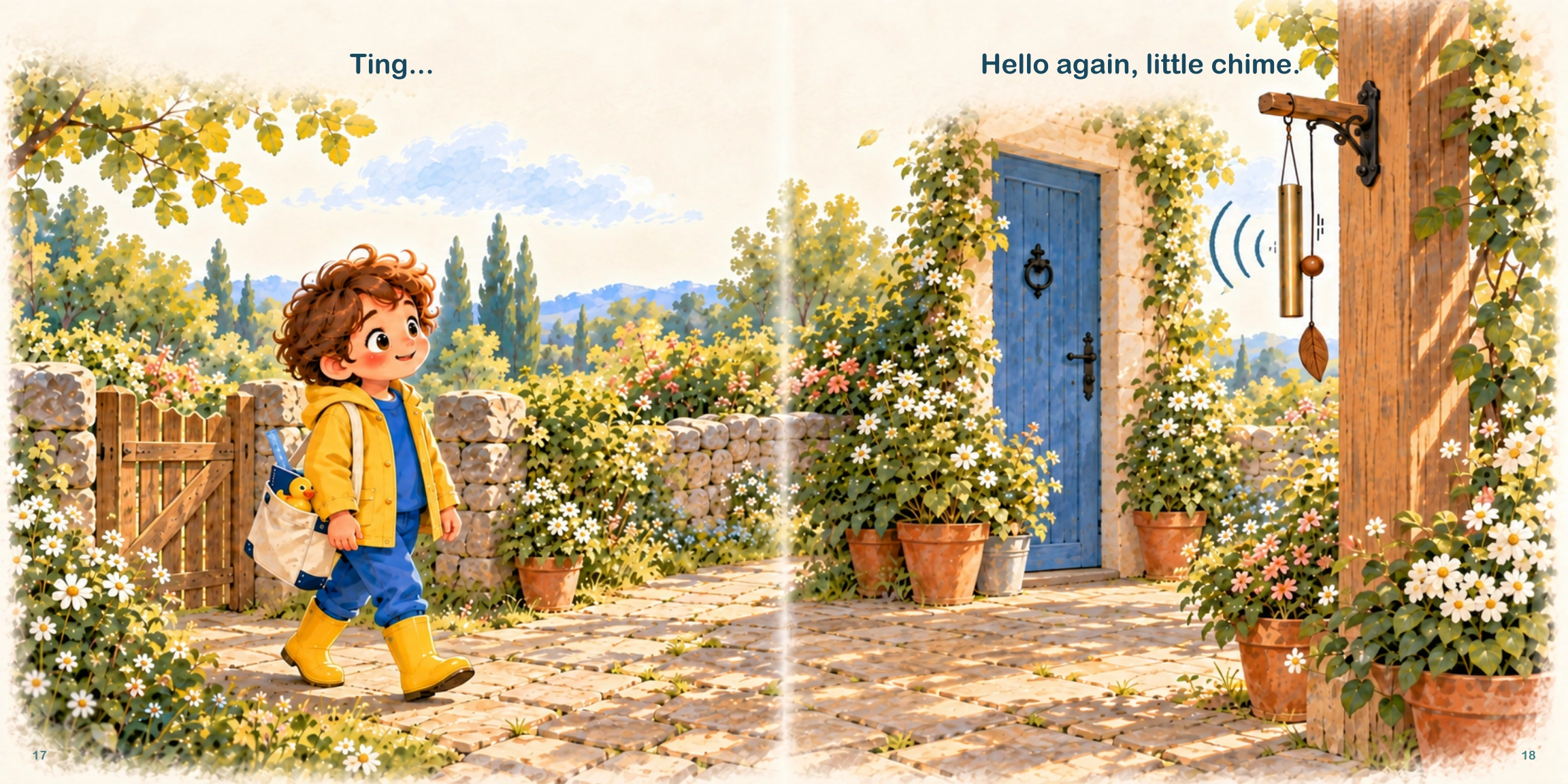
Ting... Hello again, little chime.
Explore together · Recognising a sound
Vince hears the familiar chime as he arrives home. The chime rings when its metal vibrates, just as it did at the start. A familiar sound can help us recognise a place.
Ask together: Which sound has Vince heard before?
A quiet notebook
Pages 19–20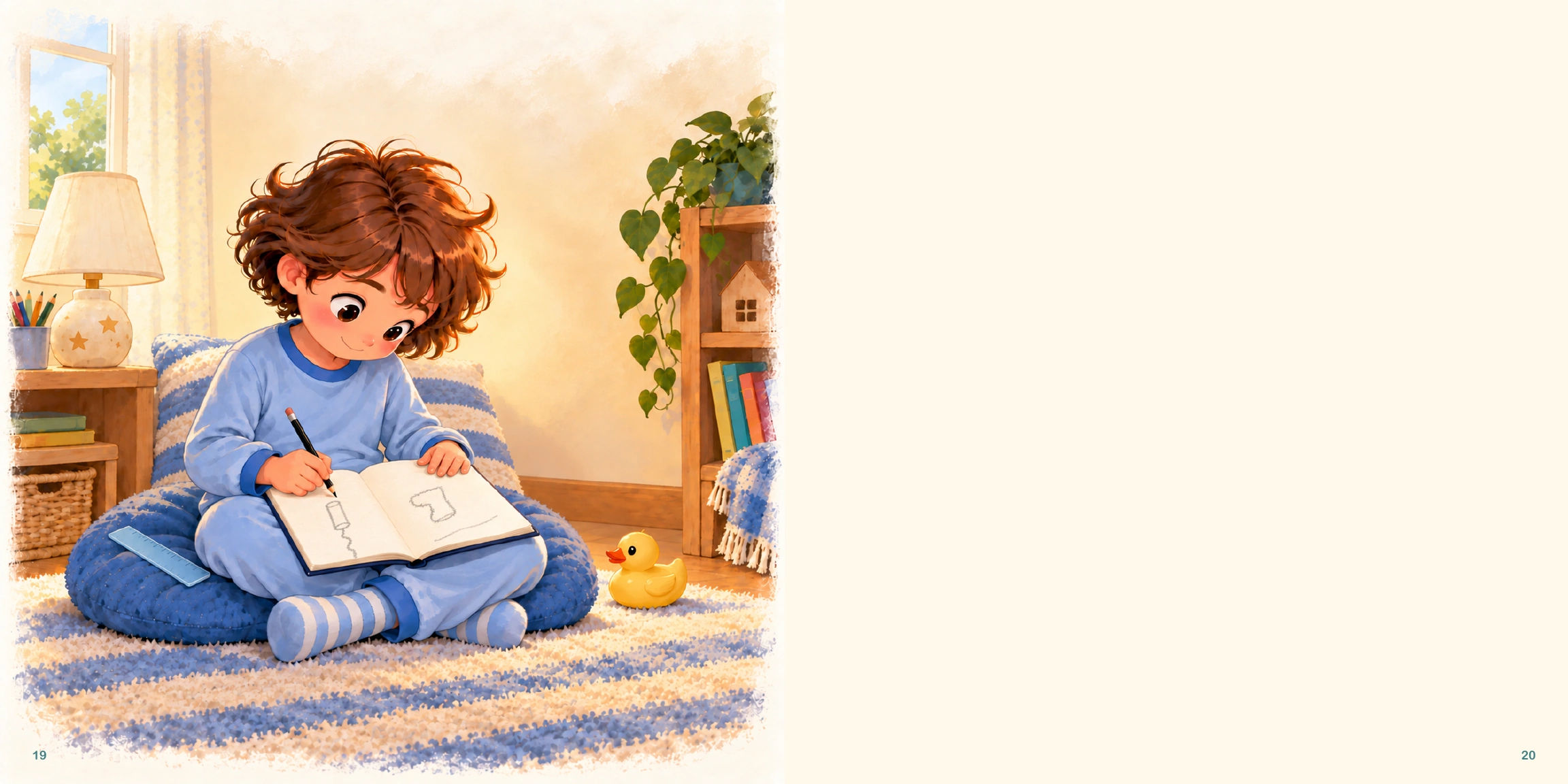
For grown-ups
Pages 21–22
For Grown-Ups Vibration means moving back and forth. It can make tiny pressure changes in the air that travel to our ears and make our eardrums vibrate. 1-6 The ringing metal Which part does Vince touch? The knock makes the metal tremble quickly. This vibration makes the ring; the slow swing is a different movement. Holding the metal reduces its vibration and quiets the ring. 7-8 Sounds underfoot What changes beneath his boots? Boots press small stones together. They knock and scrape, making vibrations and sound. On the boards, the boot and wood vibrate. The surface and the step both affect what Vince hears. 9-10 A clap comes back Can you follow the sound to the wall and back? Some sound reflects from the far stone wall. Vince hears the same clap again after a short pause: an echo. A nearby wall can reflect sound without a separate echo. Sound is invisible. Blue curves help us follow it; grey marks suggest movement. Arrows show the direction sound travels. Water ripples are visible. Listen, look or feel. Watching counts, too. 11-14 Movement we can see What moves after each tap? The drumhead pushes rice up. The bowl's trembling sides ripple the water. Both make sound in air. Water ripples and sound are different waves. Results depend on the bowl, water level and tap. 15-16 A tremble he can feel Hum, pause, then hum again. What can you feel? Air from the lungs makes the vocal folds vibrate. Keep your fingers lightly in place as you hum, then stop. Faster vibration makes a higher pitch. Higher and louder are different. 17-20 A familiar sound The chime brings Vince home. His drawing helps him remember. Exploring together Explore with a grown-up and keep sounds comfortable. A grown-up handles loose rice. Touch the throat lightly. Every activity is optional.
Open these pages in the readerA story worth keeping?
Read it here as often as you like. The physical edition is coming soon.