THE COMPLETE BOOK · FREE TO READ
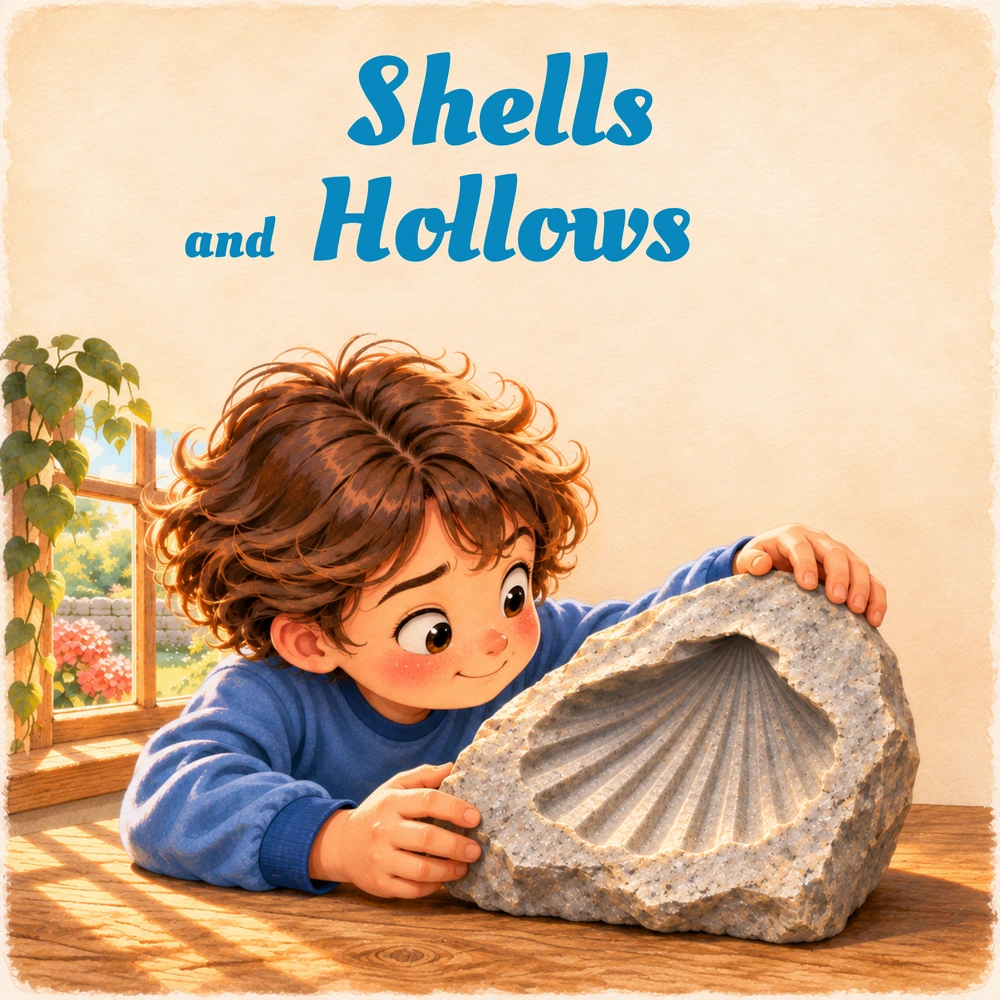
Shells and Hollows
Where did the shell in Gran’s fossil go? Vince follows its grooves from a clay impression to a ribbed glue cast, and wonders what a rock can remember.
Turn the pagesOr scroll to readA shell-shaped hollow
Pages 1–2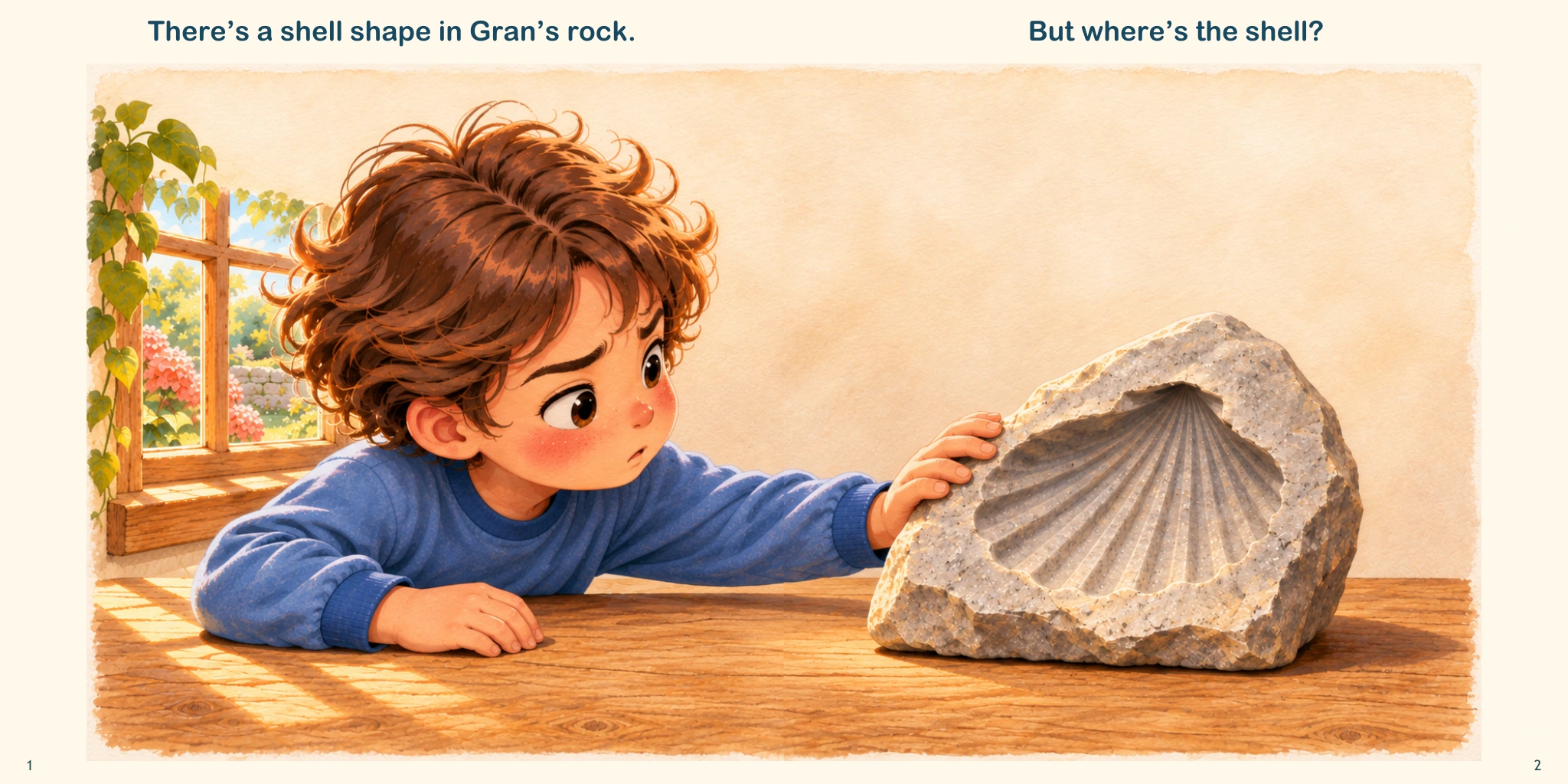
There’s a shell shape in Gran’s rock. But where’s the shell?
Explore together · Reading a fossil mold
Vince steadies Gran’s gray rock by the window. A fan of grooves catches the light. A fossil can preserve the outside shape of a shell even after the shell itself has gone.
Ask together: What makes the hollow look like a shell to you?
The bumpy side
Pages 3–4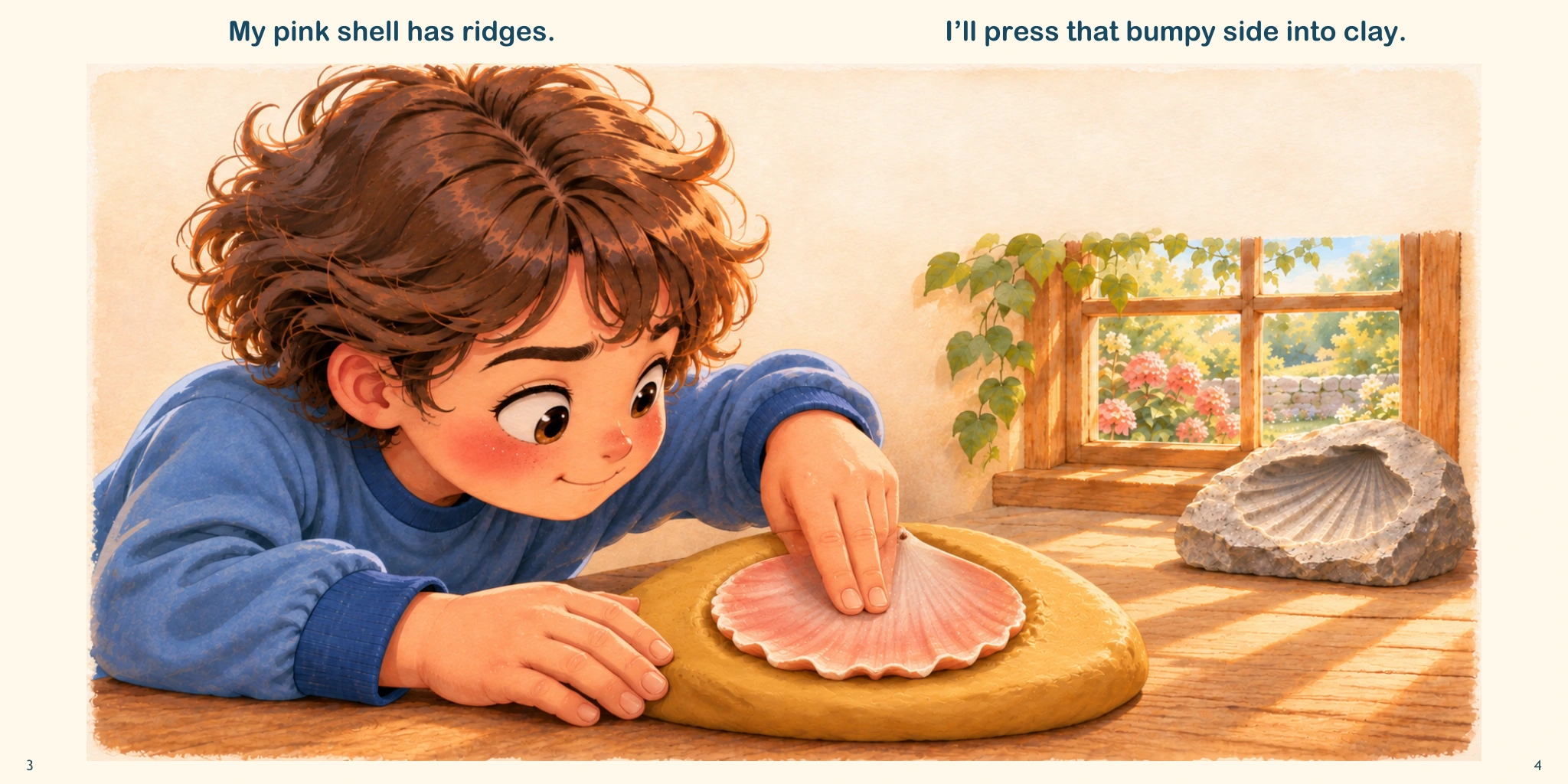
My pink shell has ridges. I’ll press that bumpy side into clay.
Explore together · Contact with soft material
Vince presses the outside of a pink shell into soft clay, with his fingers inside the shell. The surface that touches the clay determines the pattern the clay can take.
Ask together: Which side of the shell is touching the clay?
Grooves in clay
Pages 5–6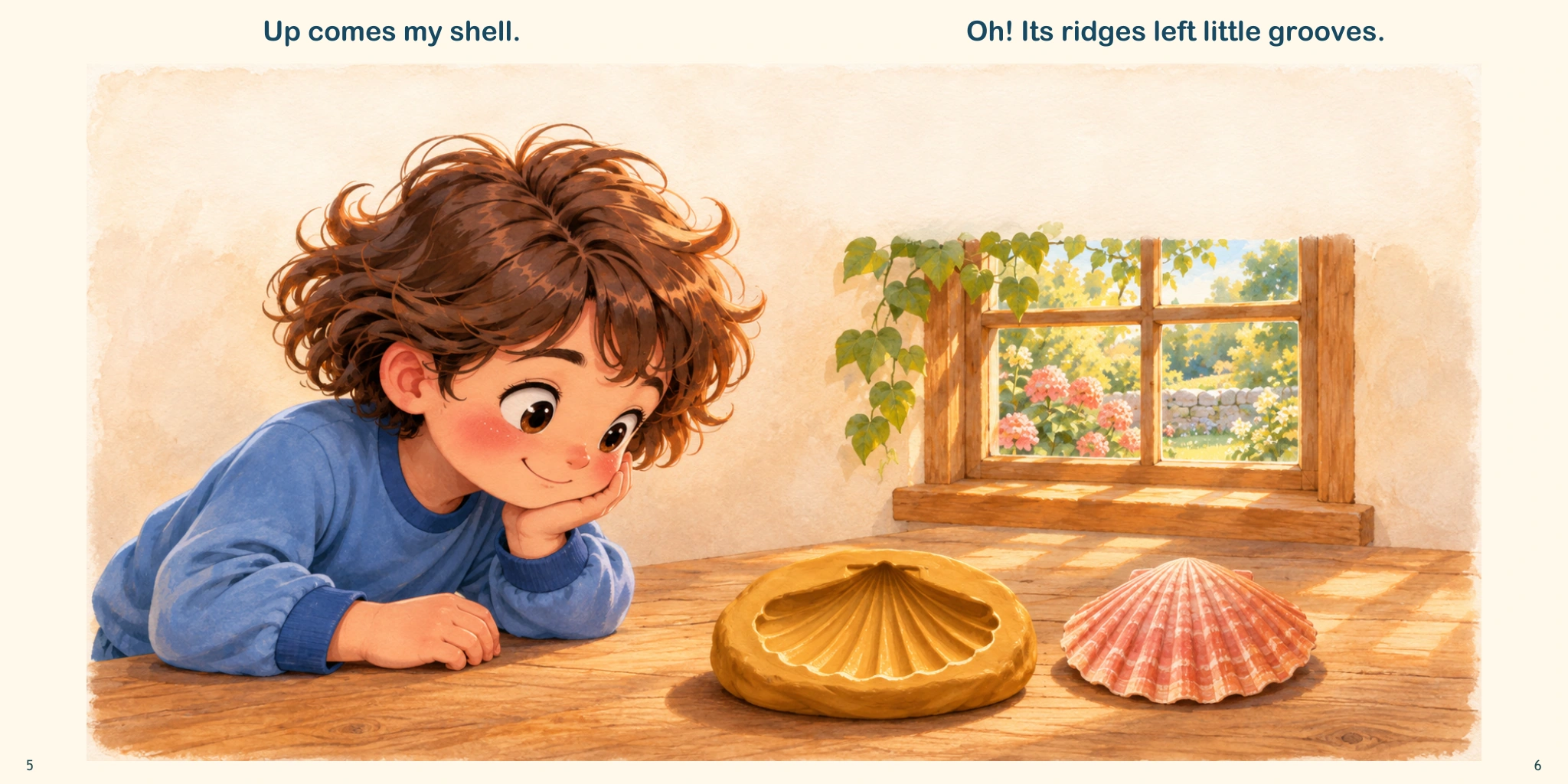
Up comes my shell. Oh! Its ridges left little grooves.
Explore together · An external mold
The pink shell rests beside the clay. Vince looks into the fan-shaped dip it left behind. The raised ribs pushed into the clay and left grooves.
Ask together: What changed when Vince lifted the shell away?
In goes the glue
Pages 7–8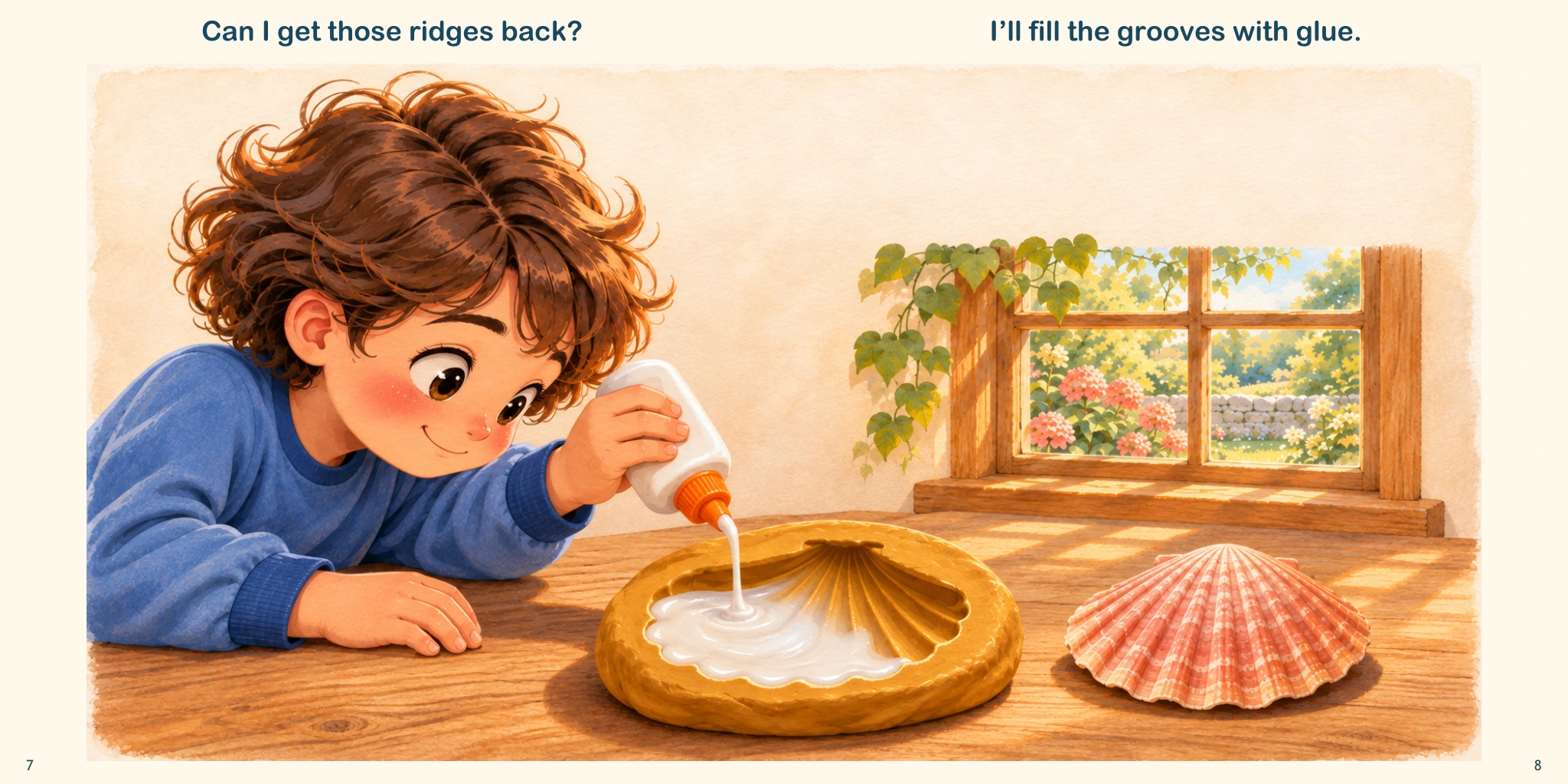
Can I get those ridges back? I’ll fill the grooves with glue.
Explore together · Filling a mold
Vince squeezes white glue into the shell-shaped hollow. Some grooves are still bare. The liquid glue spreads into low places in the clay.
Ask together: Where could the glue flow next?
The other side
Pages 9–10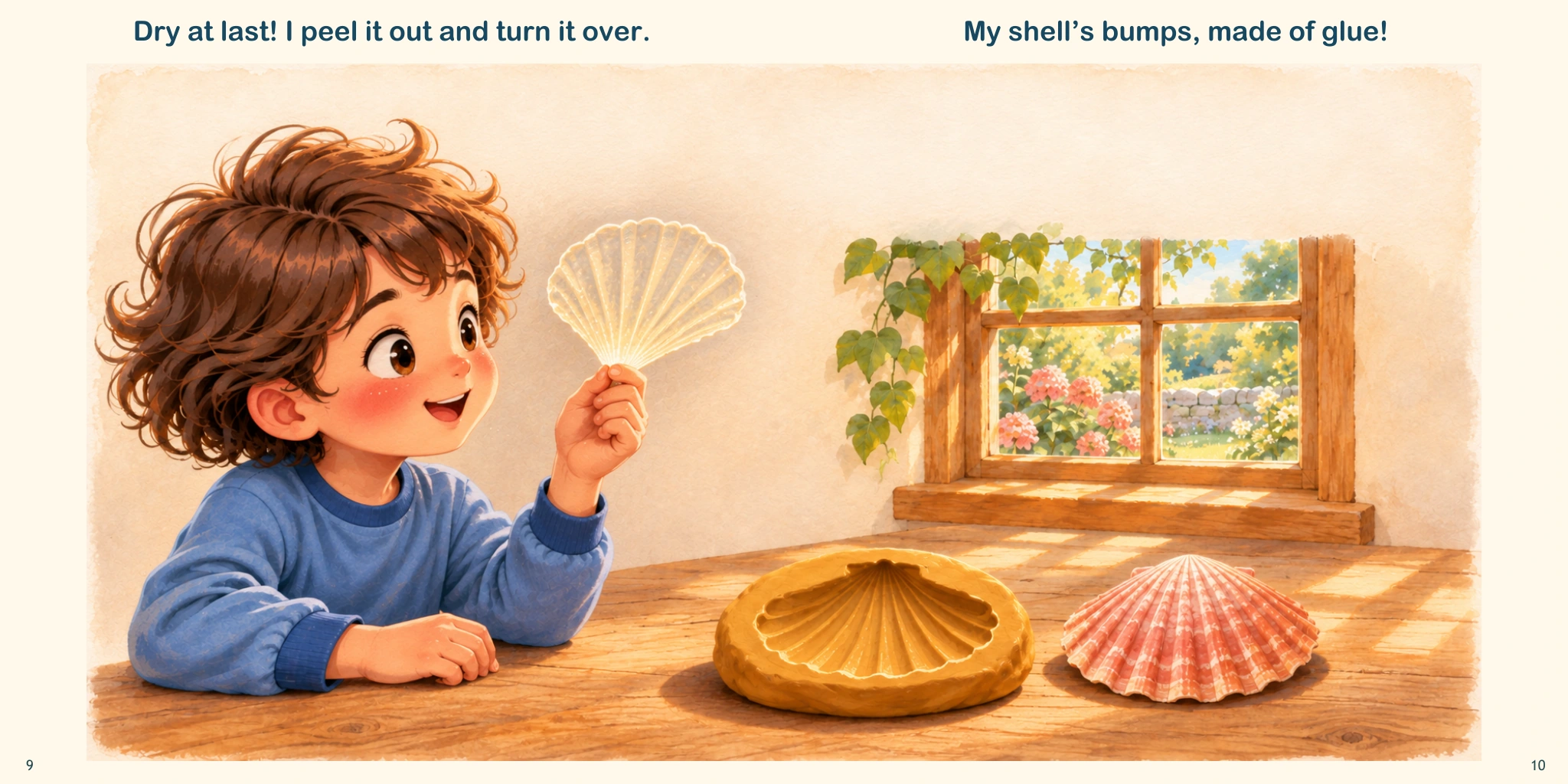
Dry at last! I peel it out and turn it over. My shell’s bumps, made of glue!
Explore together · A cast
Vince holds a pale, ribbed glue copy up to the light. The pink shell and the emptied clay rest on the table. The side of the dry glue that touched the grooves carries raised ribs of its own.
Ask together: What do the pink shell and the pale copy have in common?
A shell long ago
Pages 11–12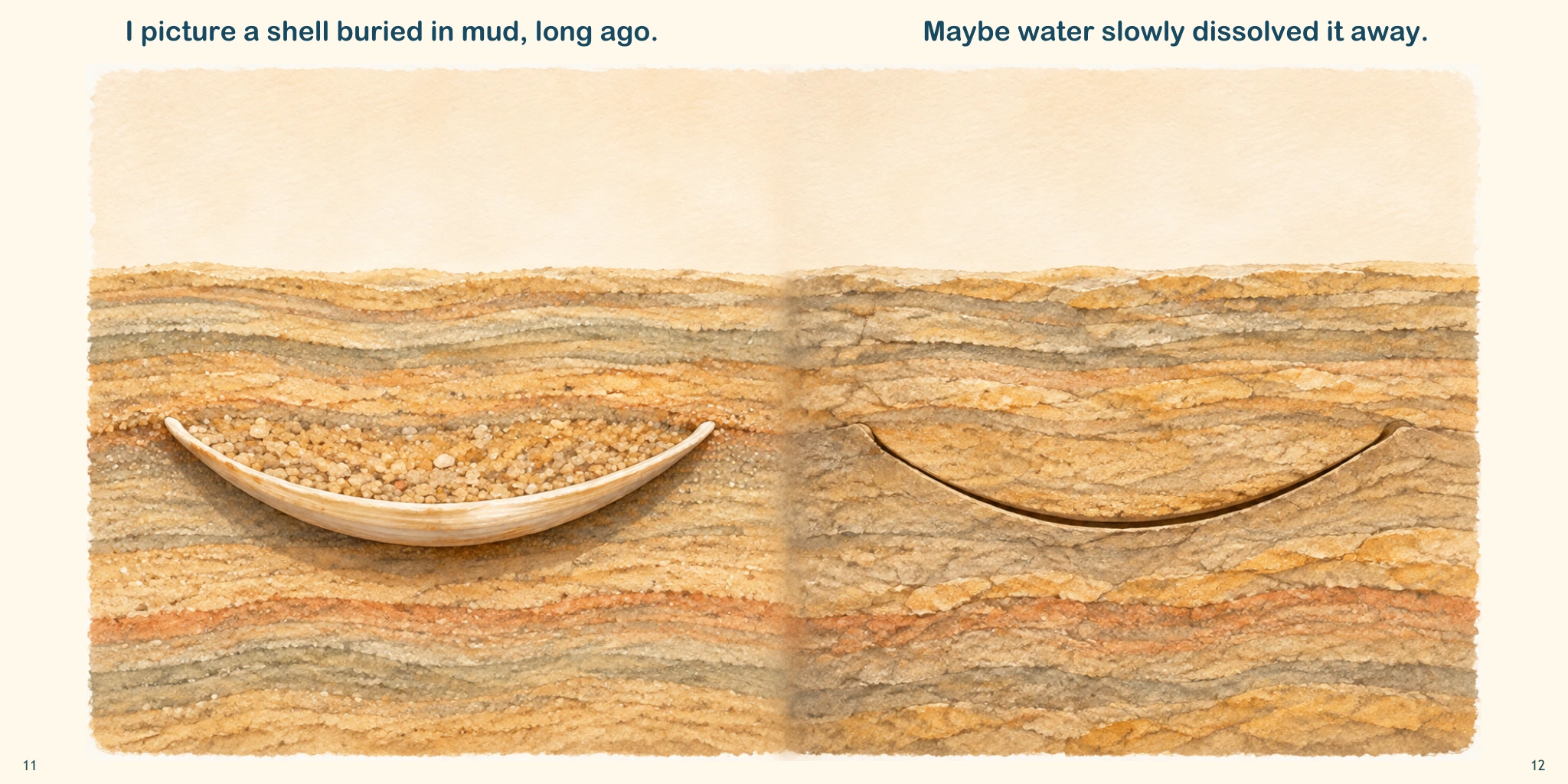
I picture a shell buried in mud, long ago. Maybe water slowly dissolved it away.
Explore together · One path to preservation
One cutaway shows a pale curved shell buried in sediment. The other shows a thin curved space in the rock. A buried shell can slowly dissolve as water moves through rock, leaving a hollow. Vince imagines one way his fossil might have formed.
Ask together: What can you still trace in the second picture?
A question for the rock
Pages 13–14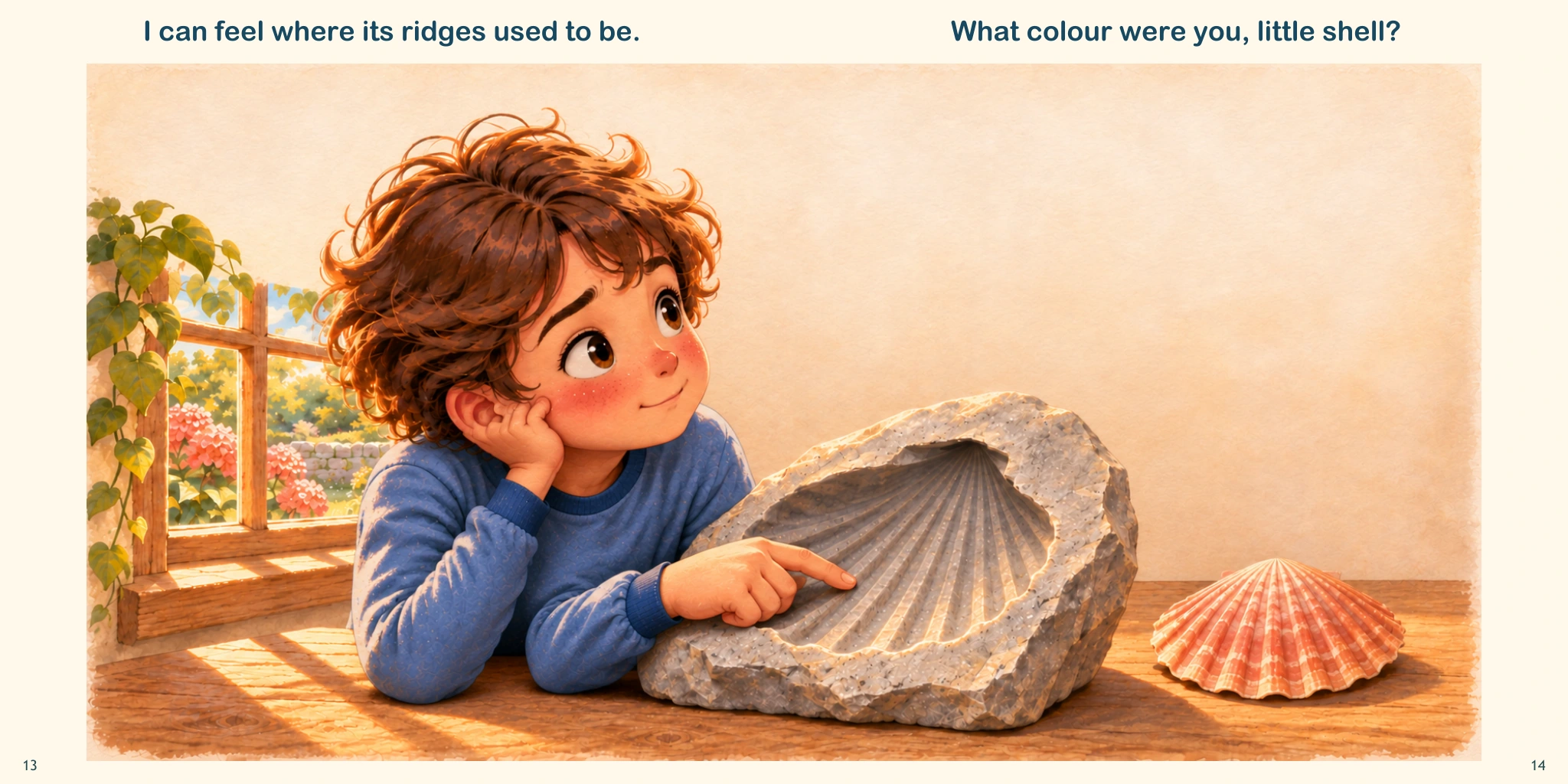
I can feel where its ridges used to be. What colour were you, little shell?
Explore together · What a fossil can tell us
Vince touches the grooves in Gran’s rock. His own pink shell rests beside it. These grooves give him a clue to the outside shape. The plain stone leaves the ancient shell’s colour a mystery.
Ask together: What can Vince feel, and what does he still wonder?
A fan of pencil lines
Pages 15–16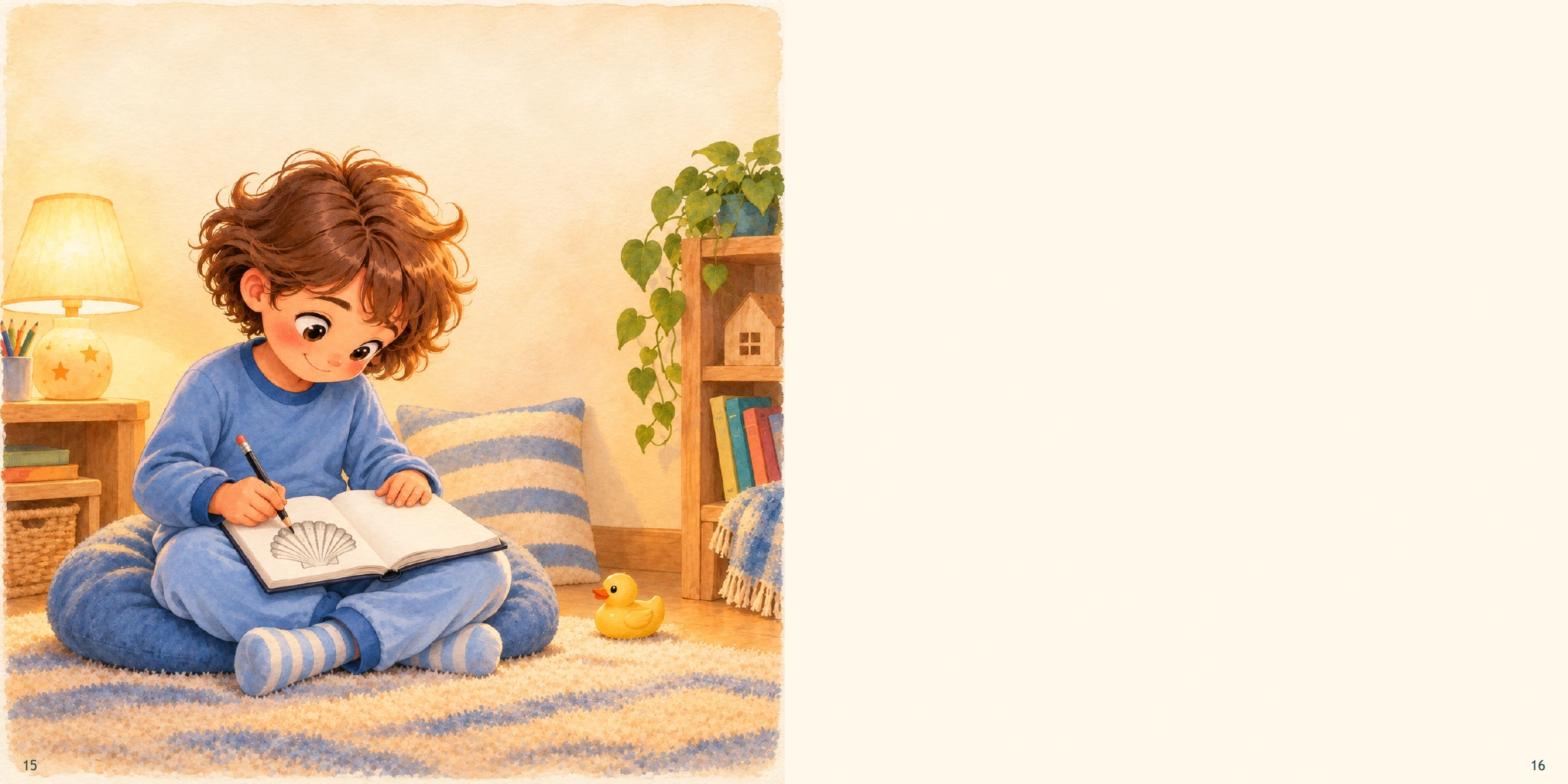
For grown-ups
Pages 17–18
For Grown-Ups Gran’s rock has a fossil you can look into. Follow the two times Vince borrows a shape, first with clay and then with glue. 1–6 Where the ribs went Vince presses the outside of one half of an empty shell into soft clay. When he lifts it, the raised ribs have left grooves. An impression of the outside is called an external mold. Where does the clay dip down? 7–10 Turn the filling over Glue flows into the grooves. Once dry, the face that touched the clay can carry raised lines. This copy is a cast. It has borrowed the shell’s shape and kept the glue’s own colour. Which side of the dry glue touched the clay? 11–14 A hollow from long ago Sediment can bury a shell and harden into rock. Water moving through the rock can slowly dissolve the shell. Sometimes its outside impression survives. If sediment or minerals fill that space, a natural cast can form. The colour is a question These grooves give Vince clues to an ancient shell’s outside shape. The plain gray stone gives him no colour to match. His pink shell is a different shell. Try a shallow impression With a grown-up, press a sturdy empty shell gently into soft modeling clay. Lift it straight up. If you like, add a thin layer of washable white school glue. Let it dry all the way before peeling. Drying time and detail vary. Science sources include the National Park Service, Kentucky Geological Survey, California Geological Survey and Royal Tyrrell Museum.
Open these pages in the readerSources and evidence
A ridged shell can leave an impression of its outer surface in soft material.
White-glue fossils: Casts, molds, and impressions
A shallow press into soft modeling clay can pick up ridges. The detail depends on the shell and how cleanly it lifts.
A thin filling can copy the grooves in a mold and carry raised details on its contact face.
White-glue fossils: Casts, molds, and impressions
Dry the glue all the way before lifting it. Drying time and the detail it picks up vary.
A buried shell can dissolve and its outside impression can survive in rock.
In nature, sediment can harden around a shell. Water can dissolve the shell, and sometimes sediment or minerals later fill the space.
This plain rock mold holds clues to shape. It gives Vince no colour to match.
The grooves belong to this particular specimen. Vince can trace its shape and still wonder what colour the shell was.
A story worth keeping?
Read it here as often as you like. The physical edition is coming soon.