THE COMPLETE BOOK · FREE TO READ
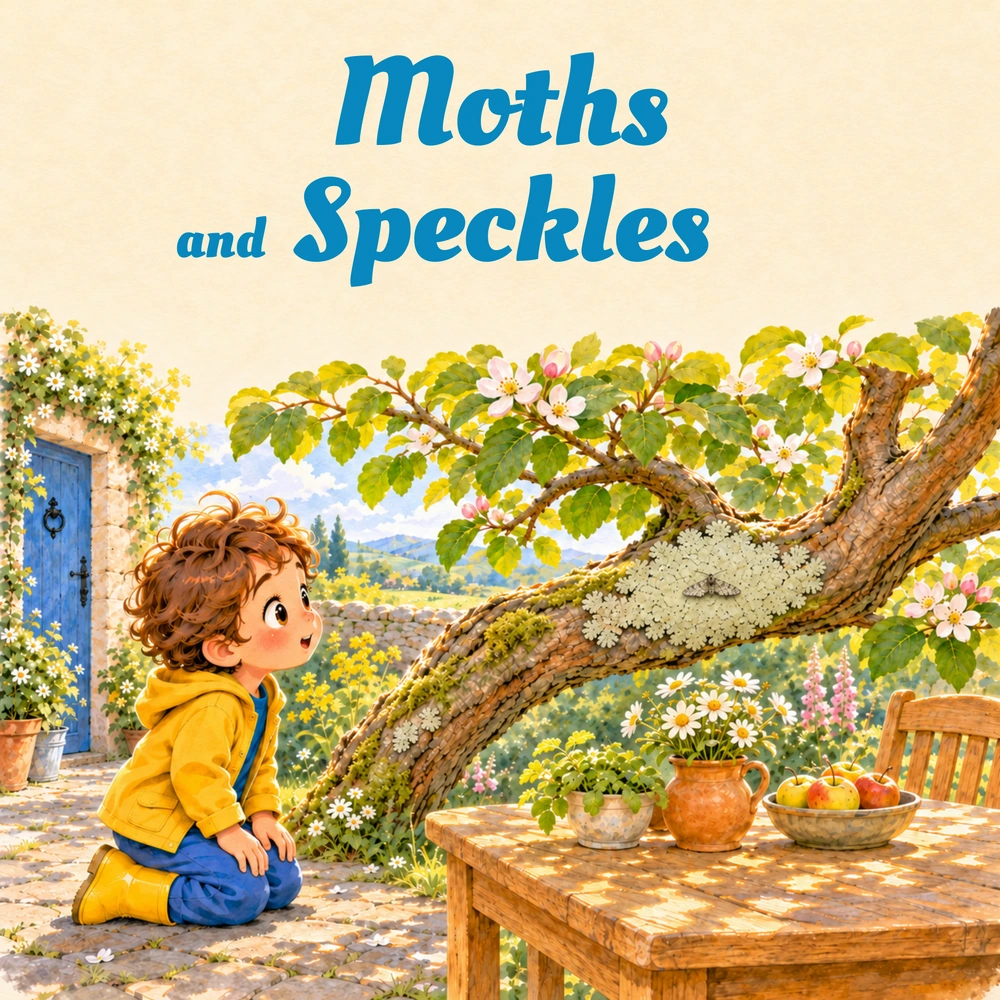
Moths and Speckles
A moth flutters past Vince and seems to vanish on a branch. Can his paper wings hide in plain sight, too?
Turn the pagesOr scroll to readA flutter in the garden
Pages 1–2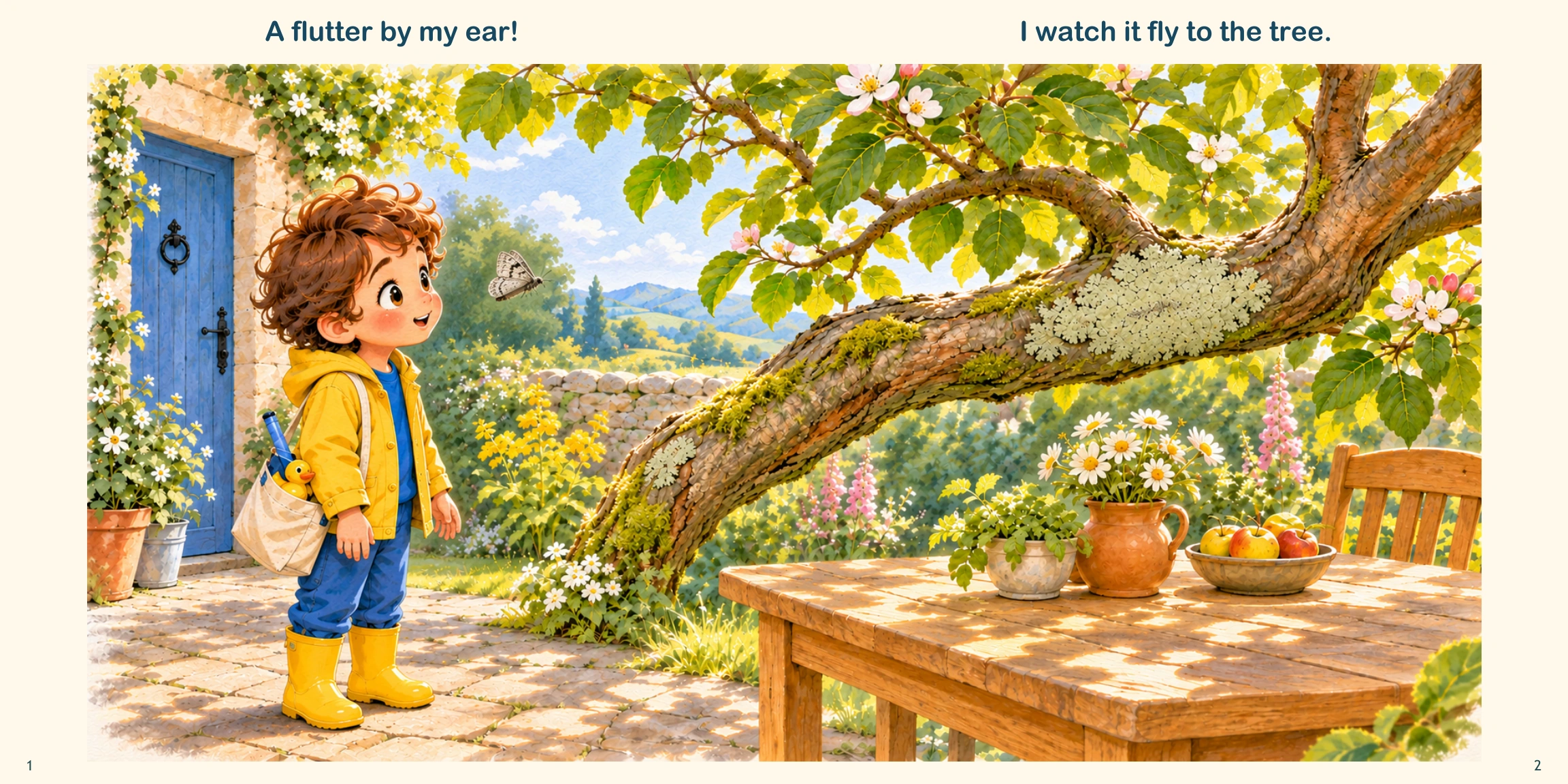
A flutter by my ear! I watch it fly to the tree.
Explore together · Following movement
A pale, dark-speckled moth flies past Vince toward a low tree branch. Movement draws Vince’s eye as he follows the insect.
Ask together: Where is Vince looking?
Where did it land?
Pages 3–4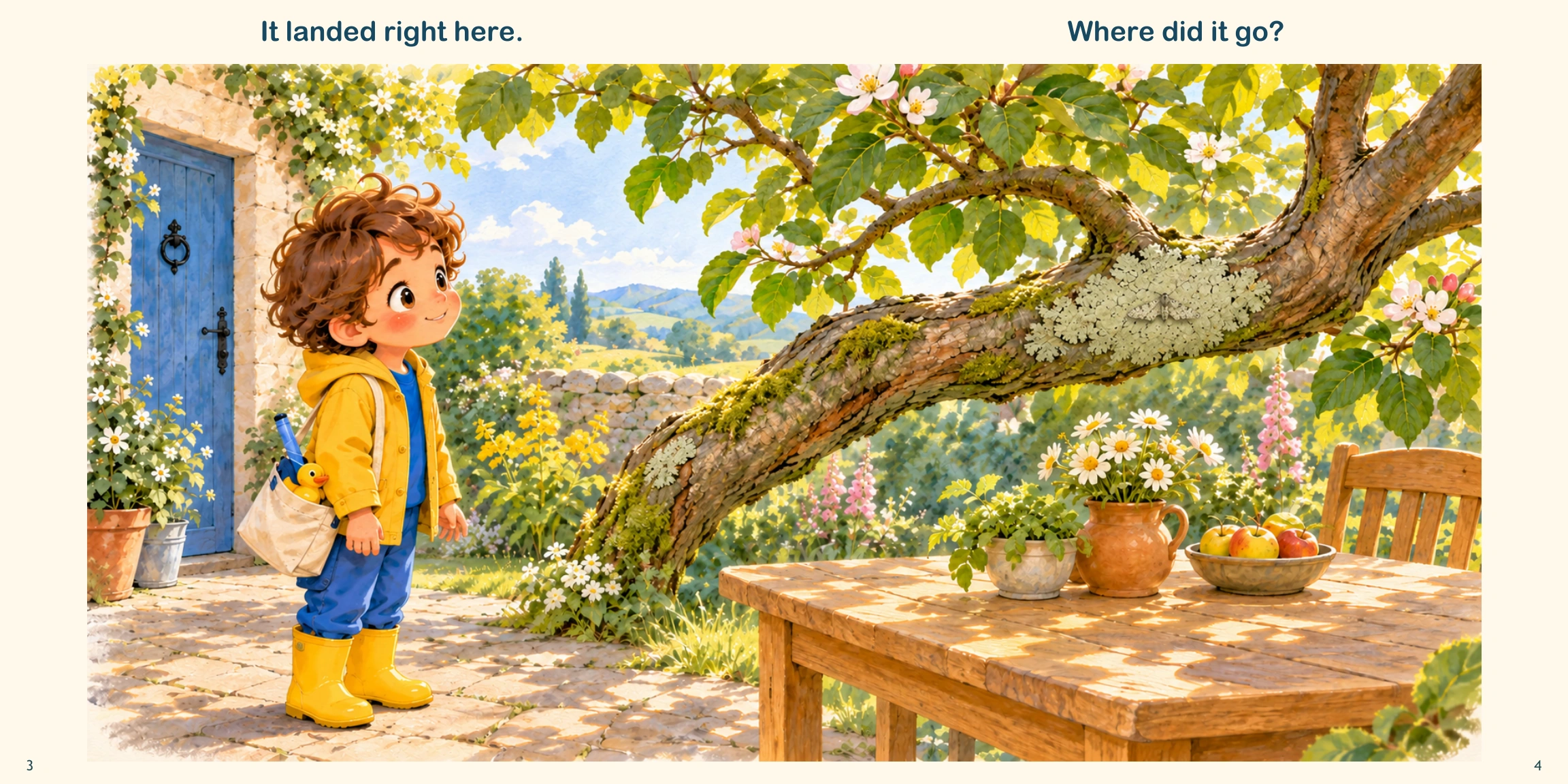
It landed right here. Where did it go?
Explore together · Background matching
Vince studies the pale flecks on a rough branch. A moth rests on one of the patches. When the moth is still, the marks on its wings can be hard to separate from the marks around it.
Ask together: Where would you look first?
Speckles on speckles
Pages 5–6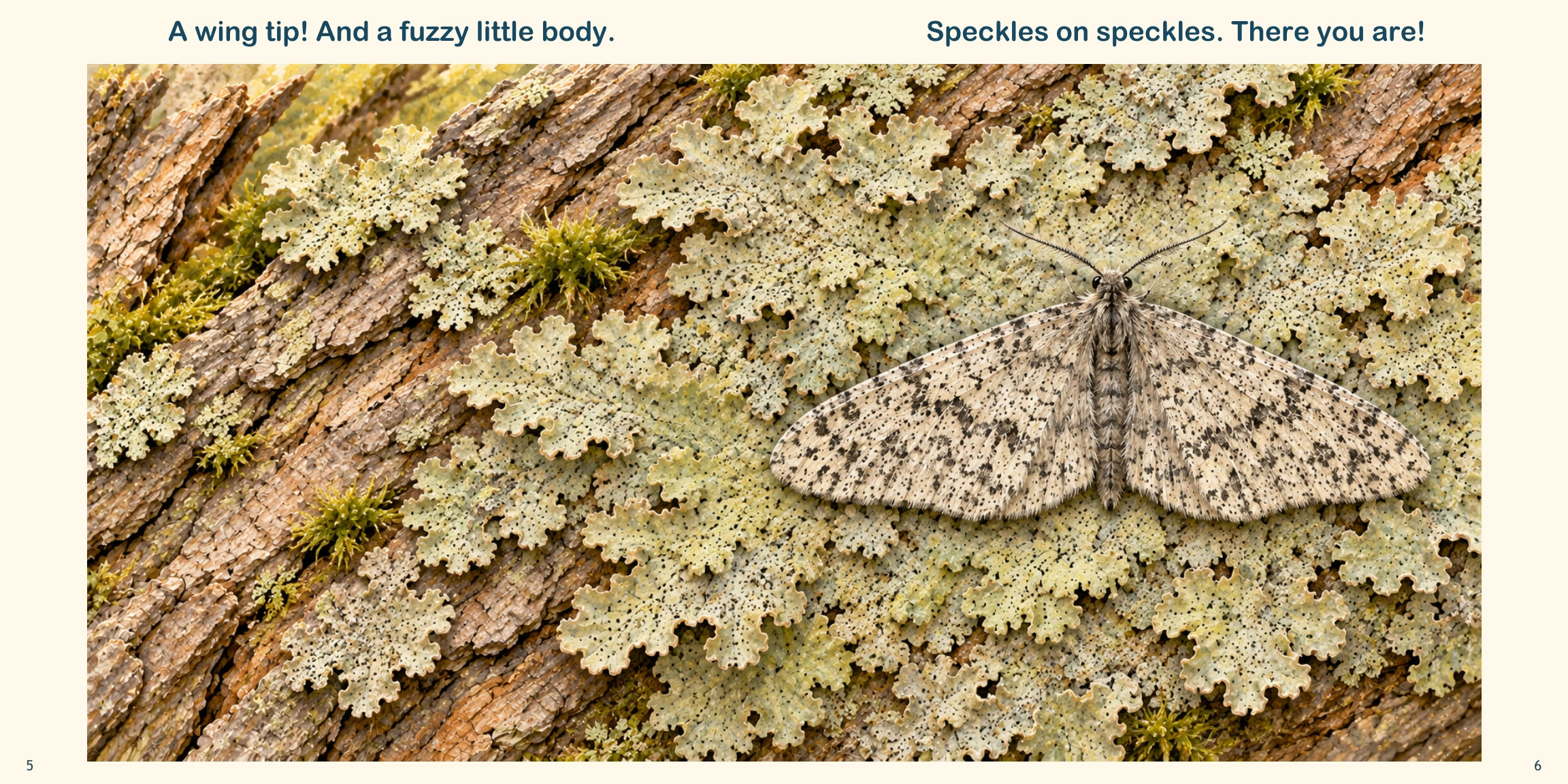
A wing tip! And a fuzzy little body. Speckles on speckles. There you are!
Explore together · Finding an outline
A close view shows a fuzzy body between pale speckled wings and two fine antennae above the head. A piece of wing edge or the little body can help you see a shape among similar marks.
Ask together: Can you follow one wing tip back to the body?
A paper moth
Pages 7–8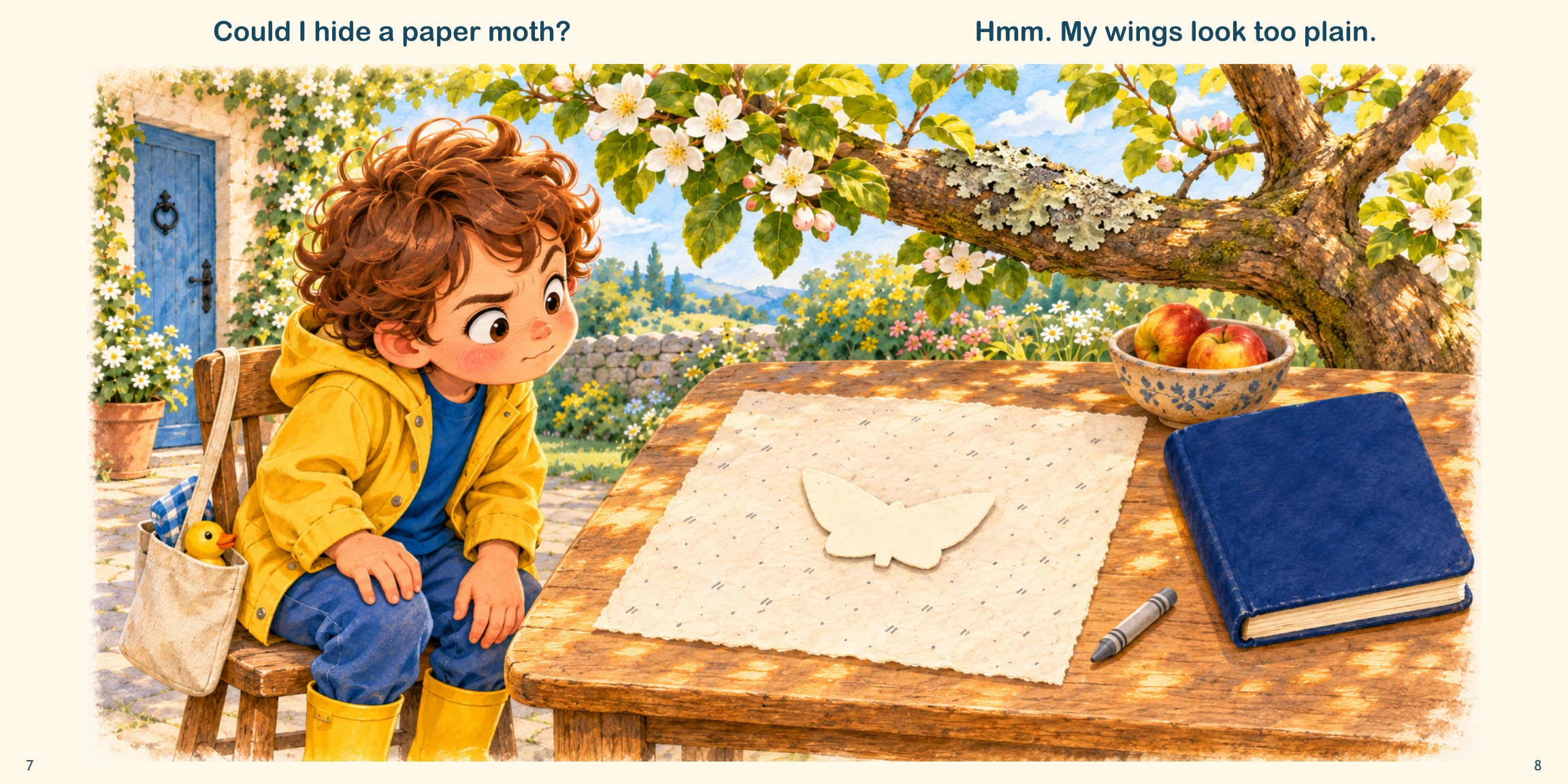
Could I hide a paper moth? Hmm. My wings look too plain.
Explore together · Making a model
A plain cream paper moth lies on a much larger flecked sheet. Vince studies it from the side. The empty shape interrupts the field of speckles. Vince can change it with his crayon.
Ask together: What could Vince add?
A dot and a dash
Pages 9–10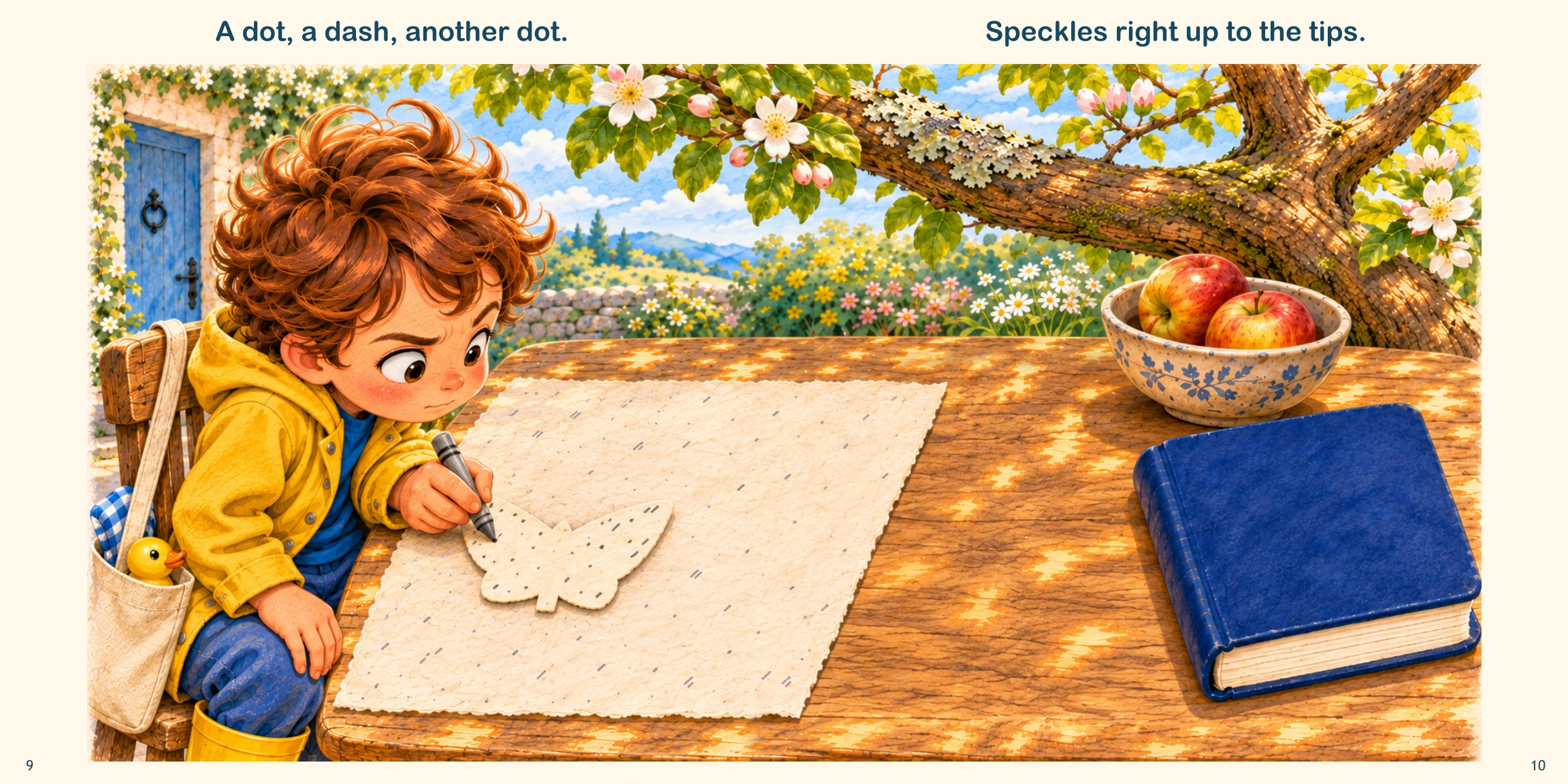
A dot, a dash, another dot. Speckles right up to the tips.
Explore together · Adding matching marks
Vince brings the tip of a gray crayon to one paper wing. Dots and short dashes reach toward both tips. Putting marks on the cutout makes it look more like the sheet underneath.
Ask together: Which marks on the wing look like the ones on the sheet?
The blue book
Pages 11–12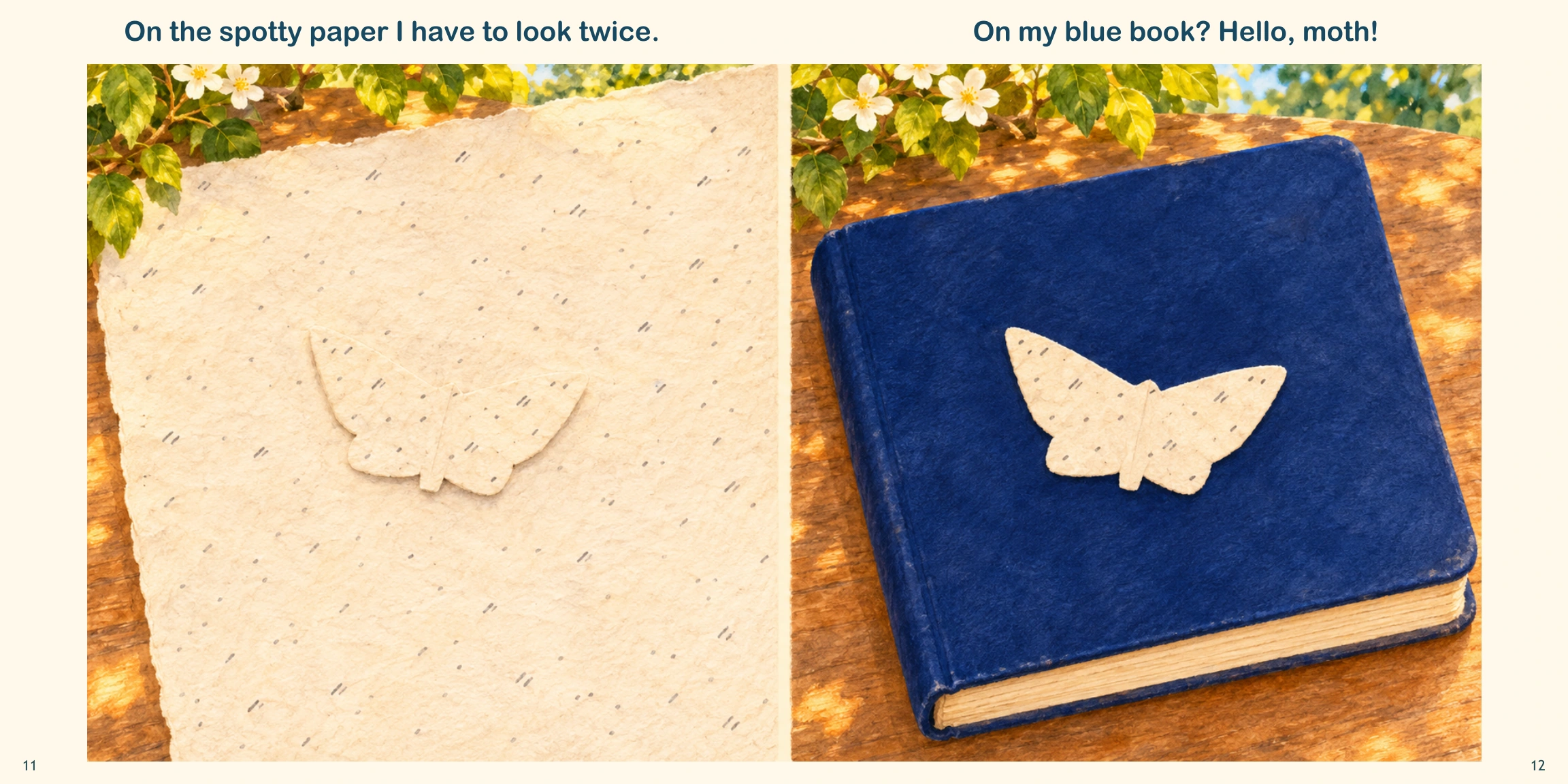
On the spotty paper I have to look twice. On my blue book? Hello, moth!
Explore together · Changing the background
The same speckled wing shape rests first on speckled paper and then on a navy notebook. The notebook provides a contrasting background, so the shape becomes easier to pick out.
Ask together: What stayed the same across the two pictures?
Back at the branch
Pages 13–14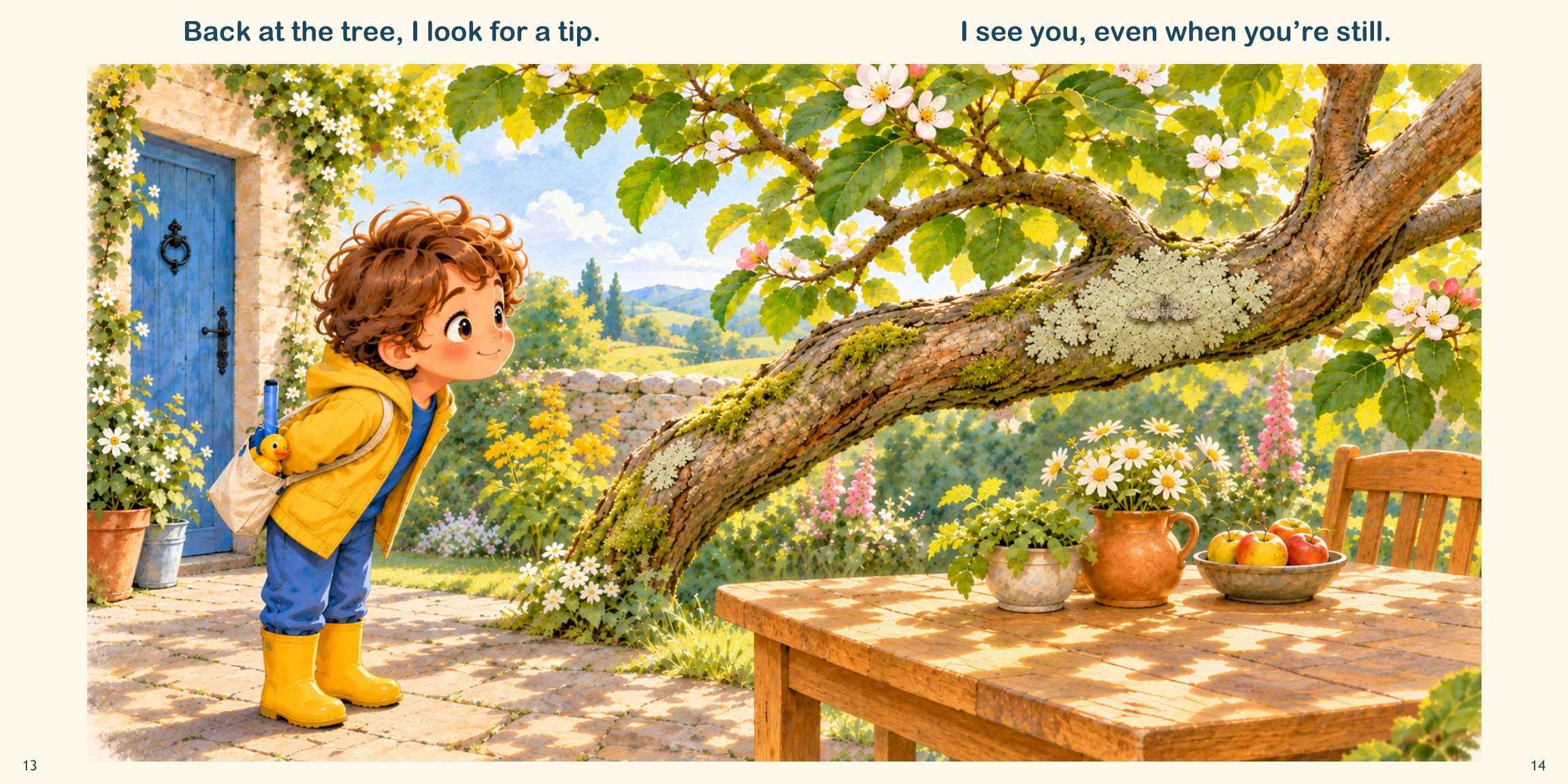
Back at the tree, I look for a tip. I see you, even when you’re still.
Explore together · Using a clue
Vince leans forward with his hands behind him. A little speckled moth rests by the fork of the branch. This time Vince knows to look for the wing tip, even when the moth is still.
Ask together: What helped you find it this time?
Wings in the notebook
Pages 15–16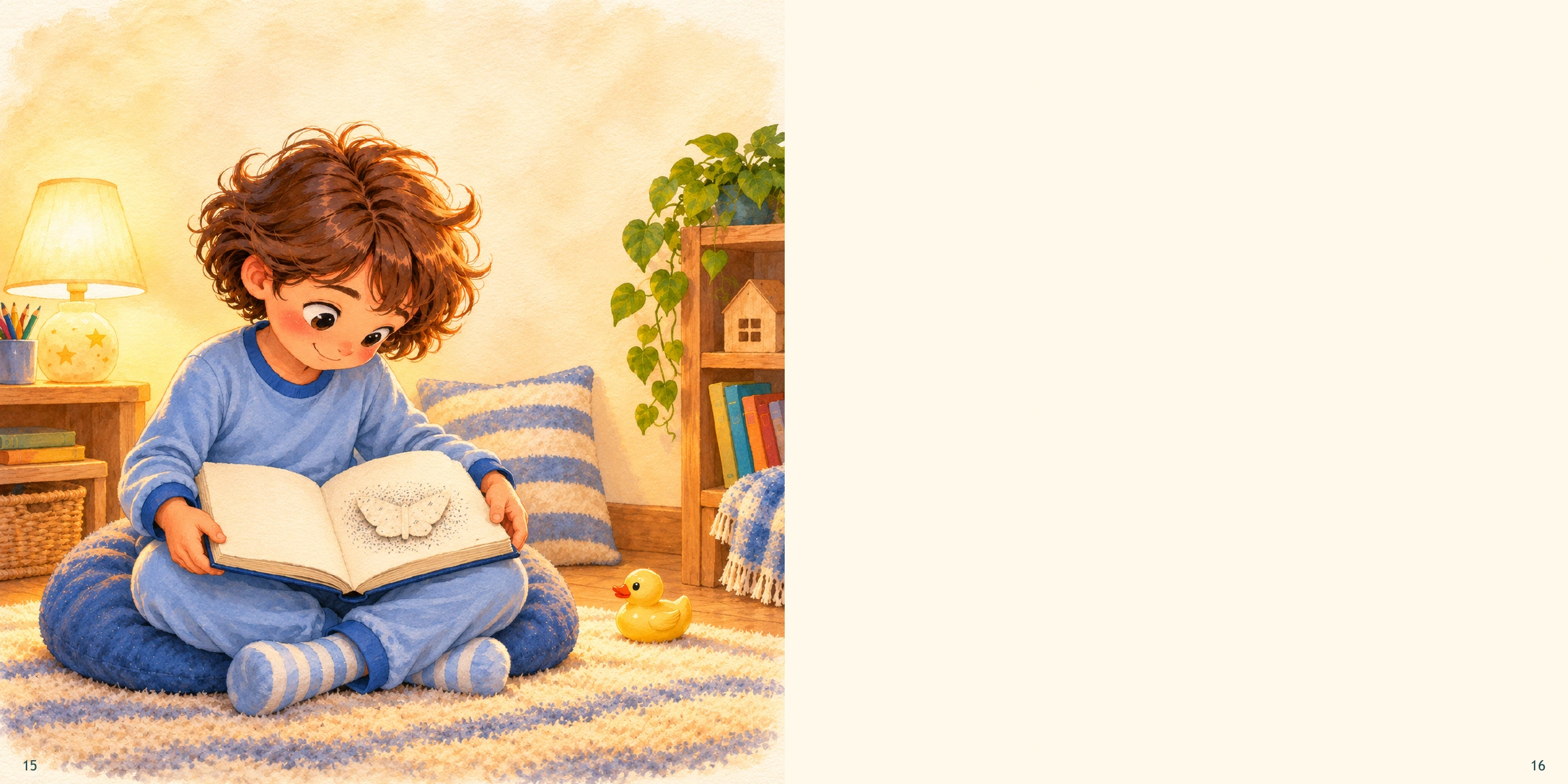
For grown-ups
Pages 17–18
For Grown-Ups Give the reader a moment to hunt along the branch before turning to the close-up. What catches your eye first? 1–6 Follow the flutter A moving shape can draw the eye against a still background. When this moth lands, its pale wings and dark flecks resemble the patch of lichen on the bark. You can look right past it. Can you find the little body between the wings? 7–12 Paper wings Vince takes one plain silhouette and gives it marks like the paper beneath it. On his solid blue book those same wings are much easier to pick out. The moth stays the same when Vince moves it. Which part of the paper moth did you see first? 13–16 A clue at the edge The little point Vince finds belongs to a wing. Matching the background can make an animal harder to see. A bit of outline, a body or a movement can still give it away. A bird’s view People and birds see different colours. Vince looks at leafy lichen. Researchers studied a kind that grows like a flat crust on bark. Using a model of bird vision, they found that pale peppered moths matched those crusts more closely than dark moths did. Make a little hiding game With a grown-up, cut a simple wing shape from scrap paper. Lay it on a patterned sheet and add marks that look like the ones around it. Try the same wings on a plain book. Switch roles and see which clues each of you finds. Science sources include Olivia Walton and Martin Stevens on peppered moths, and Joanna Hall and colleagues on motion and camouflage.
Open these pages in the readerSources and evidence
A moving shape can draw the eye against a still background.
Camouflage, detection and identification of moving targets
A flutter is one possible clue. Other movements in the background can change what draws the eye.
The pale mottled wings in Vince’s picture resemble the leafy lichen. In a separate bird-vision study, pale peppered moths matched crust-forming lichen better than dark moths did.
Avian vision models and field experiments determine the survival value of peppered moth camouflage
Vince looks with human eyes. Different kinds of lichen can look different to a bird even when their colours look similar to us.
A paper shape can be harder to pick out on a similar pattern than on a contrasting plain surface.
Camouflage, detection and identification of moving targets
Avian vision models and field experiments determine the survival value of peppered moth camouflage
Light, marks and the paper edge affect how easily the shape can be found.
A little bit of an outline or body can give a resting moth away.
Avian vision models and field experiments determine the survival value of peppered moth camouflage
Camouflage, detection and identification of moving targets
The edge is one clue in this particular picture. Camouflaged animals can still be found.
A story worth keeping?
Read it here as often as you like. The physical edition is coming soon.