THE COMPLETE BOOK · FREE TO READ
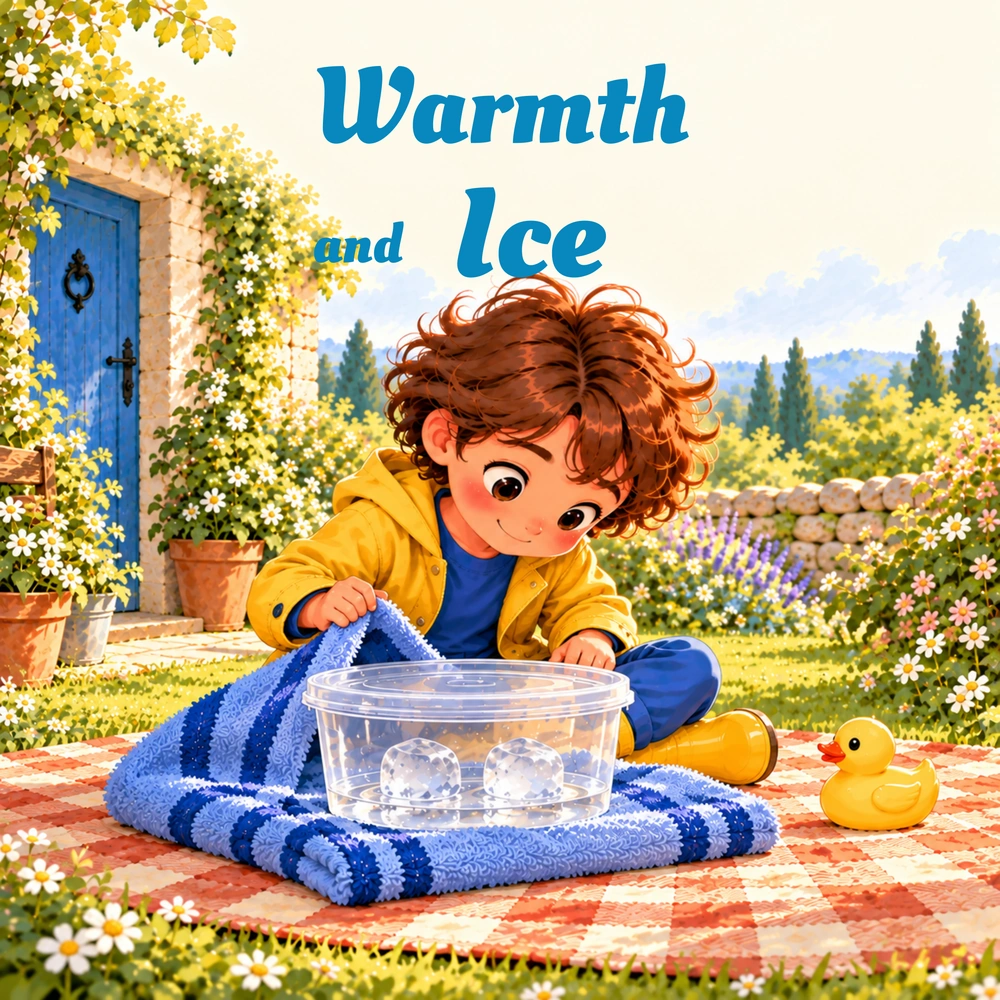
Warmth and Ice
Vince packs ice for a picnic, discovers a wet hand and tries a towel to help the ice last. Follow the same water as it melts, pours into round wells and becomes ice again the next morning.
Turn the pagesOr scroll to readIce for the picnic
Pages 1–2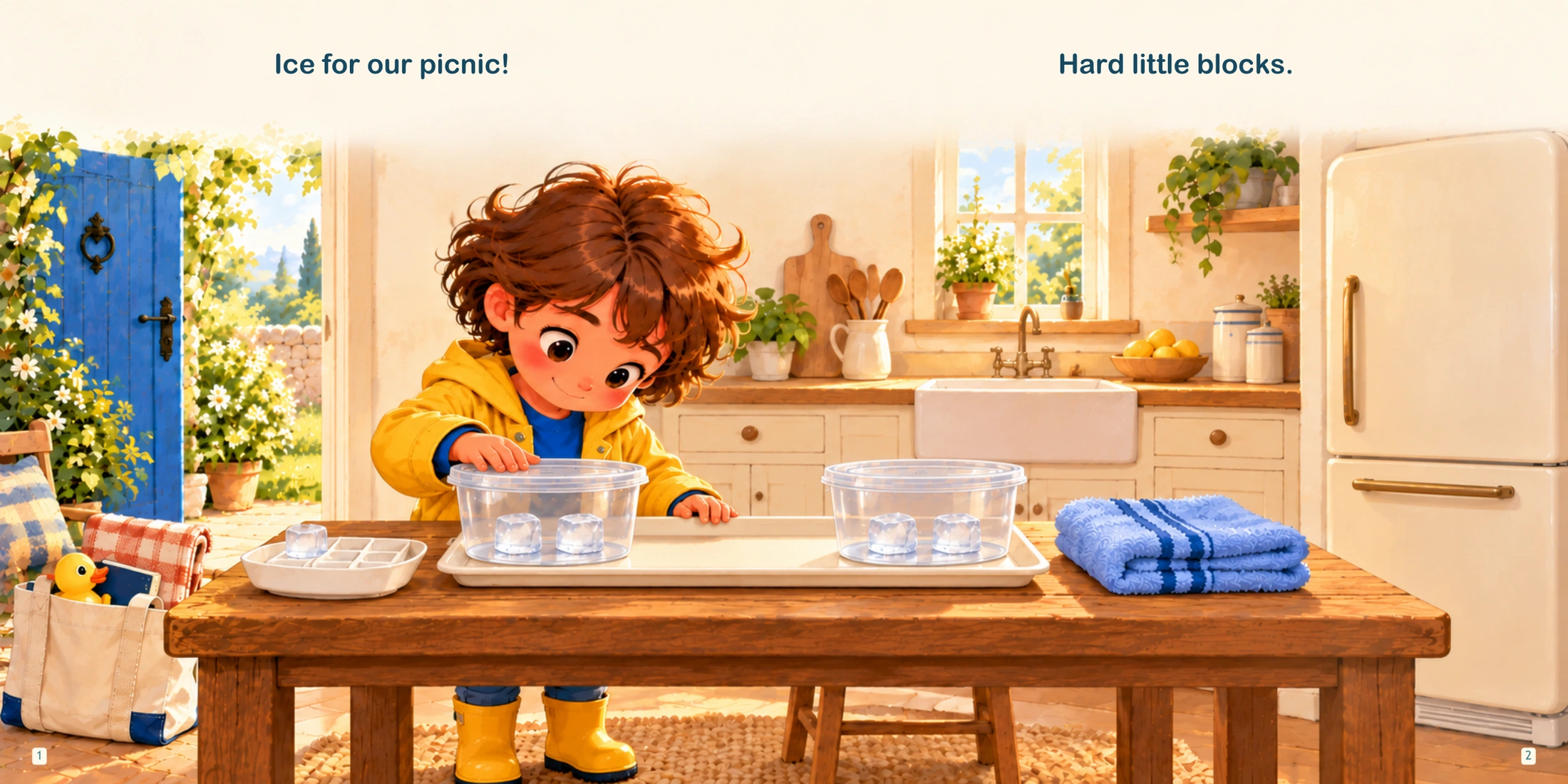
Ice for our picnic! Hard little blocks.
Explore together · Solid water keeps a shape
Vince packs two matching closed tubs, with two ice cubes in each. A spare cube sits separately in the ice tray. Ice is solid water. The pieces keep their own block shapes while frozen, unlike the liquid water Vince will pour later.
Ask together: What shapes can you see in the tubs?
A cold cube, a wet hand
Pages 3–4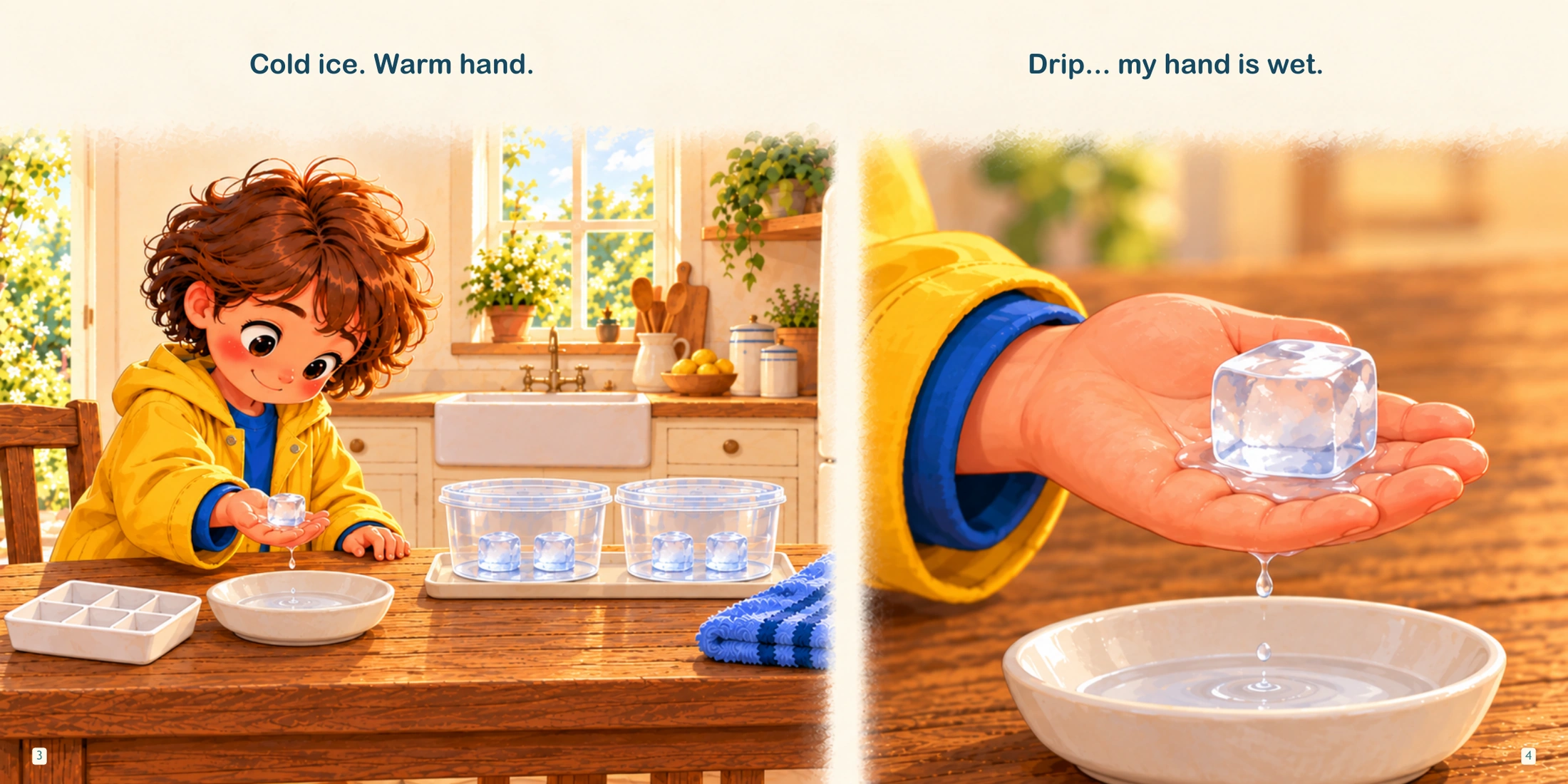
Cold ice. Warm hand. Drip... my hand is wet.
Explore together · Warm contact and melting
Vince holds the spare cube over a dish. A closer view shows meltwater on his palm and a drop falling below it. Energy transfers from his warmer hand to the colder ice, helping it melt while his hand cools. Warmer air and surfaces can melt ice too.
Ask together: Where is the water on Vince’s hand coming from?
Out to the garden
Pages 5–6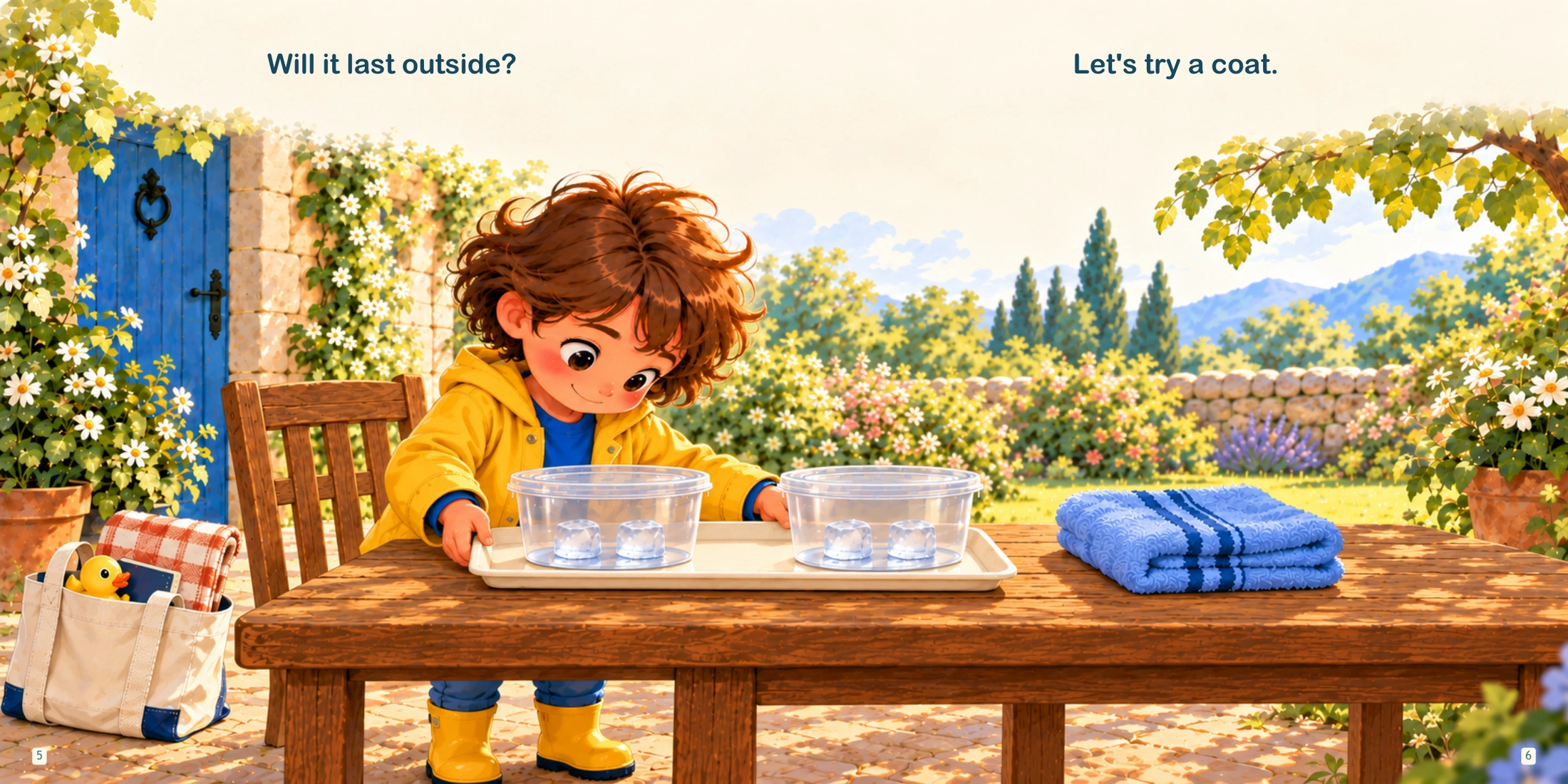
Will it last outside? Let's try a coat.
Explore together · A question to try
Vince brings both tubs together to the garden table. A folded towel lies beside them. His wet-hand discovery gives him a reason to wonder whether the picnic ice will last. He is about to try wrapping one tub; this scene does not yet show a result.
Ask together: What do you think Vince could try with the towel?
A coat for one tub
Pages 7–8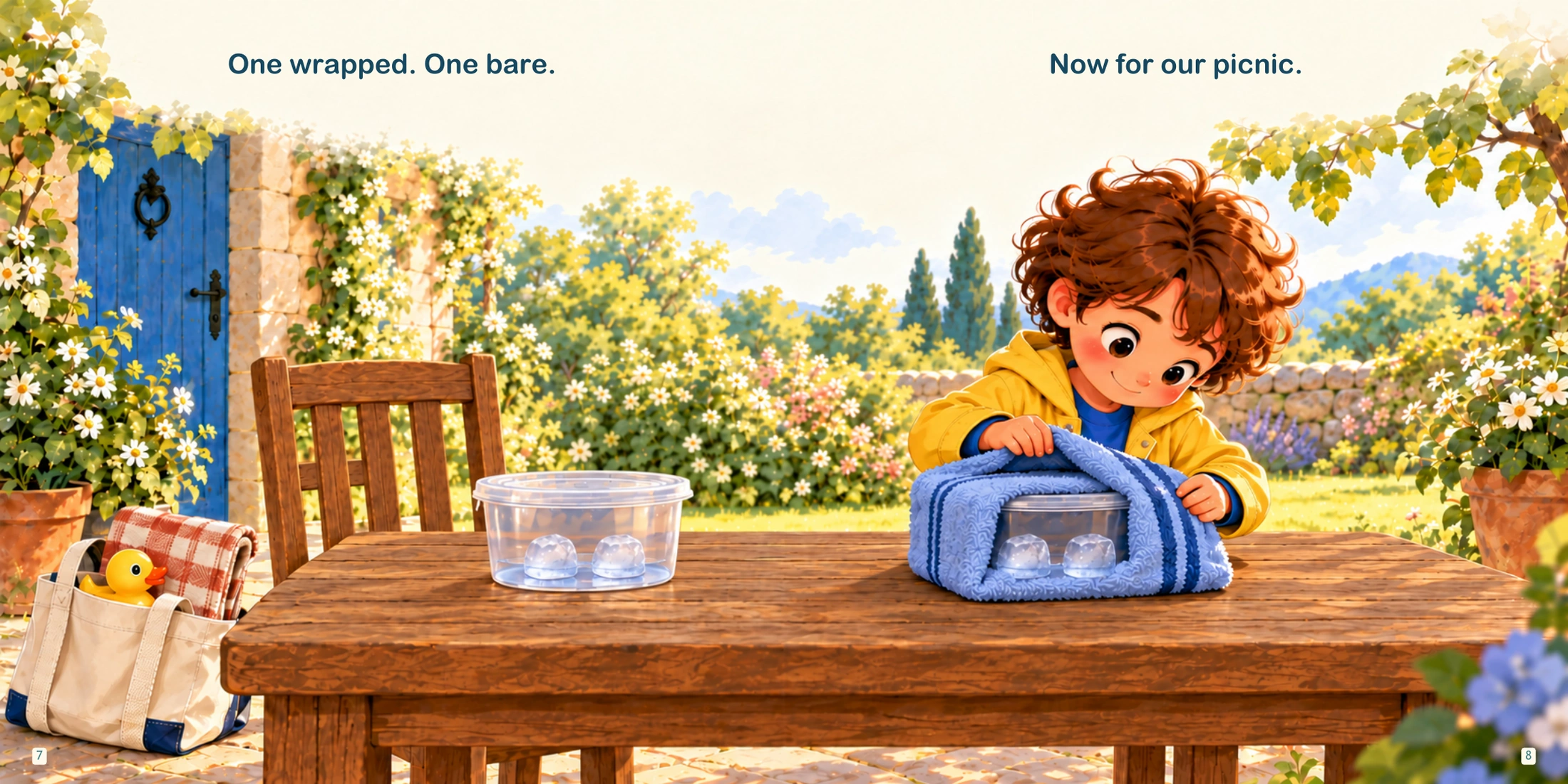
One wrapped. One bare. Now for our picnic.
Explore together · Comparing wrapped and bare
Vince folds a thick towel beneath, around and over one closed tub. The matching tub beside it stays bare. A thick, dry wrap can slow energy transfer from warmer surroundings to colder ice. Keeping the starting ice, tubs, place and waiting time alike makes the wrap the important difference to compare.
Ask together: What is the same about the two tubs, and what has Vince changed?
Time to peek
Pages 9–10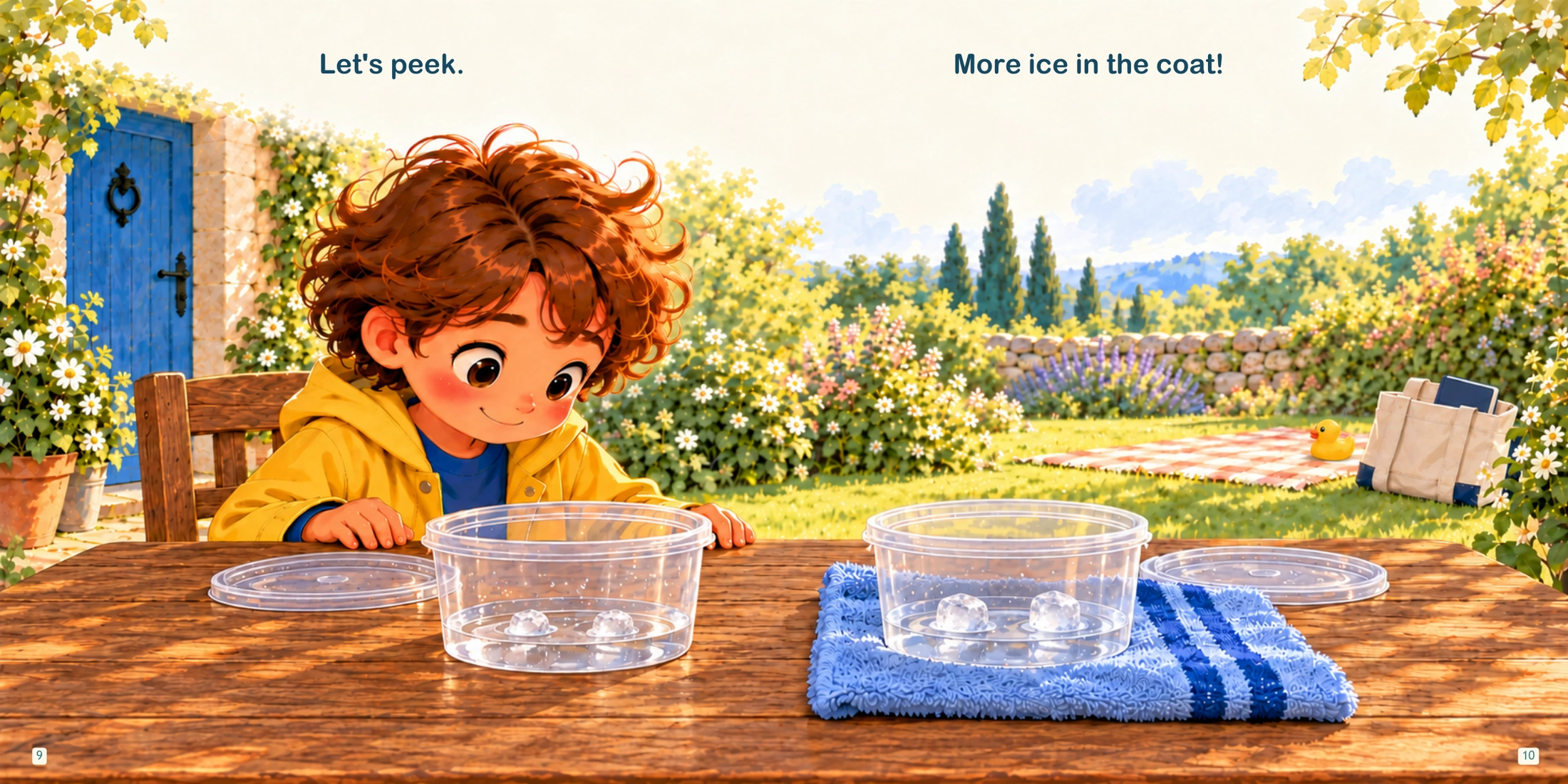
Let's peek. More ice in the coat!
Explore together · Insulation slows melting
After setting out the picnic, Vince opens both tubs. Some ice has melted in each, but larger pieces remain in the tub he wrapped. The wrap has slowed melting; it has not made new ice or stopped all change. These pictured amounts illustrate the difference rather than report a measured trial.
Ask together: What differences can you see inside the two tubs?
Water that pours
Pages 11–12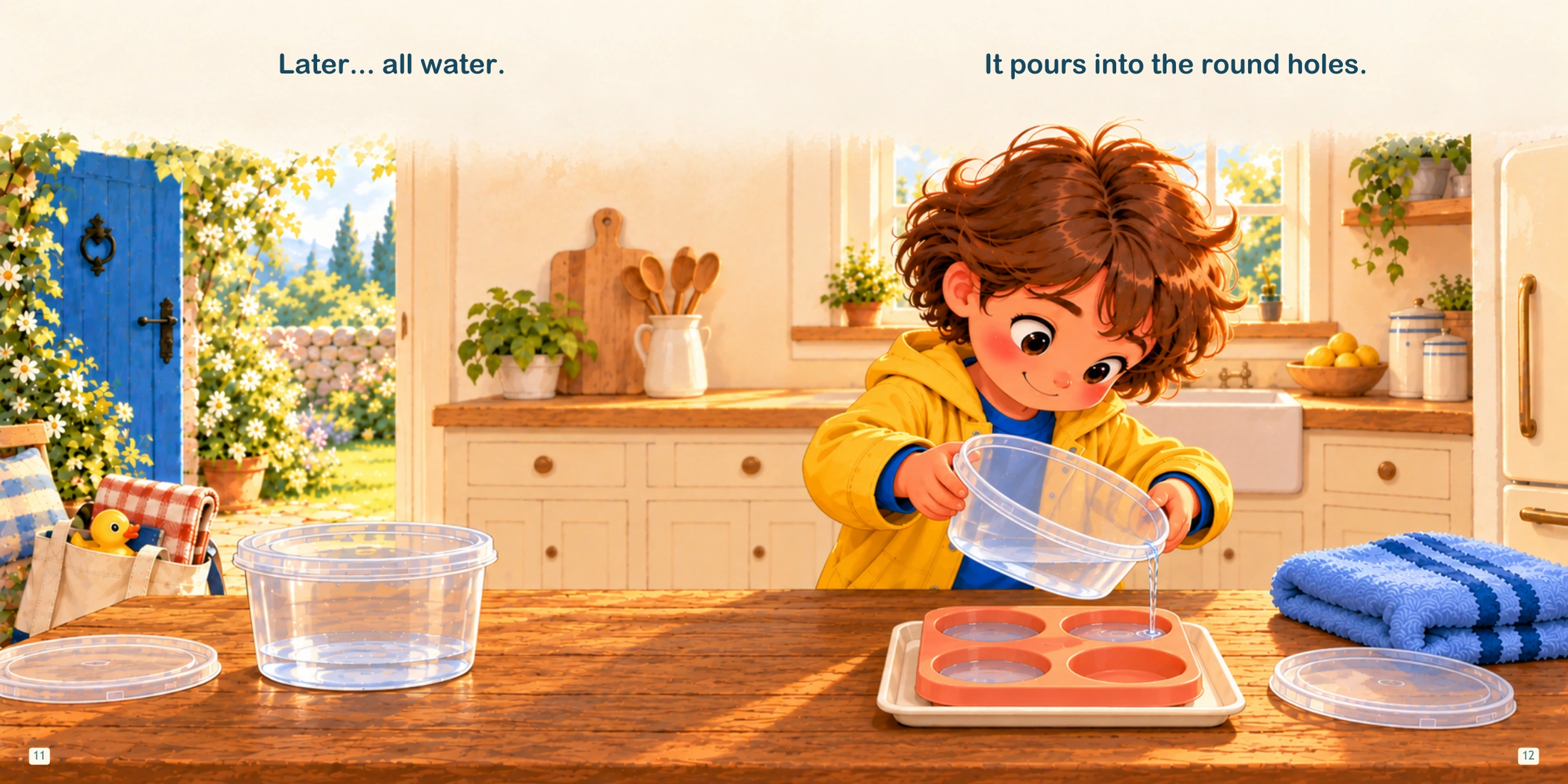
Later... all water. It pours into the round holes.
Explore together · Liquid flow and a new shape
Later, the ice in both tubs has melted. Vince pours water from the formerly wrapped tub into the round wells of a mould. The wrap did not keep the ice forever. It is still the same water, now a liquid that flows into the lower part of each well.
Ask together: What can this water do that the hard blocks could not?
Into the freezer
Pages 13–14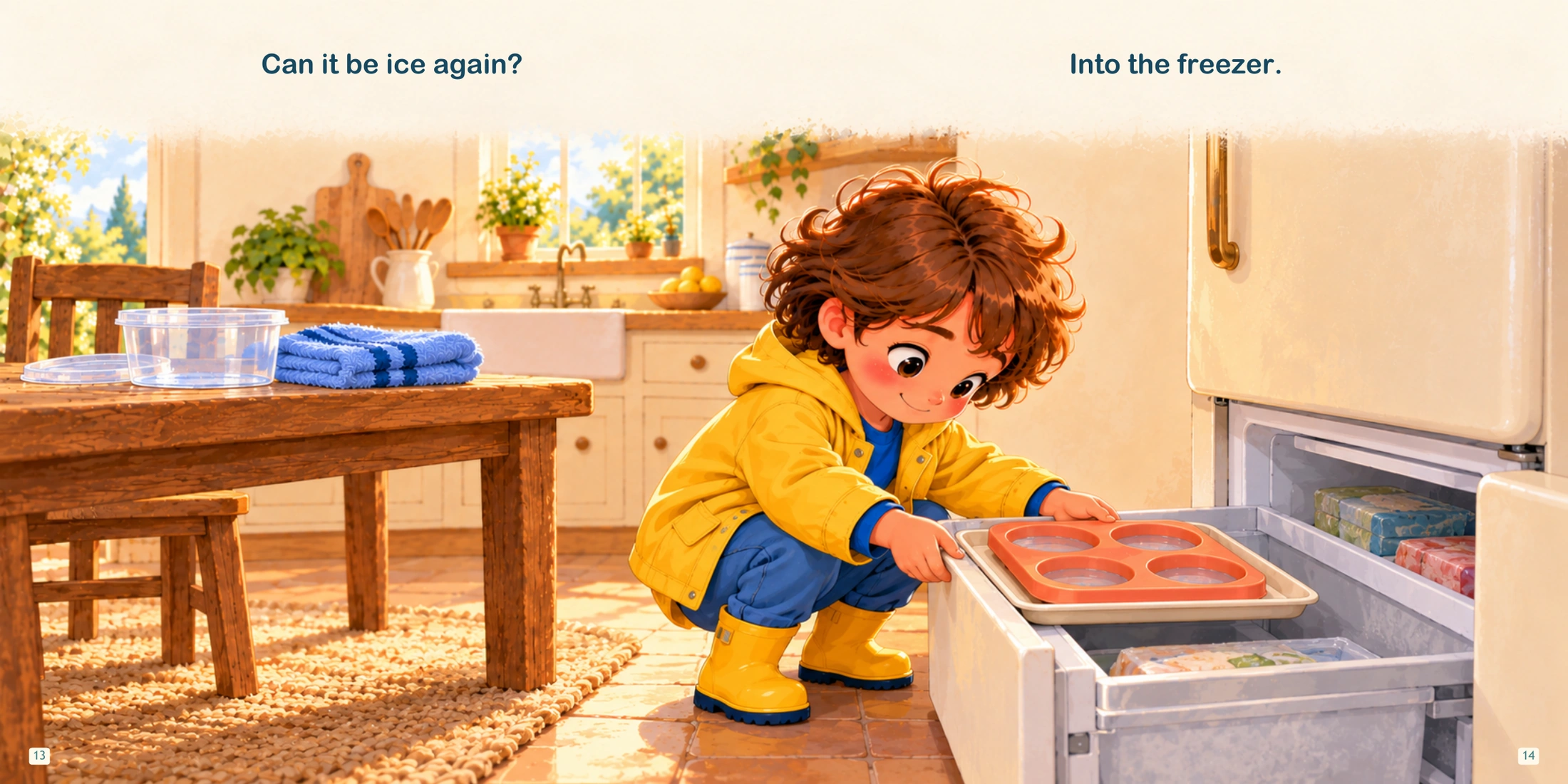
Can it be ice again? Into the freezer.
Explore together · Trying to make ice again
Vince slides the mould into the lower freezer drawer. Its four round wells contain shallow water with space below the rims. A working freezer removes energy from the water. If the water cools enough, it can freeze; the change needs time. The space above it leaves room for expansion.
Ask together: What do you think Vince will find when he comes back?
Round ice next morning
Pages 15–16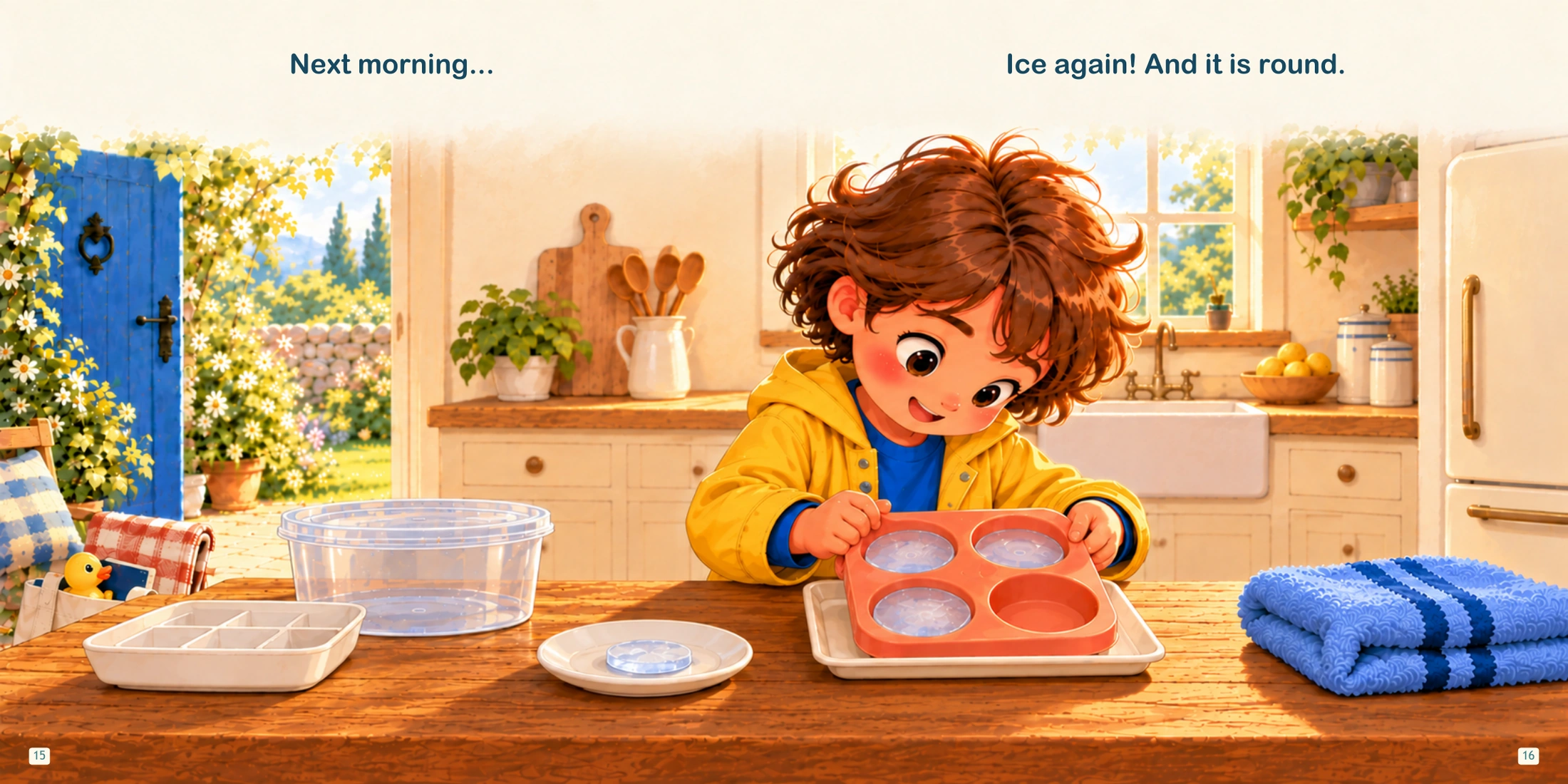
Next morning... Ice again! And it is round.
Explore together · Freezing into a new shape
The next morning, three round pieces of ice remain in the mould and one rests on a saucer beside it. One well is empty. The meltwater has become solid again. The new pieces have the round outlines of the wells, and the piece on the saucer keeps that shape. It is still water, even though its form and shape have changed.
Ask together: How is this ice like the ice at the start, and how is it different?
A quiet notebook
Pages 17–18
For grown-ups
Pages 19–20
For Grown-Ups Vince tries to keep ice for a picnic. Its changes lead him from a wet hand to a surprising next morning. Water changes its form Ice is solid water. It keeps its shape while it stays frozen. Liquid water flows and takes the shape of the space it fills. In a cold enough freezer, energy leaves the water and it can become solid again. The new ice takes the shape of the tray wells. Melting and freezing change its form; it is still water. A warm hand, a cold piece of ice Energy transfers from the warmer hand to the colder ice. This transfer is called heat. It can melt ice while the hand cools. Warm air and surfaces can also transfer energy to ice. The drops in Vince's palm are meltwater. Heat is a transfer of energy, not a visible substance. A wrap slows the change A thick, dry wrap slows heat transfer to colder ice. Fabric and pockets of still air provide insulation. The wrap does not make cold or prevent melting forever. Vince starts with equal ice in matching closed tubs, keeps them together in the shade and wraps only one. The spare hand cube stays out of both tubs. Notice together With an adult, briefly touch ice over a dish, then set it down. Watch water collect. Pour some water into a different-shaped freezer-safe mould, leaving room below its rim, and check after it has frozen. Keep comparison ice separate from food and drinks. The amounts and waiting times are illustrative, not measurements or promised results. Science behind the story American Chemical Society: Changing State - Melting; Changing State - Freezing; Be Cool... with Insulation! University of Illinois Physics Van; U.S. Department of Energy. Full checked passages and links accompany the editable book.
Open these pages in the readerSources and evidence
Solid ice keeps a shape of its own; when it melts, the same material is liquid water that can flow and take the shape of the lower part of its container.
Lesson 2.5: Changing State—Melting
Key Concepts; Engage, Step 2: Where do you think the energy came from to melt the ice?; Explore, Step 3: How could you set up an experiment to test your method?: Melting changes a solid into liquid. Air and a supporting surface can supply energy to colder ice. The lesson suggests hand contact as a way to warm ice, and recommends similar starting pieces when comparing treatments.Taking the Shape of the Container
Answer by Tamara, paragraphs on ice and liquids, published 22 October 2007: The explanation contrasts stiff solid ice with flowing liquid water. Gravity draws the water downward while the vessel confines it. This supports pouring meltwater into new wells and later observing solid pieces whose outer shapes come from those wells.Liquid water flows into the lower part of a container; it does not fill all the available space as a gas would.
Ice keeps its own shape while frozen, but that shape gradually changes as it melts. The material is still water.
Energy transfers from Vince's warmer hand and warmer surroundings toward colder ice, helping it melt. His hand loses energy during contact, so the ice can feel cold while his palm becomes wet.
Lesson 2.5: Changing State—Melting
Key Concepts; Engage, Step 2: Where do you think the energy came from to melt the ice?; Explore, Step 3: How could you set up an experiment to test your method?: Melting changes a solid into liquid. Air and a supporting surface can supply energy to colder ice. The lesson suggests hand contact as a way to warm ice, and recommends similar starting pieces when comparing treatments.This scene shows brief contact and meltwater, not a timed test of how quickly a hand melts ice.
Warmer air and surfaces can also transfer energy to ice. Touching it is not necessary for melting.
Heat is a transfer of energy, not a visible substance. The visible drops are melted ice.
The handled cube stays separate from the ice used for the wrapped-versus-bare comparison.
A sufficiently thick dry insulating wrap around a closed ice container can slow transfer from warmer surroundings, leaving more ice after the same interval than an otherwise matching bare container.
Activity – Be Cool... with Insulation!
Materials; Procedure, steps 1–3; How does it work?; Safety Suggestions: The activity compares ice inside covered containers with and without insulating material; socks are an example. It calls for approximately equal starting ice. Warmer surroundings supply energy to the ice. Materials from the activity should not be consumed.The pictured amounts are illustrative, not measured results.
A thick, dry wrap can slow heat transfer to colder ice. It does not make cold or prevent melting forever.
The towel stays outside the closed tub, separate from the meltwater.
After the meltwater is cooled sufficiently in a working freezer, it can become solid ice again; round mould wells give the new solid pieces round outer shapes.
Lesson 2.4: Changing State—Freezing
Key Concepts; Engage, Step 1: Teacher Preparation; Explain, steps 4–5: Water becomes solid ice when cooled sufficiently. A teacher demonstration places a small quantity of water in a freezer overnight and observes it the next day. Freezing expands the water, so an open flexible tray with headroom is appropriate. The source does not promise a universal freezing time.Taking the Shape of the Container
Answer by Tamara, paragraphs on ice and liquids, published 22 October 2007: The explanation contrasts stiff solid ice with flowing liquid water. Gravity draws the water downward while the vessel confines it. This supports pouring meltwater into new wells and later observing solid pieces whose outer shapes come from those wells.Pump Up Your Savings with Heat Pumps
How They Work, opening paragraph: Refrigeration uses electrical work to move thermal energy out of the cooled space. Combined with the freezing source, this supports explaining that the freezer removes energy from the water; it does not add a substance called cold.A freezer removes energy from water; it does not add a substance called cold.
Freezing depends on the water amount, starting temperature and freezer conditions. The next-morning scene does not promise a universal freezing time.
Water expands as it freezes, so the partly filled, freezer-safe mould leaves room below its rims.
The open round wells produce shallow round pieces, not spheres. Freezing changes the water’s form; it does not restore the original square cubes.
This exploratory meltwater and refrozen ice are kept separate from food and drinks.
A useful wrapped-versus-bare comparison changes the wrap while keeping the other important starting conditions alike.
Lesson 2.5: Changing State—Melting
Key Concepts; Engage, Step 2: Where do you think the energy came from to melt the ice?; Explore, Step 3: How could you set up an experiment to test your method?: Melting changes a solid into liquid. Air and a supporting surface can supply energy to colder ice. The lesson suggests hand contact as a way to warm ice, and recommends similar starting pieces when comparing treatments.Activity – Be Cool... with Insulation!
Materials; Procedure, steps 1–3; How does it work?; Safety Suggestions: The activity compares ice inside covered containers with and without insulating material; socks are an example. It calls for approximately equal starting ice. Warmer surroundings supply energy to the ice. Materials from the activity should not be consumed.A useful comparison begins with similar ice pieces at the same temperature in matching closed tubs, kept together for the same interval. Only one tub is wrapped.
The illustrations show a qualitative comparison, not a measured experiment or a guarantee that every wrap will perform the same way.
A story worth keeping?
Read it here as often as you like. The physical edition is coming soon.