THE COMPLETE BOOK · FREE TO READ
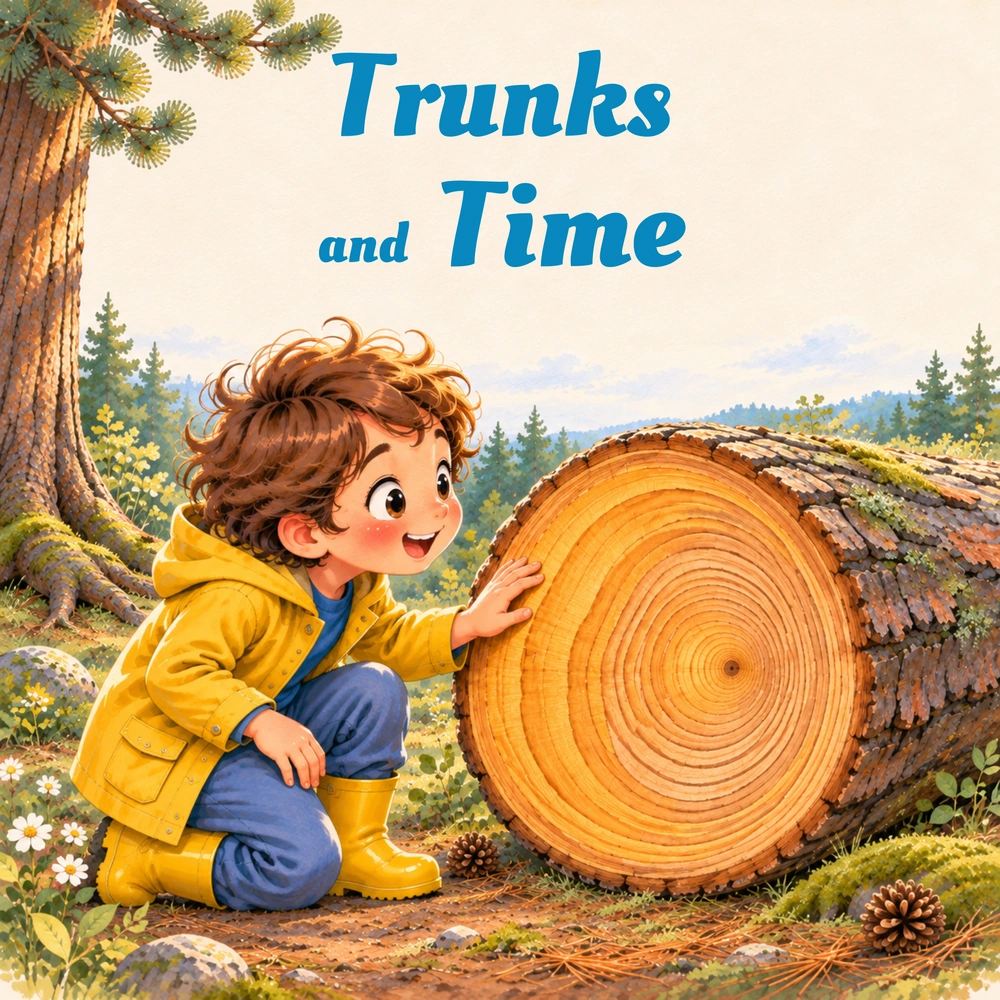
Trunks and Time
Vince’s hands won’t meet around a pine. On a nearby log, he follows one ring around and then traces across the years, until he can picture the little trunk his arms might once have held.
Turn the pagesOr scroll to readA hug that won’t reach
Pages 1–2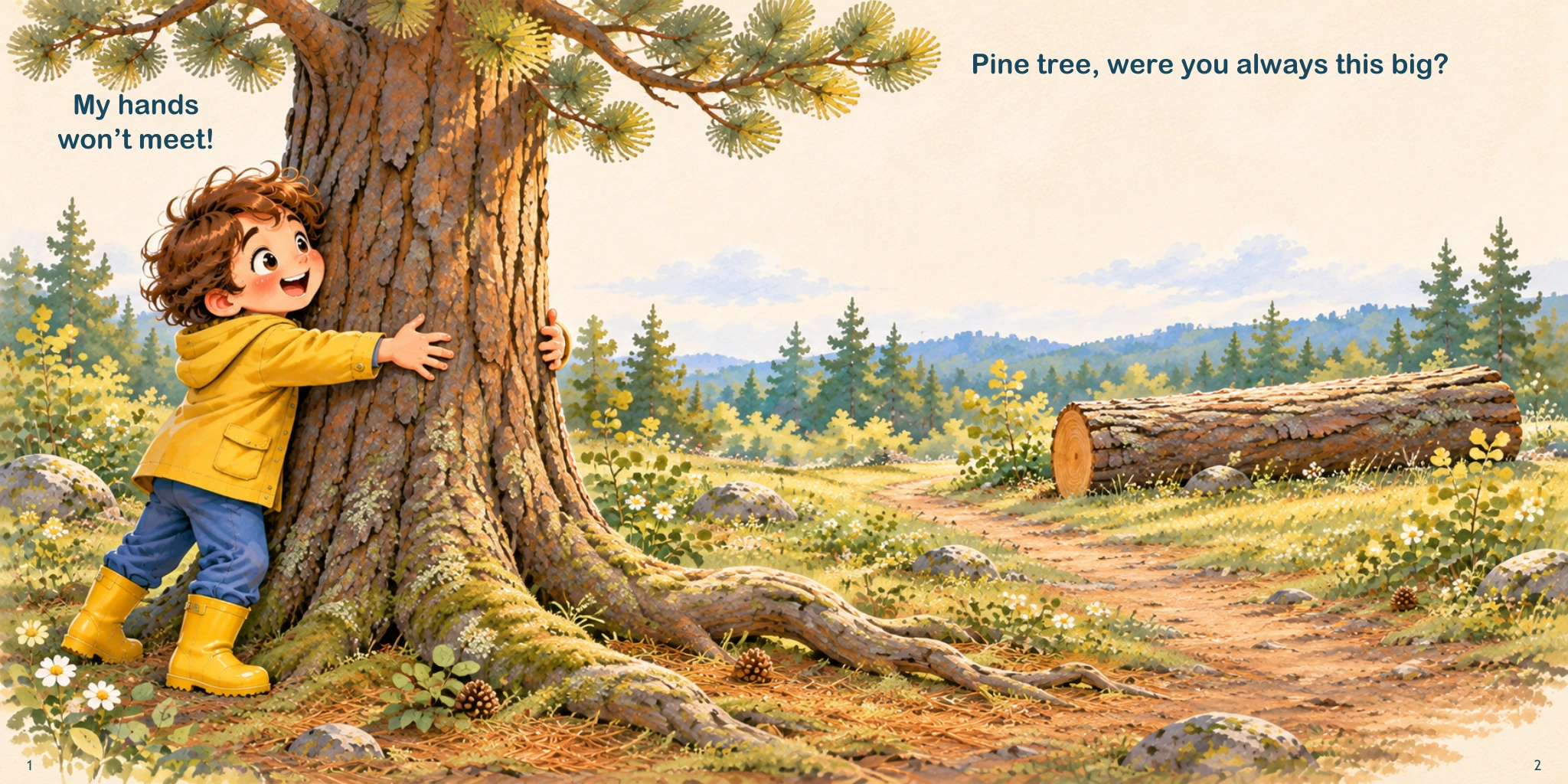
My hands won’t meet! Pine tree, were you always this big?
Explore together · Trunk width
Vince stretches his arms around a pine. His fingers fall short. Another pine log lies farther along the path. His arms give him a way to compare the trunk he can see today with a smaller one he imagines.
Ask together: What would it take for his hands to meet?
An end full of rings
Pages 3–4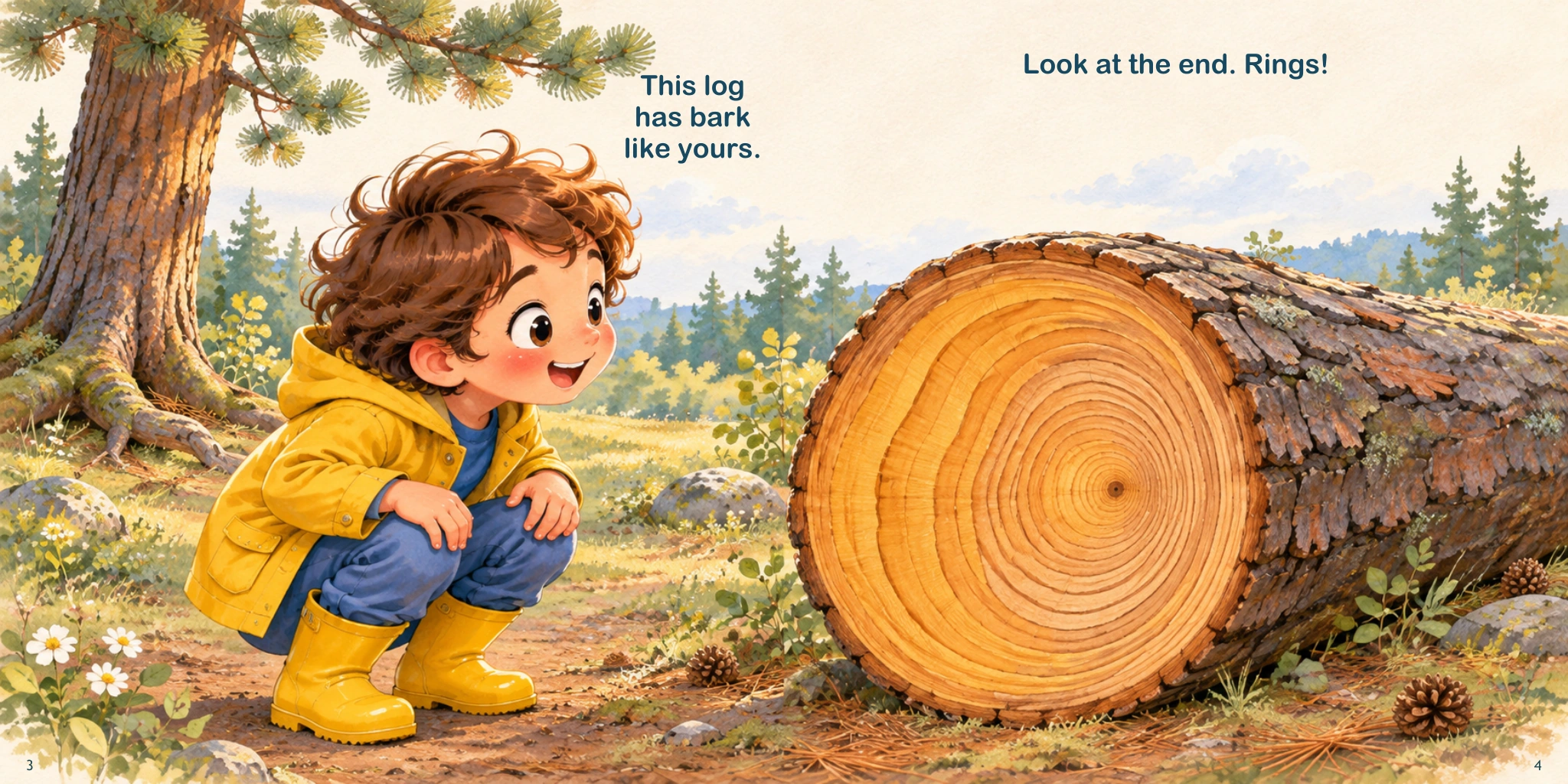
This log has bark like yours. Look at the end. Rings!
Explore together · A cross section
Vince crouches by the log. Its rough bark surrounds a smooth golden end with rings inside one another. A cut across a trunk exposes layers of wood that the bark usually hides.
Ask together: Where can you find the smallest loop?
Around an old edge
Pages 5–6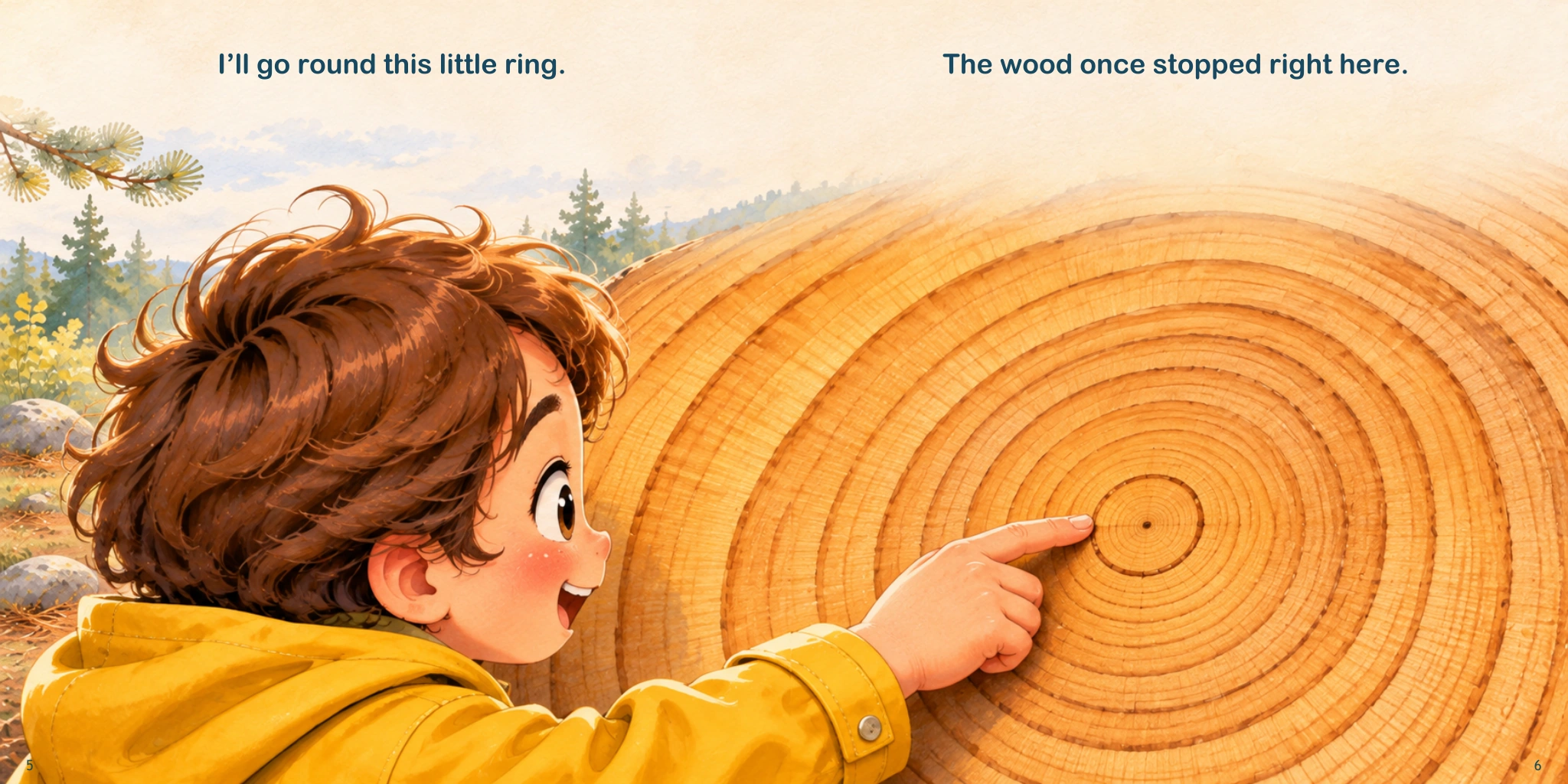
I’ll go round this little ring. The wood once stopped right here.
Explore together · Older wood inside
Vince puts his finger on a small ring near the middle. Larger rings surround it. The outer edge of an old ring shows how far the wood reached at that height before later layers grew around it.
Ask together: Where does your finger come back to if it follows that edge?
Across a year
Pages 7–8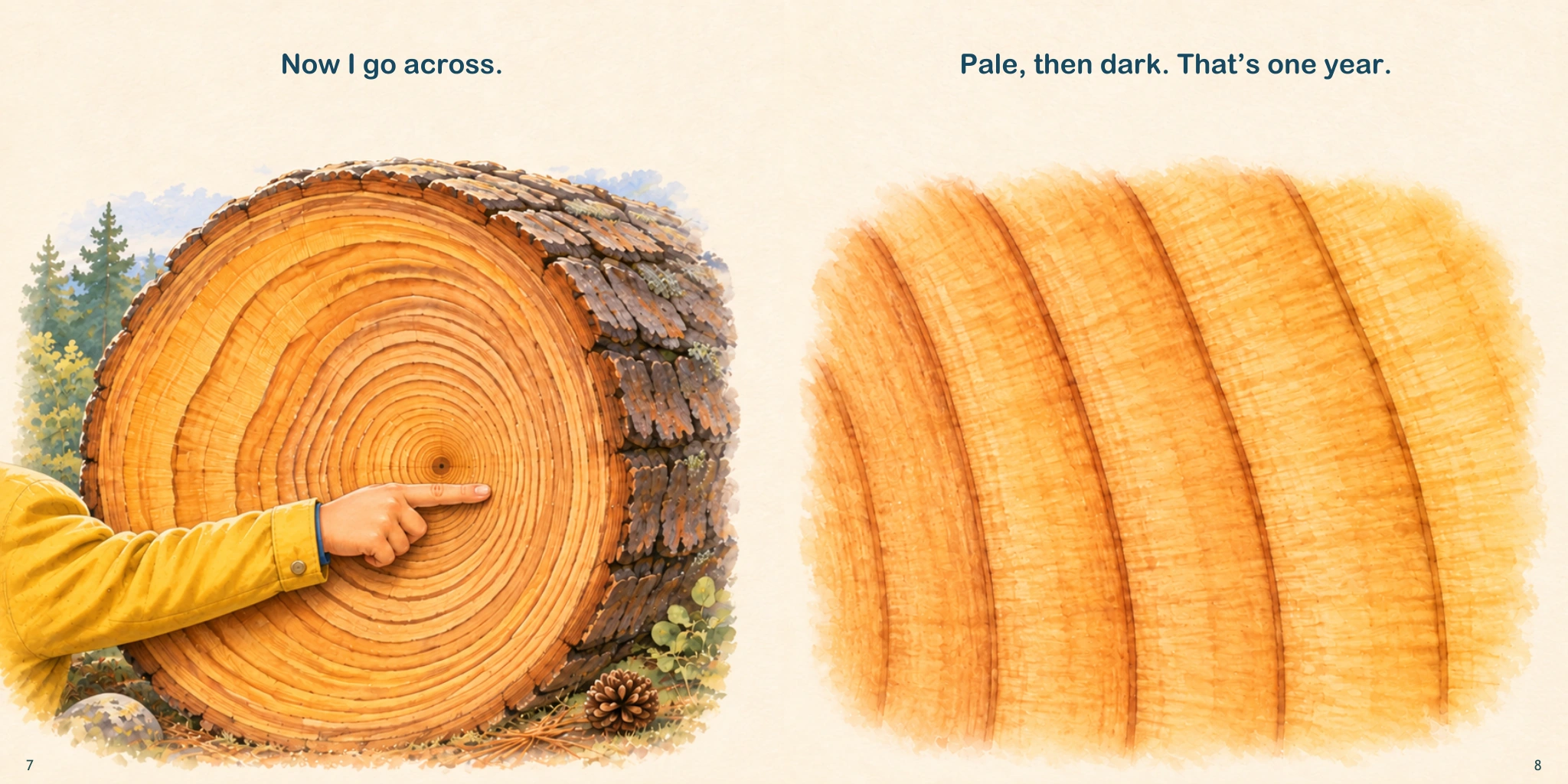
Now I go across. Pale, then dark. That’s one year.
Explore together · Two parts of an annual ring
Vince points across the rings. A separate close view shows pale wood ending in dark edges. In this pine, lighter wood from earlier in the growing season and darker wood from later in the season make up one annual ring.
Ask together: Which way would you move your finger to cross into another year?
A year as thin as a sliver
Pages 9–10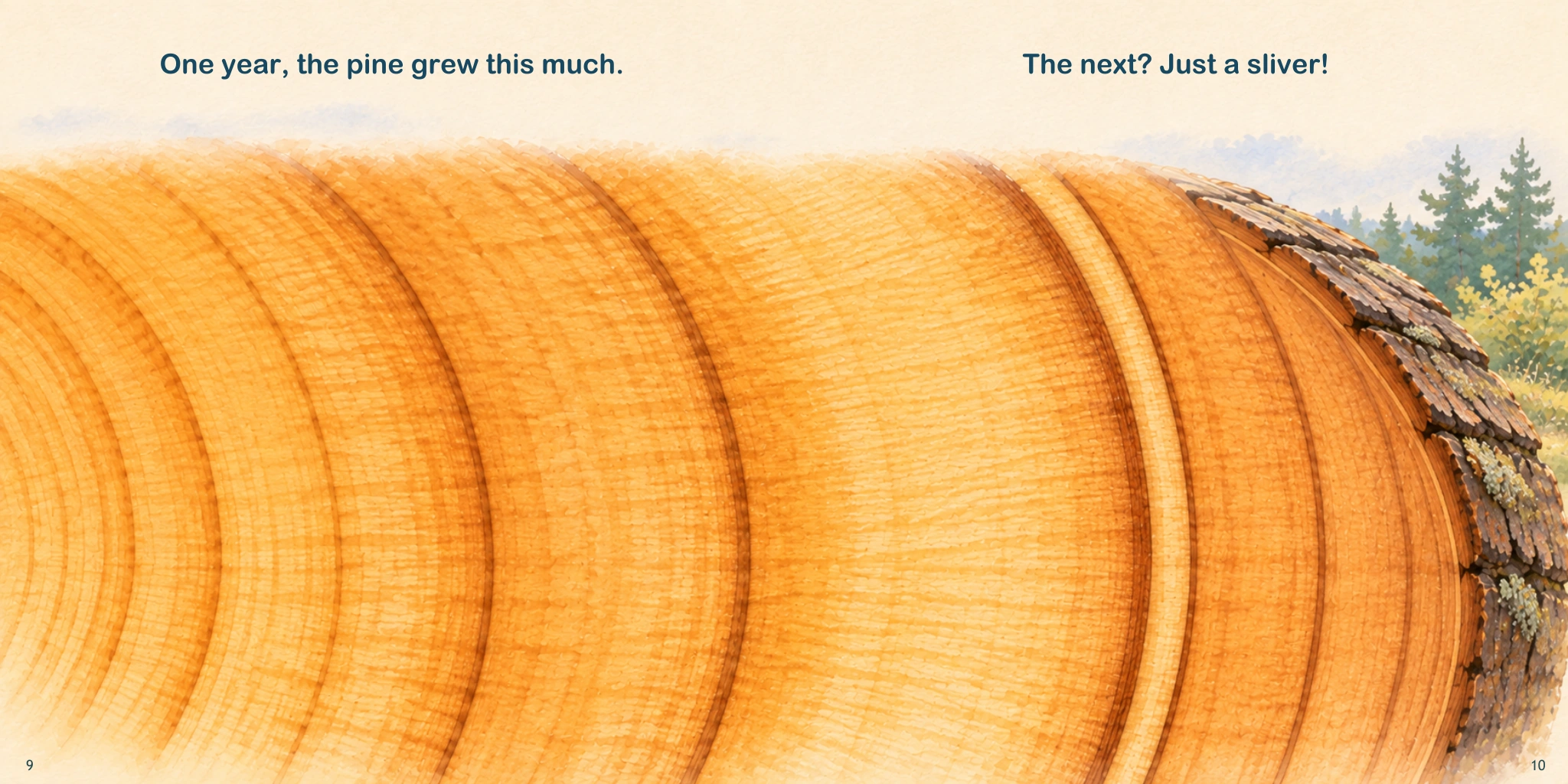
One year, the pine grew this much. The next? Just a sliver!
Explore together · Growth varies
A wide sweep of wood sits beside a narrow strip between two dark edges. A wider ring means more thickness was added in that spot during one growing season. The width alone cannot tell us what caused the difference.
Ask together: Where do two dark edges come especially close together?
Where the new wood grew
Pages 11–12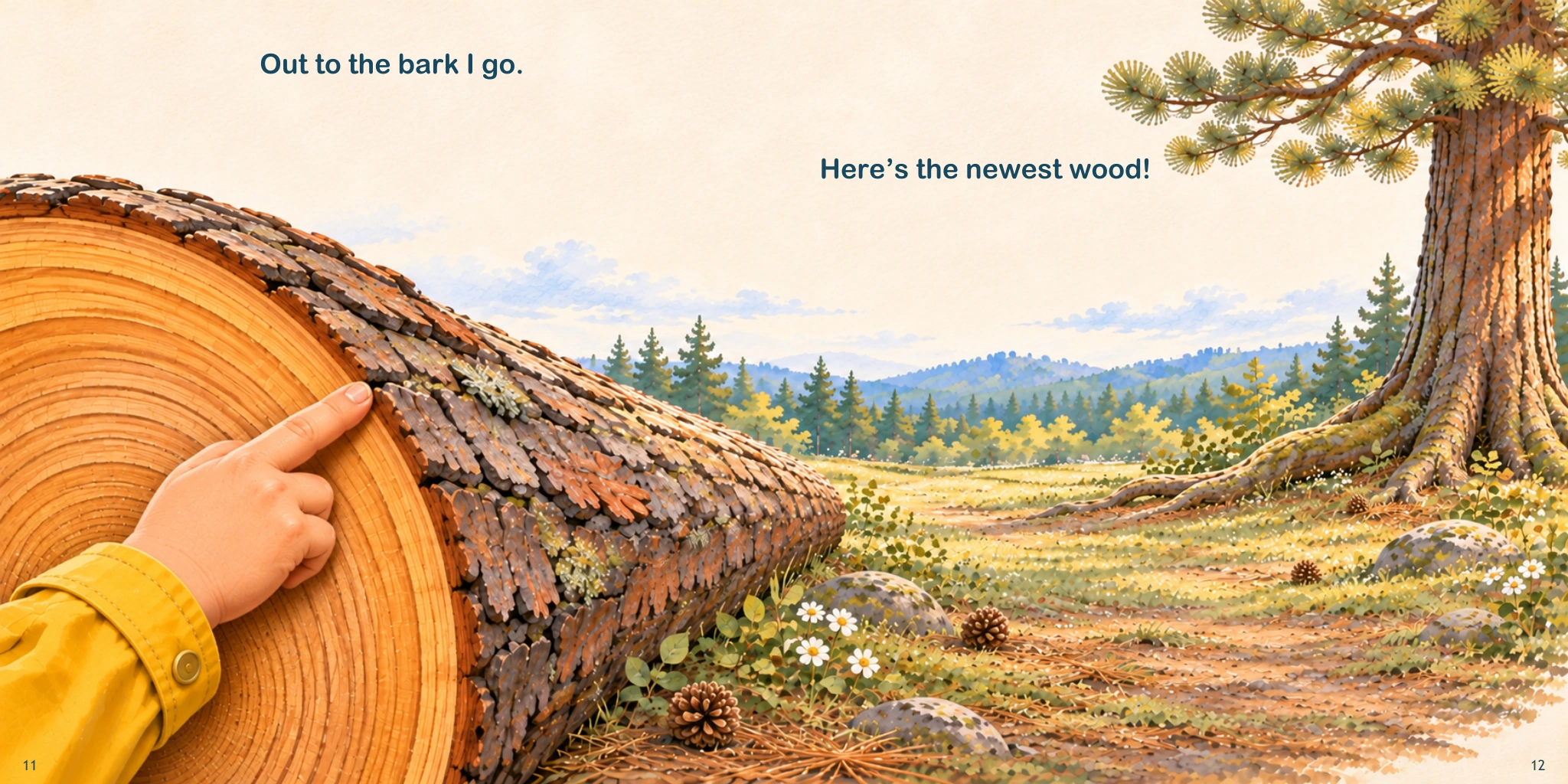
Out to the bark I go. Here’s the newest wood!
Explore together · Newest wood by the bark
Vince’s fingertip reaches the rim where the golden wood meets the scaly bark. An upright tree stands across the clearing. As a trunk thickens, new wood grows around older wood, just inside the bark.
Ask together: Where would you look for the most recently formed wood on the log?
A little hug
Pages 13–14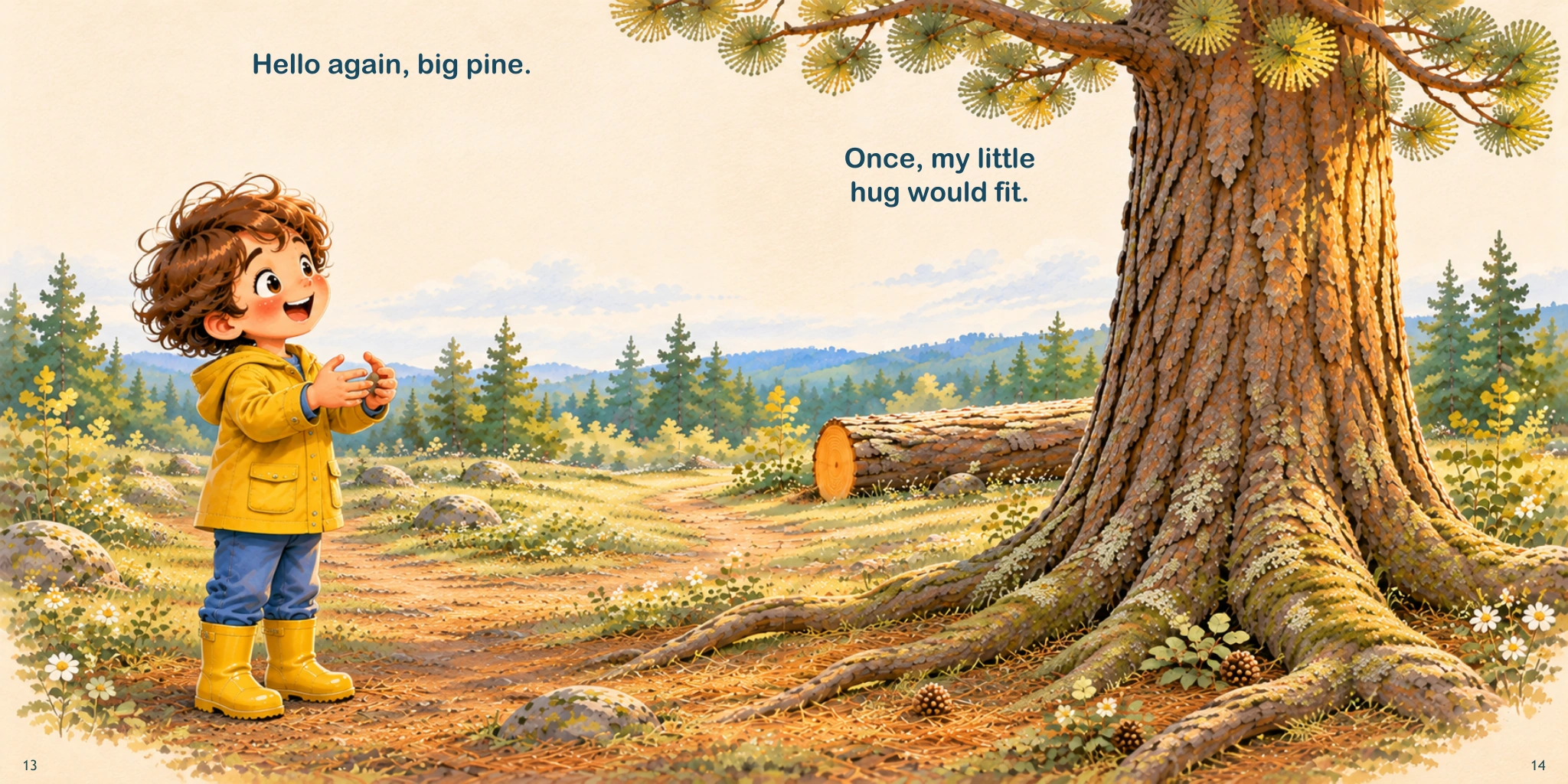
Hello again, big pine. Once, my little hug would fit.
Explore together · Using an observation to imagine the past
Vince stands beside the big pine with his arms around a small space in front of him. The log helps him imagine how narrow the standing trunk once was. Its older wood is still inside.
Ask together: How has his hug changed since the first page?
One loop inside another
Pages 15–16
For grown-ups
Pages 17–18
For Grown-Ups Vince asks a question with his arms. The end of a different pine gives him a way to look back through the wood. 1–6 A smaller trunk inside On the cut end, follow an inner ring all the way around. Its outer edge shows how wide the wood reached at that height long ago. New wood grew around it, just beneath the bark. Where would your fingers meet around a small ring? 7–8 Turn your finger Follow one ring around, then trace across the rings toward the bark. In this pine, a ring begins with pale wood and ends with darker wood. Together they usually mark one year’s growth. Which way takes you from older wood to newer wood? 9–12 A wide year and a thin one Compare neighbouring rings along the same path from the middle. A wide ring means the pine added more thickness there that year. Water, light and other conditions affect growth. One ring alone cannot tell you what the weather was. 13–16 Another kind of hug The standing pine hides its rings under bark. Vince can imagine a narrower trunk inside. Counting visible rings estimates years of growth at the height of a cut. A ring can be faint, missing or look doubled. Give a pencil tree room to grow Draw a little loop. Add a new loop around it. Leave a wide space one time and a narrow space the next. Let a finger follow the first loop again. Where is it now? Explore further with the U.S. Geological Survey, NOAA’s tree-ring data bank and the National Institute of Standards and Technology.
Open these pages in the readerSources and evidence
As a pine thickens, newer wood surrounds older wood just beneath the bark.
Tree Rings: Timekeepers of the Past
An old boundary marks the former extent of wood at that height. Bark covered the wood at the time.
In this temperate pine, lighter earlywood and its darker latewood form one annual ring.
Tree Rings: Timekeepers of the Past
Description of International Tree Ring Data Bank (ITRDB) Data Files and Procedures
Some rings are faint, partly missing or look doubled. Tree species and growing conditions influence the pattern.
The width of a ring shows how much thickness the tree added there in one growing season.
Description of International Tree Ring Data Bank (ITRDB) Data Files and Procedures
Tree Rings: Timekeepers of the Past
Compare whole rings on one radius at the same scale. One width cannot identify the weather on its own.
An exposed end can show growth rings. A count estimates years of growth at the height of the cut.
Tree Rings: Timekeepers of the Past
How Do You Measure the Age of a Tree?
An intact standing trunk hides its rings under bark. Use the page or an already exposed cross section.
A story worth keeping?
Read it here as often as you like. The physical edition is coming soon.