THE COMPLETE BOOK · FREE TO READ
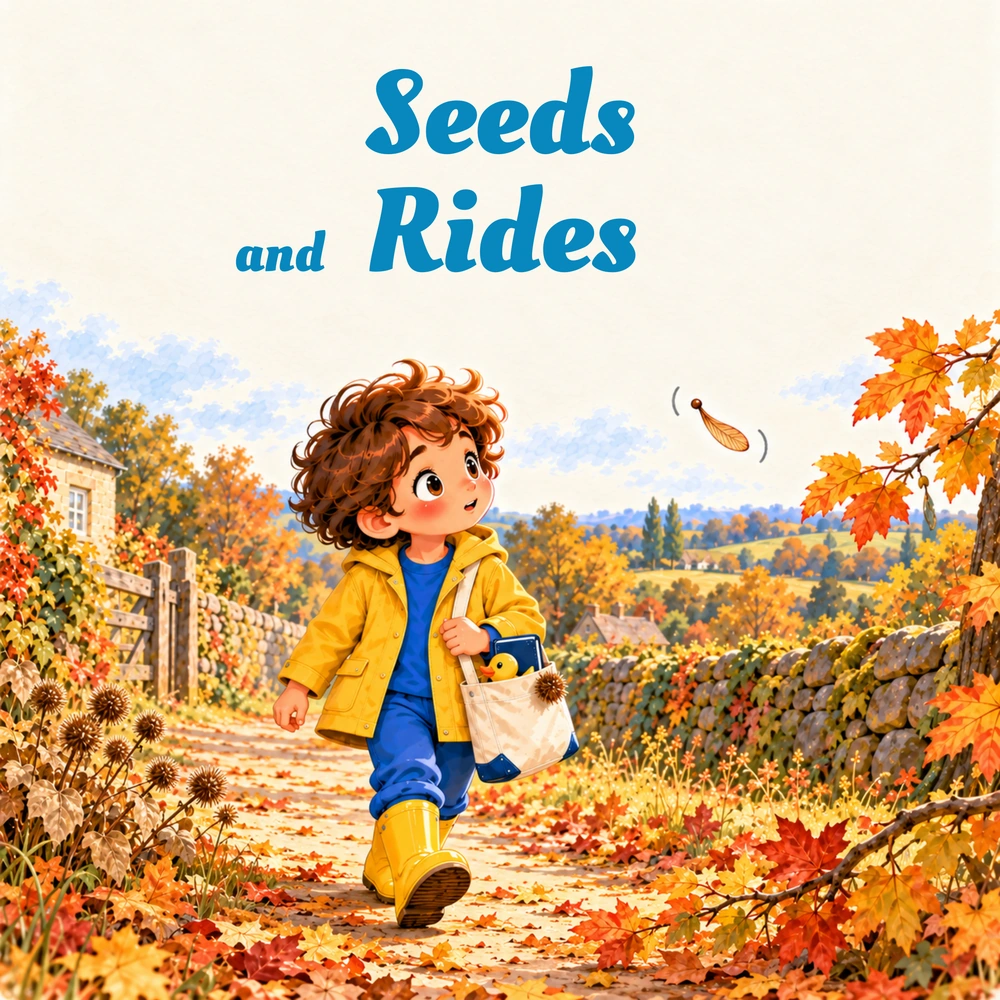
Seeds and Rides
A prickly passenger catches on Vince’s bag. On his walk, he follows winged maple fruits and fluffy dandelion travellers, then discovers who has ridden all the way home.
Turn the pagesOr scroll to readA prickly passenger
Pages 1–2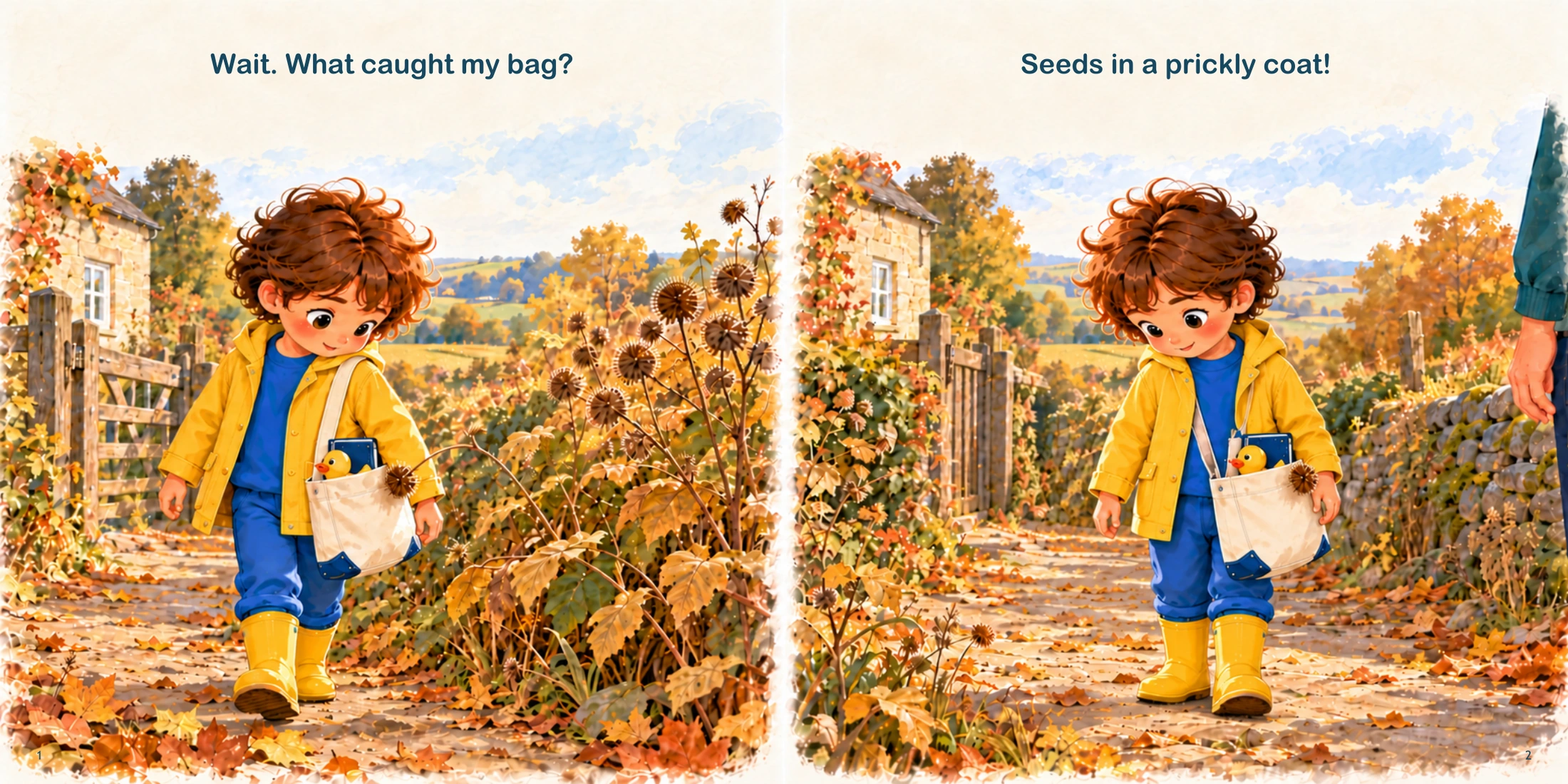
Wait. What caught my bag? Seeds in a prickly coat!
Explore together · Seeds can move with an outside carrier.
Vince’s bag brushes dry burdock heads. One brown burr catches near the bag’s seam. A burdock burr carries several fruits with seeds inside. Its bracts have hooked tips that can catch fibres or fur.
Ask together: What caught on Vince’s bag?
Little hooks
Pages 3–4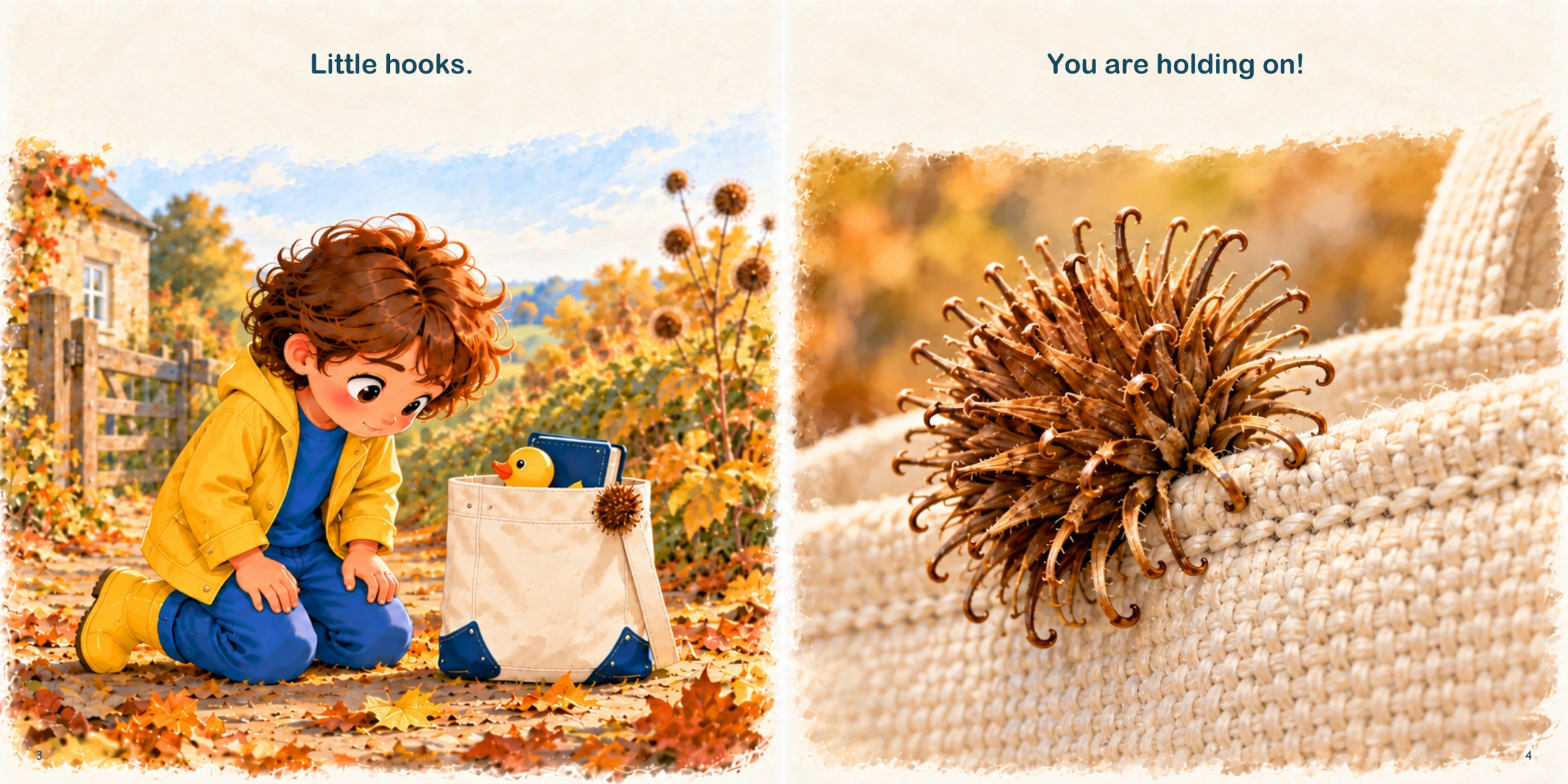
Little hooks. You are holding on!
Explore together · Shape and contact explain attachment.
A closer view shows curved hook tips catching loops in the cream fabric. The burr is held by hooks caught in the cloth, not by glue. How well it catches depends on both surfaces.
Ask together: Where do the hooks meet the cloth?
A ride and a twirl
Pages 5–6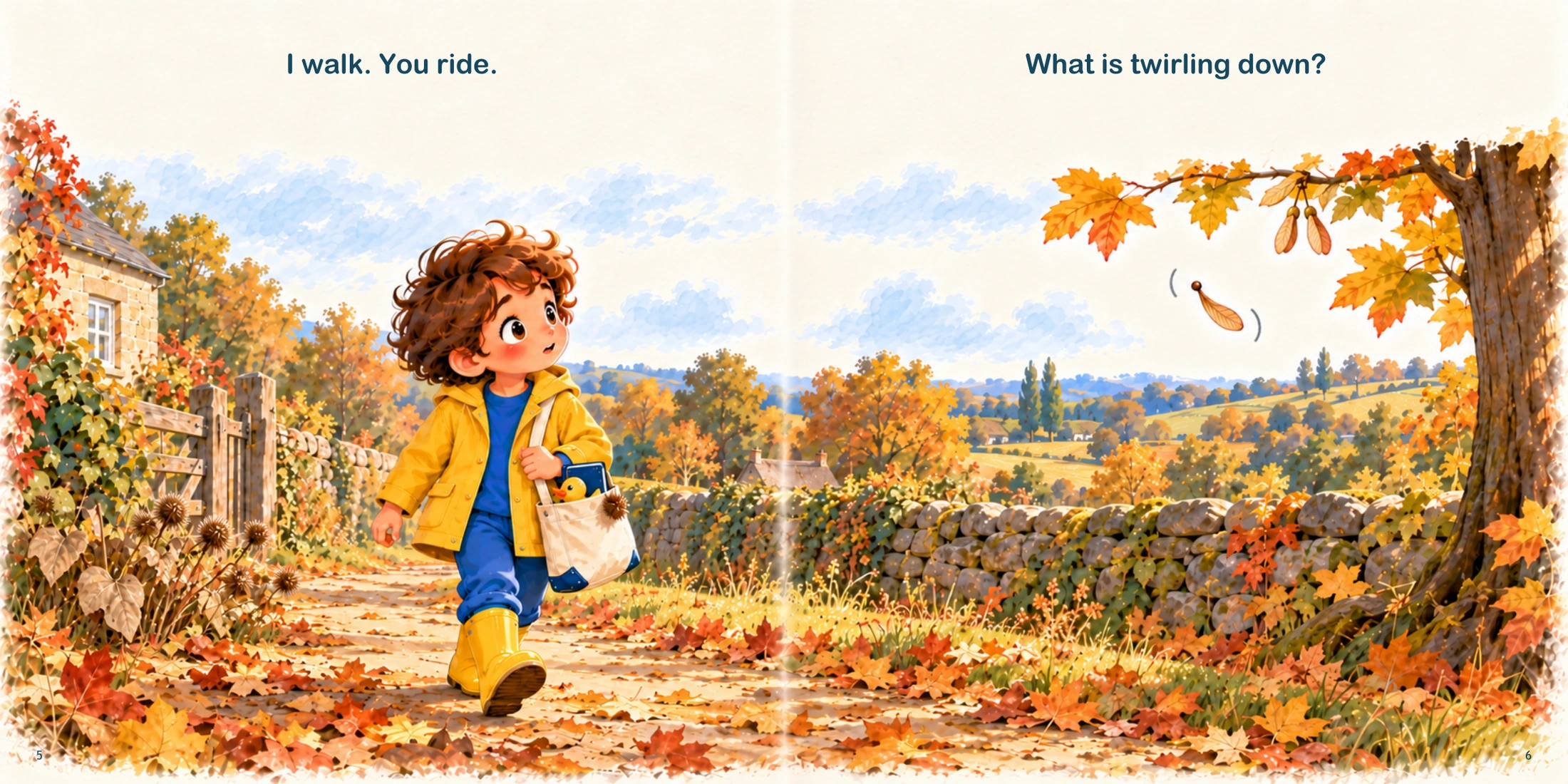
I walk. You ride. What is twirling down?
Explore together · Different structures travel in different ways.
The burr stays on the moving bag. Ahead, one winged maple fruit falls near a tree. Vince carries the bag and its attached passenger. The separate winged fruit turns while it falls through air.
Ask together: Which traveller is Vince carrying?
A turning fall
Pages 7–8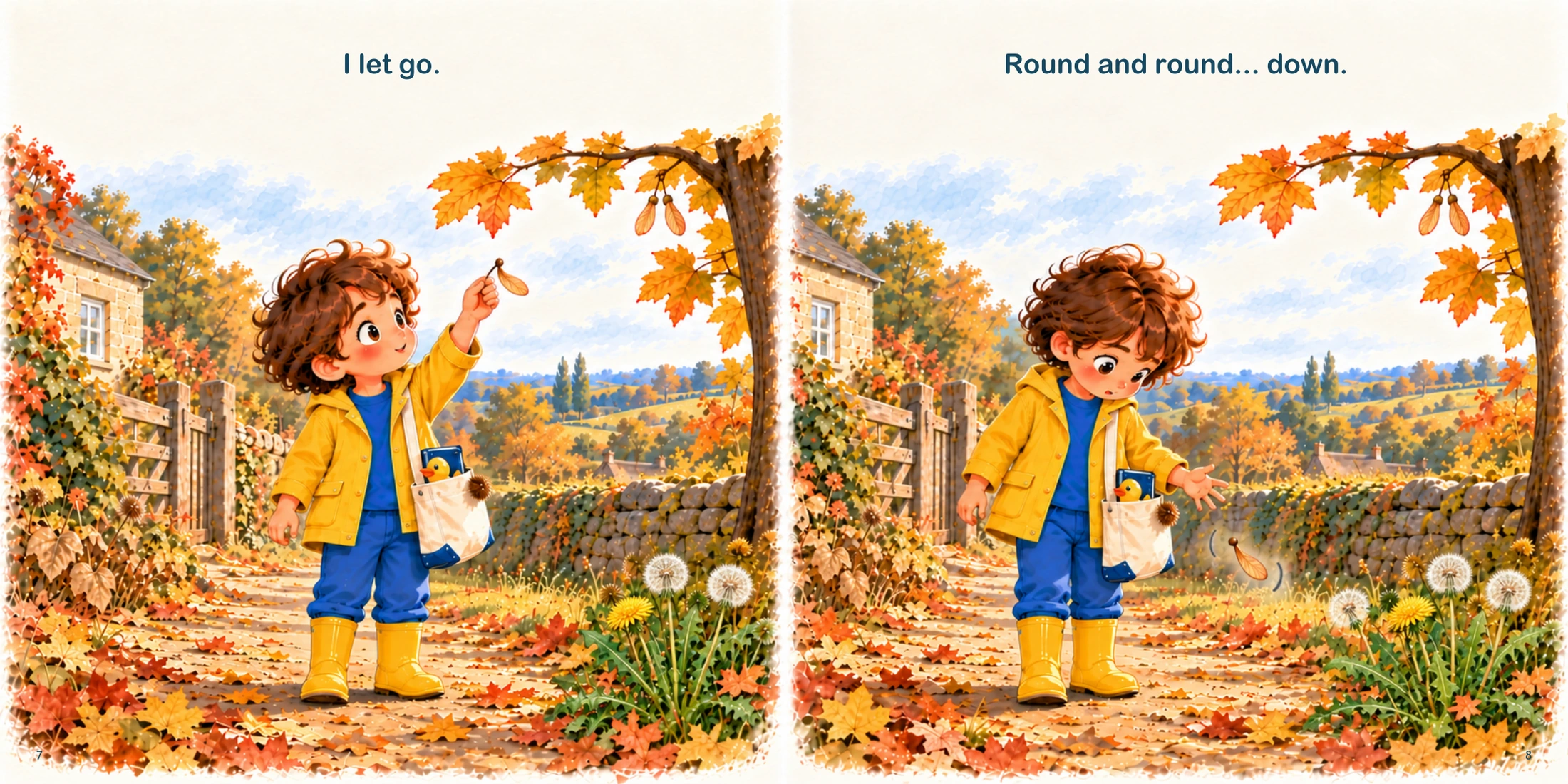
I let go. Round and round... down.
Explore together · A released winged fruit can spin as it descends.
Vince releases one mature maple fruit. It is lower than his open fingers and turning. A maple samara has a wing and a thick seed-bearing end. Its shape interacts with air during descent; a short drop may not show a clear spin.
Ask together: Where is the fruit after Vince lets go?
Below the fluff
Pages 9–10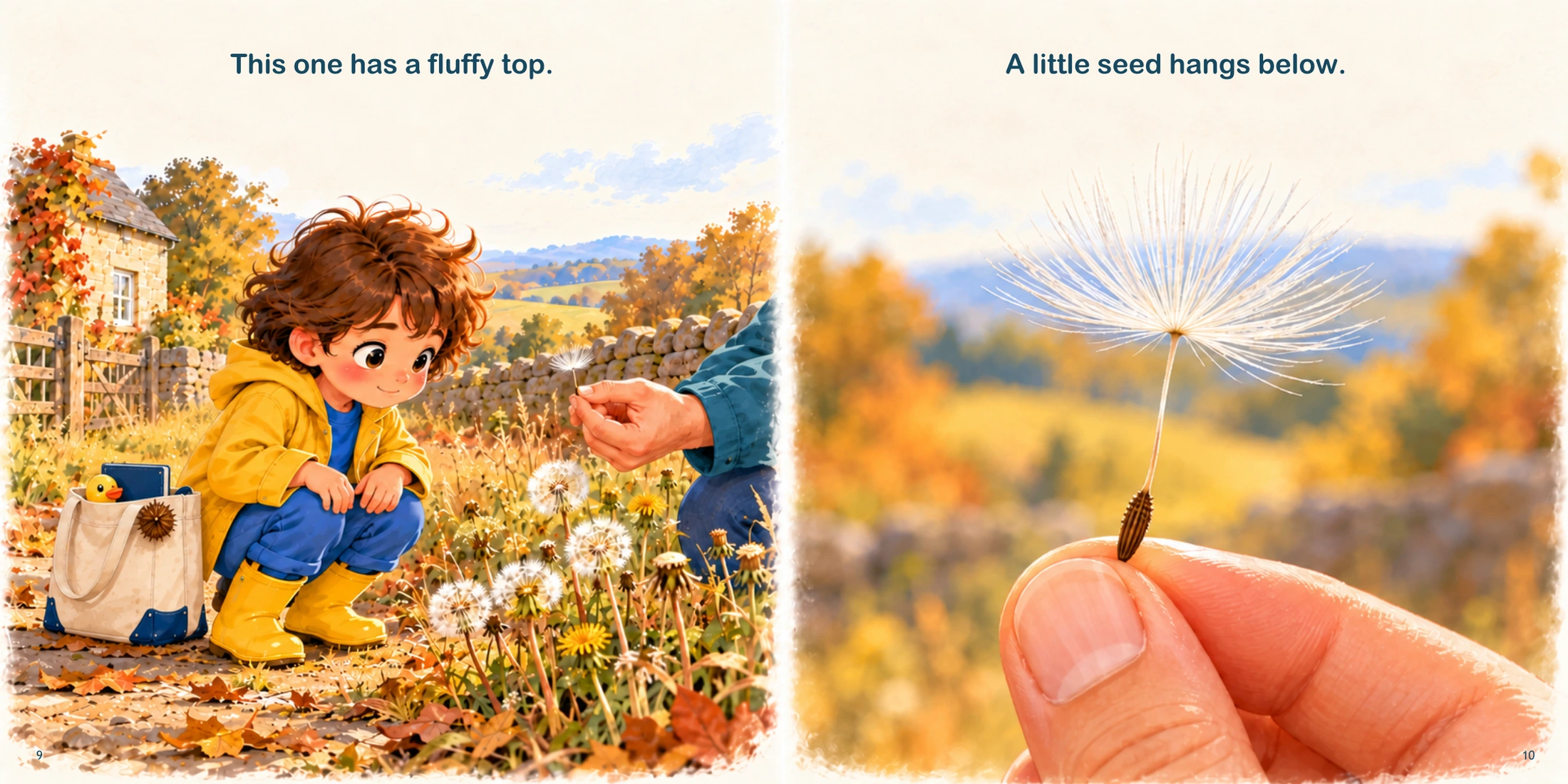
This one has a fluffy top. A little seed hangs below.
Explore together · The tuft, stalk and seed-bearing fruit stay connected.
An adult holds a complete dandelion unit while Vince looks. A thin stalk joins its tiny brown fruit to white bristles. The object often called a dandelion seed is a fruit containing a seed. Its tuft of bristles is called the pappus.
Ask together: What hangs below the fluffy top?
A little puff
Pages 11–12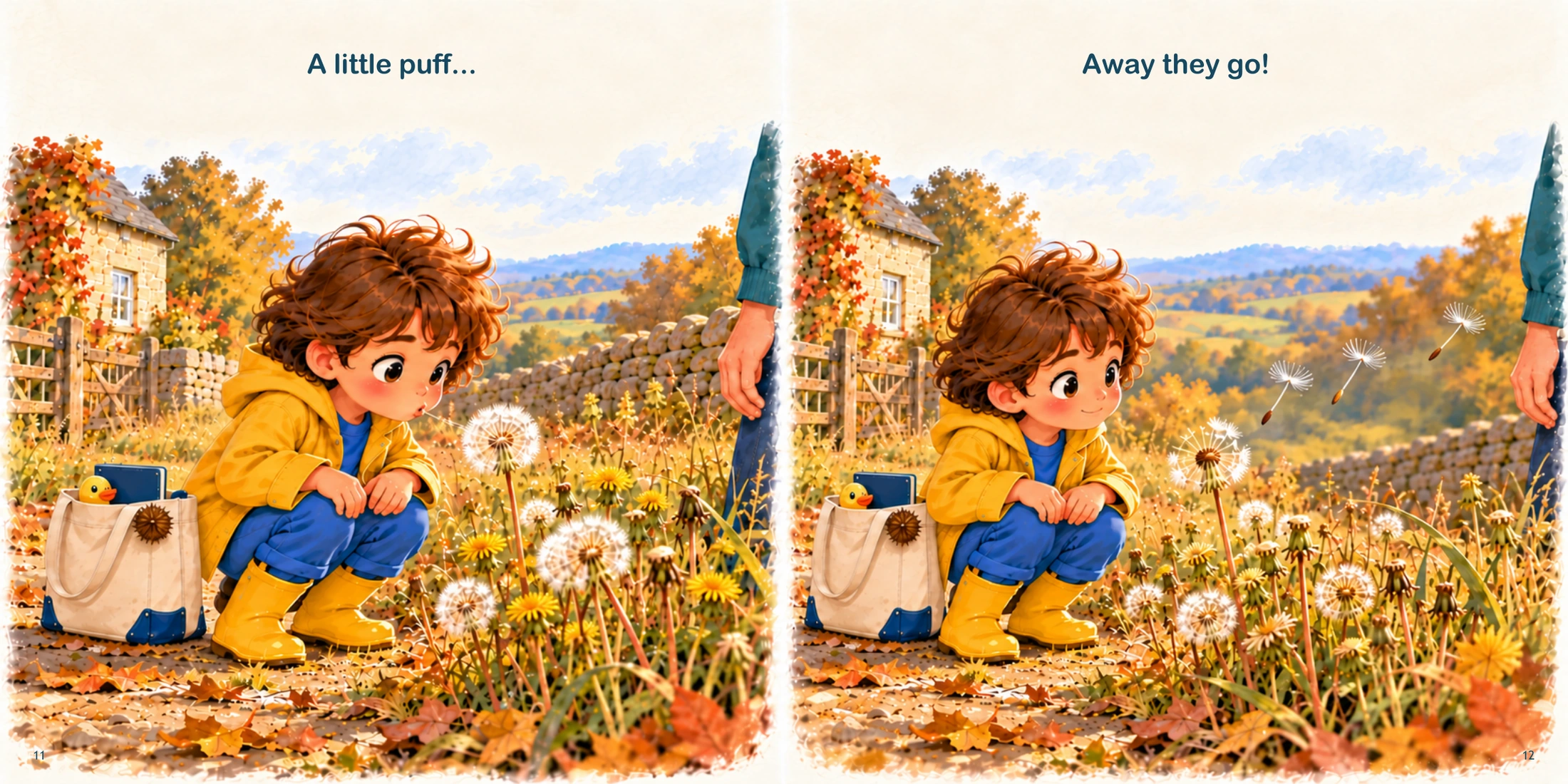
A little puff... Away they go!
Explore together · Moving air can carry a tufted fruit.
Vince blows gently toward a rooted dandelion head. Some complete units travel sideways; others remain attached. The bristles help slow falling, allowing moving air to carry the fruit. Dryness, maturity and the air affect what happens.
Ask together: What travels with each fluffy top?
Landing nearby
Pages 13–14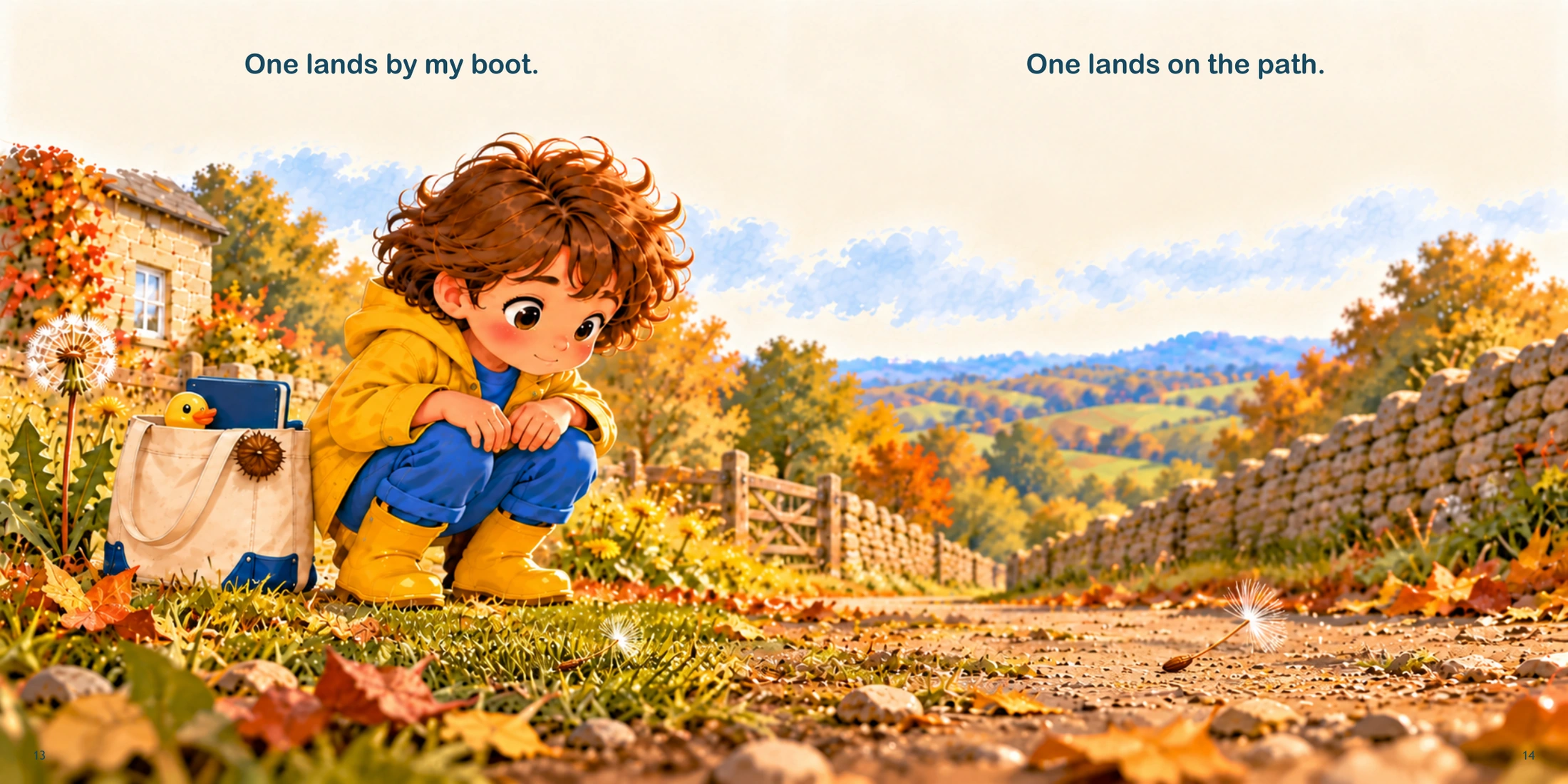
One lands by my boot. One lands on the path.
Explore together · A journey ends when a traveller comes to rest.
One complete dandelion unit rests beside a yellow boot, and another rests on the path. Seeds and fruits can land in different places. A landing does not establish that a seed will grow there.
Ask together: Where did these two travellers land?
All the way home
Pages 15–16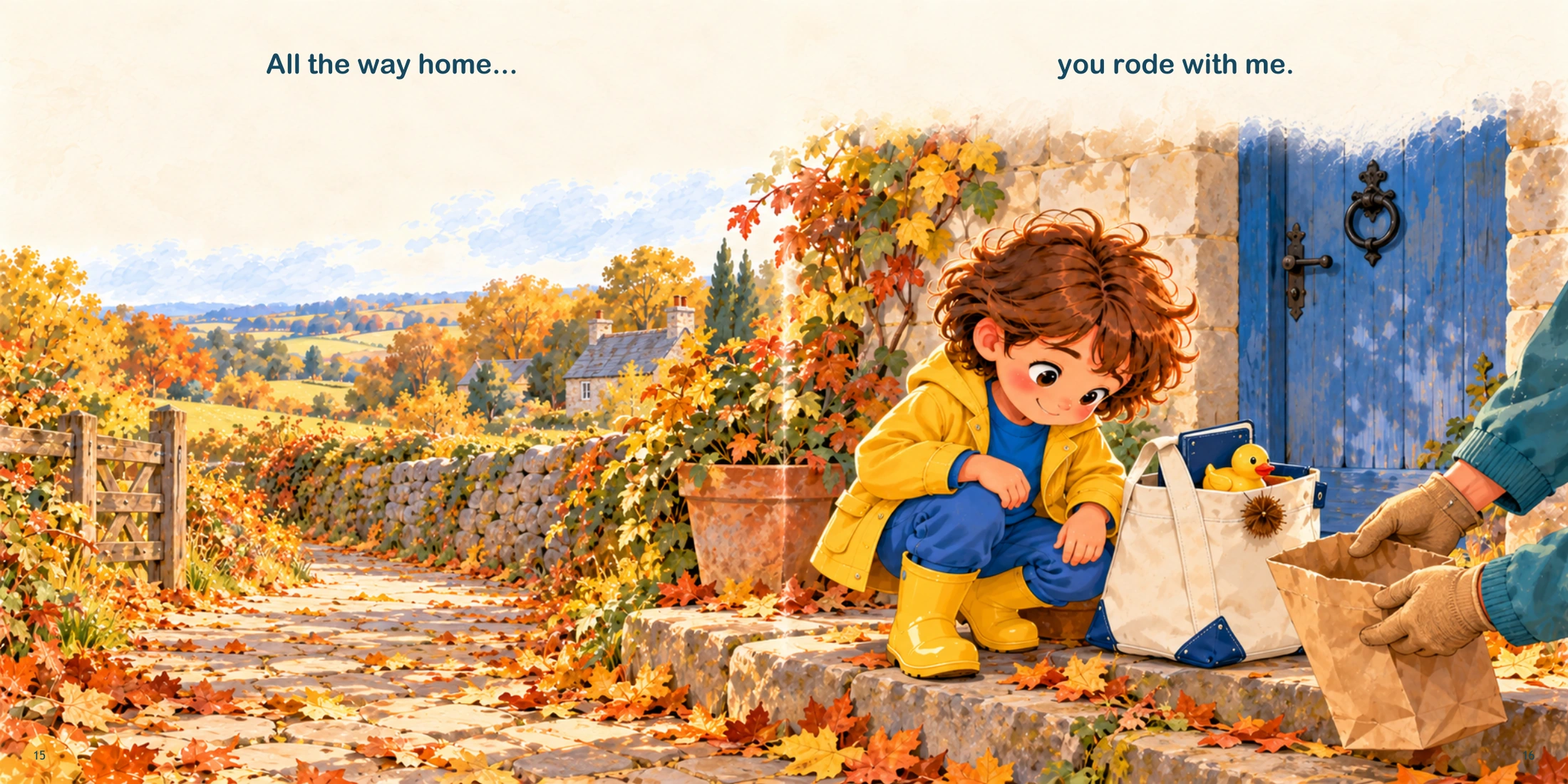
All the way home... you rode with me.
Explore together · An attached passenger moves with its carrier.
At the cottage, the same burr is still caught on the bag. An adult is ready to remove it. The burr arrived because Vince carried the bag. Adults should identify and remove plant hitchhikers appropriately and avoid spreading unfamiliar or invasive plants.
Ask together: Who carried this passenger home?
Remembering the rides
Pages 17–18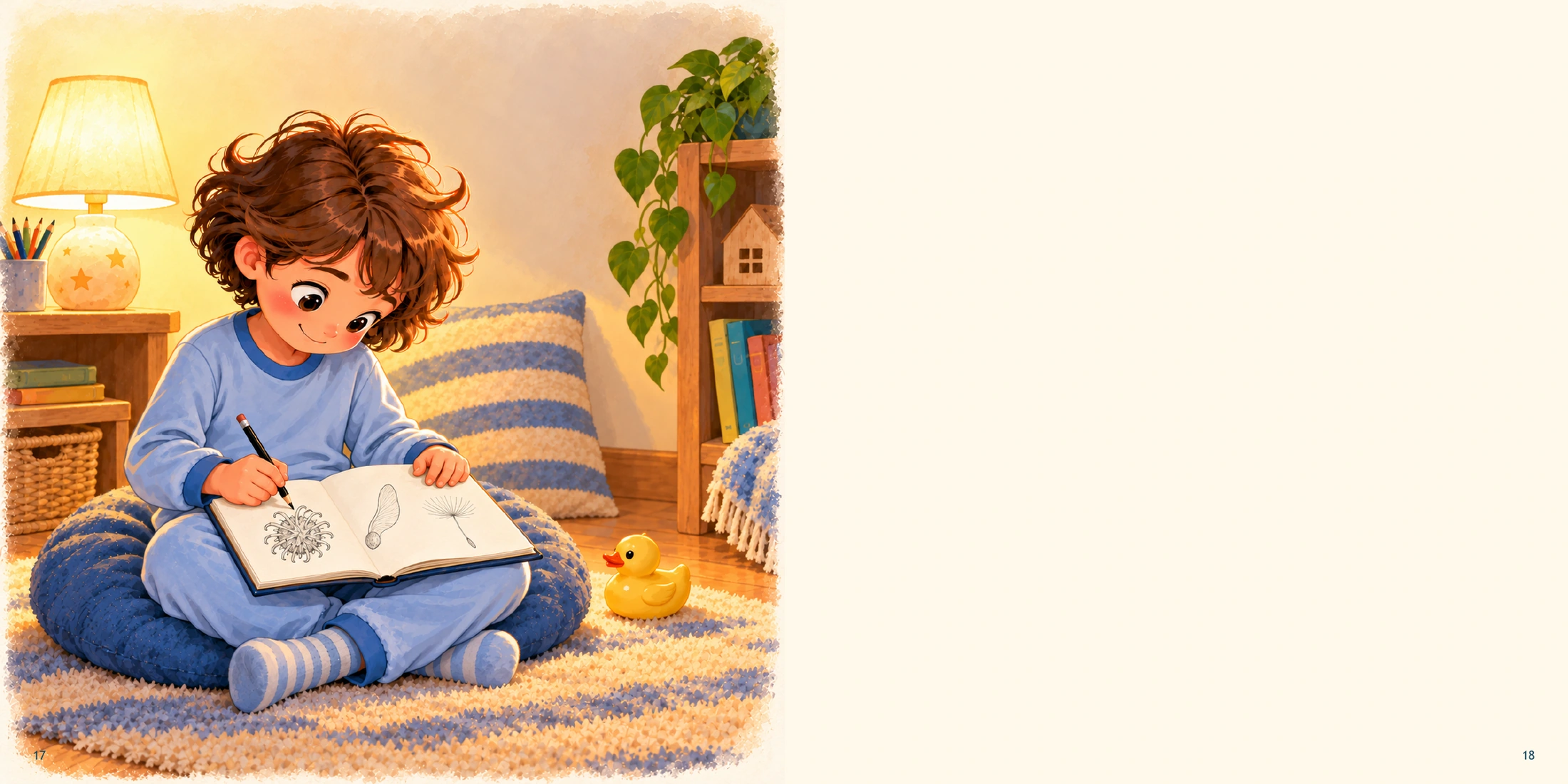
For grown-ups
Pages 19–20
For Grown-Ups Seeds can move while the parent plant stays rooted. Vince finds three ways they travel: hooked heads catch a lift, winged fruits spin as they fall, and fluffy tufts help fruits ride moving air. The plants do not choose a destination. 1–6, 15–16 A hooked passenger A burdock burr is a head holding several dry fruits with seeds inside. Its hooked bracts can snag fibres or fur. Vince moves the bag, so the attached burr moves too. It is not glued on. How well it catches depends on the burr and the fabric. 5–8 A turning wing The thick end of a maple samara holds a seed. The wing interacts with air as the fruit falls and spins, slowing its descent. Wind can move it sideways. A short drop, a damaged wing or an immature fruit may not give a clear spin. The curved grey marks suggest movement; they are not visible air or measured paths. 9–14 A fluffy traveller What we often call a dandelion seed is a tiny dry fruit containing a seed. A slender stalk connects it to a tuft of fine bristles called the pappus. The bristles help slow falling, so moving air can carry the whole unit. Many land nearby; some travel farther. Dampness, maturity and the air change what happens. Look closely together With an adult, watch familiar local plants or examine a fallen maple fruit. Where is the seed carried? What catches, turns or drifts? Try releasing an intact mature samara in a clear space and describe what actually happens. A dandelion puff is optional only where an adult decides it is appropriate; watching wind is enough. An adult identifies plants and handles or removes burs. Do not pull burs apart, put seeds near mouths or eyes, or spread unfamiliar or invasive plants. Remove hitchhikers before leaving a place and dispose of them appropriately. Wash hands after handling plants. Landing somewhere does not mean a seed will grow there. These pictures show plausible observations, not a timed or measured trial.
Open these pages in the readerSources and evidence
A mature burdock burr can catch on fibrous fabric with hooks and be carried with the fabric.
Manitoba Agriculture: Common Burdock
Latter (1941), A Factor in the Dispersal of Burdock
Attachment depends on the hooks and the material they meet.
A burr is a seed-bearing head: it can carry several fruits with seeds inside, rather than being one seed.
Manitoba Agriculture: Common Burdock
Latter (1941), A Factor in the Dispersal of Burdock
A burdock burr is a seed-bearing head holding several fruits, not a single seed. Adults should handle or remove burs without pulling them apart.
A mature single maple samara can rotate as it falls; its wing interacts with air and slows descent.
Caltech (2009): Maple Seeds and Animals Exploit the Same Trick to Fly
US Forest Service: Silvics of North America, Norway Maple
A mature intact maple samara may need sufficient falling distance to establish a clear spin. The illustrated short drop is a plausible example, not a measured trial.
A dandelion dispersed unit has a small fruit at one end of a slender stalk and a tuft of fine bristles at the other.
The ordinary word seed refers here to a tiny fruit containing a seed. Its thin stalk joins the fruit to the tuft.
Moving air can carry dandelion fruits with their tufts; the bristles help slow falling.
Cummins et al. (2018): A separated vortex ring underlies the flight of the dandelion
Release and movement vary with moisture, maturity and air conditions. Many fruits land nearby; no particular distance is promised.
Dispersal moves seeds to other places, through attachment to a carrier or movement in air; arriving somewhere does not ensure growth.
Cummins et al. (2018): A separated vortex ring underlies the flight of the dandelion
Movement and landing do not guarantee germination or survival. No growth outcome is depicted or tested.
A story worth keeping?
Read it here as often as you like. The physical edition is coming soon.