THE COMPLETE BOOK · FREE TO READ
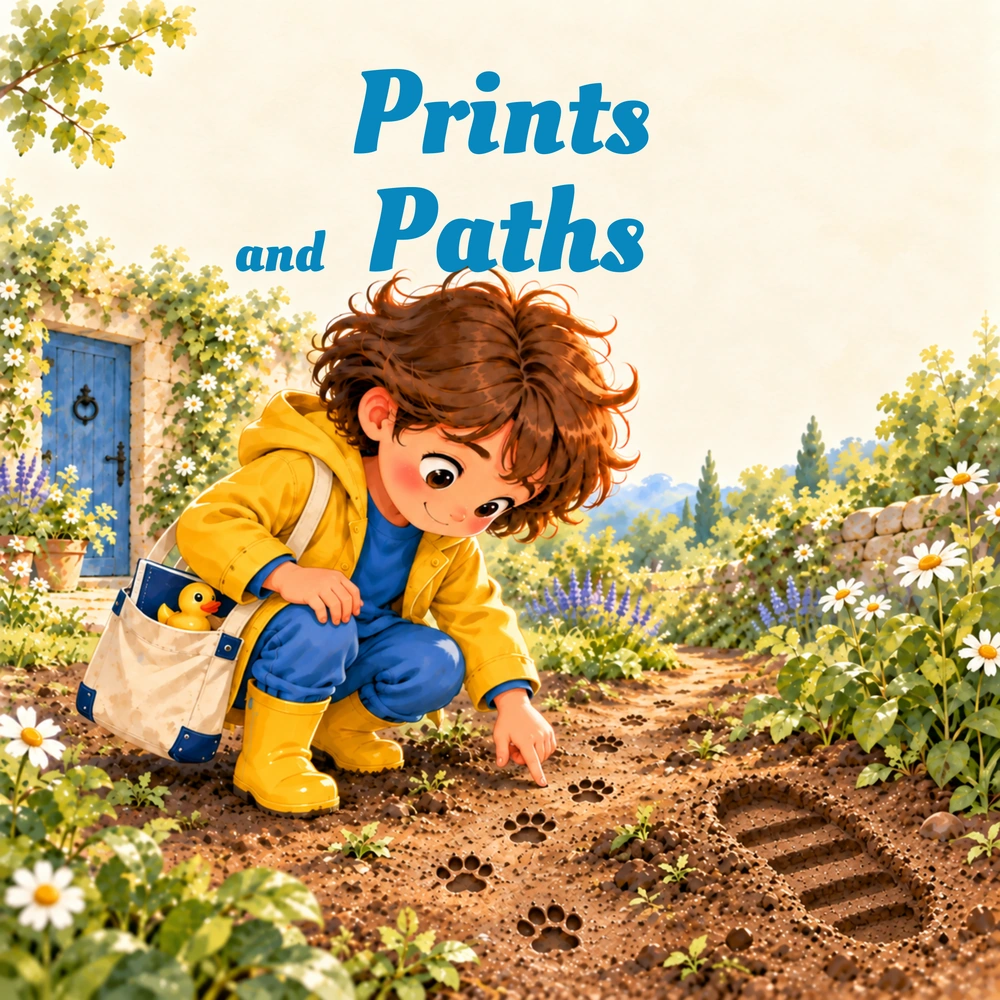
Prints and Paths
Follow Vince through a garden of small clues. Compare boot and paw prints, see how soft ground keeps a dent and hard stone can carry mud, then watch a cat cross a gap in its visible trail.
Turn the pagesOr scroll to readLittle clues
Pages 1–2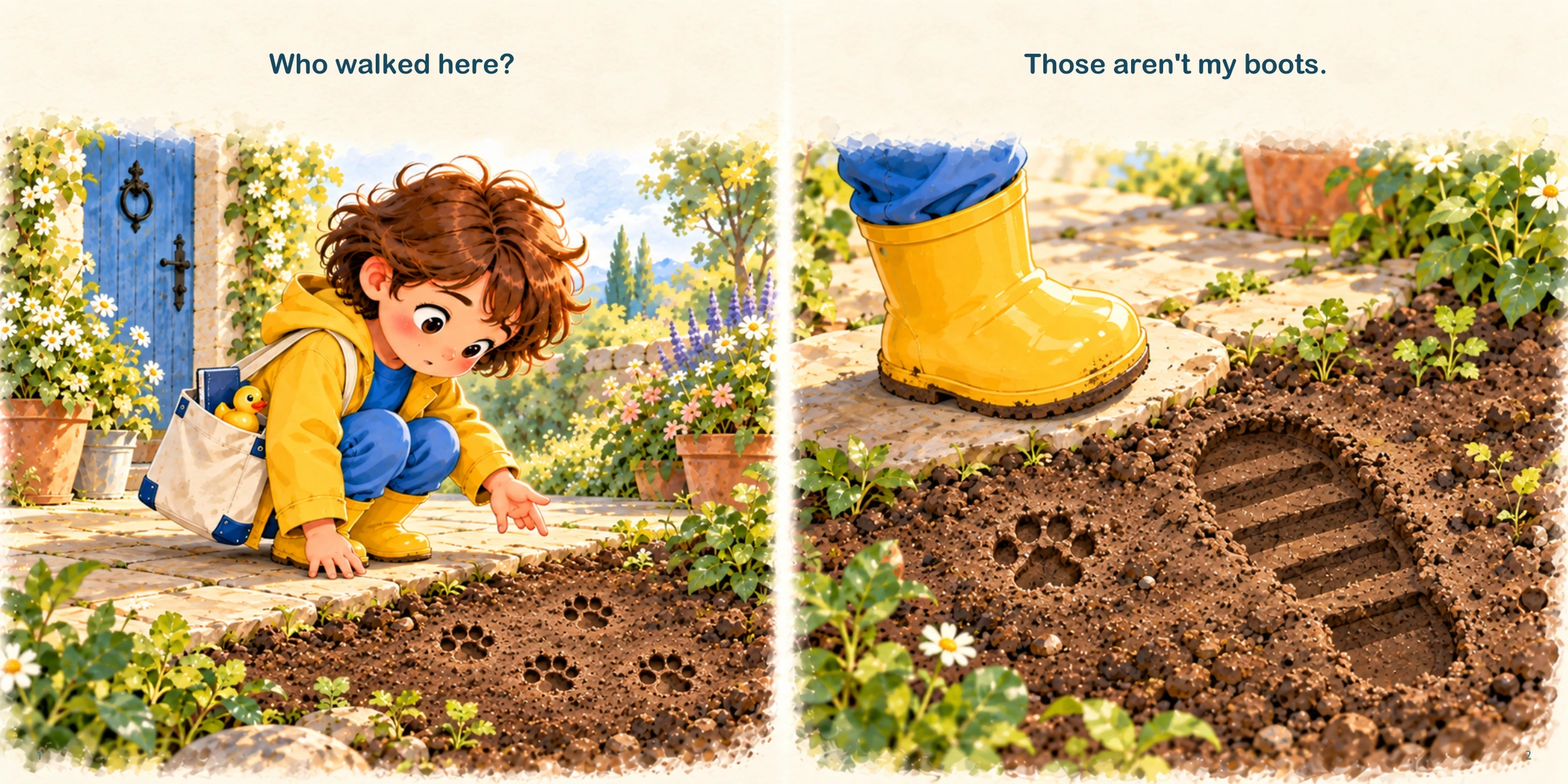
Who walked here? Those aren't my boots.
Explore together · Comparing shapes
Vince notices small paw-shaped marks beside his much broader boots. A print can preserve parts of the shape that touched the ground. Shape is a clue; it does not identify a particular animal by itself.
Ask together: What looks different about the two kinds of marks?
Press and lift
Pages 3–4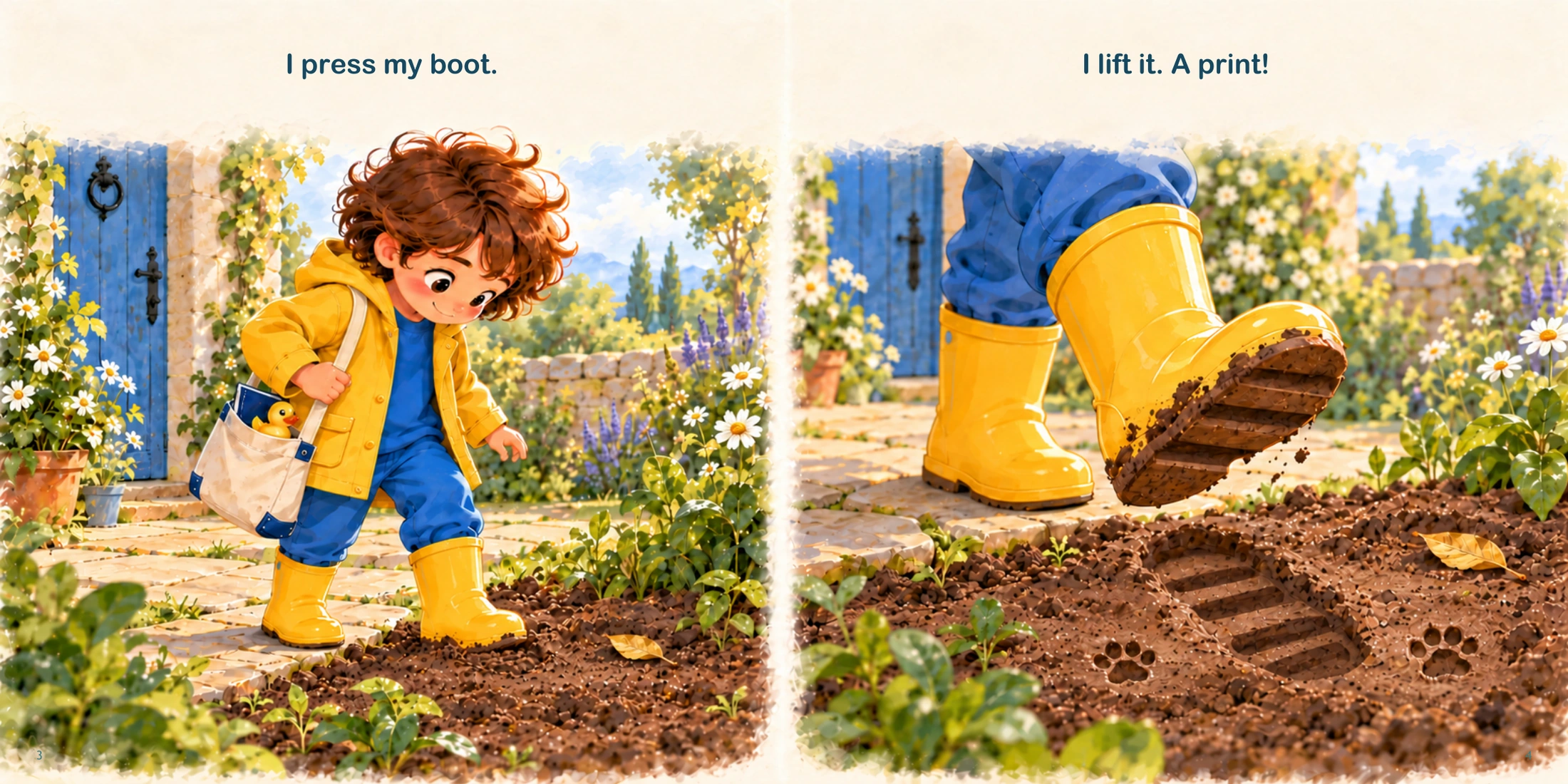
I press my boot. I lift it. A print!
Explore together · Contact makes an impression
Vince presses a boot into soft soil and lifts it to reveal a dent. Soft ground can change shape under a foot and keep an impression after it lifts. The broad outline and tread come from contact.
Ask together: Which parts of the boot can you find in its print?
Mud moves too
Pages 5–6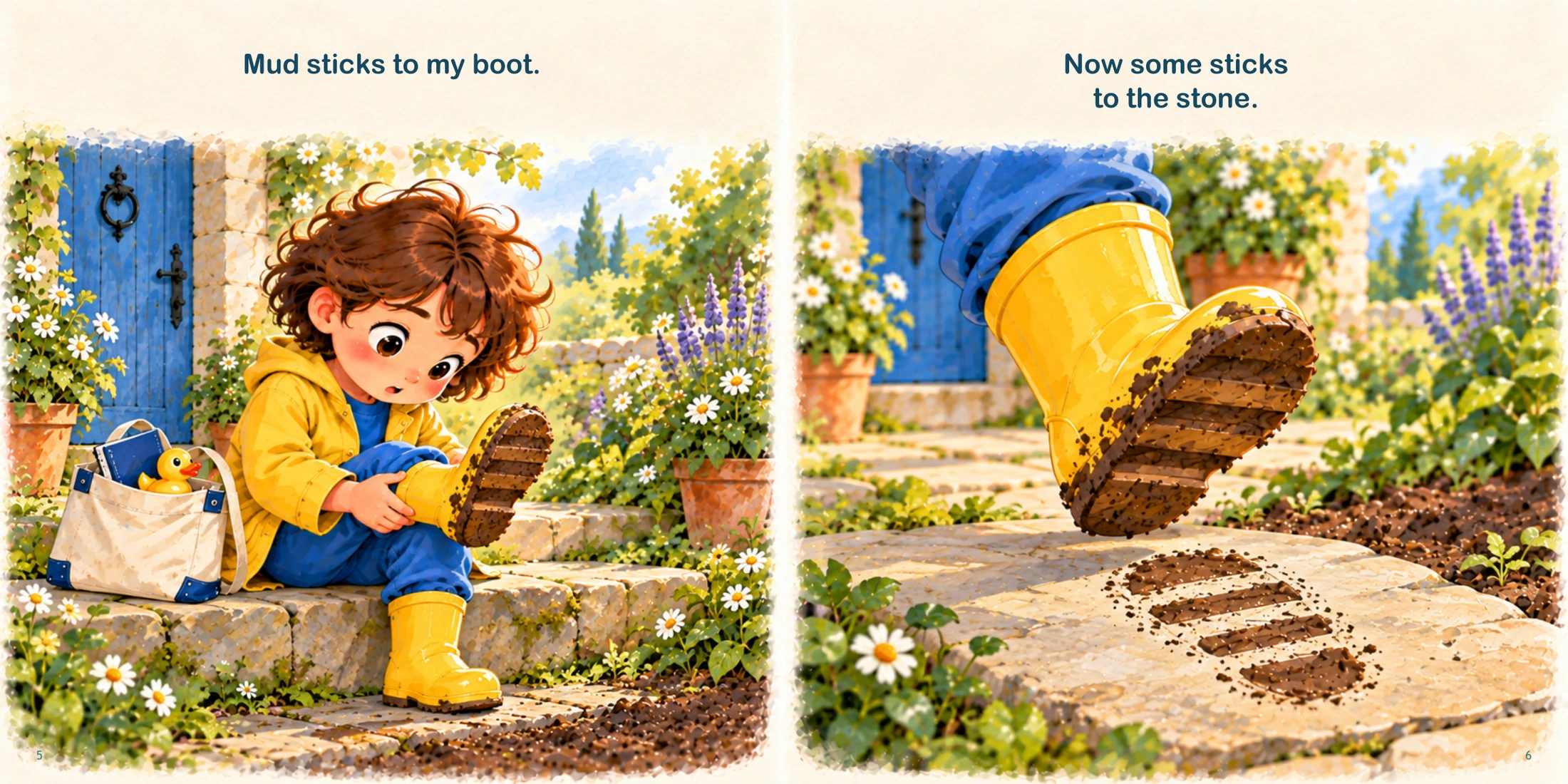
Mud sticks to my boot. Now some sticks to the stone.
Explore together · A transfer mark
Mud sticks to Vince's boot, then some remains on a pale stone. The mark on the stone is a thin deposit of mud. Unlike the soil impression, it does not require the stone to dent.
Ask together: How does the mark on the stone look different from the dent in the soil?
A gap in the trail
Pages 7–8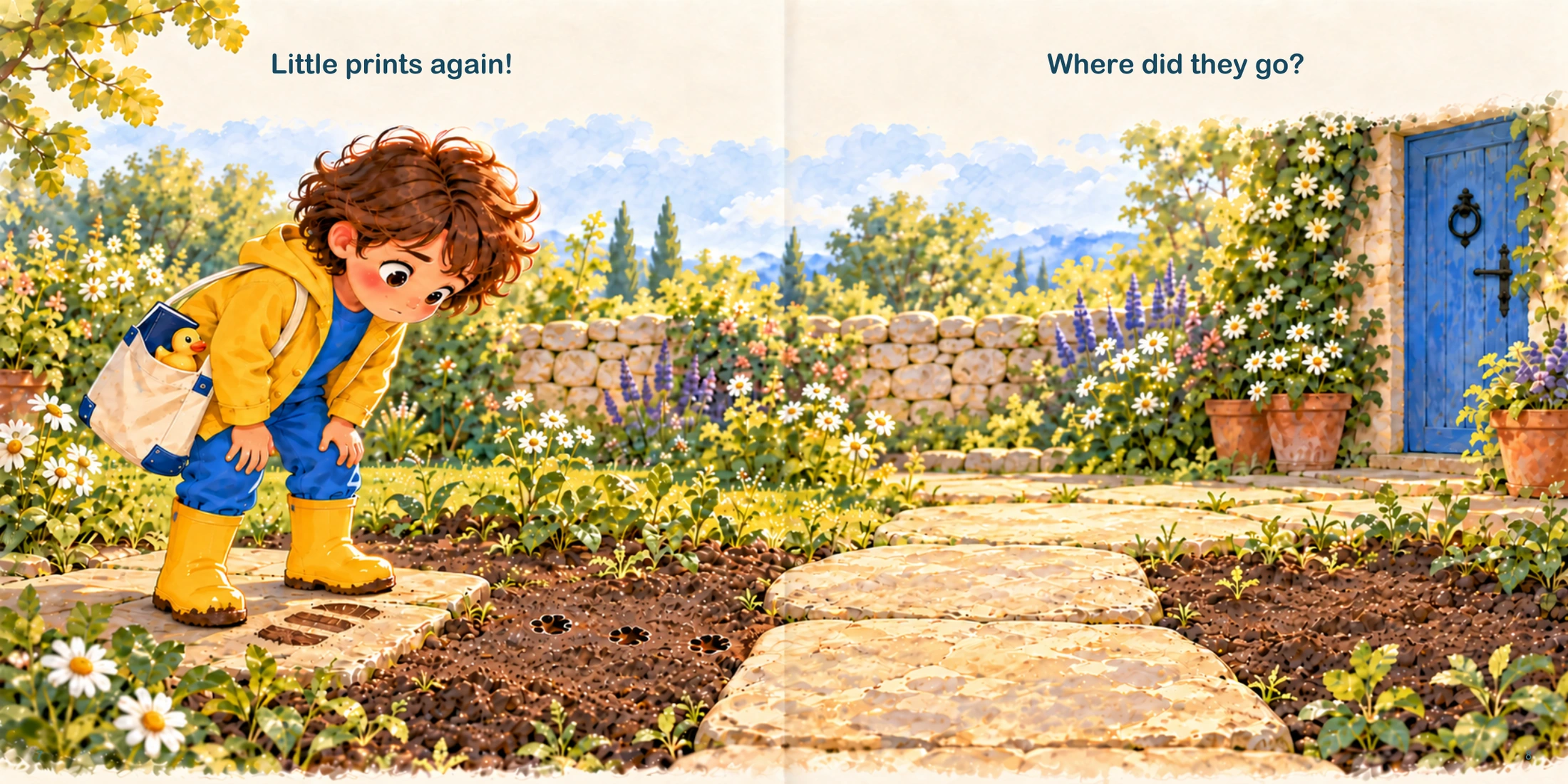
Little prints again! Where did they go?
Explore together · Surfaces record differently
The small prints become hard to follow where the soil meets stone. A clear trail may disappear when the surface changes. A missing visible mark does not mean that its maker stopped there.
Ask together: Where would you look next?
Watching a maker
Pages 9–10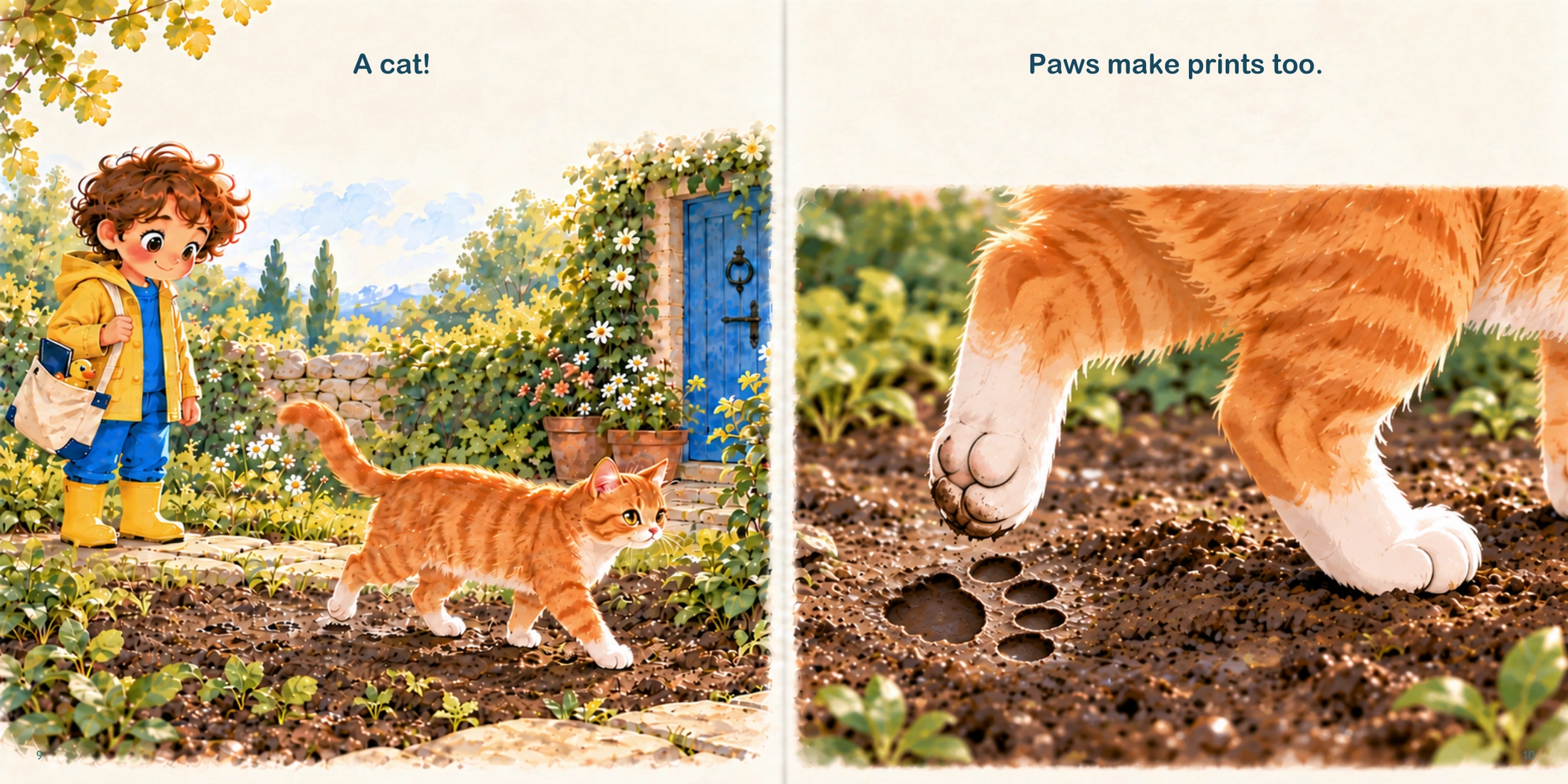
A cat! Paws make prints too.
Explore together · Direct observation
Vince watches a cat place a paw in soft soil and leave a new print. Seeing a foot make a mark connects the maker and this new impression. Similar older marks are still uncertain clues.
Ask together: What changes when the cat lifts its paw?
Across the stones
Pages 11–12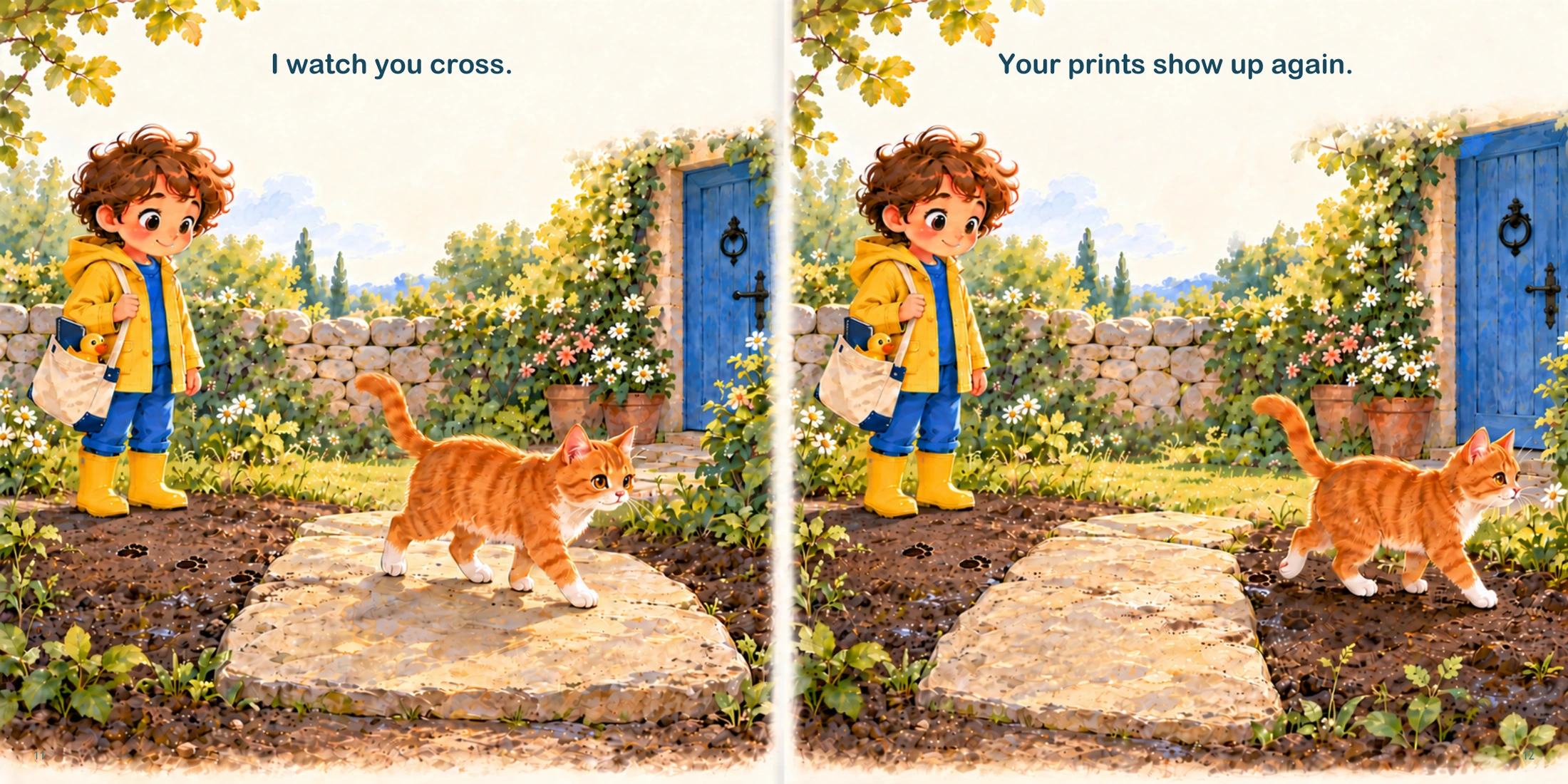
I watch you cross. Your prints show up again.
Explore together · A gap is not a stop
The cat crosses pale stone and leaves visible prints again in soft ground. The same moving animal can leave a clear record on one surface and little visible record on another.
Ask together: What can Vince see happening that the prints alone did not show?
Two paths home
Pages 13–14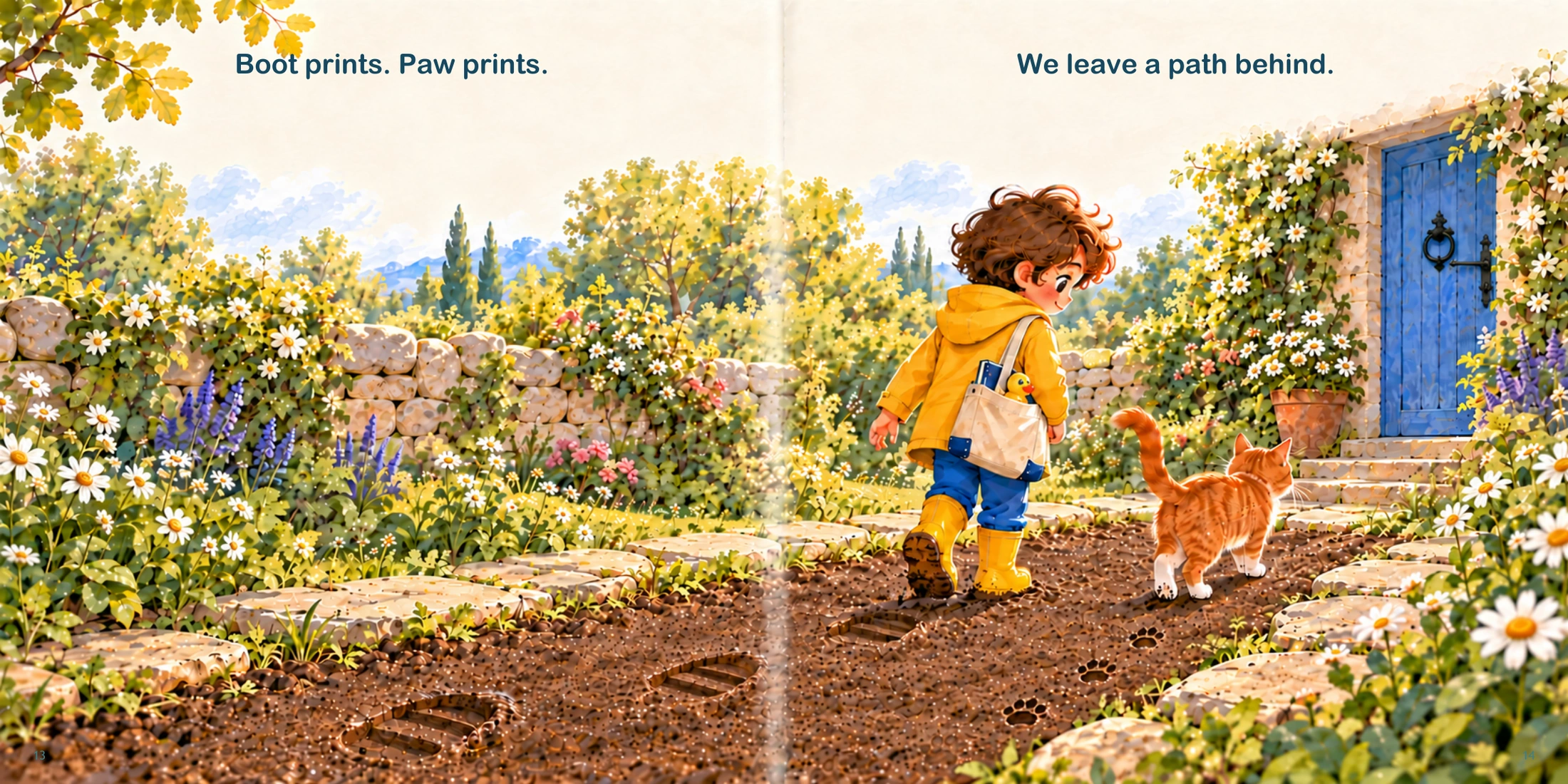
Boot prints. Paw prints. We leave a path behind.
Explore together · Comparing new evidence
Vince and the cat walk home with differently shaped trails behind them. Their newly made marks preserve different foot shapes. Here, Vince can compare the traces with the makers he is watching.
Ask together: Which trail leads to Vince, and which leads to the cat?
Remembering the marks
Pages 15–16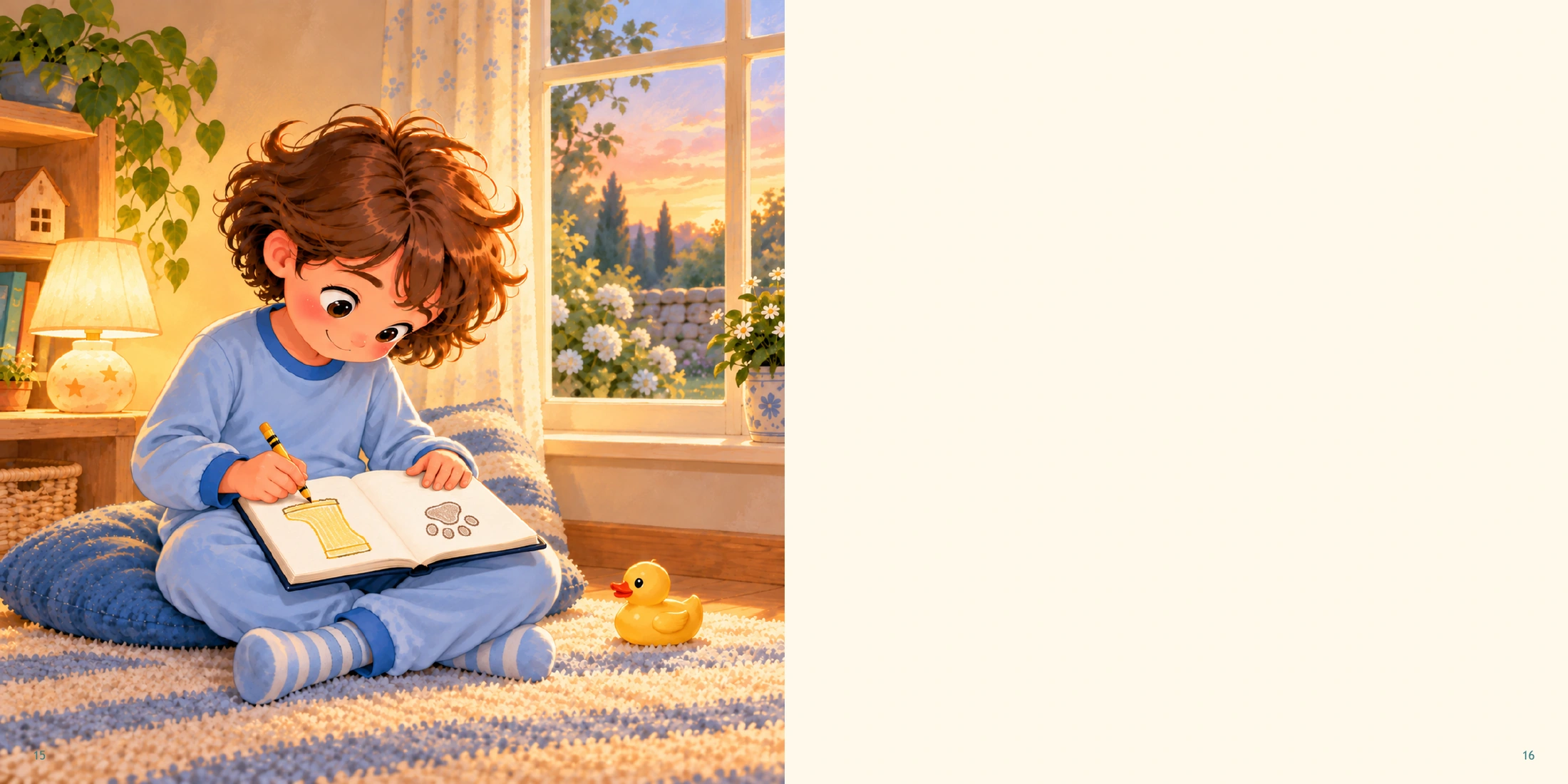
For grown-ups
Pages 17–18
For Grown-Ups A footprint is a trace of contact. Vince begins with a question, makes a comparison, then watches new prints being made. Pressing a shape A boot can press a hollow into soft ground. Its sole may leave some of its pattern behind. A paw leaves a different shape. Ground firmness, moisture and the way a foot moves affect the result; a print is rarely a perfect copy. Carrying a mark Mud picked up by a boot can stick to a stone on the next step. That brown mark sits on the stone; it is not a dent in it. A hard surface can show transferred mud even when it does not yield under a foot. Following clues A trail can disappear from view where the ground changes. That does not mean its maker stopped. Vince sees the cat cross the stones and leave new prints in softer ground. Looking is different from guessing Vince watches this cat make new prints. The earlier similar marks are clues, not proof that this particular cat made them. Some prints are incomplete, and different animals can leave similar marks. Try noticing together With a grown-up, press a shoe into a shallow tray of damp sand or soft mud, then lift it. Compare the sole and the mark. A little mud on a washable shoe may also make a mark on a pale washable tile. Results vary with the materials; look at what actually happens. Use clean materials and a stable, non-slip place. Avoid animal droppings, wash hands afterward and clean up slippery mud. Watch animals quietly from a distance; never chase them or press their feet into a surface. Sources: NIST, Virginia Department of Forensic Science, New Mexico State University, ABQ BioPark and University of Michigan BioKIDS.
Open these pages in the readerSources and evidence
Foot contact can leave an impression in suitable soft ground.
NIST: Pattern and Impression Evidence
Virginia Department of Forensic Science: Impressions
The clarity of an impression depends on the ground, moisture and contact; some marks are incomplete.
An impression can preserve broad features of the contacting sole or paw.
Virginia Department of Forensic Science: Impressions
New Mexico State University Circular 561: Identifying and Preserving Wildlife Tracks
A broad shape may be recognizable without identifying a particular individual.
Mud carried on a boot can transfer to a hard stone as a surface mark.
NIST OSAC Lexicon: Transfer Impression
Mud transfer depends on how much mud adheres to the foot and whether it transfers to the next surface.
A visible trail may have gaps because surfaces differ in how well they record and reveal marks.
New Mexico State University Circular 561: Identifying and Preserving Wildlife Tracks
Hard surfaces can sometimes carry transfer marks; they do not always leave a completely blank record.
Watching a new print form provides direct evidence about its maker; an older similar print remains a clue.
NIST: Pattern and Impression Evidence
New Mexico State University Circular 561: Identifying and Preserving Wildlife Tracks
Watching this cat make new prints does not prove that it made the older similar marks.
A walking domestic cat can leave tracks with four toe impressions and a larger pad.
University of Michigan BioKIDS: Smaller, four front and four back
Ordinary clear domestic-cat prints show four toe impressions and a main pad; incomplete marks and other animals can look similar.
A story worth keeping?
Read it here as often as you like. The physical edition is coming soon.