
THE COMPLETE BOOK · FREE TO READ
Nibbles and Wings
Follow Vince's return visits to a leaf-nibbling monarch caterpillar. A shed skin, an upside-down hang, a green chrysalis and unfolding wings lead to flight and flower sipping. Look closely at what changes while Vince watches and waits.
Turn the pagesOr scroll to readA leaf nibbler
Pages 1–2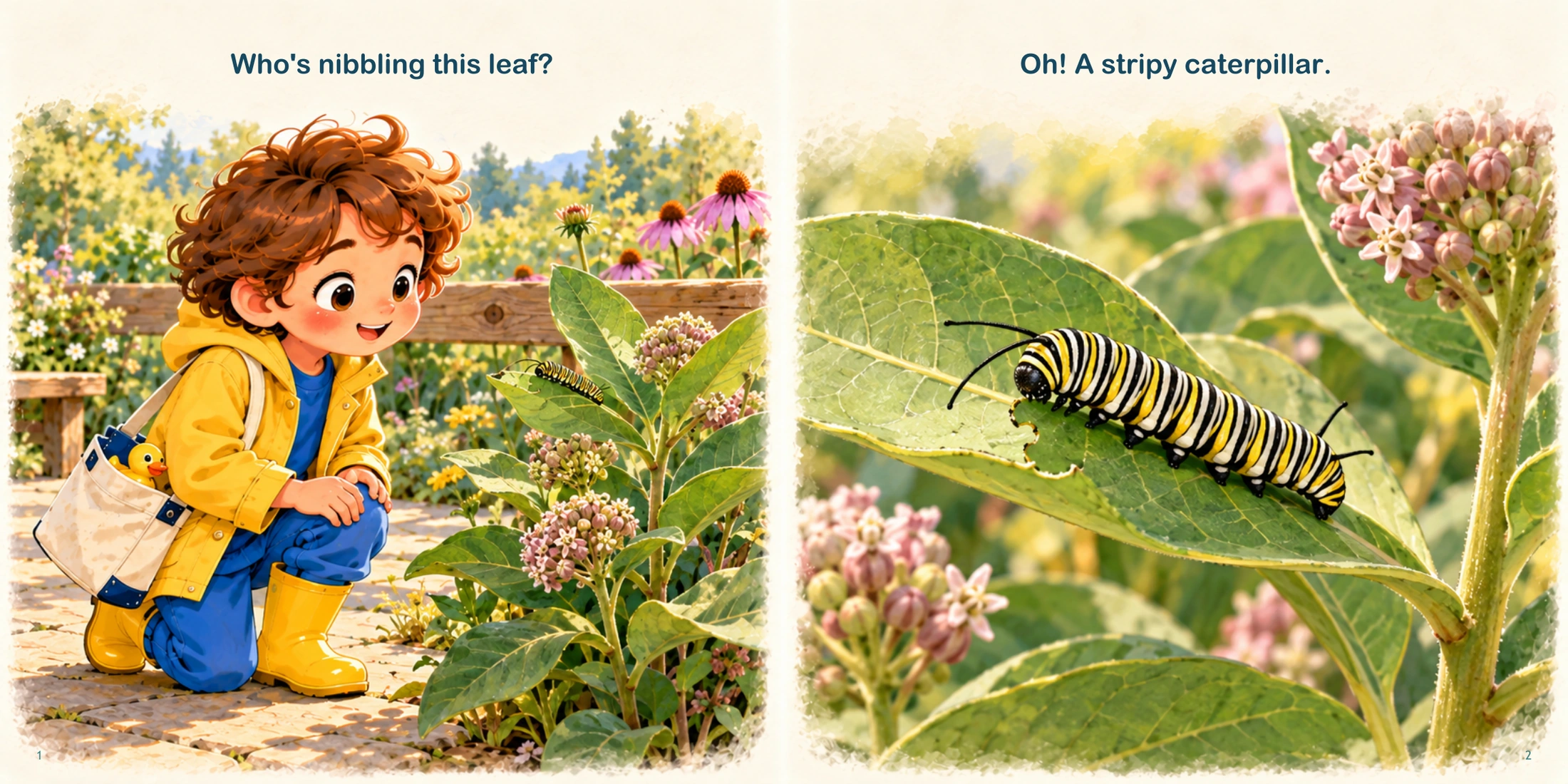
Who's nibbling this leaf? Oh! A stripy caterpillar.
Explore together · Leaf feeding
Vince finds a striped caterpillar with its mouth beside a missing piece of leaf. Monarch caterpillars chew milkweed leaves. The missing edge and feeding position connect the animal with the changed leaf.
Ask together: What do you notice beside the caterpillar's head?
Growing and shedding
Pages 3–4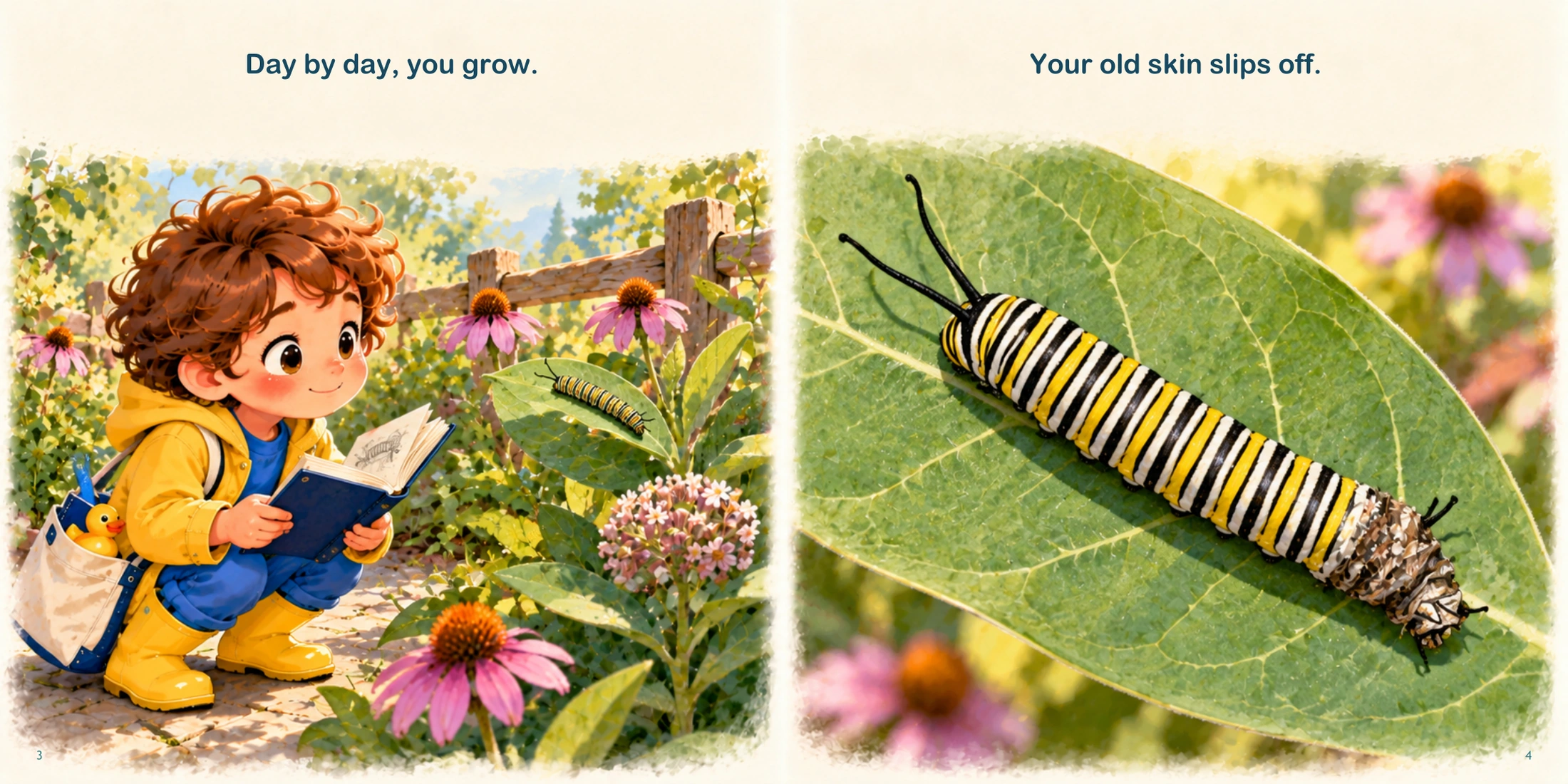
Day by day, you grow. Your old skin slips off.
Explore together · A larval molt
Across later visits, Vince watches the caterpillar; a close view shows rumpled old skin behind its intact striped body. A monarch sheds its outer skin several times as it grows. After these early molts, it is still a caterpillar. The old skin may soon be eaten.
Ask together: What looks different at the two ends of the caterpillar?
A place to hang
Pages 5–6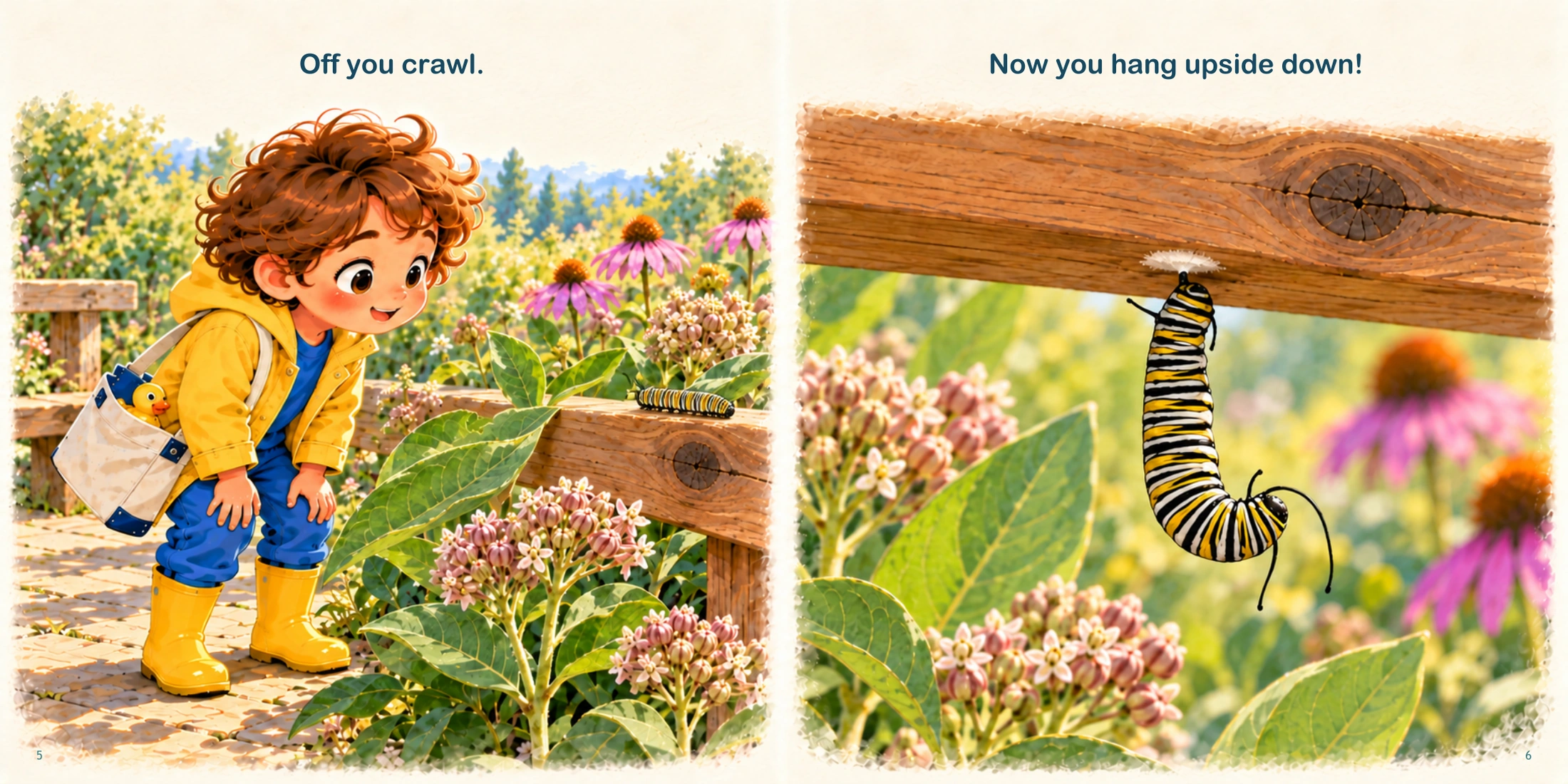
Off you crawl. Now you hang upside down!
Explore together · Moving and attaching
The caterpillar is on a wooden rail, then hangs beneath it in a J shape from a small silk pad. A mature monarch caterpillar may leave its food plant. It attaches by its rear end to silk before the next change.
Ask together: Where is the hanging caterpillar holding on?
Smooth and green
Pages 7–8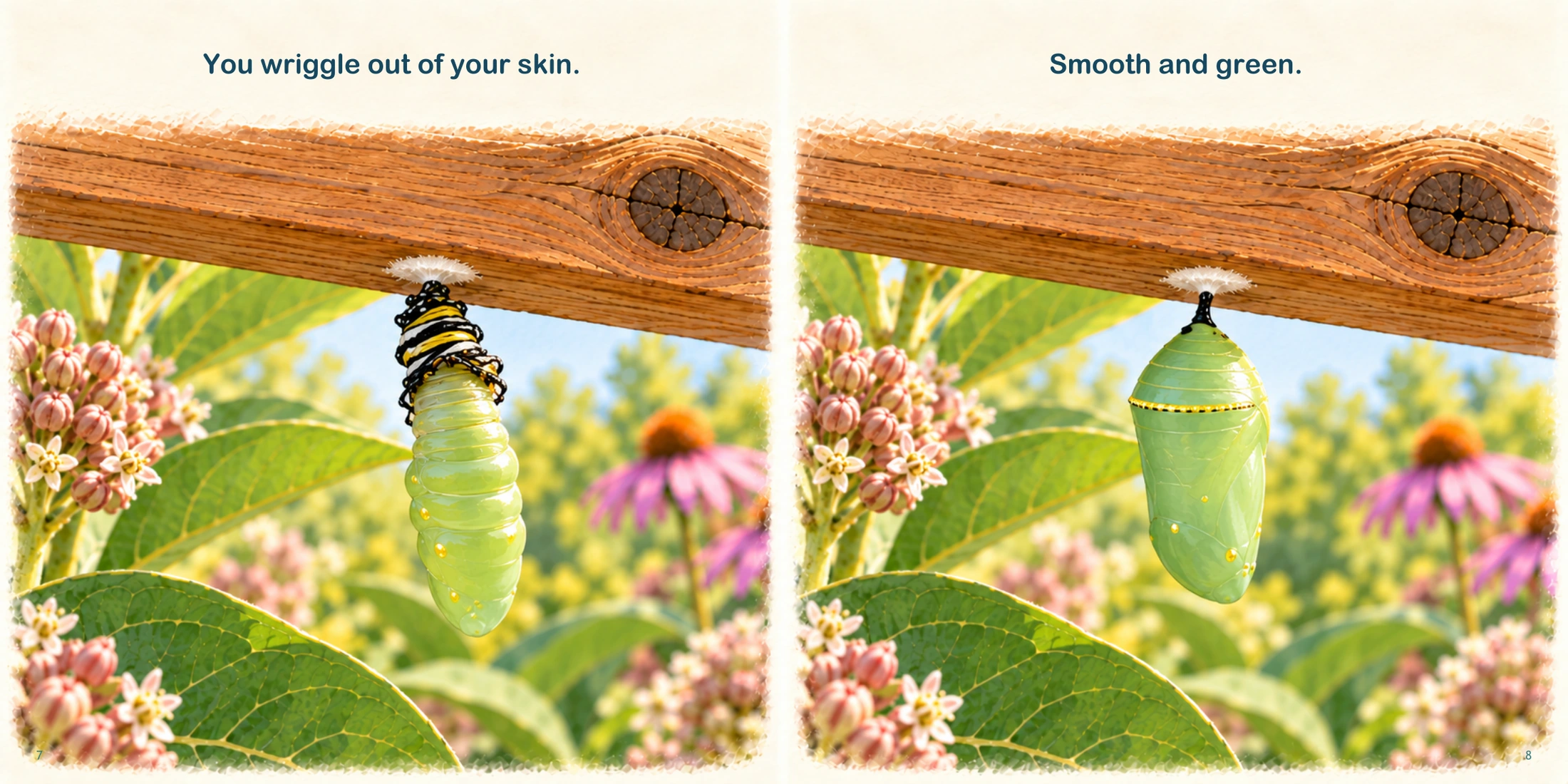
You wriggle out of your skin. Smooth and green.
Explore together · Becoming a pupa
Striped skin bunches upward, revealing a green form. Later, a smooth chrysalis hangs from the same rail. The last larval skin sheds to reveal the chrysalis. This pupa is a living developmental stage; the caterpillar has not built a silk cocoon around itself.
Ask together: What has changed, and what stays in the same place?
Orange appears
Pages 9–10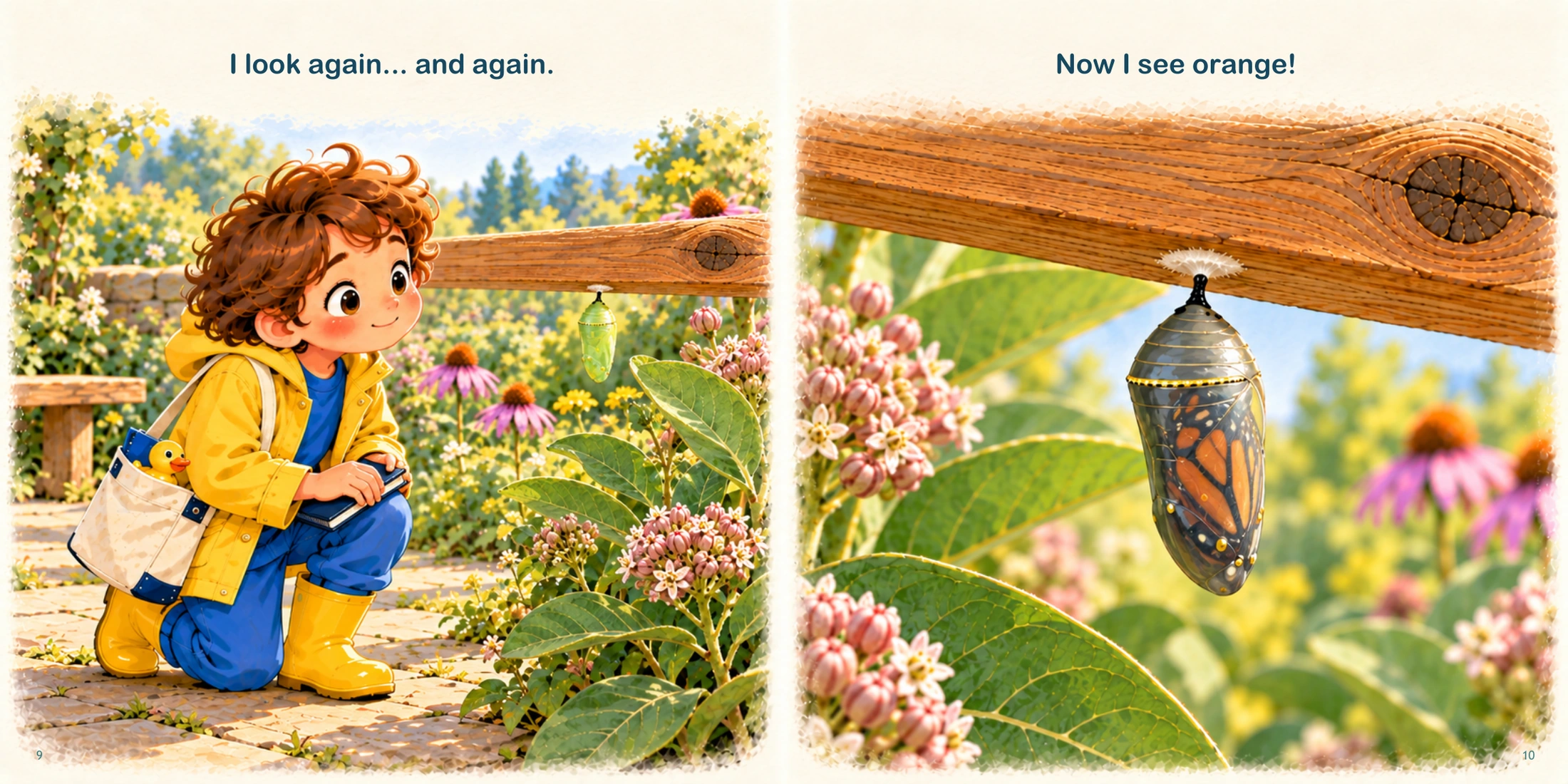
I look again... and again. Now I see orange!
Explore together · Change during the pupal stage
Vince returns to the green chrysalis. A later close view reveals an orange-and-black wing pattern. The adult develops during the pupal stage. Near emergence, its wing pattern becomes visible through the case. Repeated visits may show no visible change before this happens.
Ask together: What can Vince see now that he could not see before?
Waiting for wings
Pages 11–12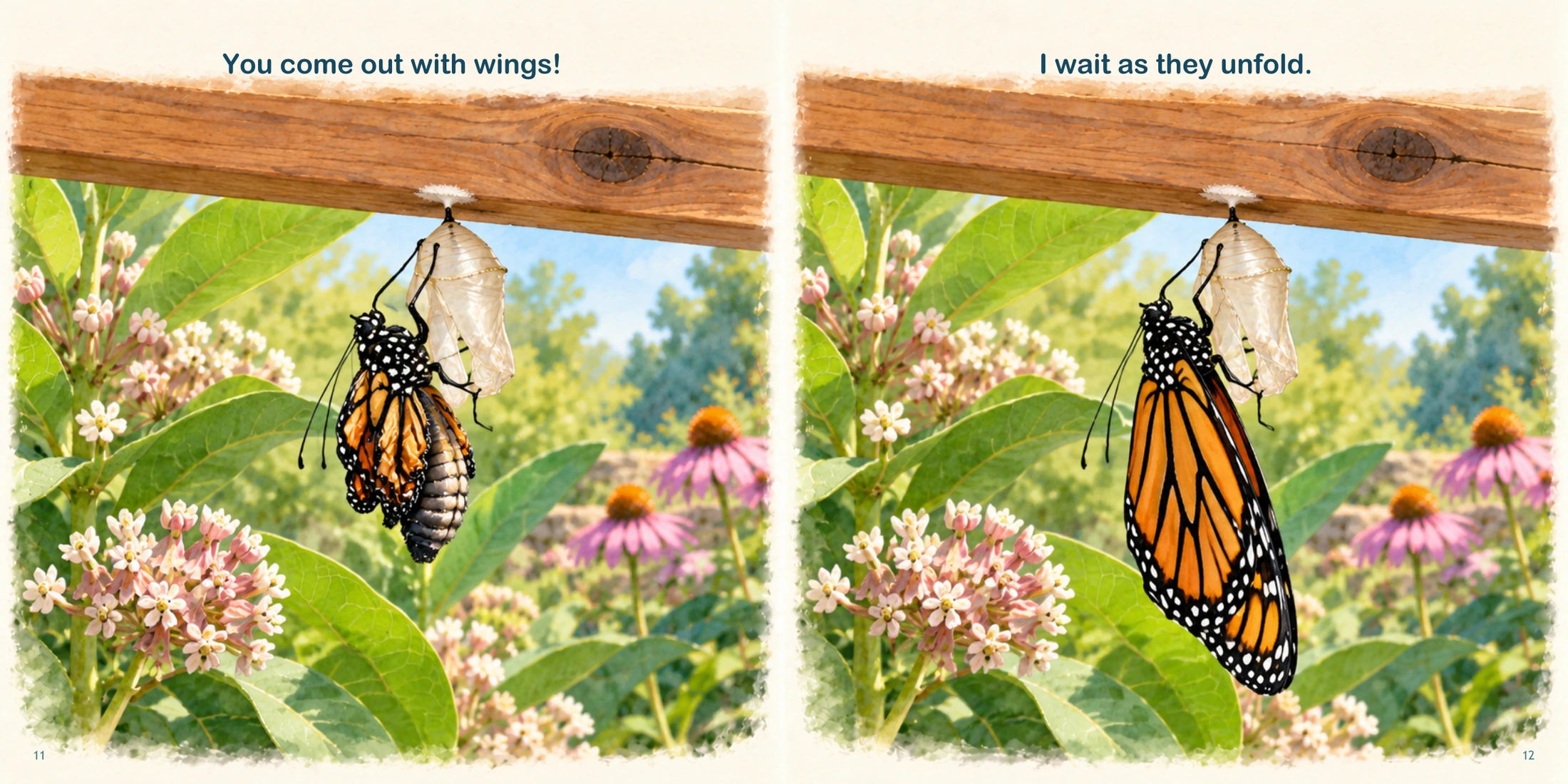
You come out with wings! I wait as they unfold.
Explore together · Emergence and wing expansion
The emerging butterfly has small crumpled wings. In the next view, it remains hanging with long expanded wings. A butterfly pumps fluid into its wings after emerging. It needs time for them to expand and become ready before it can fly; Vince leaves them untouched.
Ask together: What changes while the butterfly stays hanging?
A different way to feed
Pages 13–14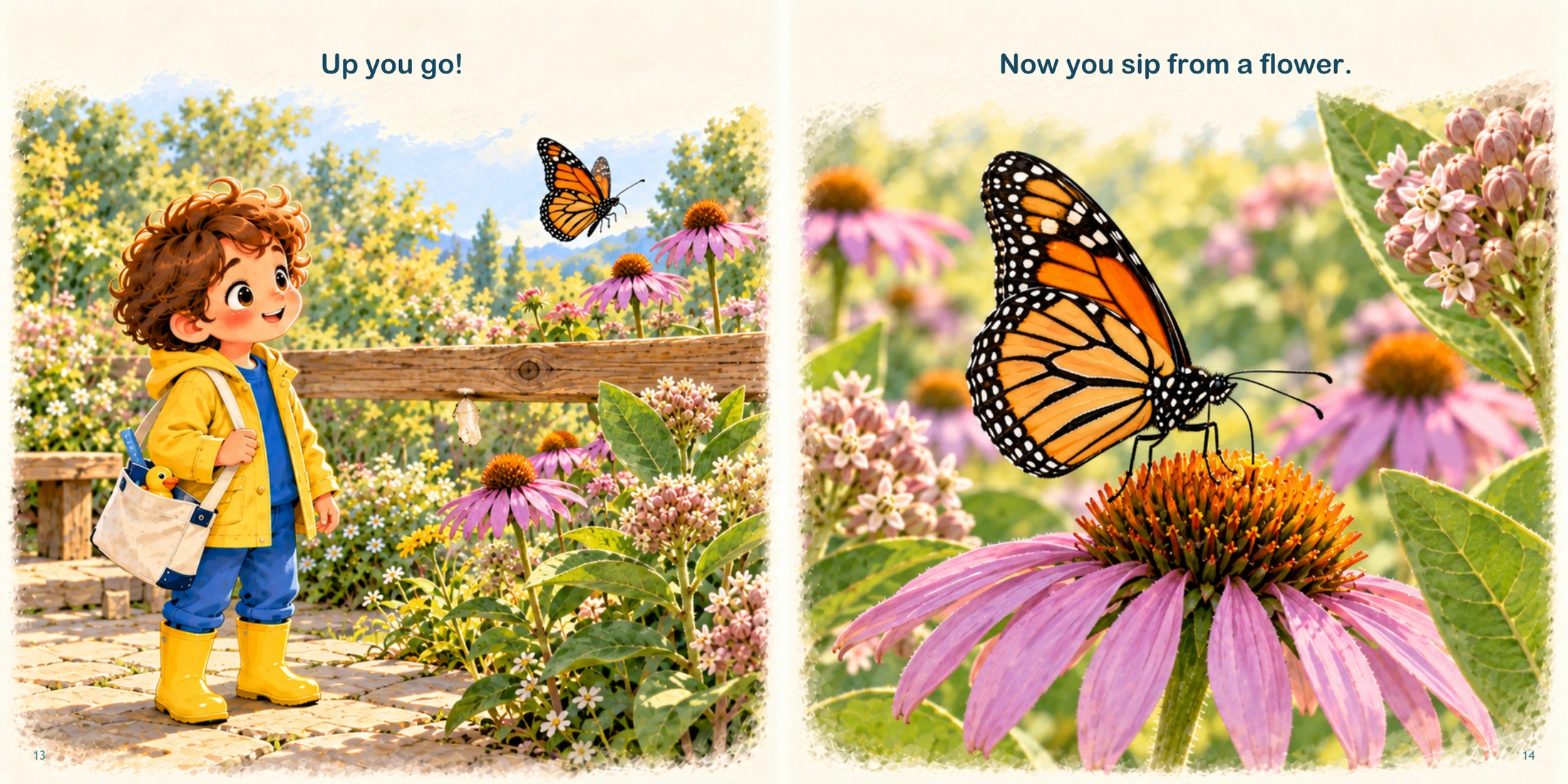
Up you go! Now you sip from a flower.
Explore together · Flight and nectar sipping
The butterfly flies away from the rail, then rests on a coneflower with a slender mouthpart reaching its center. The adult drinks nectar through a proboscis. Its flight and flower sipping contrast with the caterpillar's crawling and leaf chewing at the beginning.
Ask together: How is its food different from the first pages?
Keeping the discoveries
Pages 15–16
For grown-ups
Pages 17–18
For Grown-Ups Vince follows a monarch from a leaf-chewing caterpillar to a nectar-sipping butterfly. Its body changes as it develops. These pictures follow one successful summer journey, across many visits. 1-4 Eating and growing Monarch caterpillars feed on milkweed. As one grows, it sheds its outer skin several times. Underneath is another caterpillar stage, still striped. The old skin may soon be eaten. Close views make small details easier to see. 5-8 A new stage A mature caterpillar may crawl away from its food plant. It makes a silk pad and hangs by its rear end. The last larval skin slips away, revealing a chrysalis. This pupa is a living stage, not an empty bag or a sleeping caterpillar. 9-12 Wings appear The adult develops during the pupal stage. Near emergence, its orange-and-black wing pattern becomes visible. The butterfly emerges with crumpled wings, then pumps fluid into them as it hangs. It needs time before it can fly. 13-16 Different ways to feed The caterpillar used chewing mouthparts. The adult extends a slender proboscis into flowers to drink nectar. Look back: which food and body parts have changed? Watching together Look with a grown-up and leave insects, chrysalises and plants where they are. Do not pull a leaf, touch wings or taste plants. A notebook is enough. Sketch what you actually notice; some visits bring no visible change. Timing depends on temperature and other conditions. An animal may move away, and you may miss a stage. Not every caterpillar reaches adulthood. Pictures show selected moments, not a timetable or a promise of what your garden will show. Sources: Monarch Joint Venture; University of Maryland Extension, FS-1144; University of Maine Cooperative Extension; U.S. Fish & Wildlife Service.
Open these pages in the readerSources and evidence
Monarch caterpillars chew milkweed leaves; adult monarchs drink nectar from flowers.
Monarch | U.S. Fish & Wildlife Service
Metamorphosis: The Life Stages of a Monarch Butterfly on Milkweed, FS-1144
Monarch Butterfly on Purple Coneflower | U.S. Fish & Wildlife Service
This is a monarch feeding on milkweed; other caterpillars have different food plants. A butterfly may drink from several kinds of nectar-bearing flower.
A growing monarch caterpillar sheds its old outer skin and remains a caterpillar through its larval molts.
Life Cycle | Monarch Joint Venture
The illustrated moments are separated by days. Their sizes are not measurements. The exposed old skin may soon be eaten.
A mature monarch caterpillar commonly leaves its feeding plant, attaches a silk pad to a support and hangs in a J before pupating.
Life Cycle | Monarch Joint Venture
The wooden rail is one possible support. The caterpillar hangs by its rear end; a monarch chrysalis is not a silk cocoon.
The last larval skin is shed to reveal a chrysalis; it is a living pupal stage, and adult wing colours become visible before emergence.
Life Cycle | Monarch Joint Venture
The pupa is a living stage, not an empty house containing an unchanged caterpillar. The pictures show different moments.
A monarch emerges with small crumpled wings, then pumps fluid into them so they expand while it hangs; it flies after its wings are ready.
Monarch Butterfly and Caterpillar | University of Maine Cooperative Extension
Life Cycle | Monarch Joint Venture
Crumpled and expanded wings are separated in time. The butterfly remains supported while they expand; no exact duration is promised.
Development takes time and depends on conditions; an outdoor observer may miss a stage or lose sight of an animal. Not every caterpillar reaches adulthood.
Life Cycle | Monarch Joint Venture
Monarch Larva Monitoring Project: Frequently Asked Questions
Timing depends on conditions. An outdoor observer may miss a stage or lose sight of the animal, and not every caterpillar reaches adulthood. The story follows one successful journey.
A story worth keeping?
Read it here as often as you like. The physical edition is coming soon.