THE COMPLETE BOOK · FREE TO READ
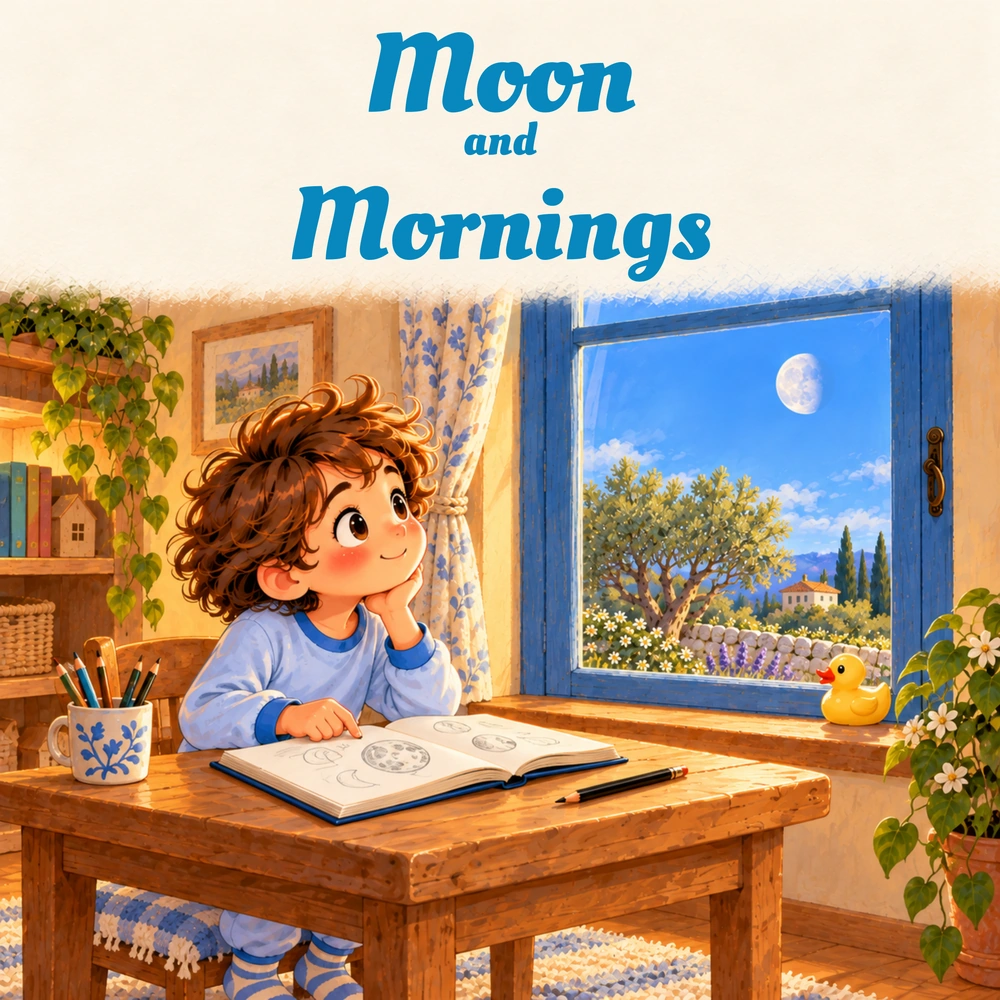
Moon and Mornings
Vince wants to draw the Moon. His notebook follows a faint circle, passing clouds, a changing place in the sky and different bright shapes across nights and mornings. Look closely together and compare the pictures he keeps.
Turn the pagesOr scroll to readA curve to keep
Pages 1–2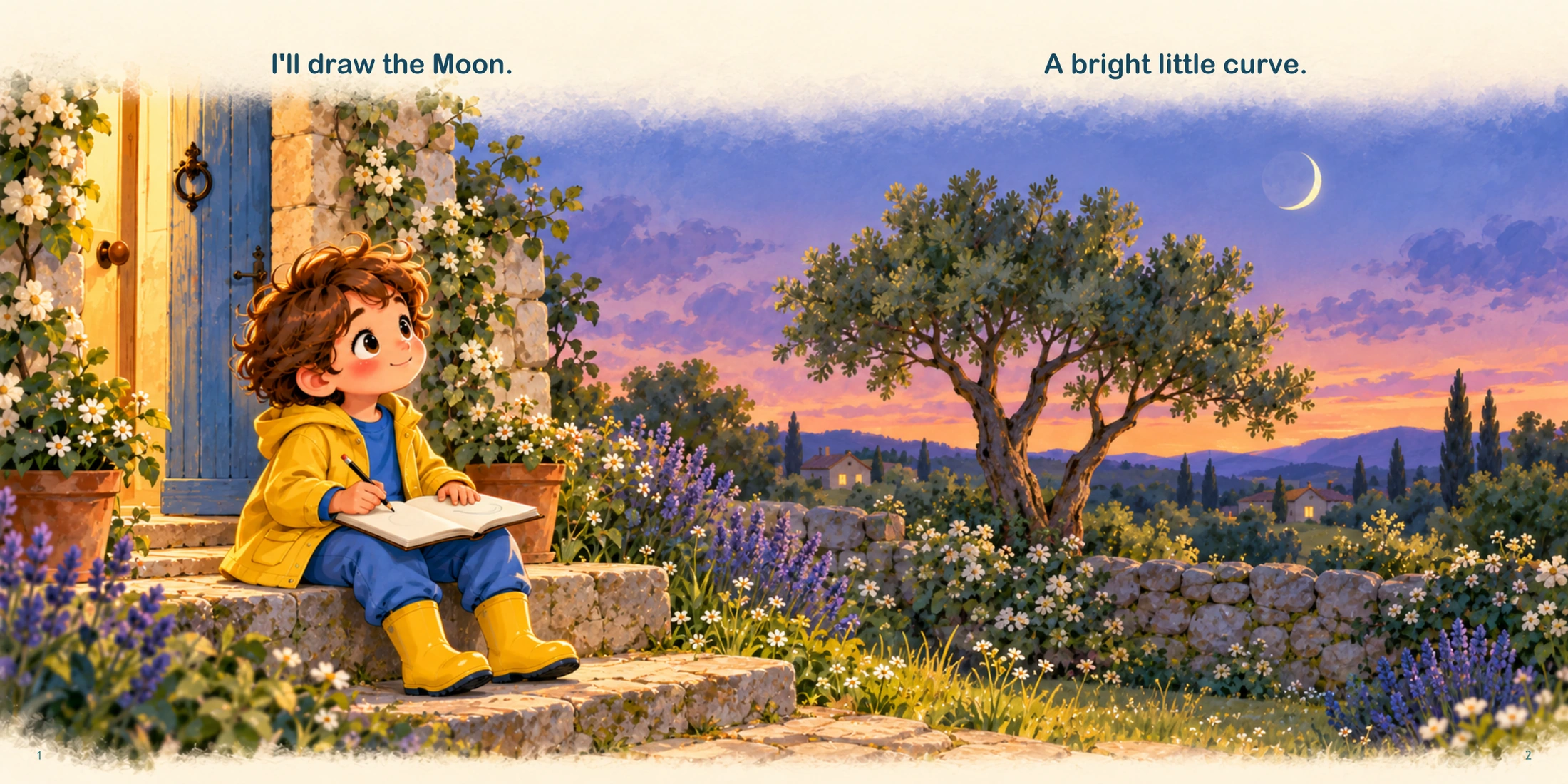
I'll draw the Moon. A bright little curve.
Explore together · Looking and recording
Vince pauses with his pencil and notebook to look at a bright curved part of the Moon. Sunlight makes the crescent bright. A drawing can keep the shape he notices at this particular time.
Ask together: What shape is Vince trying to draw?
More than the bright curve
Pages 3–4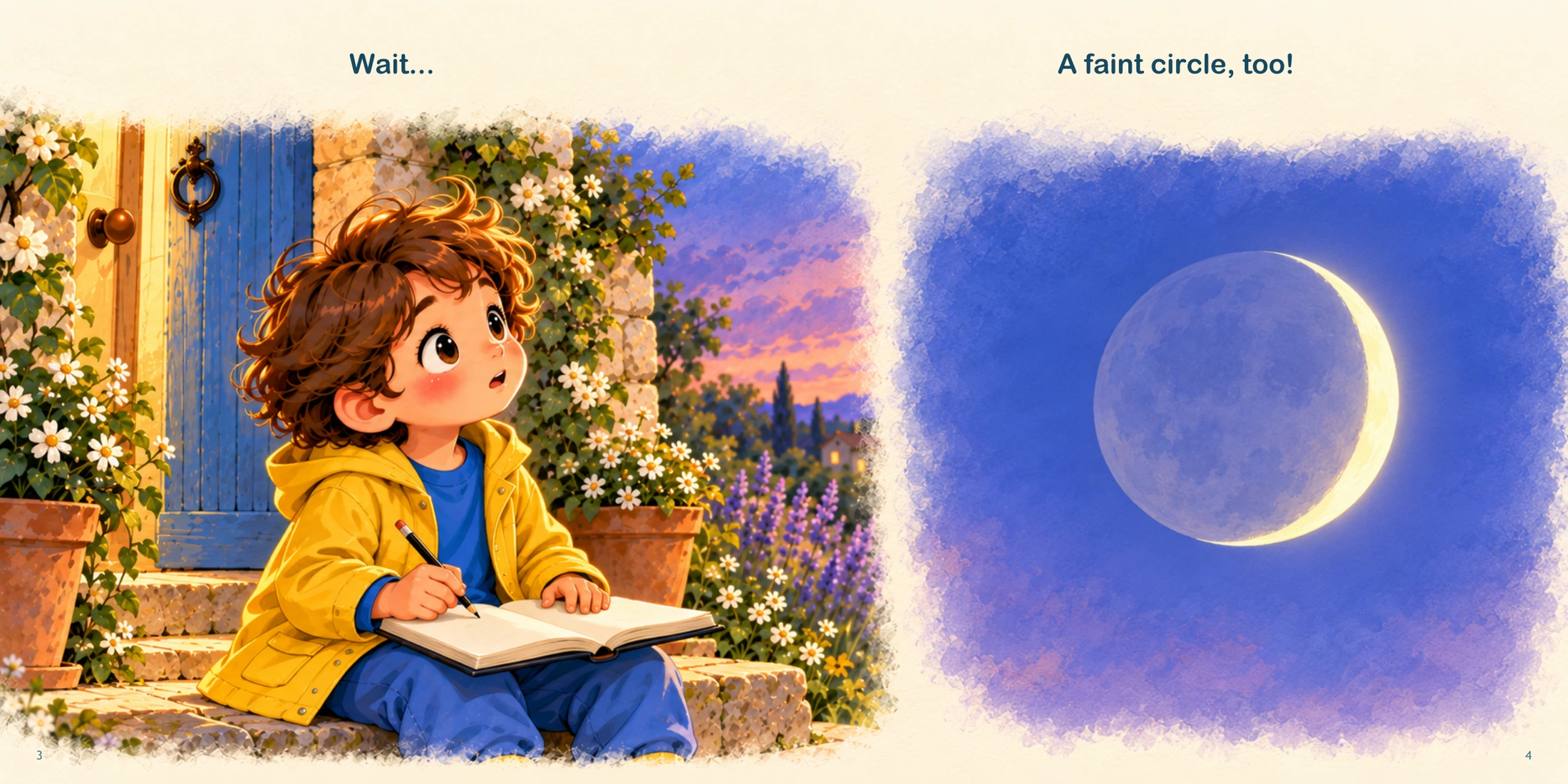
Wait... A faint circle, too!
Explore together · Earthshine and the whole Moon
A closer sky view reveals a faint round part beside the much brighter crescent. Sometimes sunlight reflected from Earth makes the rest of the Moon faintly visible. This earthshine is easier to notice in some twilight conditions than others.
Ask together: What can you notice beyond the bright curve?
Hidden, then back
Pages 5–6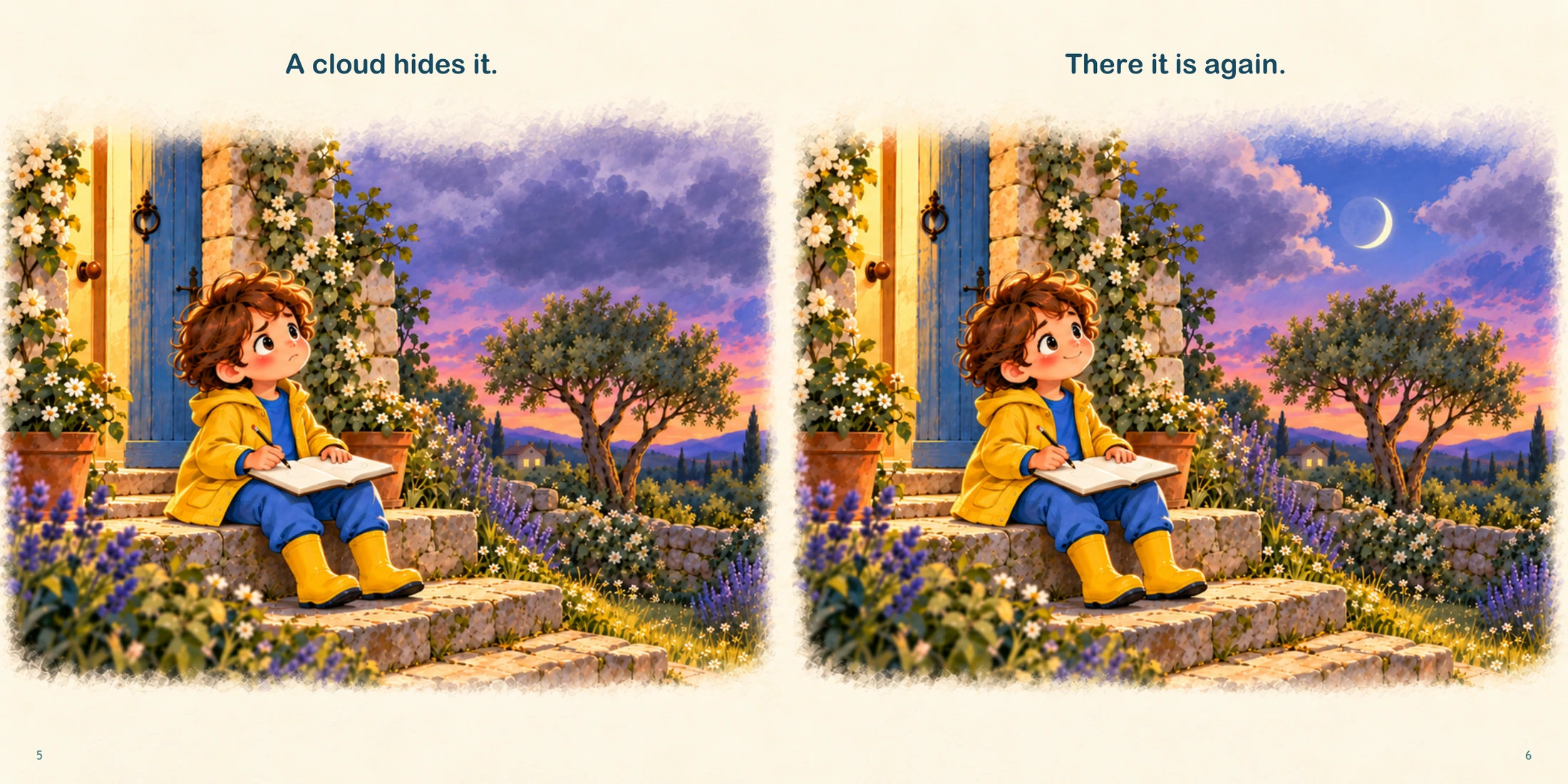
A cloud hides it. There it is again.
Explore together · Clouds and visibility
A thick cloud hides the Moon; a gap reveals the crescent again while Vince waits. An opaque cloud can block our view. Its passing does not change the Moon’s monthly phase.
Ask together: What changes between these two pictures?
Lower in the sky
Pages 7–8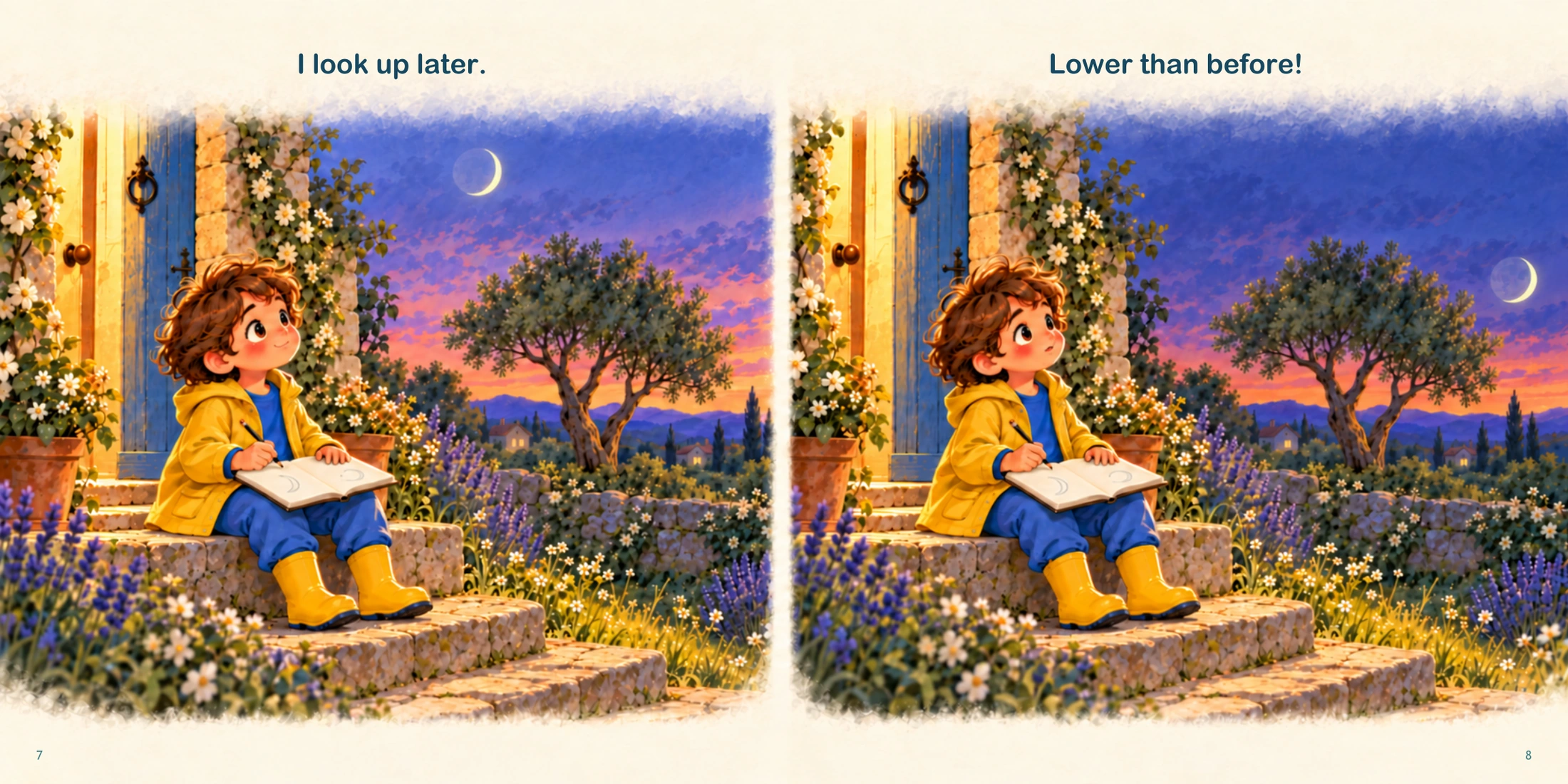
I look up later. Lower than before!
Explore together · Comparing with a fixed landmark
In two views from the same spot, the crescent appears lower and farther across the tree as the evening goes on. Earth’s turning makes the Moon appear to travel across the sky. A fixed tree or roof helps us compare its position.
Ask together: Where is the Moon compared with the tree each time?
A different bright shape
Pages 9–10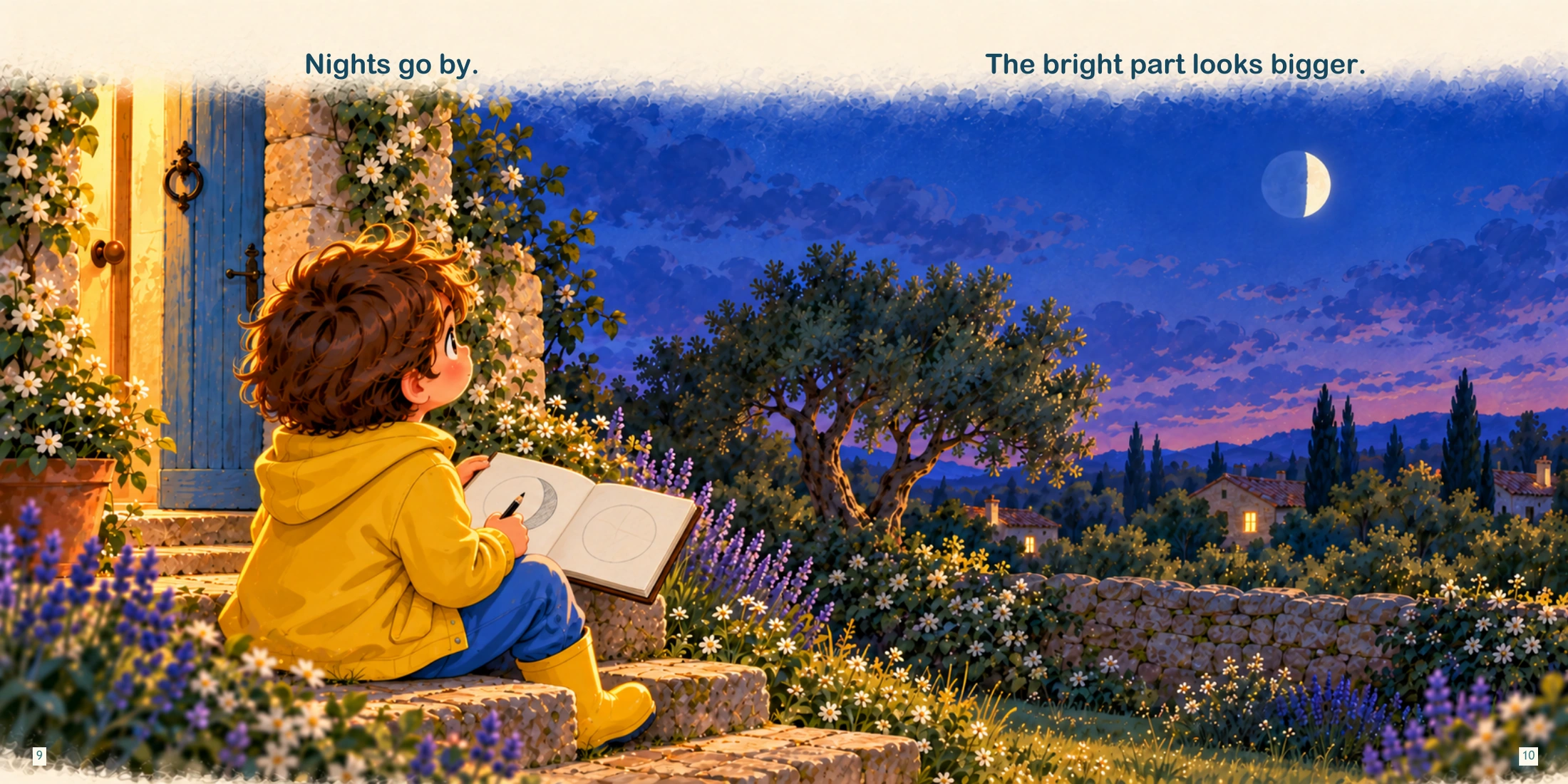
Nights go by. The bright part looks bigger.
Explore together · Changes across nights
Several nights later, Vince compares his earlier crescent drawing with a Moon whose right half looks bright. The Moon itself has not grown. As it travels around Earth, we see different amounts of its sunlit half.
Ask together: How does the bright part compare with Vince’s earlier drawing?
A bright circle
Pages 11–12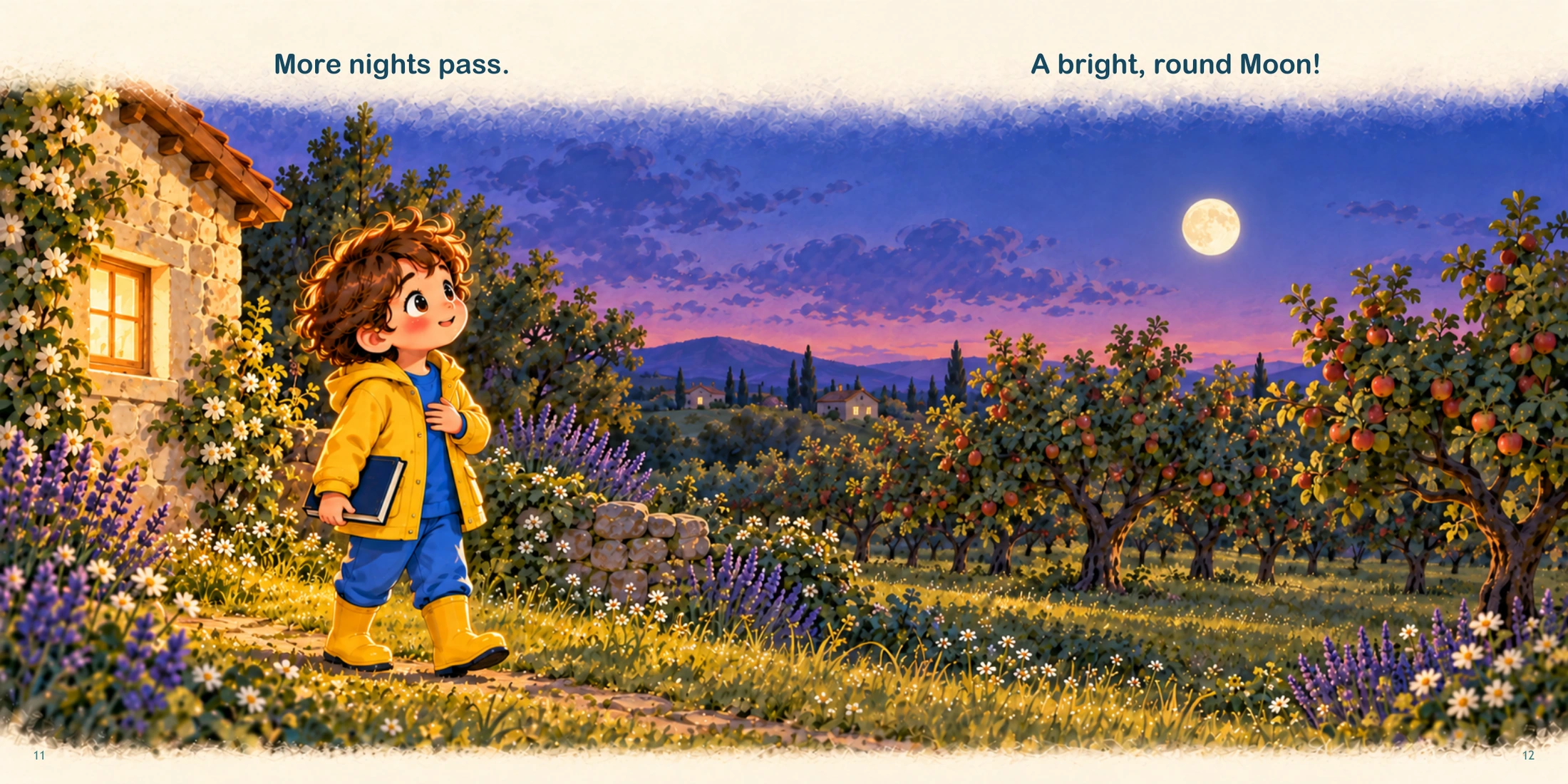
More nights pass. A bright, round Moon!
Explore together · Watching toward full Moon
After more nights, Vince carries his notebook to another side of the garden and sees a bright round Moon above the orchard. Near full Moon, almost all of the side facing us is sunlit. A full Moon rises around sunset.
Ask together: What kind of drawing could Vince add now?
Moon in the morning
Pages 13–14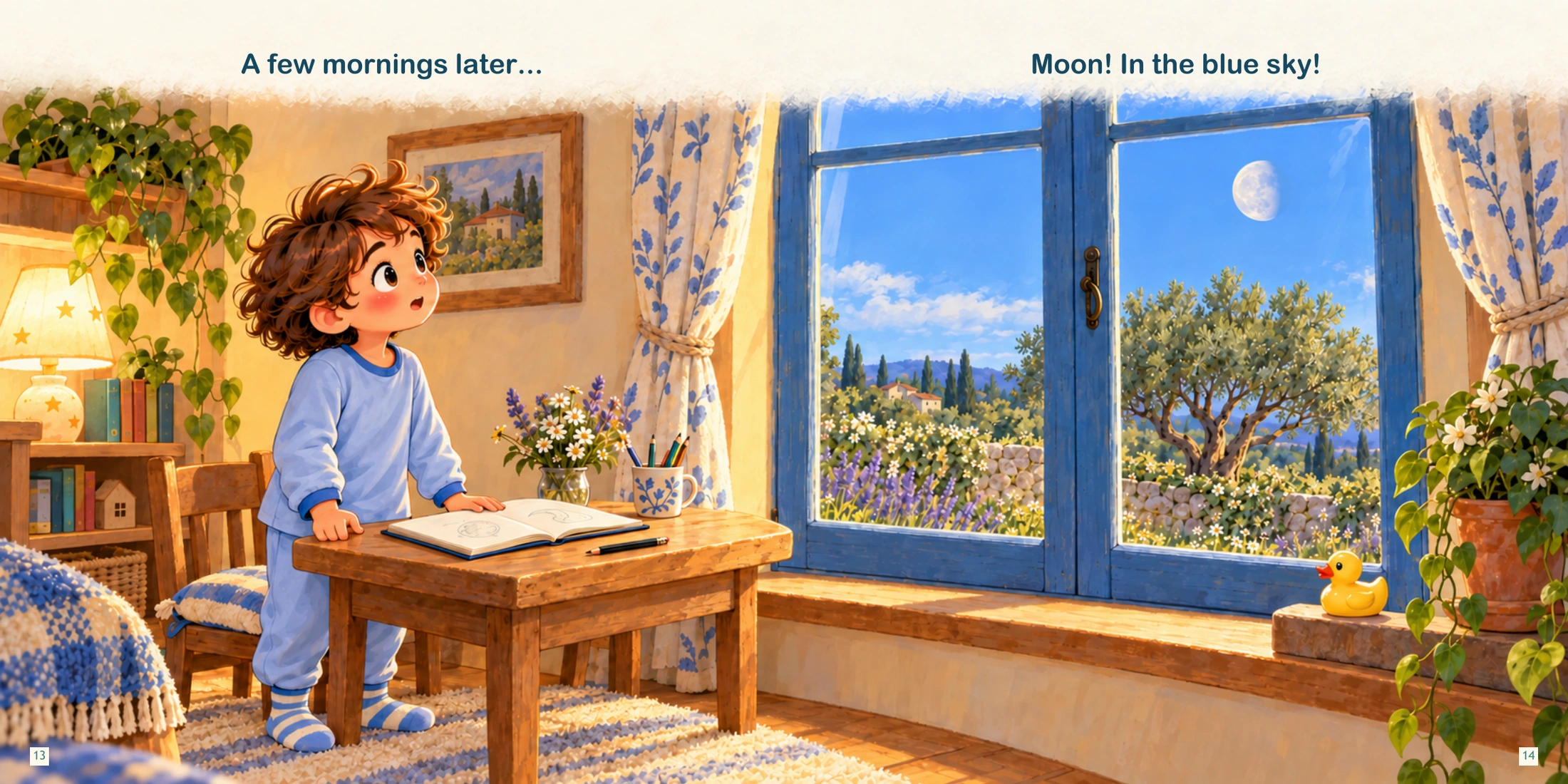
A few mornings later... Moon! In the blue sky!
Explore together · Daylight visibility
In pyjamas at a closed window, Vince spots a pale Moon in the blue morning sky. The Moon reflects sunlight in daytime too. After full Moon it can remain in the morning sky; visibility depends on the phase, date, place and weather.
Ask together: What is different about the sky around this Moon?
Keeping both pictures
Pages 15–16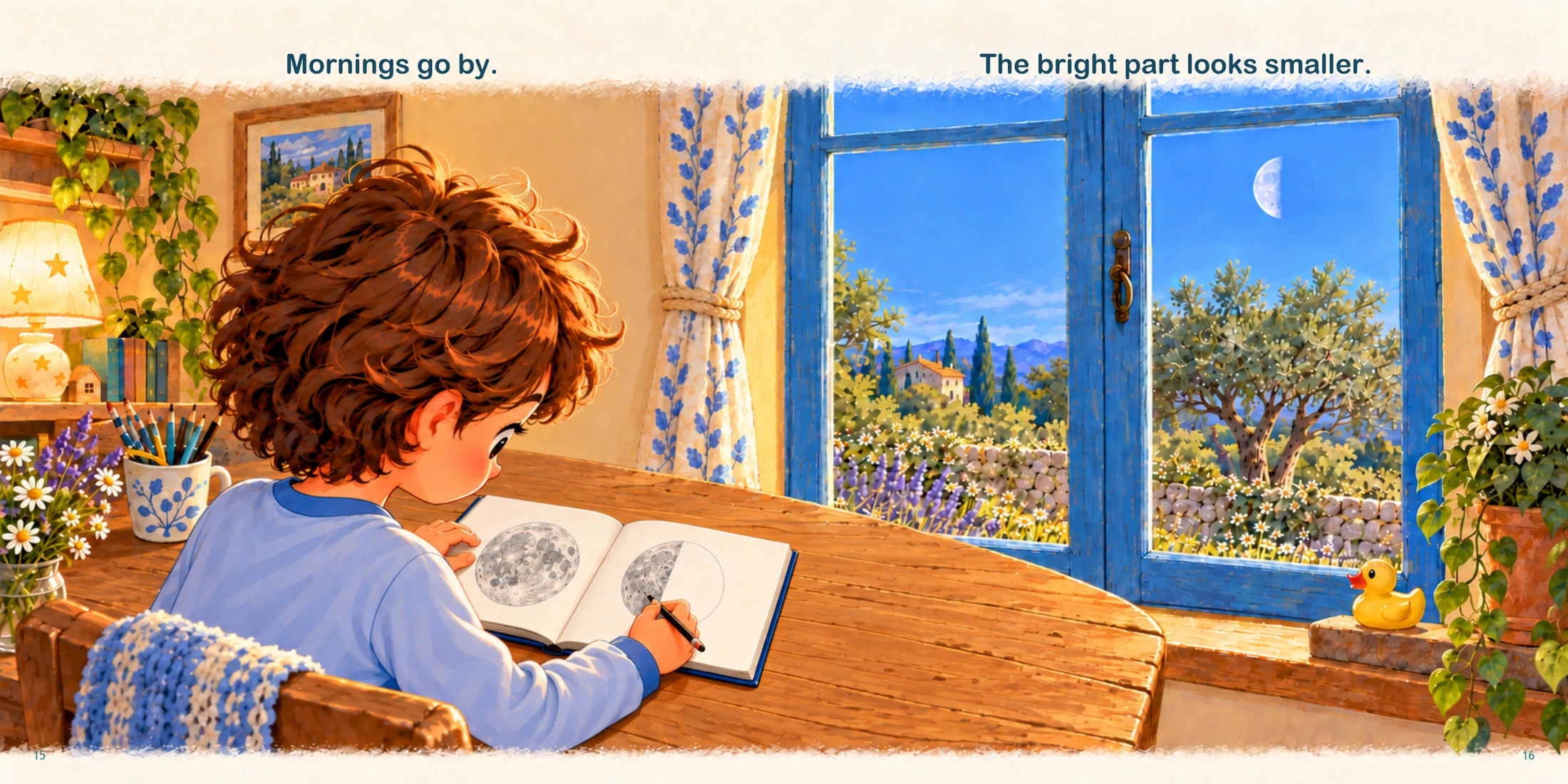
Mornings go by. The bright part looks smaller.
Explore together · Waning and comparing records
On a later morning, Vince draws a half-bright Moon beside an earlier full-Moon record. After full Moon the visible bright portion gets smaller over successive days. His notebook can keep both observations for comparison.
Ask together: What has changed between the two notebook drawings?
A notebook of Moons
Pages 17–18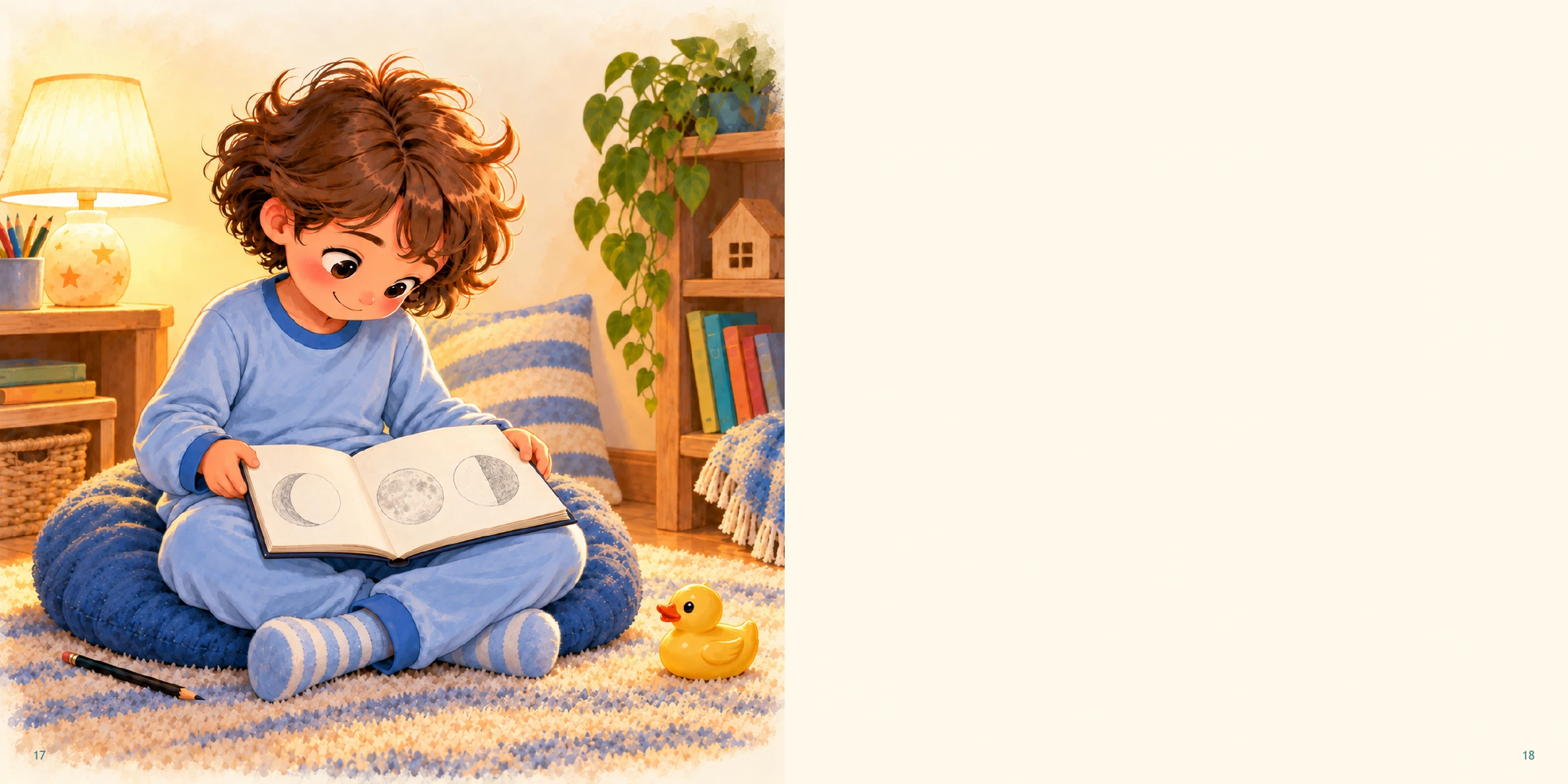
For grown-ups
Pages 19–20
For Grown-Ups Vince keeps looking over several weeks. These pictures show a northern-hemisphere view. The Moon can look tilted differently from other places. A bright part, a whole Moon The crescent is sunlit. Sometimes light reflected from Earth makes the rest faintly visible: earthshine. It can be hard to see through haze or near bright lights. Hidden, then moving A thick cloud can hide the Moon; a gap reveals it. From one safe spot, compare the Moon with a fixed tree or roof. As Earth turns, the Moon appears to travel across the sky. Clouds do not cause its monthly phases. Changing bright shapes The Sun lights half the Moon. As the Moon travels around Earth, we see different amounts of that sunlit half. The Moon is not growing or shrinking. Ordinary phases are not Earth’s shadow. The visible bright part grows toward full, then shrinks; a whole cycle takes about a month. A morning Moon The Moon reflects sunlight by day, too. After full Moon, it can stay up into the morning. When and where to look depend on the phase, date and place. Trees and cloudy skies can hide it. Look and record together With a grown-up, look from a safe place using just your eyes. Never look at the Sun. Draw the bright part and a nearby landmark; add the date and time. If you cannot see the Moon, record that too. Compare your drawings over several weeks. A local Moon guide can help you choose when to look. The closer sky pictures help us notice shape and light. They are not a scale map. Which drawing would Vince add next?
Open these pages in the readerSources and evidence
A crescent Moon can have a dimly visible round remainder, lit by earthshine. The bright crescent is not the whole physical Moon.
NASA Earth Observatory: Earthshine
Earthshine is sometimes visible; sky clarity and contrast matter. The closer sky view is not a scale map.
Clouds can obstruct a Moon observation without changing its phase; a passing gap may reveal the same phase minutes later.
Some clouds are thin enough for the Moon to remain visible. A thick cloud can hide it, and a clear gap may reveal it again.
The Moon can change position relative to fixed horizon landmarks over one evening, here becoming lower as it approaches setting.
NASA: Why Can You See the Moon During the Day?
Position comparisons work from the same safe viewpoint using fixed landmarks. Movement during one evening and changes in phase across many days occur on different timescales.
Across multiple nights the visible bright portion can grow from crescent through first quarter to full, then become smaller on later mornings. The Moon itself does not grow or shrink.
These selected observations span several weeks. The pictures use northern-hemisphere orientations; apparent tilt varies with the observer’s place and time.
A waning Moon may be visible in a blue morning sky; the Moon is not exclusively a night object.
NASA: Why Can You See the Moon During the Day?
Visibility depends on the Moon’s phase and position, the date, the observer’s location and the weather. Use only your eyes, and never look at the Sun.
Ordinary lunar phases arise from our changing view of the sunlit half as the Moon travels around Earth. Clouds and Earth’s shadow do not cause these phases.
Ordinary lunar phases have a different cause from the darkening during a lunar eclipse.
Repeated dated drawings of the Moon and nearby fixed landmarks can record changes, while missed observations remain gaps in the record.
Weather, obstacles and the Moon’s position can prevent a sighting. Recording a missed observation is useful too.
A story worth keeping?
Read it here as often as you like. The physical edition is coming soon.