THE COMPLETE BOOK · FREE TO READ
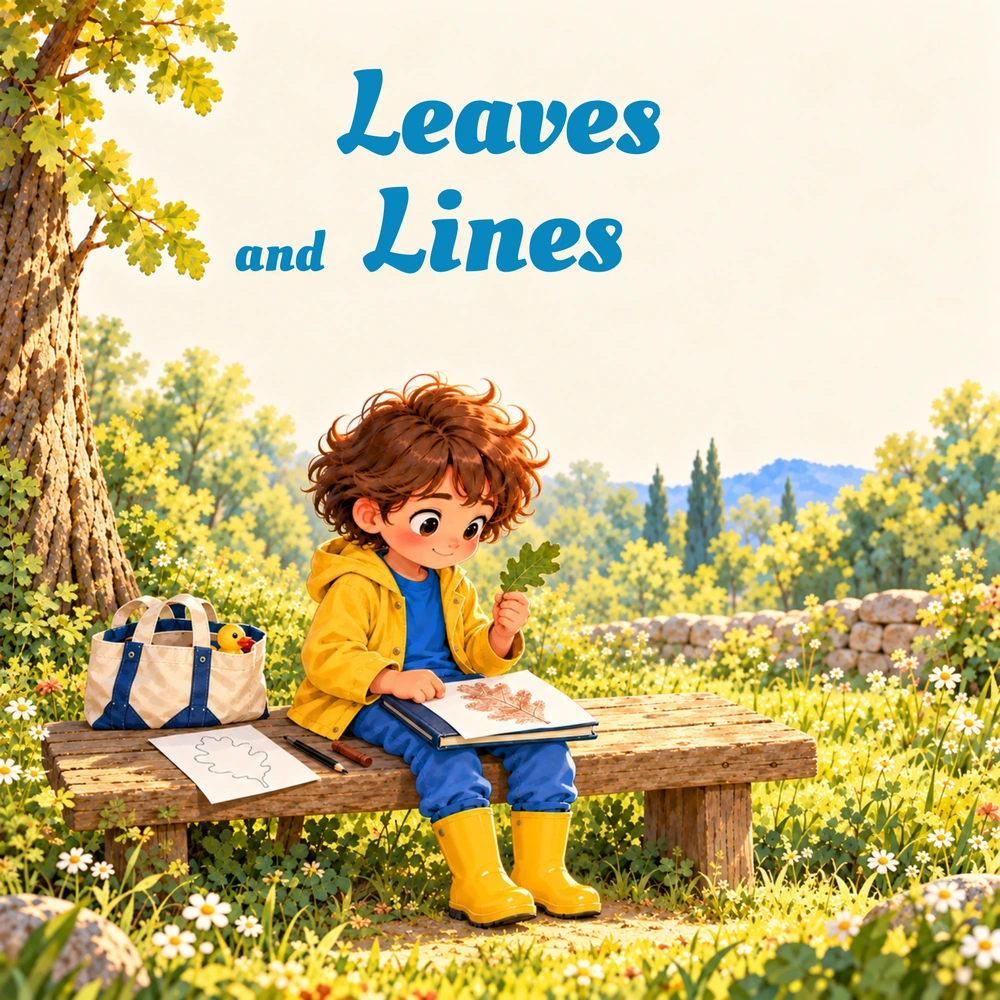
Leaves and Lines
Vince traces a fallen leaf, feels the bumps underneath and makes a rubbing to keep its pattern. Compare rounded and pointed leaves, follow their different vein arrangements, and notice how leaves on one tree can vary.
Turn the pagesOr scroll to readAround the edge
Pages 1–2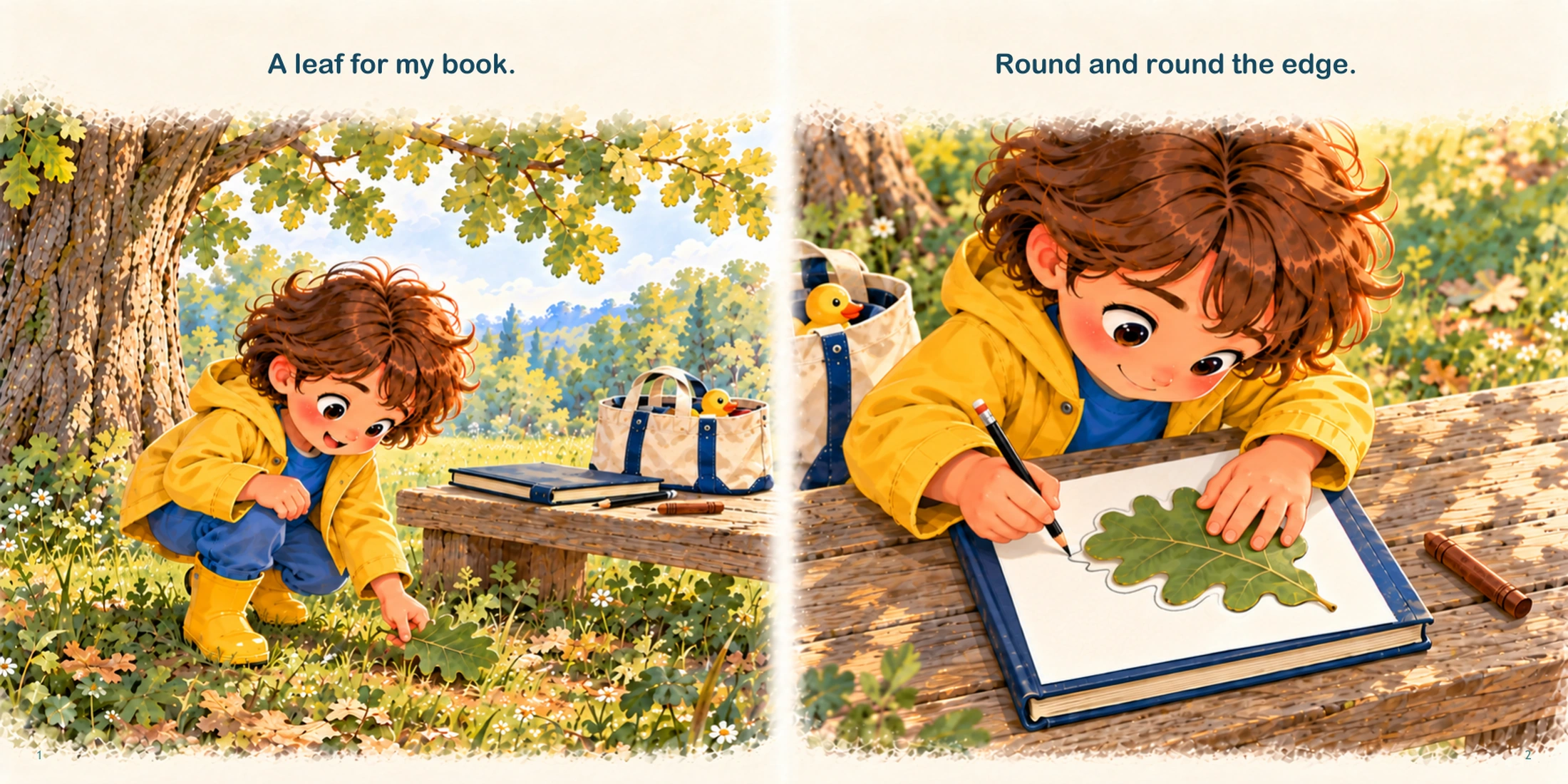
A leaf for my book. Round and round the edge.
Explore together · Recording an outline
Vince picks up a fallen leaf and follows its outside edge with a pencil on paper. An outline records the leaf’s outside shape. It does not capture every detail inside that boundary.
Ask together: Which parts of the leaf does the pencil go around?
Finding the little lines
Pages 3–4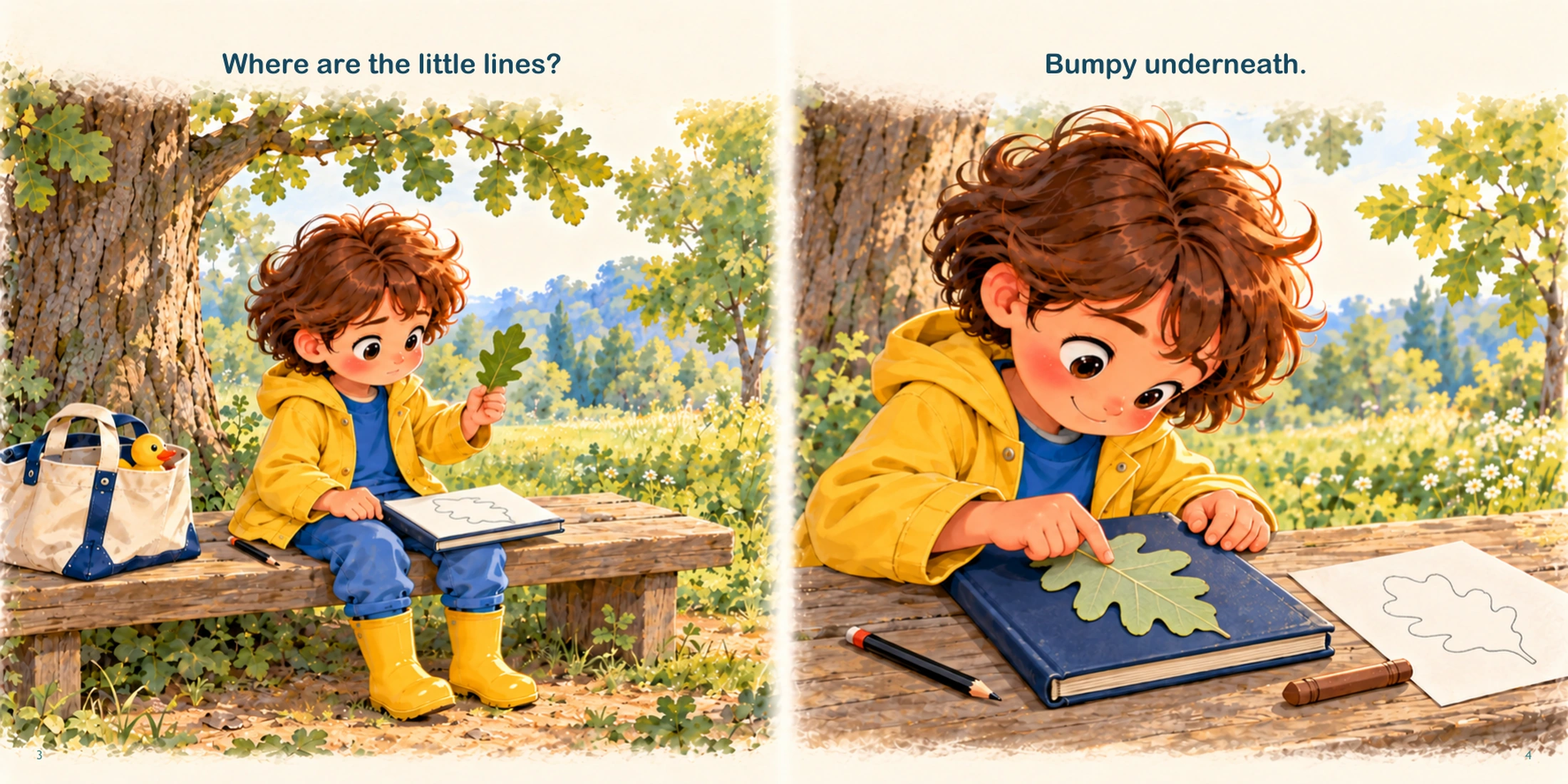
Where are the little lines? Bumpy underneath.
Explore together · Looking at both surfaces
The paper has only an outline. Vince turns the leaf over and touches a raised vein. A leaf has a vein pattern as well as an outside edge. The larger veins on this leaf stand out on its underside.
Ask together: What can Vince feel that his outline does not show?
A pattern through paper
Pages 5–6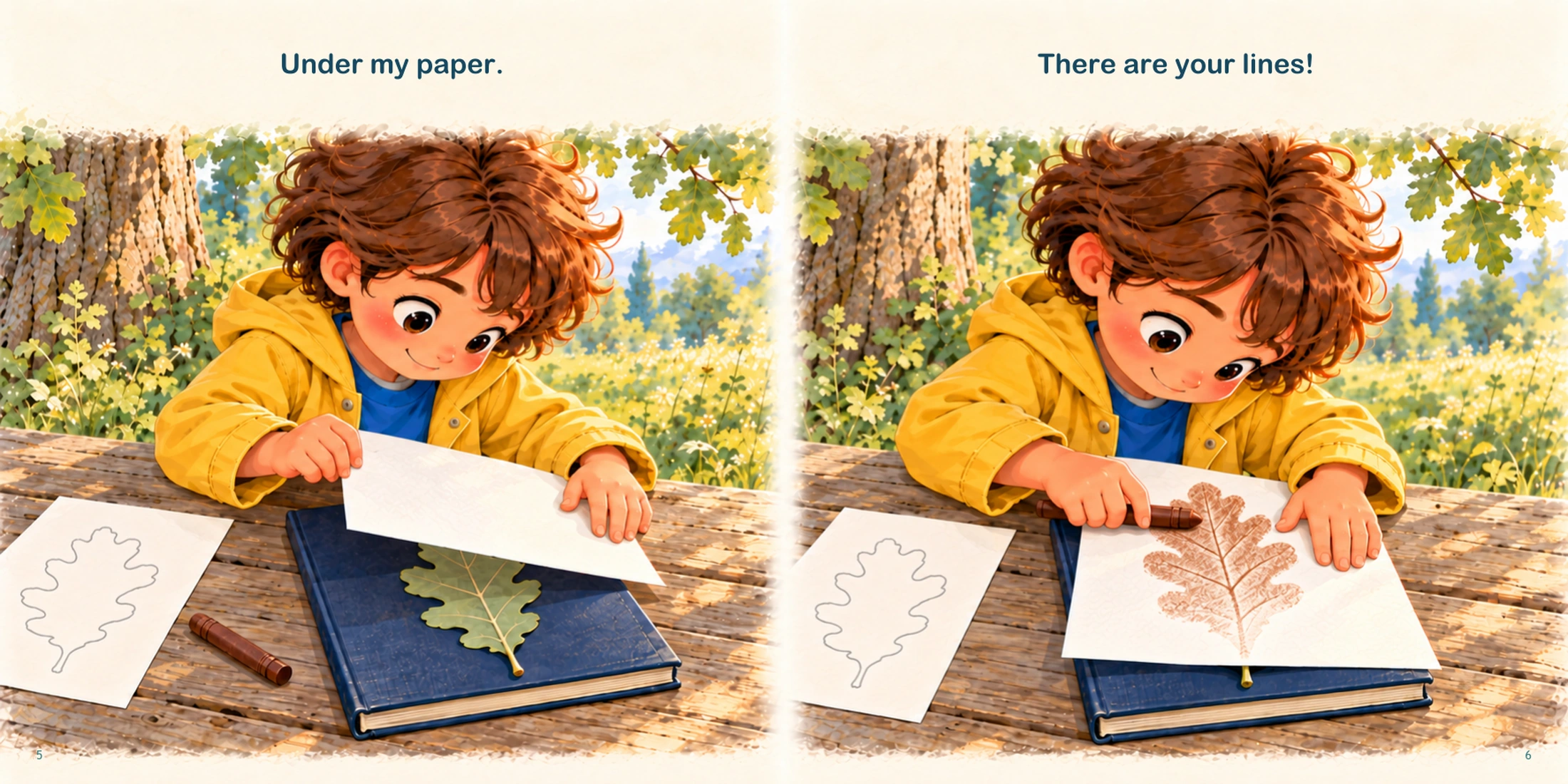
Under my paper. There are your lines!
Explore together · Making a rubbing
Vince covers the leaf with paper on his closed notebook, then rubs a brown wax crayon sideways across the sheet. The crayon leaves more colour on the paper where it rests against raised features. Thin paper, a firm backing and gentle rubbing help reveal the pattern; some leaves work better than others.
Ask together: Which details appear in the brown rubbing?
Two different arrangements
Pages 7–8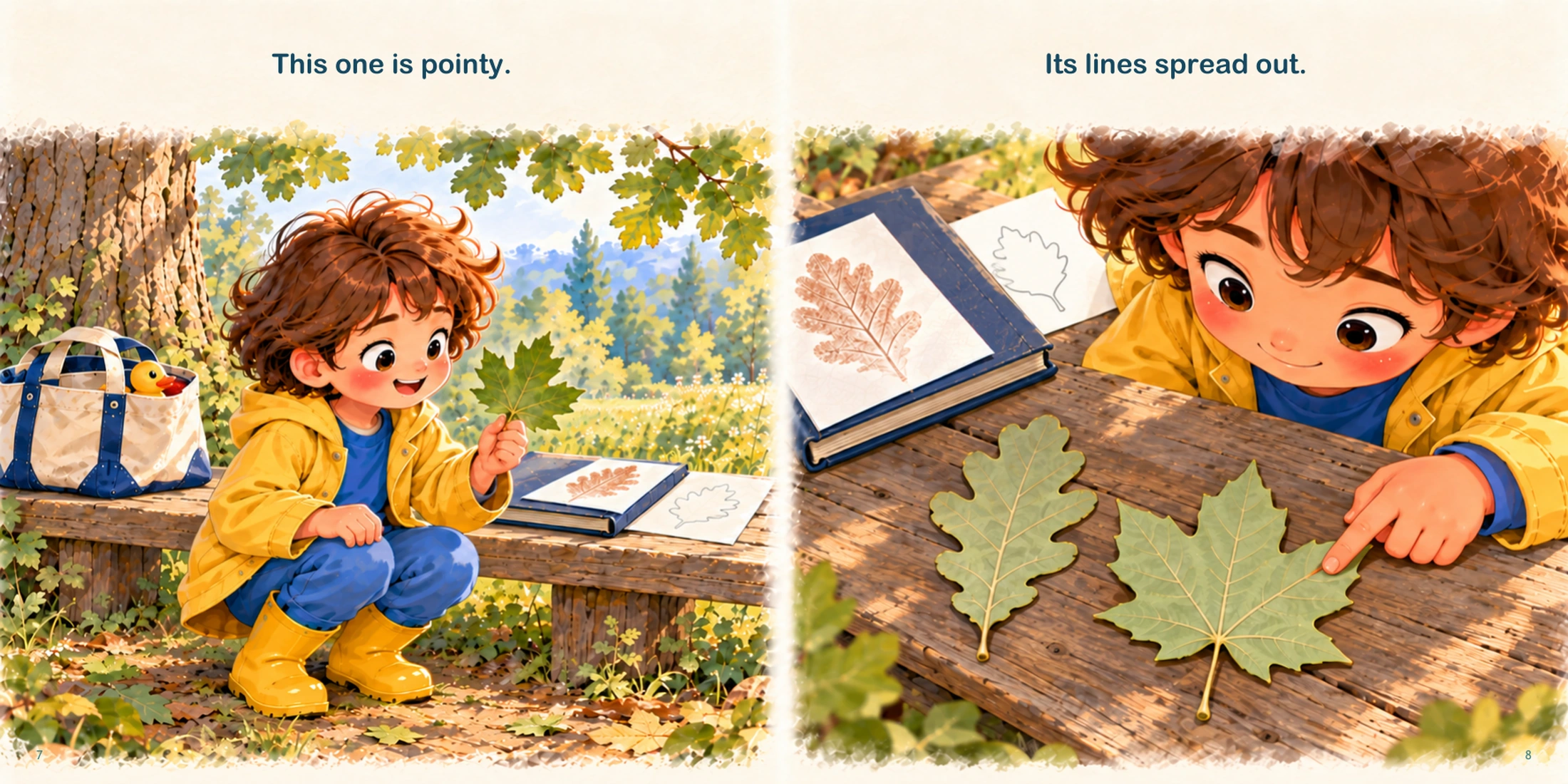
This one is pointy. Its lines spread out.
Explore together · Comparing leaf edges and veins
Vince compares a rounded-lobed oak leaf with a pointed maple leaf. The oak’s veins branch from a middle line; the maple’s main veins spread from near its stalk. These two leaves differ in both their outlines and their vein arrangements. Comparing several features tells us more than looking at one feature alone.
Ask together: Where do the large lines on each leaf begin?
Leaves on the tree
Pages 9–10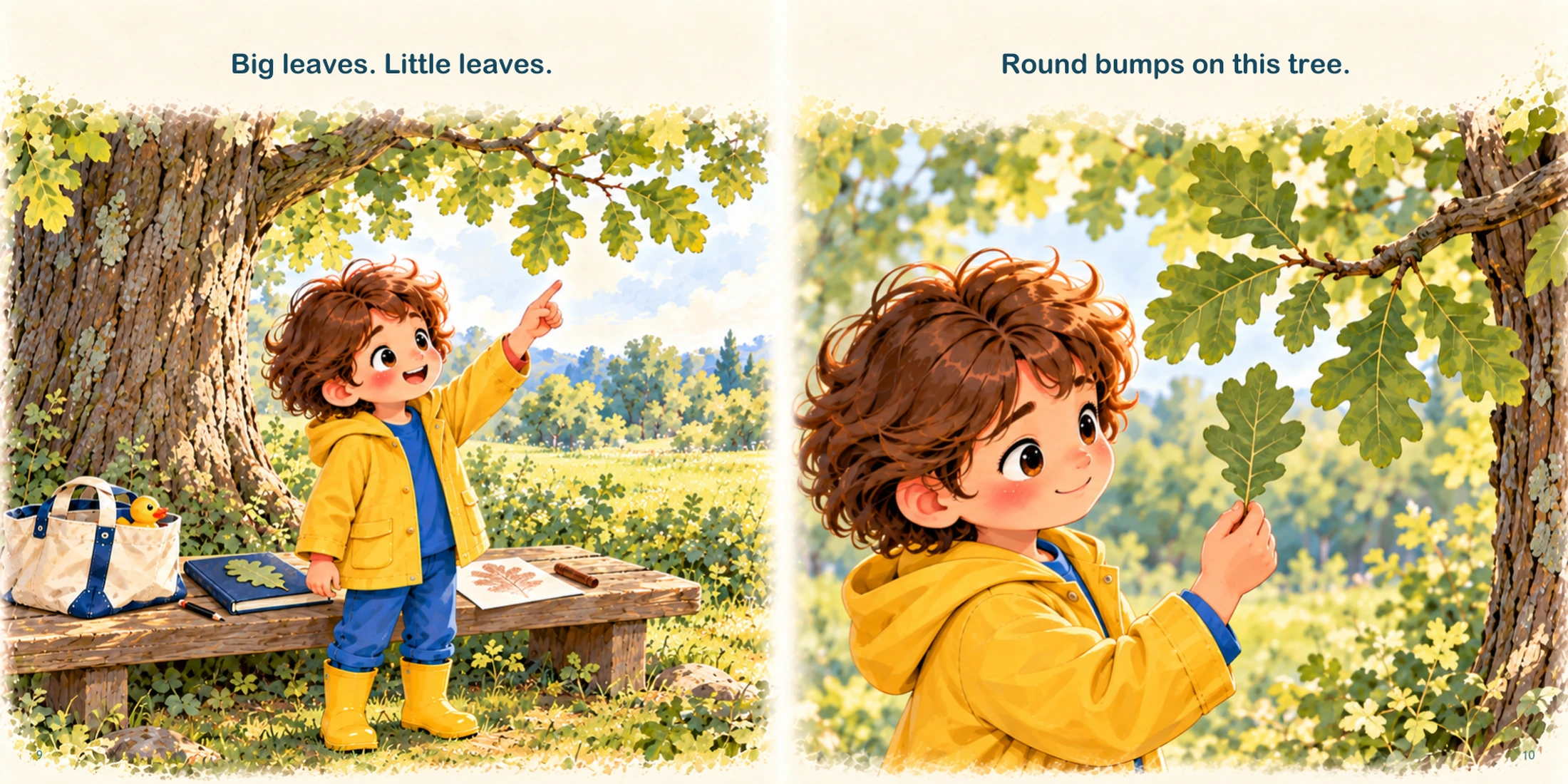
Big leaves. Little leaves. Round bumps on this tree.
Explore together · Variation and resemblance
Vince looks at differently sized leaves attached to one branch, then holds his fallen leaf nearby to compare their rounded lobes. Leaves can vary on the same tree. Similar shapes are useful clues, but resemblance alone cannot prove where a fallen leaf came from.
Ask together: What looks alike, and what looks different, among these leaves?
Keeping the pictures
Pages 11–12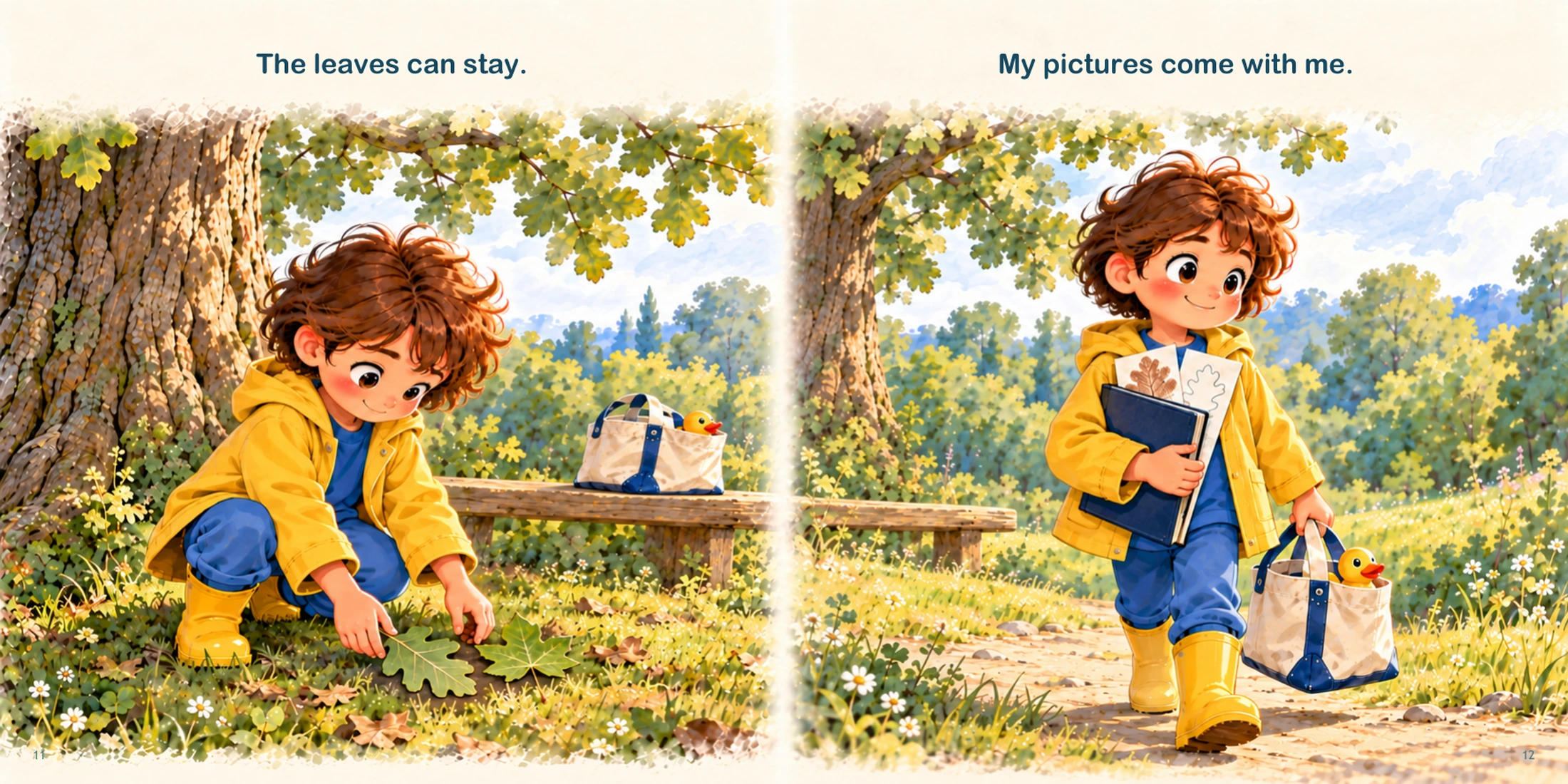
The leaves can stay. My pictures come with me.
Explore together · Records and real objects
Vince leaves both real leaves beside the tree and takes the oak outline and rubbing with him in his notebook. A drawing or rubbing can keep selected details when the real object stays behind. Each kind of record shows some features more clearly than others.
Ask together: What is Vince taking home, and what is staying by the tree?
Remembering the tree
Pages 13–14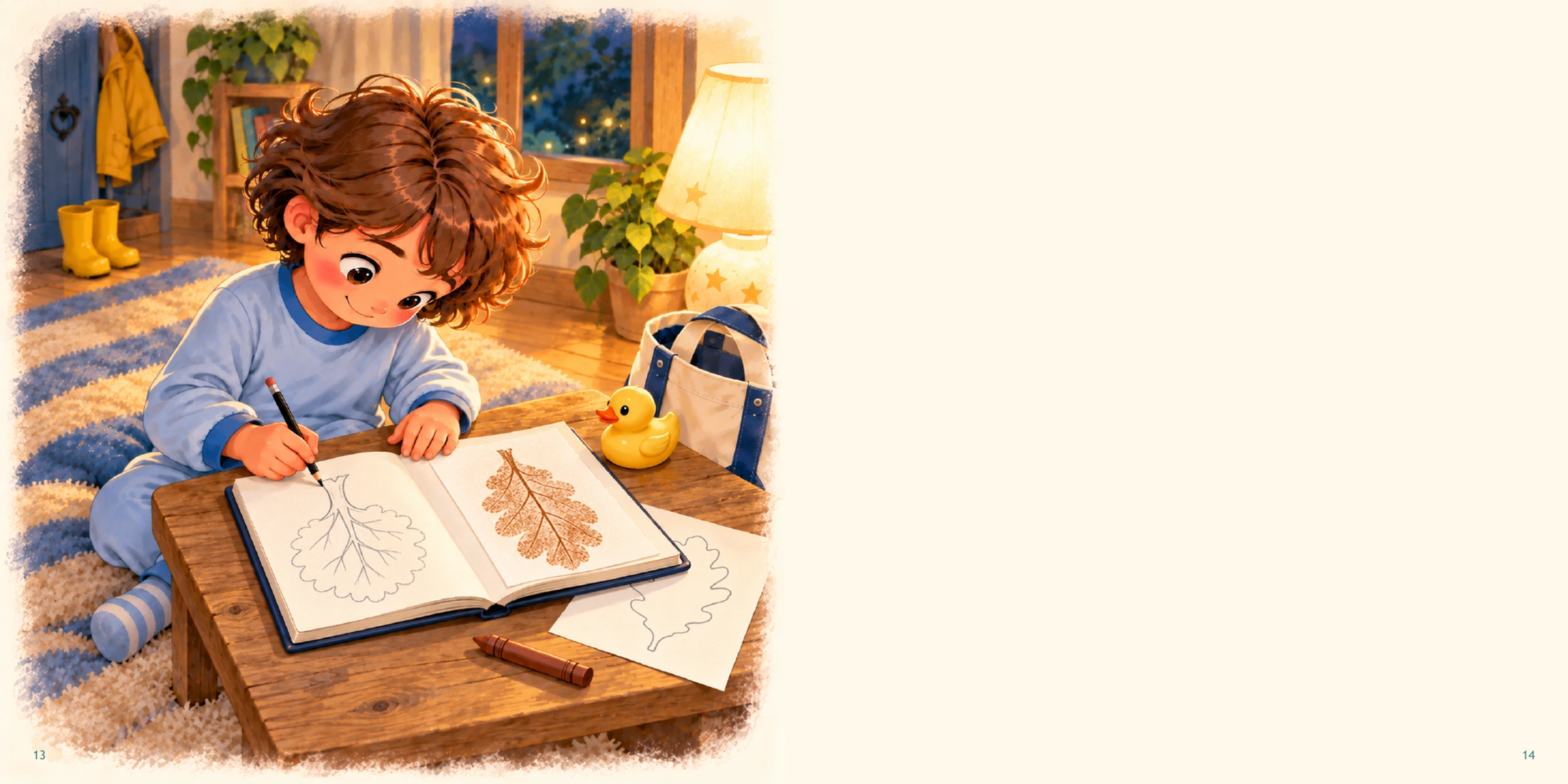
For grown-ups
Pages 15–16
For Grown-Ups Vince starts with a leaf’s outside shape. Turning it over reveals a raised pattern, and rubbing lets him keep a record of details he first missed. Edges and veins The illustrated white-oak leaf has rounded lobes. The sugar-maple leaf has pointed lobes. Oak veins branch from a strong middle vein; the maple’s main veins spread from near the stalk. These are examples, not rules for every oak or maple. Leaves vary, even on one tree. Veins help support a living leaf and carry water and other materials. Here Vince sees and feels their surface shape. The pictures do not show anything flowing inside them. A pattern on paper With a grown-up, choose a safe, supple fallen leaf with raised veins. Place it vein-side up on a firm, flat surface. Cover it with thin paper, hold it still, and gently rub the side of a wax crayon across the paper. Try thinner paper or another leaf if the pattern is faint. Brittle leaves may break. The crayon leaves more colour where the paper rests against raised features. The rubbing is a crayon record, not the leaf’s colour moving onto the sheet. It can keep some details after the real leaf is set aside; it need not copy every tiny vein. Look together Compare the outside shape, the large veins and the two surfaces. Which details stayed in Vince’s rubbing? Can you find differently sized leaves still attached to one tree? Similar shapes give clues, but cannot prove where a fallen leaf came from. Use several features and a local tree guide if you want to identify it. An adult should choose the leaves. Avoid unfamiliar or irritating plants, leave living branches and wildlife undisturbed, keep leaves and crayons out of mouths, and wash hands afterward.
Open these pages in the readerSources and evidence
The selected oak leaf has rounded lobes; the selected maple leaf has pointed lobes. These leaves have different outlines.
Oregon State University, Quercus alba
Oregon State University, Acer saccharum
Arnold Arboretum, Marginalia (6 November 2016)
The illustrated white-oak and sugar-maple leaves are examples. Individual leaves vary, and these shapes are not rules for every oak or maple.
A leaf has an internal vein pattern as well as an outer outline. On the selected leaf the larger underside veins are raised enough to feel.
University of Florida IFAS, How to Identify a Tree
Forestry England, Exploring natural materials – forest art
Relief and visibility differ among leaves. Choose a safe, supple fallen leaf with raised veins when looking or feeling with a grown-up.
A side-held wax crayon rubbed over thin paper resting on a vein-up leaf can record its raised pattern. The brown mark is crayon on paper, not green material moving out of the leaf.
Forestry England, Exploring natural materials – forest art
Deschutes Land Trust, Fall Craft Idea: Leaf Rubbings!
Use thin paper, a firm flat backing and gentle side-rubbing with a wax crayon. Thick paper, brittle leaves or weak relief can give faint or broken results. The colour comes from the crayon, not from the leaf.
The oak example has one prominent midvein with side branches; the maple example has several prominent veins spreading from near the stalk.
University of Florida IFAS, How to Identify a Tree
Oregon State University, Quercus alba
Oregon State University, Acer saccharum
The illustrations emphasize major veins. Finer networks need not appear in a rubbing; no moving liquid is visible.
Leaves attached to one tree can differ in size while sharing useful shape and vein features. A resemblance is a clue, not proof of where a fallen leaf originated.
Kew Grow Wild, What leaves reveal about wildflowers
Oregon State University, Quercus alba
University of Florida IFAS, How to Identify a Tree
Resemblance gives clues, not proof of a fallen leaf’s origin. Use several features and a local guide for identification.
Veins support the leaf and transport water and other materials while it is part of the living plant.
Kew Grow Wild, What leaves reveal about wildflowers
Veins help support a living leaf and transport water and other materials. A detached-leaf rubbing records surface shape; it does not demonstrate transport.
A story worth keeping?
Read it here as often as you like. The physical edition is coming soon.