THE COMPLETE BOOK · FREE TO READ
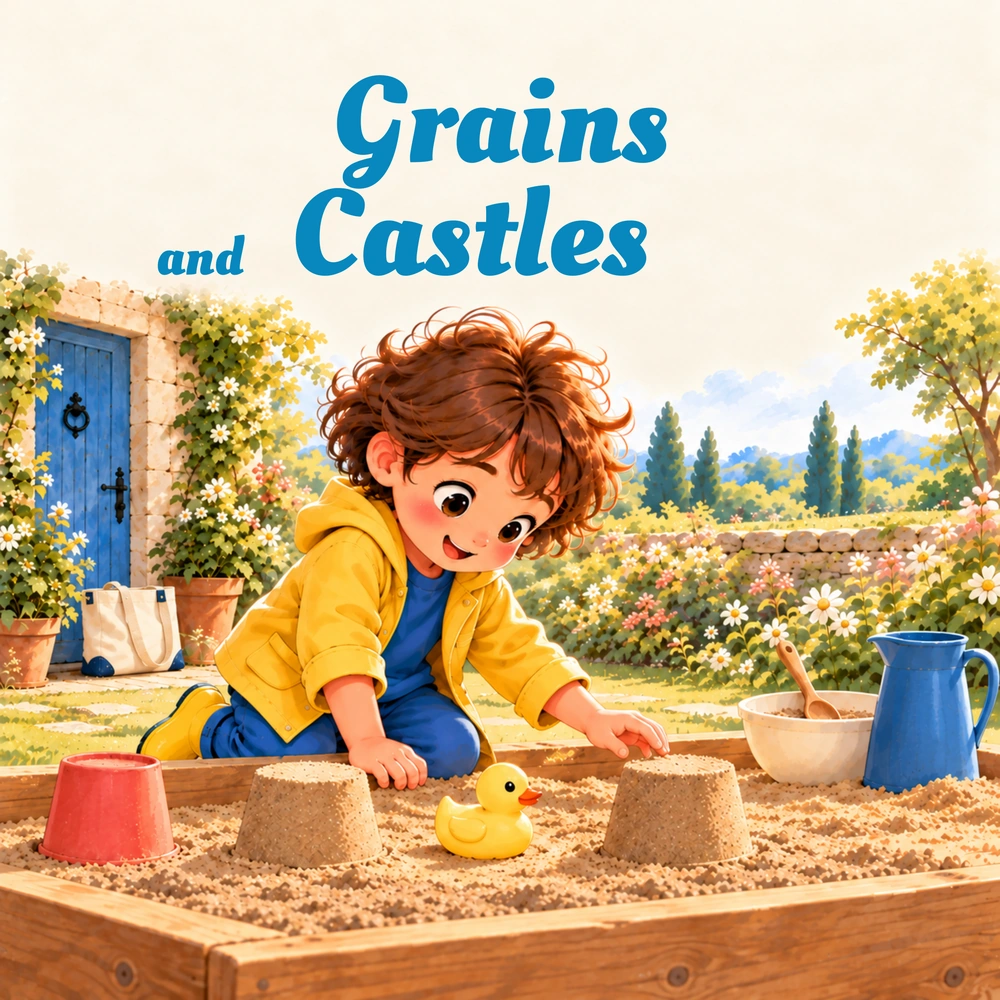
Grains and Castles
Build with Vince as loose sand pours, damp sand clumps and a cup lifts away from a tower. Too much water sends the mixture running; dry sand changes it again. Compare the shapes, follow the repairs and see what happens when the castle dries.
Turn the pagesOr scroll to readA heap of grains
Pages 1–2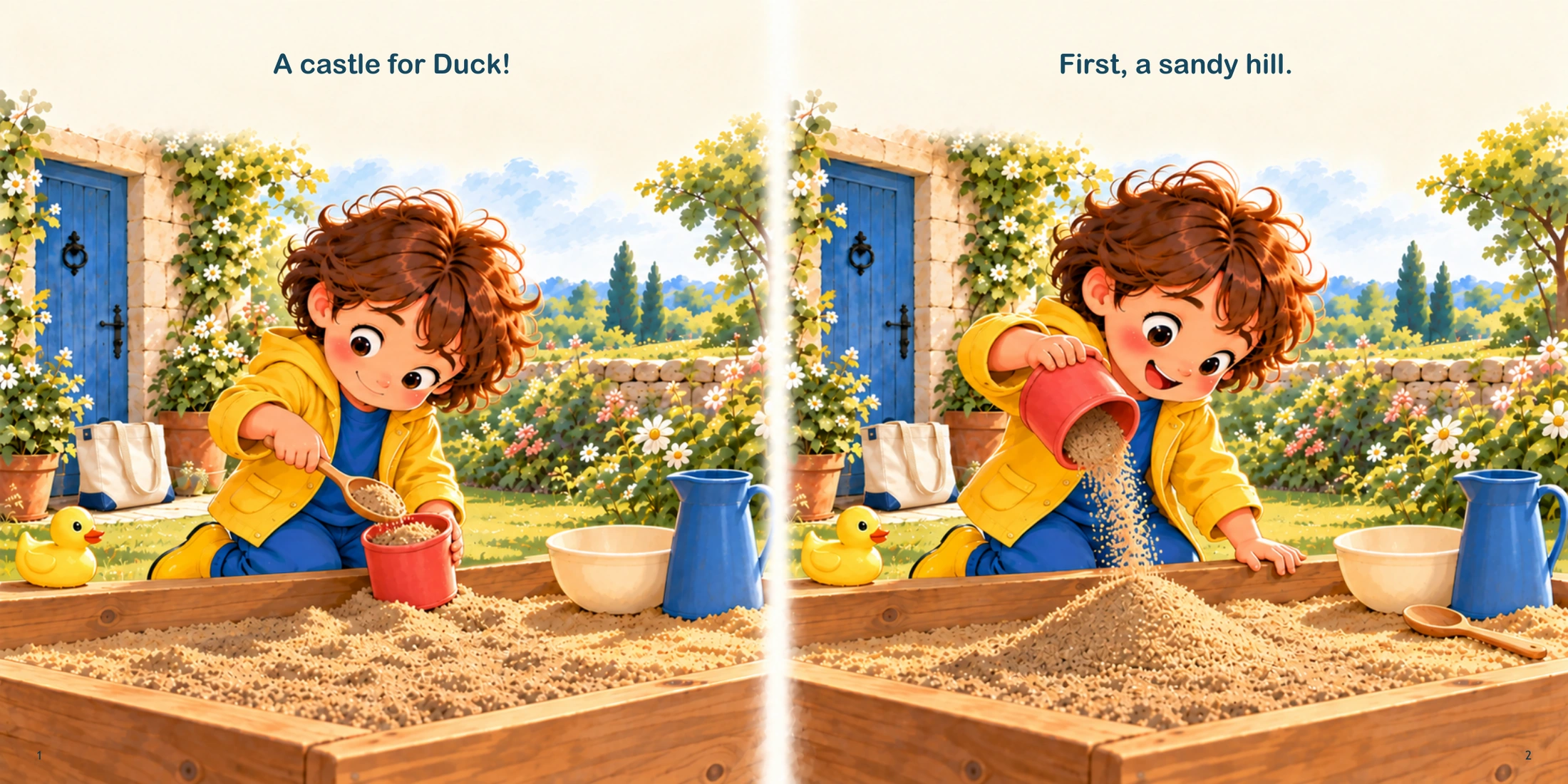
A castle for Duck! First, a sandy hill.
Explore together · Grains that pour and pile
Vince fills a cup, then pours a stream of sand into a heap. Duck waits beside the tray. Sand is made of many small solid grains. Dry grains can move past one another as they pour, then stop in a heap.
Ask together: What shape does the sand make when it lands?
The dry tower falls
Pages 3–4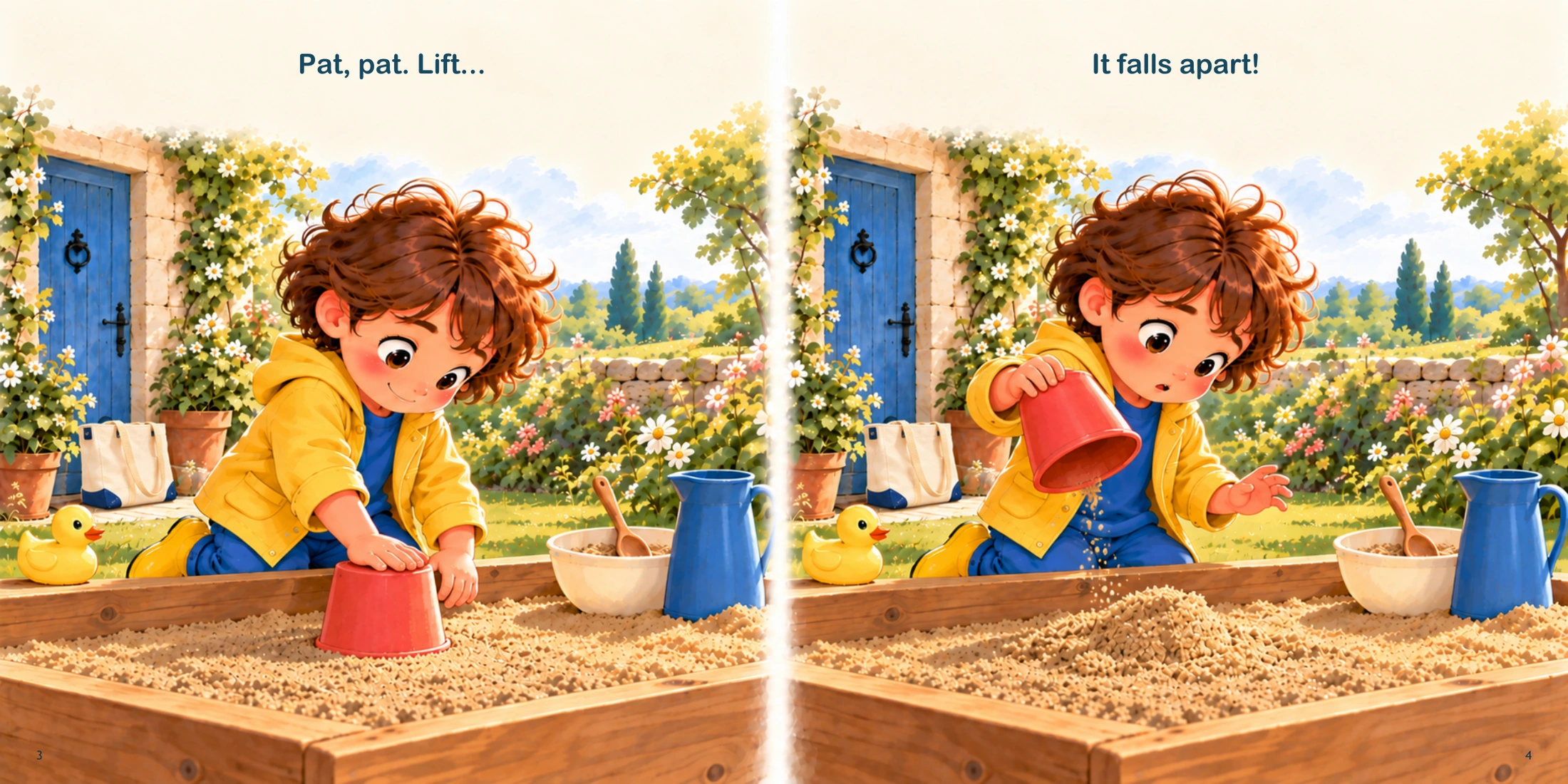
Pat, pat. Lift... It falls apart!
Explore together · Support and slope
Vince pats the upside-down cup. When he lifts it, loose grains settle into a low heap. The cup supports the sand while it is inside. Ordinary dry play sand does not hold these steep moulded sides after the cup is removed; grains slide into gentler slopes.
Ask together: What changes when the cup lifts away?
A little water
Pages 5–6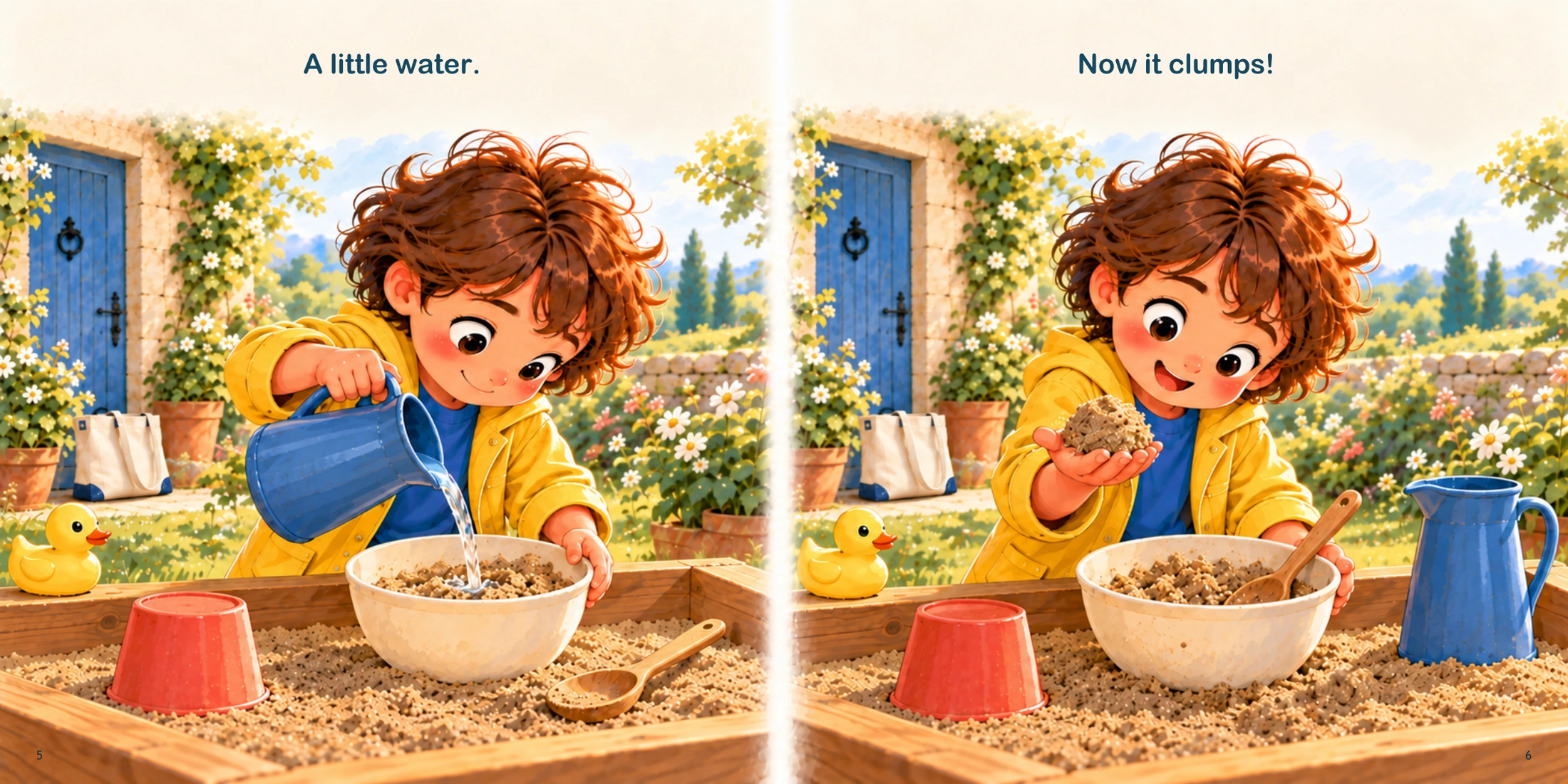
A little water. Now it clumps!
Explore together · Damp grains hold together
Water enters the bowl of sand. Vince then holds a rough clump on his open palm. In damp sand, tiny water contacts help pull grains together. The clump is visible; those tiny contacts are too small to see in the picture.
Ask together: How is the sand in his hand different from the pouring sand?
One tower stands
Pages 7–8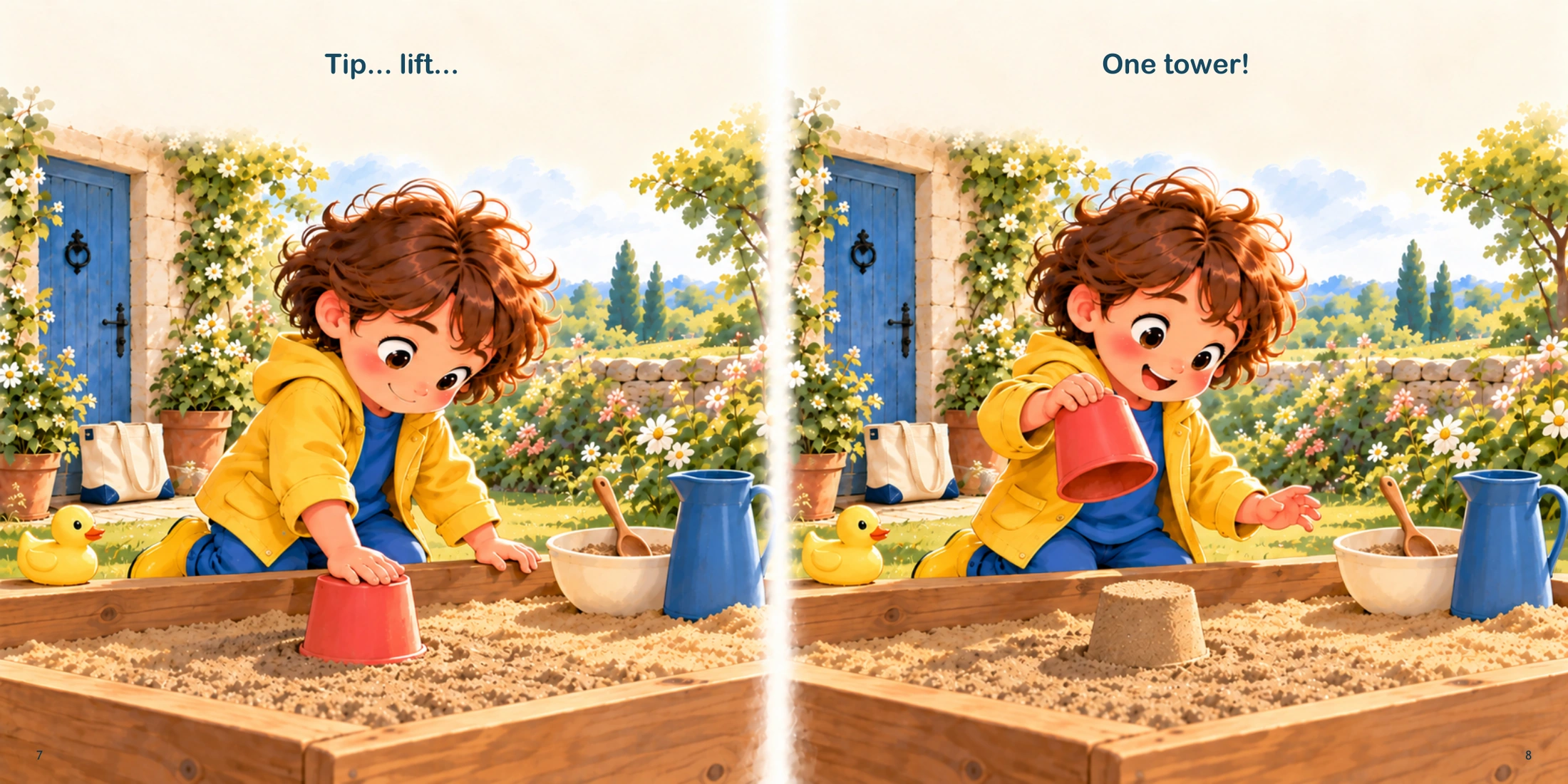
Tip... lift... One tower!
Explore together · Moulding damp sand
The cup lifts clear of a small sand tower that keeps its shape. Damp sand can hold a moulded shape. Packing the grains into a small smooth cup helps, and a wider opening makes release easier.
Ask together: How is this lift different from the first one?
Too runny
Pages 9–10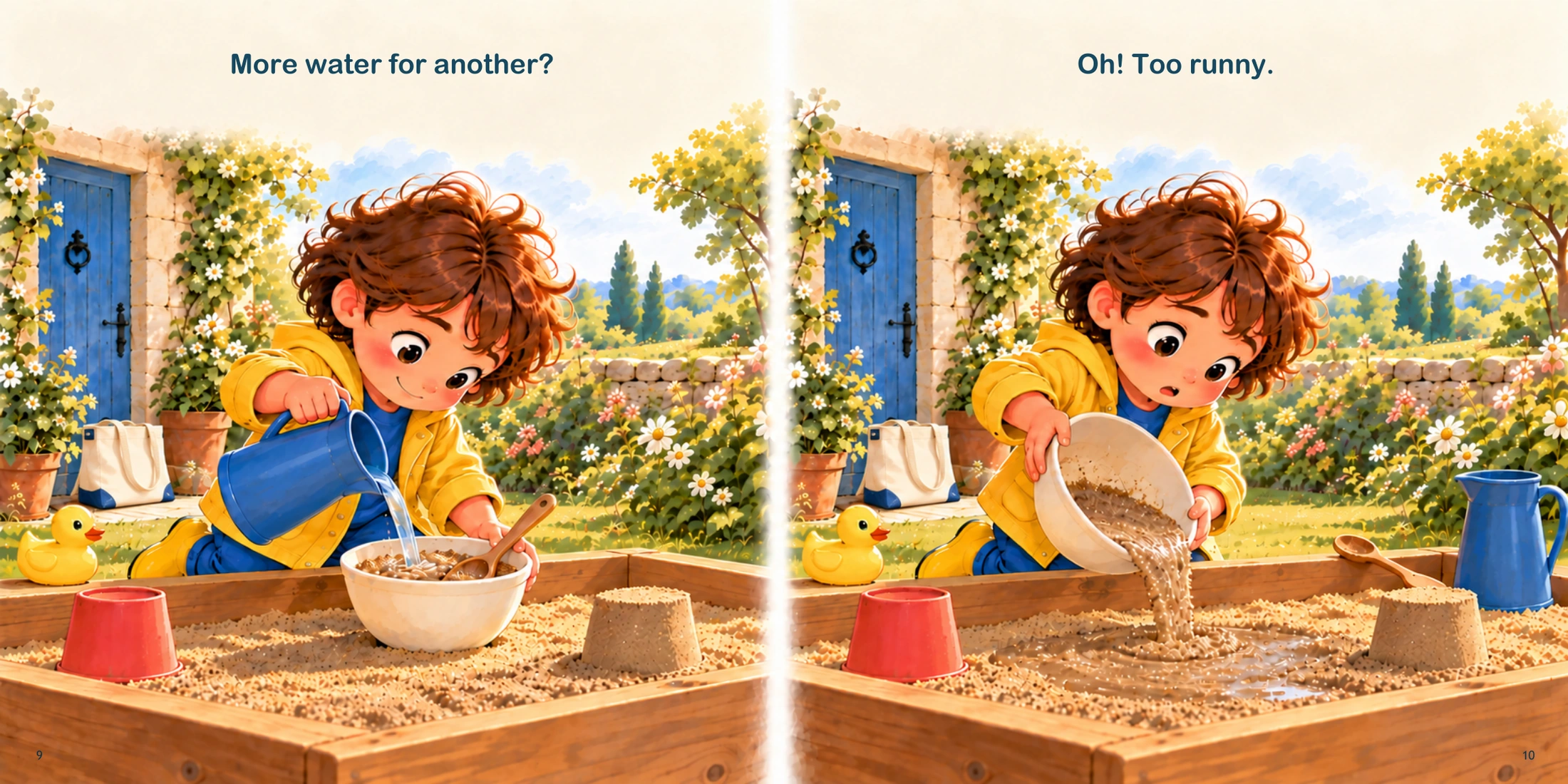
More water for another? Oh! Too runny.
Explore together · More water changes the result
Vince adds more water to the bowl. The mixture pours out and spreads, while his first tower stays beside it. Adding enough water can make a sand mixture runny. More water does not always make a stronger castle.
Ask together: What can this mixture do that the tower cannot?
Clumpy again
Pages 11–12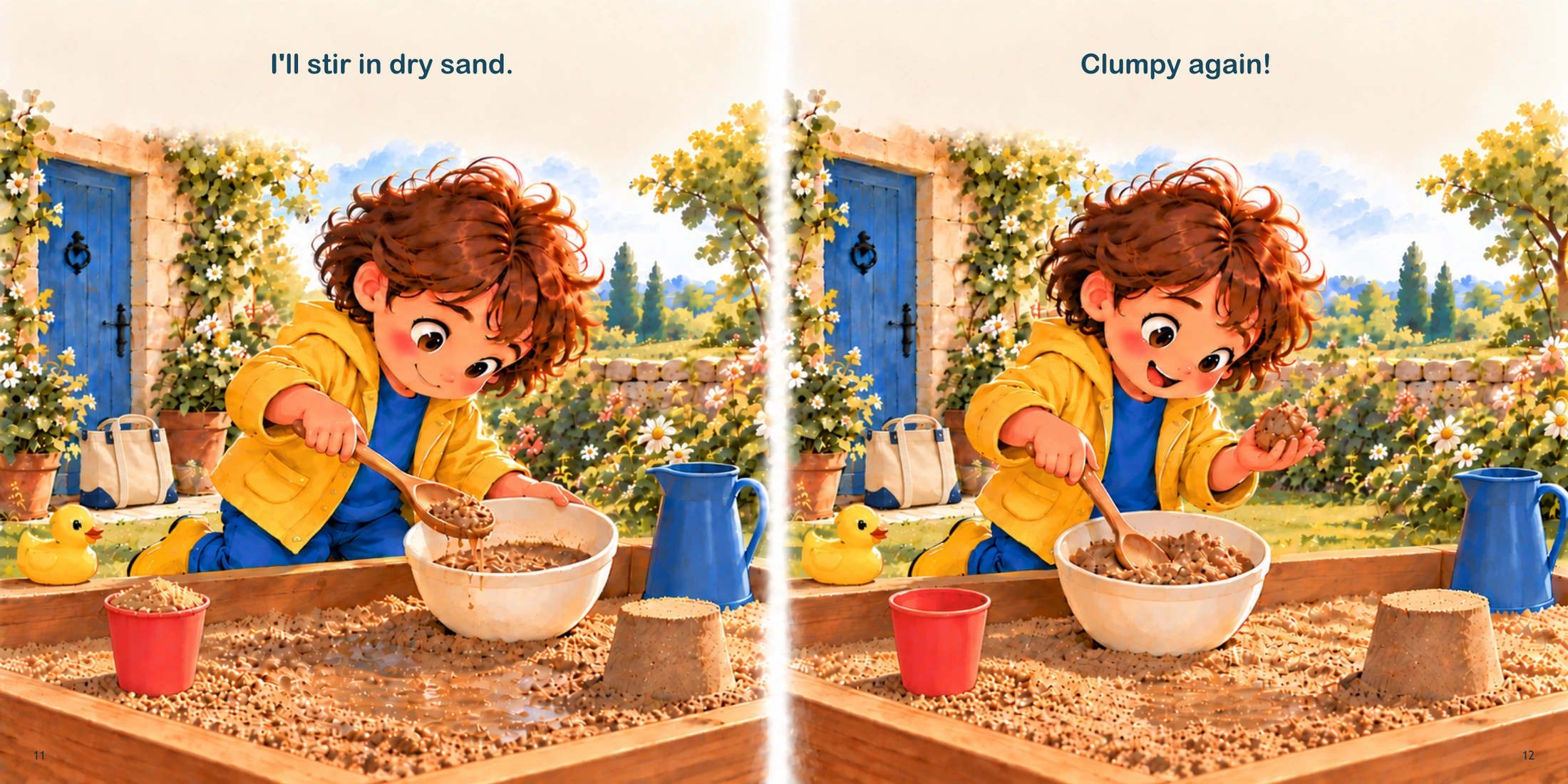
I'll stir in dry sand. Clumpy again!
Explore together · Changing the mixture
A cup of dry sand waits beside the runny mixture. After mixing, the cup is empty and Vince holds a clump again. Mixing in dry sand changes the proportion of grains and water. The amount needed depends on the materials and how they are mixed; there is no one perfect spoonful.
Ask together: What could Vince try if the mixture is still too runny?
A castle for Duck
Pages 13–14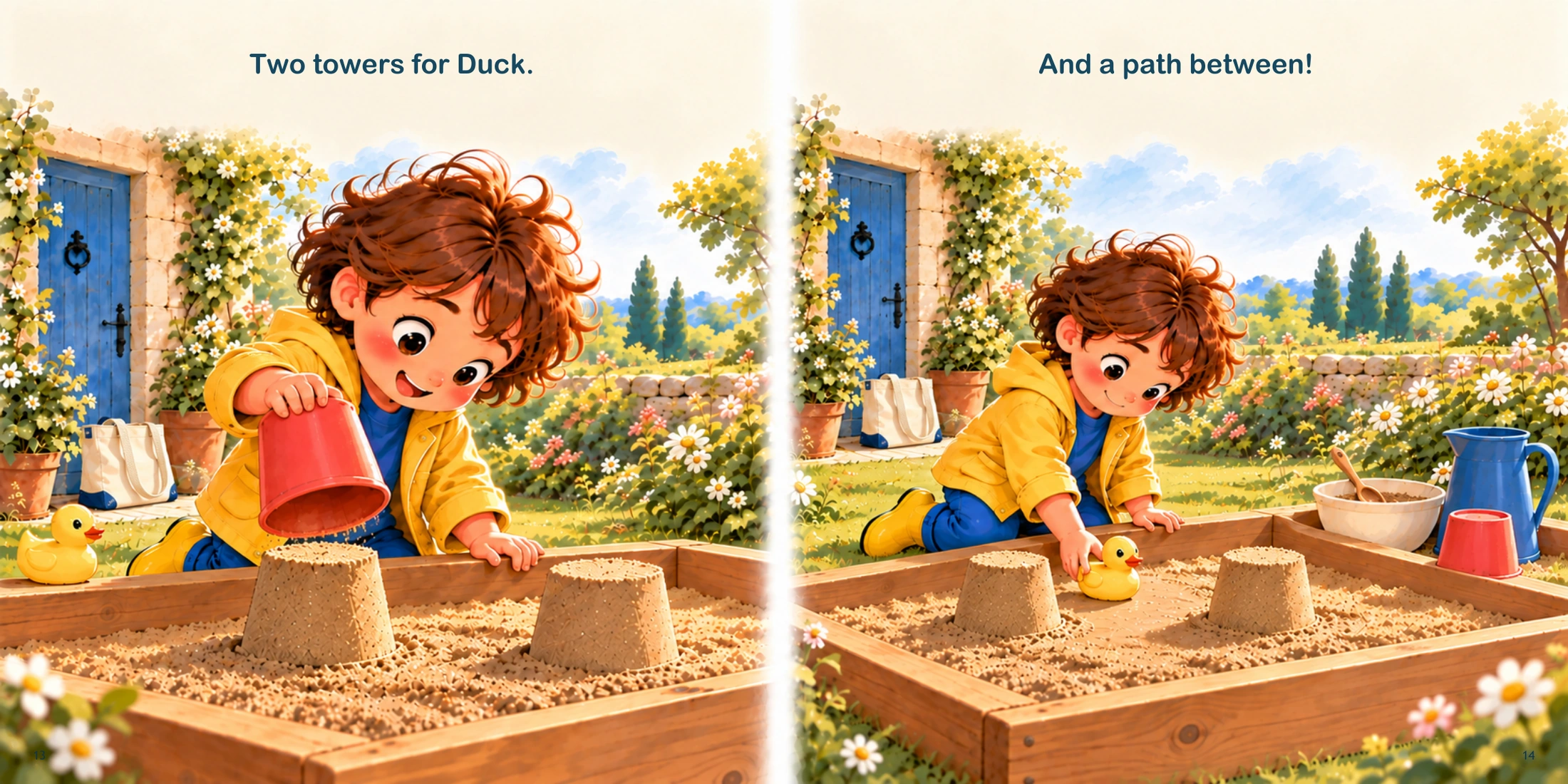
Two towers for Duck. And a path between!
Explore together · Using a discovery
Vince lifts the cup from a second tower, then moves Duck along the path between the two. He uses the same moulding idea again to finish his play space. The wider view shows the path and both towers together.
Ask together: Where could Duck go next?
Loose grains again
Pages 15–16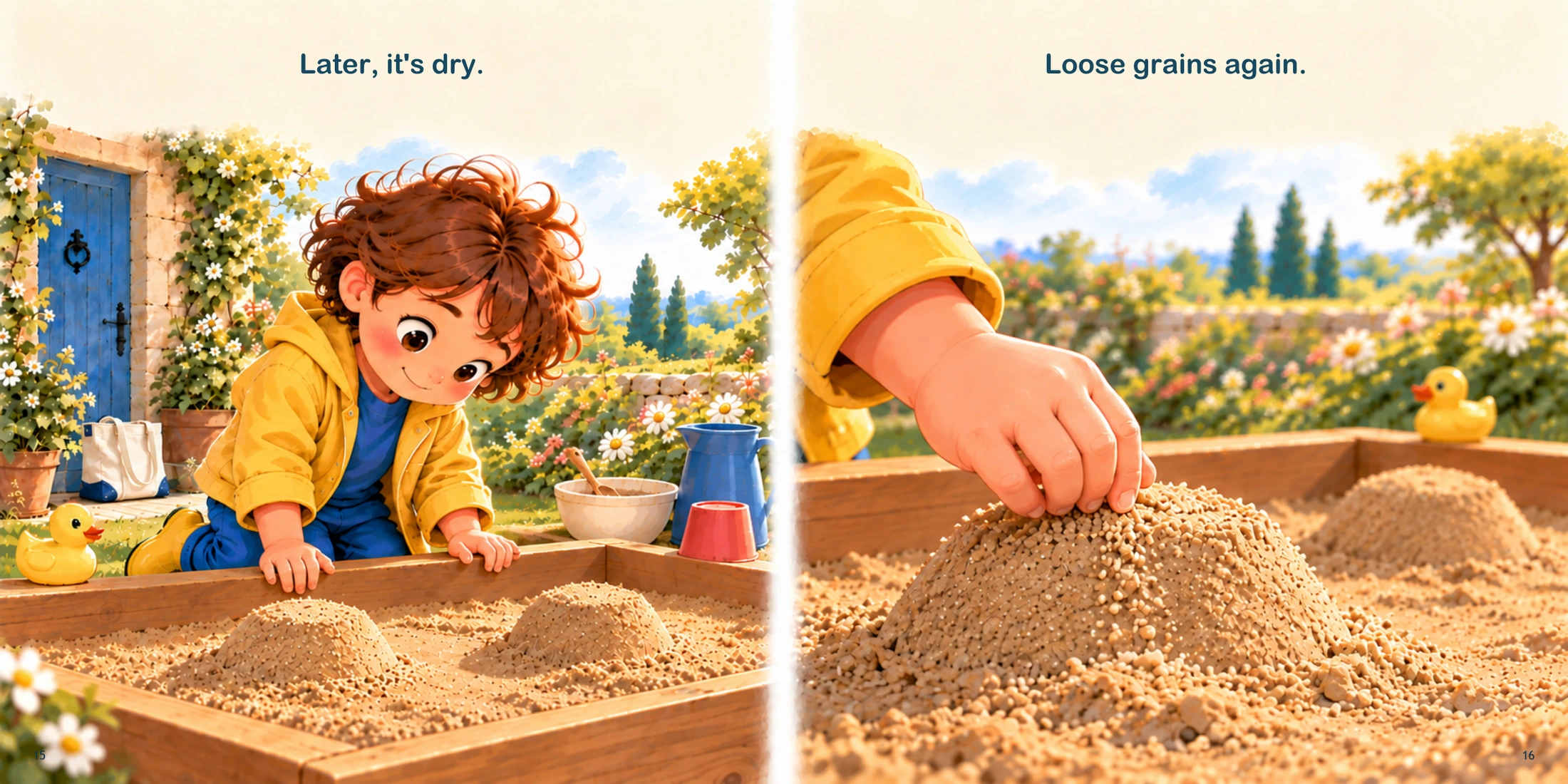
Later, it's dry. Loose grains again.
Explore together · A change as sand dries
At a later visit, the towers are lower rounded heaps. Vince loosens grains with his fingers. Water can leave sand by evaporation. As the sand dries, the grains lose the water contacts that helped hold them together. The timing and remaining shape depend on conditions.
Ask together: What is different from the two towers Duck first visited?
Keeping the castle
Pages 17–18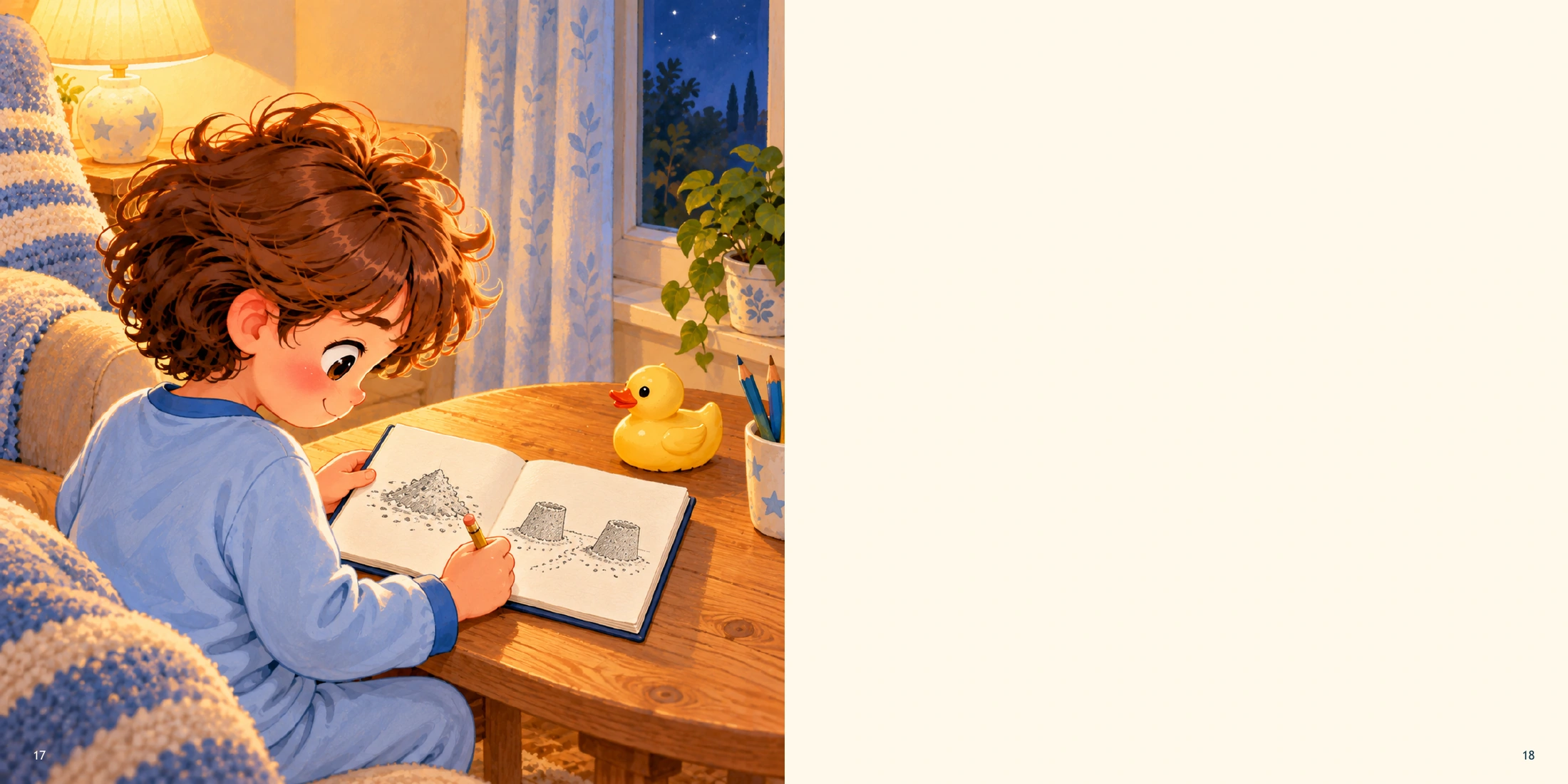
For grown-ups
Pages 19–20
For Grown-Ups Sand is made of many small solid grains. Vince changes how those grains move and hold together as he builds for Duck. 1–4 Flowing and piling Dry grains can move past one another and pour. They come to rest in a heap. A steep cup-shaped tower falls apart when the cup is lifted: grains slide down into gentler slopes. 5–8 A little water In damp sand, tiny water contacts between grains help pull them together. Packing the grains into a small mould can help it keep its shape. Vince sees the clump and tower; the tiny water contacts are too small to see here. 9–14 More is not always better With enough water, the mixture becomes runny. Adding dry sand and mixing changes the proportion again. The amount needed depends on the sand, water and packing; there is no one perfect spoonful. 15–18 Loose again Water can leave sand by evaporation. At the later visit, the towers have slumped into rounded shapes. A gentle rub frees dry grains from an edge. Drying can take different amounts of time. Vince keeps the castle in his drawing. Explore together Use clean play sand, a shallow tray and a short smooth cup with a slightly wider opening. Compare dry and damp sand, packing each in the same way. Add water little by little and mix. Try a little more in a separate bowl; if it is runny, mix in dry sand gradually. Some sand contains clay or coatings and behaves differently. Keep sand away from eyes and mouths, and wash hands afterwards. What changes when Vince lifts the cup? What would you try next?
Open these pages in the readerSources and evidence
Loose dry sand grains can pour and come to rest as a heap.
MIT OpenCourseWare, The Environment of the Earth's Surface, Chapter10: Mass Wasting
These pictures show ordinary mineral play sand. Grains remain solid when a pile pours.
Ordinary dry loose sand does not keep the steep sides of the illustrated small cup mould when released.
MIT OpenCourseWare, The Environment of the Earth's Surface, Chapter10: Mass Wasting
Damp sand can hold steeper shapes than dry sand. The result depends on grain properties, packing and the amount of water.
Adding and mixing a little water can make this sand clump and retain a packed moulded shape.
The tiny water contacts are too small to see here. Use a short smooth mould with a slightly wider opening.
A mixture with enough added water can become runny and fail to retain the cup shape.
Enough added water can make the mixture runny. Its behaviour depends on the materials and water content; more water is not always better.
Mixing more dry sand into the runny mixture can reduce the water-to-sand proportion and return it to a mouldable damp state.
Mix dry sand in gradually. There is no fixed spoonful or recipe for every sand. Sand with clay or coatings can behave differently.
After this clean sand dries, grains loosen again when Vince gently rubs its edge; water can have left by evaporation.
USGS Water Science School, Evaporation and the Water Cycle
Drying takes different amounts of time. The story makes no exact prediction of the drying time or remaining shape.
A story worth keeping?
Read it here as often as you like. The physical edition is coming soon.