THE COMPLETE BOOK · FREE TO READ
Folds and Bridges
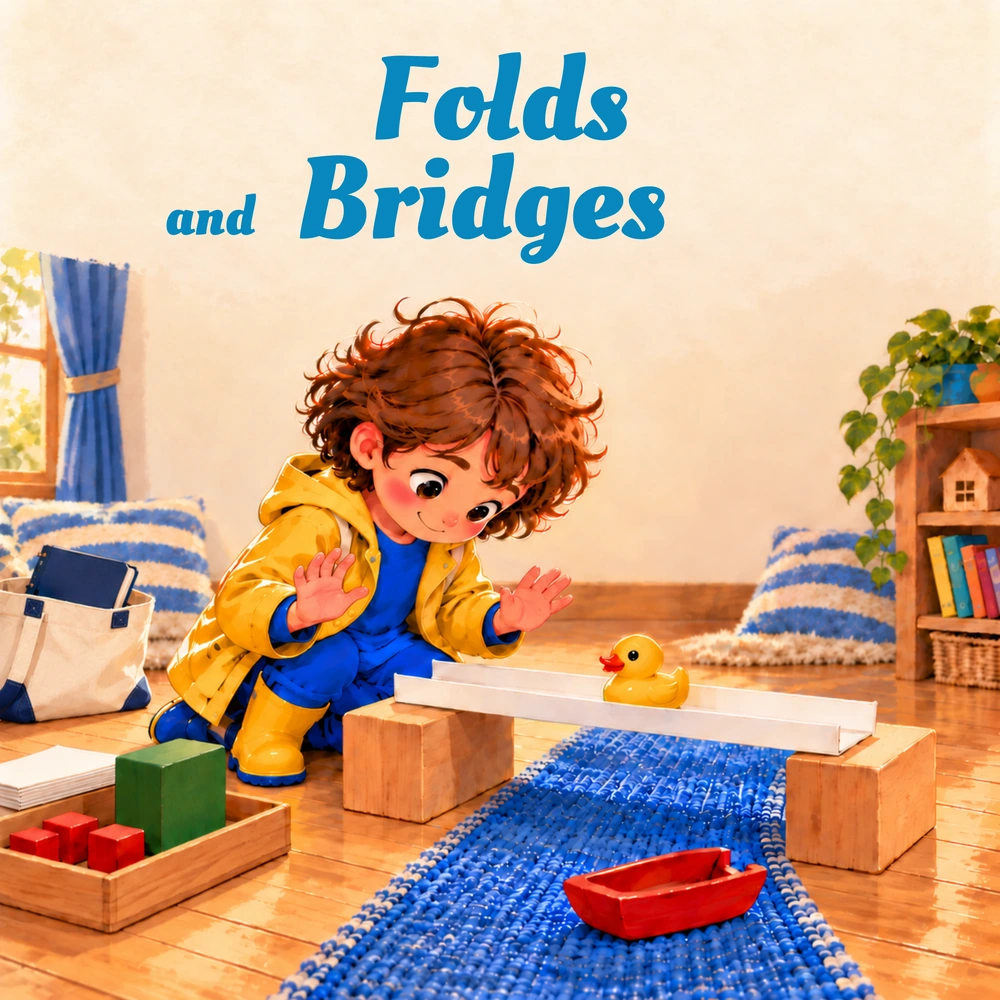
Vince wants his duck to cross a paper bridge and his boat to pass underneath. Moving supports, folding paper and adding passengers turn one crossing into a playful design problem.
Turn the pagesOr scroll to readA bending bridge
Pages 1–2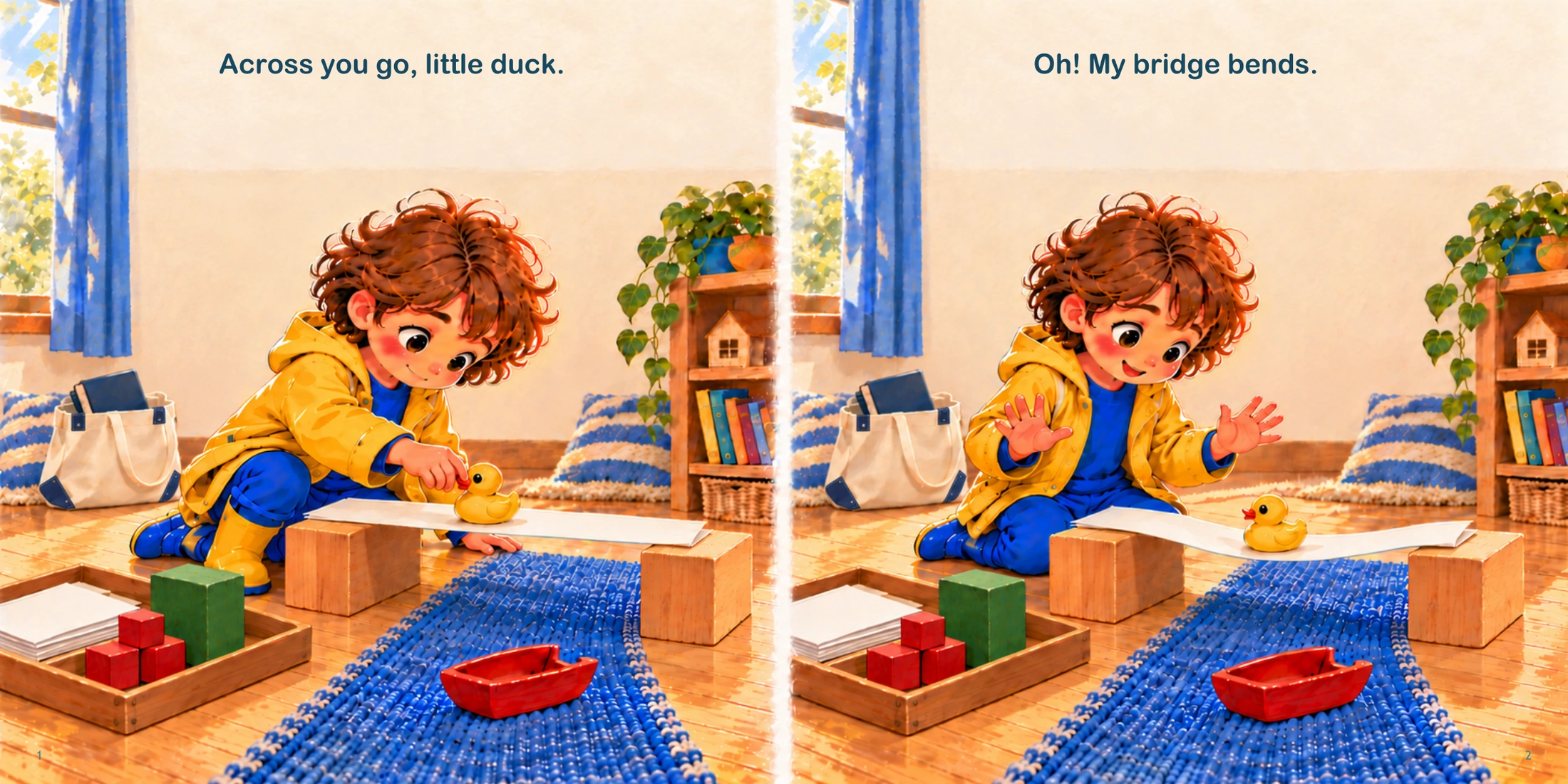
Across you go, little duck. Oh! My bridge bends.
Explore together · A load can bend paper
Vince places his duck on a flat paper bridge. With his hands clear, the middle bends down. A flat sheet can bend under a toy between its supports. The picture shows one possible result, not a measured weight limit.
Ask together: What changes when Vince lets go?
A shorter gap
Pages 3–4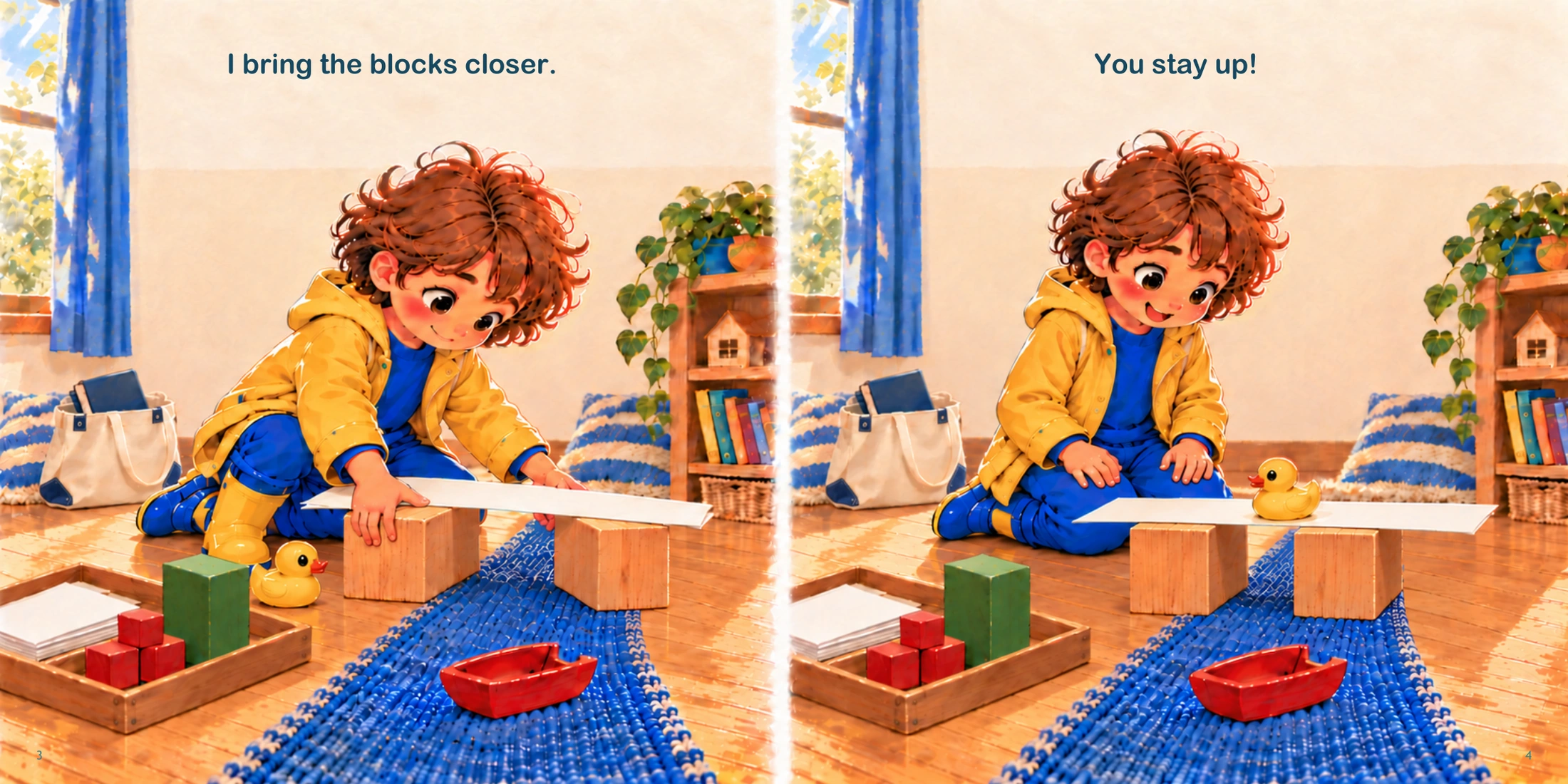
I bring the blocks closer. You stay up!
Explore together · Less paper left unsupported
Vince brings the same end blocks closer. The duck stays up and the paper ends reach farther past the supports. Shortening the unsupported span can reduce bending under the same load. The longer overhangs help show what changed.
Ask together: Where does the paper reach beyond the blocks now?
Room for a boat
Pages 5–6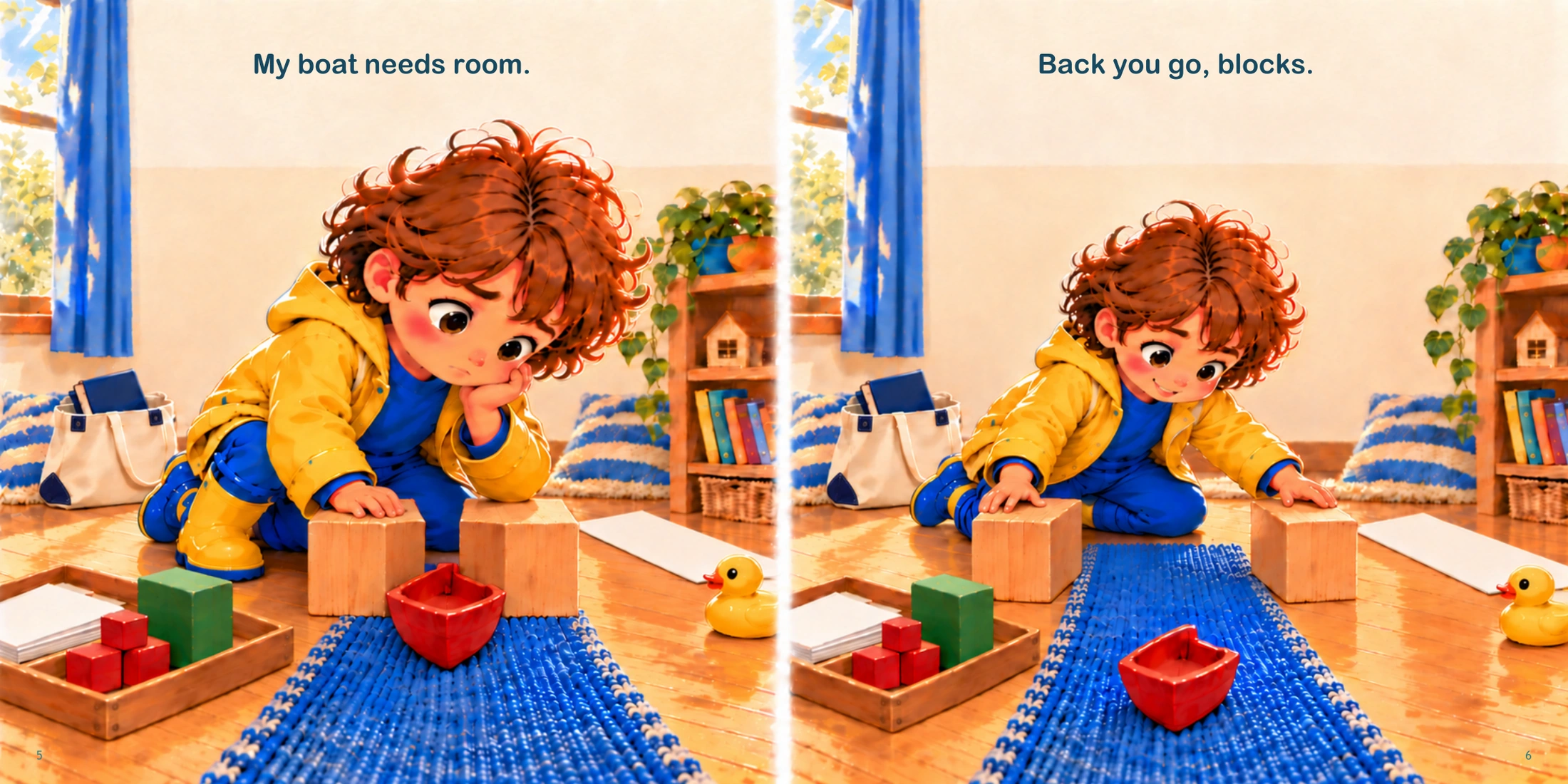
My boat needs room. Back you go, blocks.
Explore together · A design has more than one job
The boat is wider than the narrow opening. Vince moves the blocks apart again. A bridge can carry a toy yet leave too little room below. The boat gives Vince another requirement to consider.
Ask together: What is stopping the boat?
Two long folds
Pages 7–8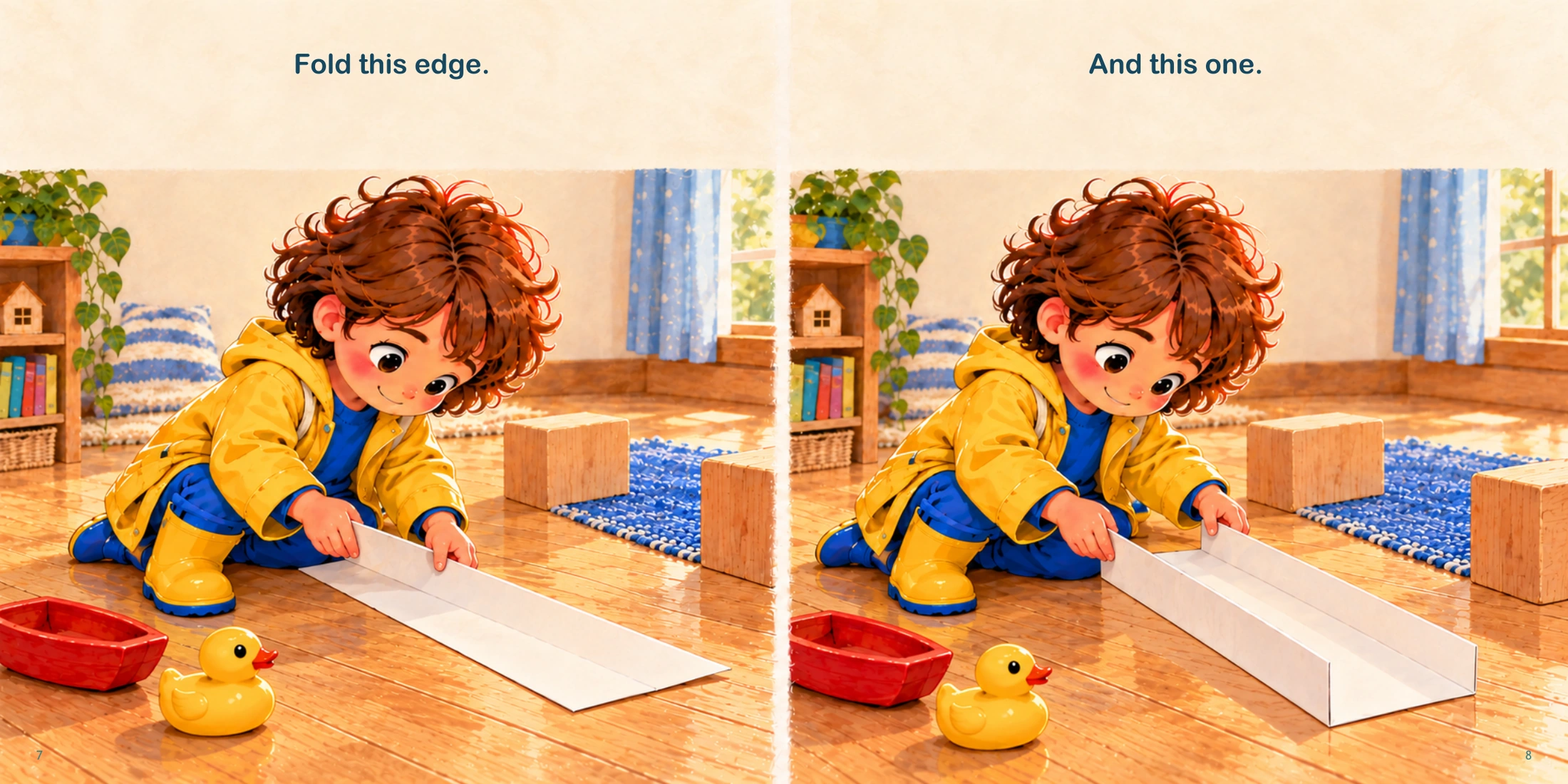
Fold this edge. And this one.
Explore together · Shape changes how paper bends
Vince folds one long edge upright, then the other, making an open channel. The same sheet gains a different cross section. Upright lengthwise edges can help it resist bending without adding more paper.
Ask together: What is different about the paper after the second fold?
The wide gap again
Pages 9–10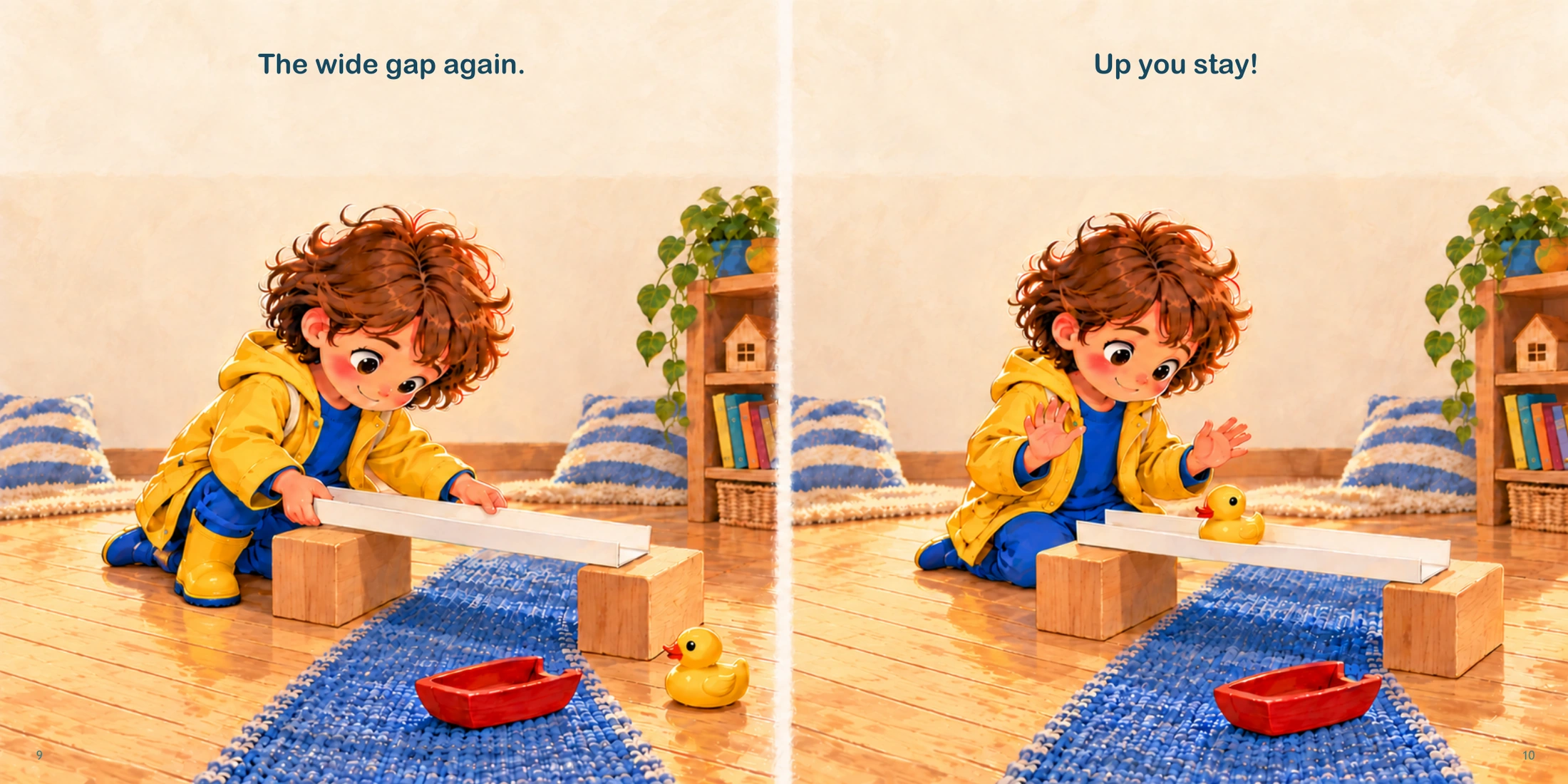
The wide gap again. Up you stay!
Explore together · Compare shapes at the same gap
The folded bridge returns to the wide opening. The duck stays up while Vince lifts both hands. The channel can resist bending better than the earlier flat sheet at the same span. Paper, folds and toy weight still matter.
Ask together: What stayed the same, and what changed?
More passengers
Pages 11–12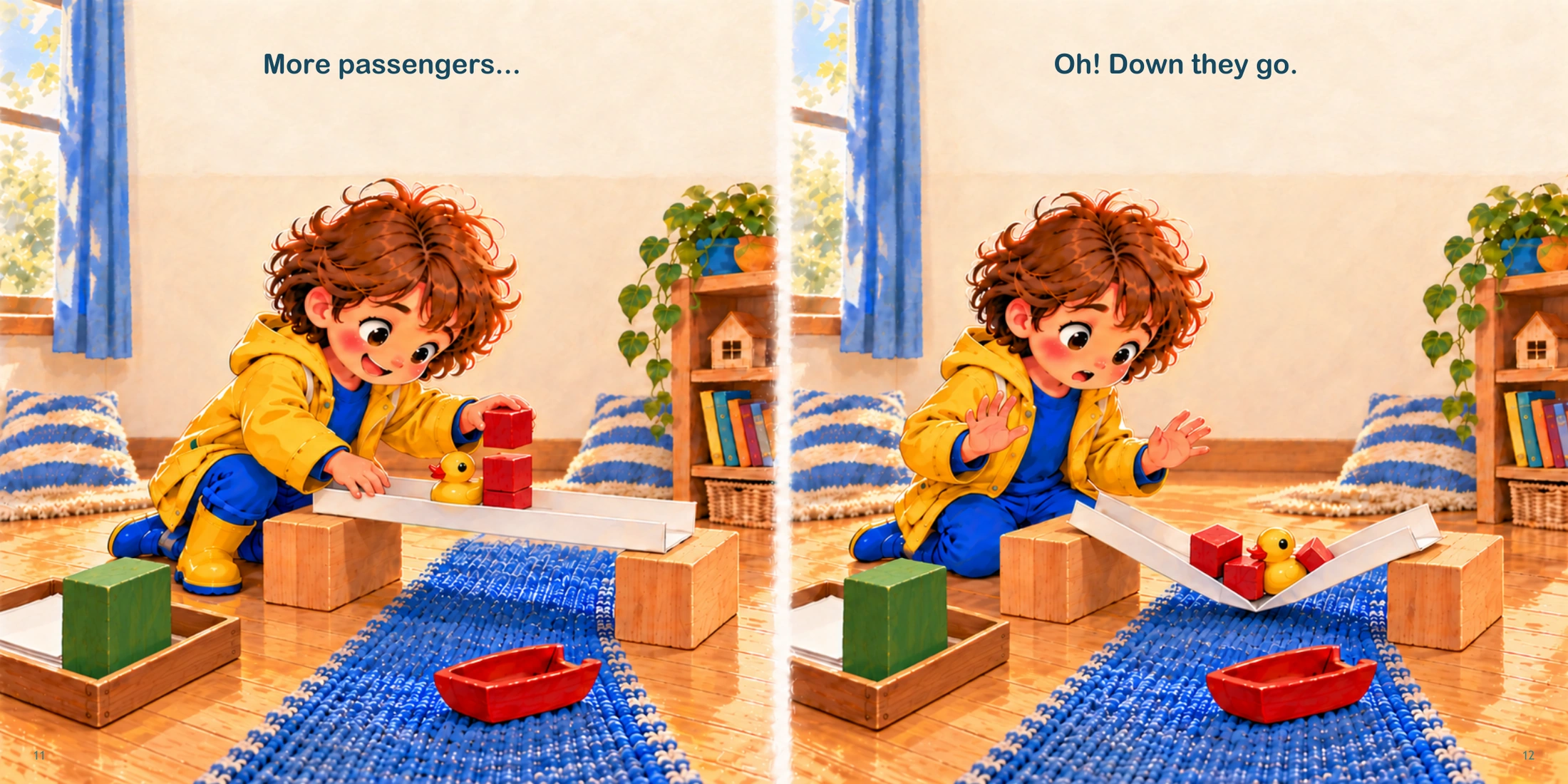
More passengers... Oh! Down they go.
Explore together · Every structure has limits
Vince adds red cubes beside the duck. The paper creases and the passengers drop into the sag. Holding one toy does not establish unlimited capacity. Enough added weight can permanently crease a paper bridge; the illustrated cube count is not a tested threshold.
Ask together: What do you notice about the paper after it bends?
Support with a cost
Pages 13–14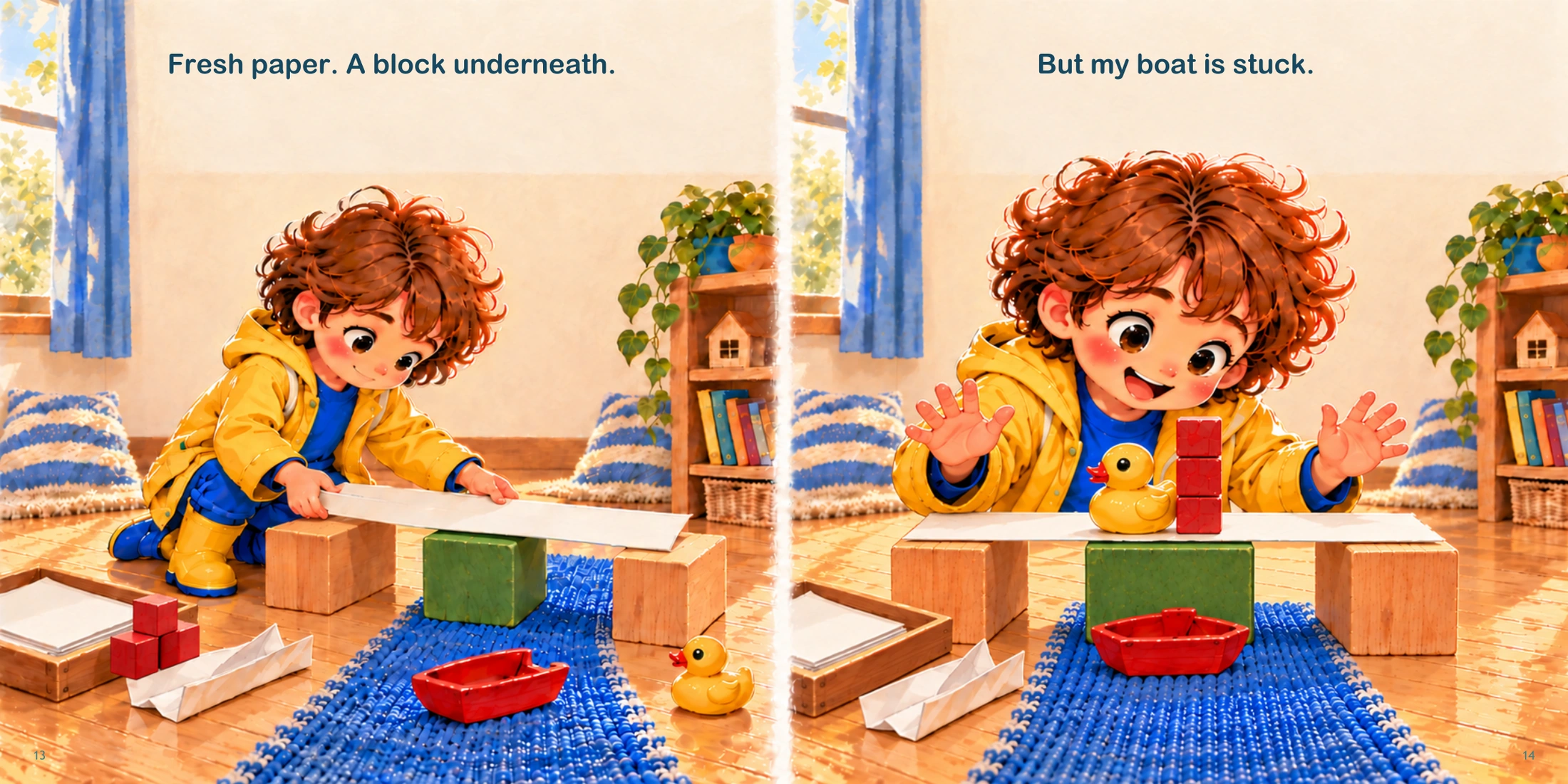
Fresh paper. A block underneath. But my boat is stuck.
Explore together · Direct support takes up space
Vince uses fresh flat paper and a broad middle block. The block supports the duck and cargo above but stops the boat below. A block in contact beneath the load can carry it through the paper. This is a new design with a fresh sheet and a new support, and it uses the passage the boat needs.
Ask together: What does the green block help, and what does it stop?
A way for both
Pages 15–16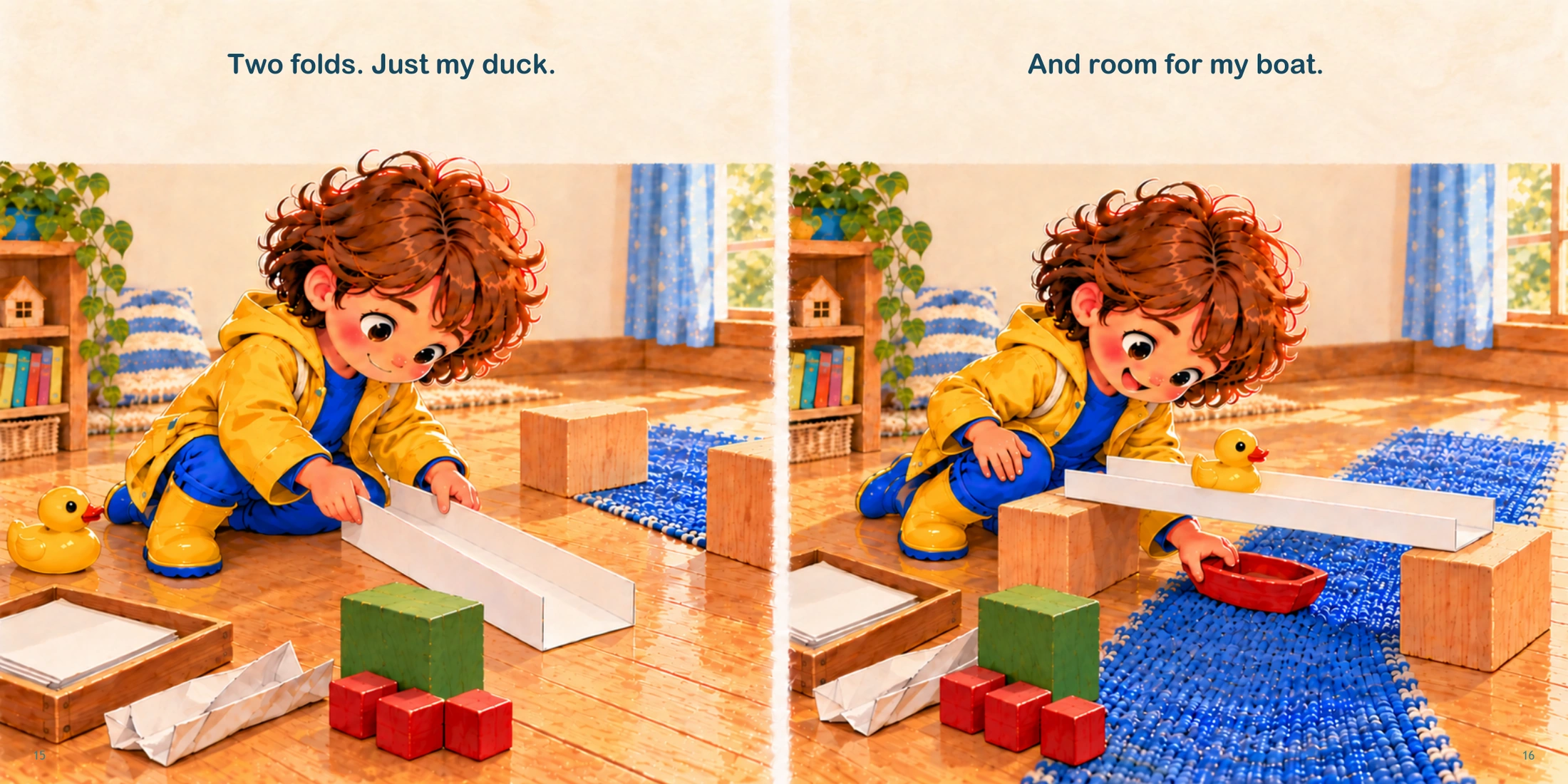
Two folds. Just my duck. And room for my boat.
Explore together · Combine discoveries to choose a design
Vince folds the fresh sheet, sets the green block and cargo aside, and sends his boat beneath the duck. The folded bridge carries the chosen light load while leaving the opening clear. Vince combines earlier discoveries to meet both needs.
Ask together: Which parts of the earlier bridges does Vince keep?
A quiet notebook
Pages 17–18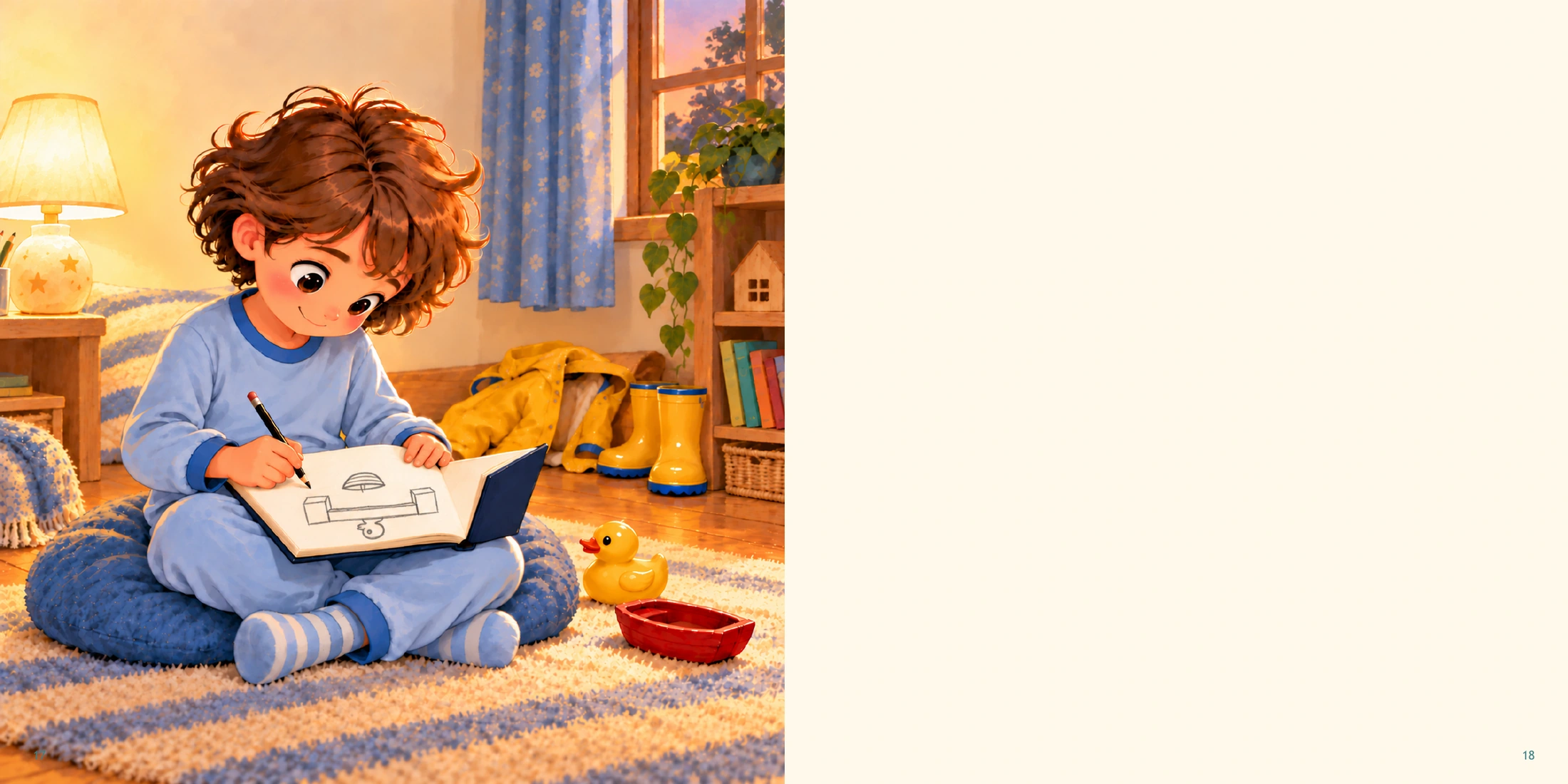
For grown-ups
Pages 19–20
For Grown-Ups Vince wants a crossing for his duck and a clear way through for his boat. Changing one part of a bridge can help one job and make another harder. 1–4 How far between supports? The flat paper bends under the duck. Moving the end blocks closer leaves less paper unsupported, so it can bend less under the same load. The longer ends now rest beyond the supports. 5–10 A different shape The boat needs a wider opening. Vince folds the long edges upright into a channel. The paper itself is not thicker, but its new shape resists bending better. He returns to the original gap and tries the same duck. 11–14 More weight, more support Holding one toy does not mean a bridge can hold any load. As Vince adds cargo, his paper bridge creases and collapses. He rebuilds with fresh, flat paper. The middle block carries the load above it, but blocks the boat below. This new design changes both the sheet and its support. 15–18 Choosing what works Vince folds the new sheet and sets the cargo and middle block aside. His folded bridge carries the duck while leaving space below. He combines earlier discoveries to choose a design for two jobs. Explore together Use paper, two equal-height blocks and light, large toys on the floor with a grown-up. Try a short gap first. Keep the same toy and gap when comparing shapes. Change the gap or load gently; stop before the paper creases or tears. Fresh paper is needed after damage. Never stand on a paper bridge. These are illustrated possibilities, not measured load limits. Paper, folds, gap and toy weight all matter; your bridge may behave differently. Science sources: Exploratorium, File Card Bridges; Science Buddies, Paper Bridge Design Challenge; David Roylance (MIT), Beam Displacements. These explain the comparisons; they do not test Vince’s exact toys.
Open these pages in the readerSources and evidence
A flat paper bridge can bend under a toy placed between its supports.
File Card Bridges — Exploratorium Science-at-Home Team
Depicted gentle sag, not fracture or permanent crease. Actual toy and paper not tested; no fixed weight or dimensions promised.
Reducing the unsupported gap can reduce bending under the same central load.
Beam Displacements — David Roylance, MIT, November30 2000
Same flat sheet, same duck and equal-height supports. Overhang increases as supports approach; no hand holds the deck in result view. Qualitative elastic behavior, not a measured ratio.
Folding the two long edges upright changes the paper cross section and can make a bridge resist bending better.
Paper Bridge Design Challenge — Ben Finio, Science Buddies
File Card Bridges — Exploratorium Science-at-Home Team
A U-shaped channel is different from folding the sheet flat into layers. Folds run along the span. Compare same paper and duck at original support spacing. Not every fold makes every structure stronger.
Adding enough load can crease and collapse a folded paper bridge; holding one toy does not establish unlimited capacity.
Paper Bridge Design Challenge — Ben Finio, Science Buddies
Depict cumulative loading followed by a sharp crease/collapse. Replace the damaged sheet explicitly; do not imply it springs back. Illustrated cubes are not a tested load rating or a guaranteed failure count.
A block in direct contact beneath a load can support it through the paper while occupying the passage below.
Beam Displacements — David Roylance, MIT, November30 2000
The new flat sheet, middle block and loaded configuration are a redesigned bridge, not a controlled one-variable comparison with the failed folded sheet. Keep the full duck/cargo footprint directly over the broad support. Block contacts underside and floor. Boat obstruction is this design’s literal clearance constraint, not a universal property of supports.
A useful bridge design must both carry its chosen load and leave the required passage clear.
Paper Bridge Design Challenge — Ben Finio, Science Buddies
An application of source engineering-design comparisons to this invented play problem, not an empirical test. Final scene changes both load and support deliberately; it is not called a controlled experiment.
A story worth keeping?
Read it here as often as you like. The physical edition is coming soon.