
THE COMPLETE BOOK · FREE TO READ
Dew and Drips
Vince investigates drops in the garden, on a cold cup and on a window. He compares, wipes, breathes and watches water join, slide and dry. The grown-up guide connects these small changes to condensation and evaporation.
Turn the pagesOr scroll to readMorning drops
Pages 1–2
Tiny drops! Who put them here? Can we make some?
Explore together · Dew and observation
Vince notices beads of water on a leaf and grass, then turns to a grown-up with a question. Dew can form when a surface cools enough for water vapor to become liquid. A wet leaf alone cannot tell us where every drop came from: rain, spray and water released by a plant can also wet it.
Ask together: Where can you find drops in the picture?
A cold comparison
Pages 3–4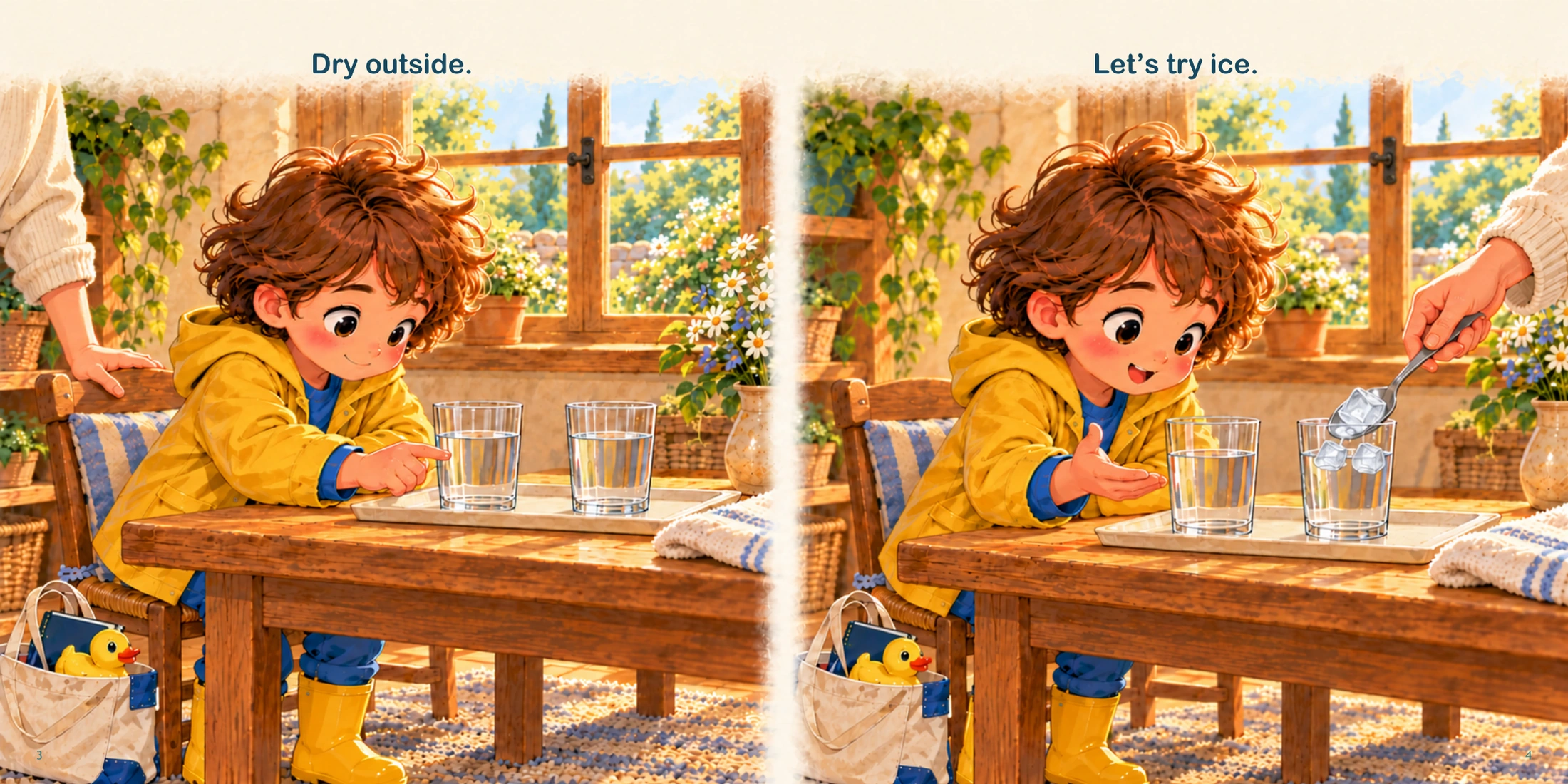
Dry outside. Let’s try ice.
Explore together · Setting up a comparison
Two matching cups start dry outside. A grown-up lowers ice into the right-hand cup while Vince watches. Starting with matching cups, similar water levels and dry outsides makes a later difference easier to notice. Ice cools one cup; its water level can also rise as the ice goes in.
Ask together: What changes when the ice goes in?
Wet outside
Pages 5–6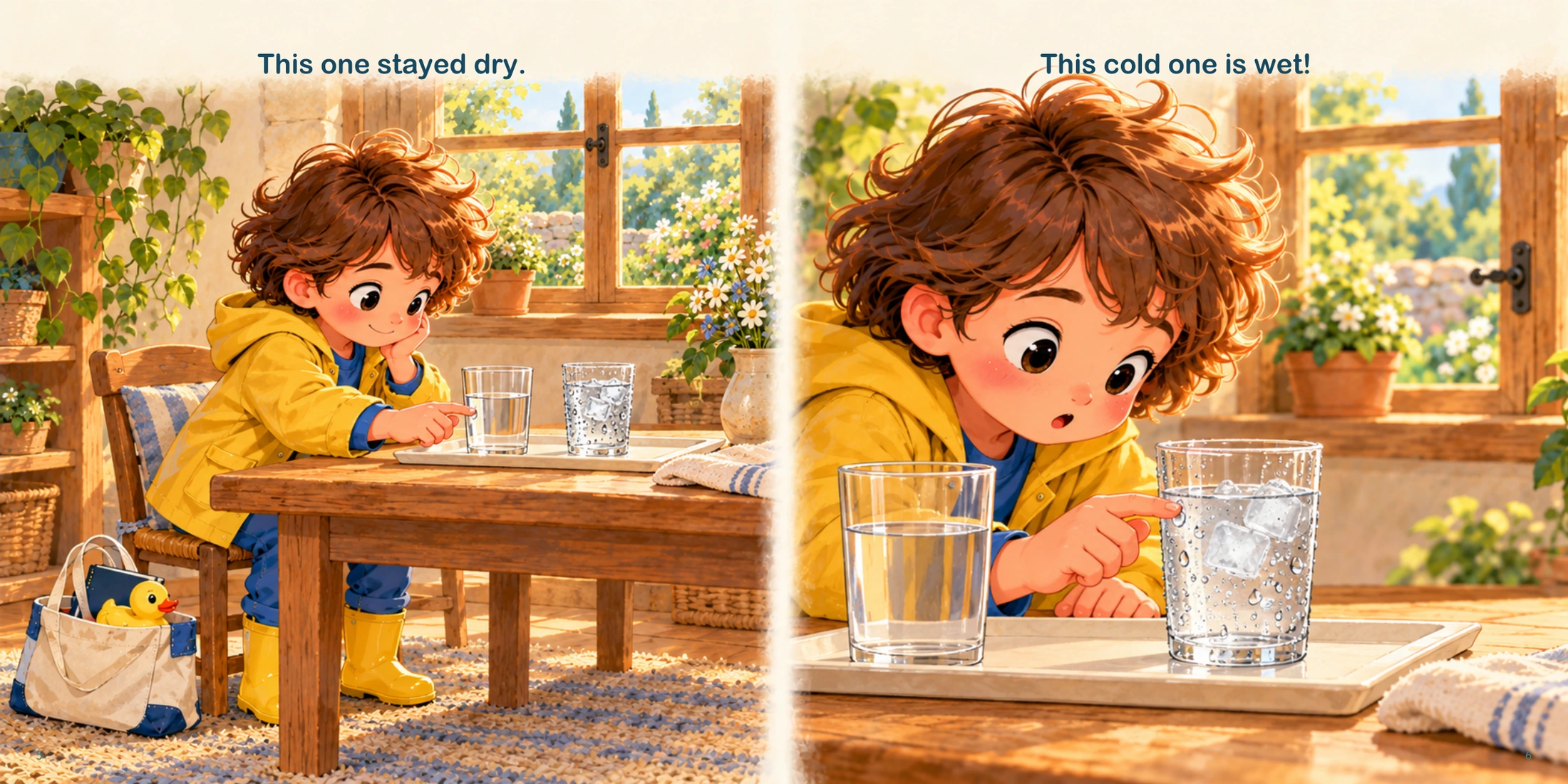
This one stayed dry. This cold one is wet!
Explore together · Condensation on a cool surface
Vince touches the dry cup, then the beaded outside of the cup with ice. Water vapor from the surrounding air can become liquid on a sufficiently cold surface. In this room the cold cup gets wet outside while the other stays dry. Humidity, temperature and the cups affect what happens.
Ask together: How do the two outsides look different?
Back again
Pages 7–8
I wipe. They come back.
Explore together · Condensation can continue
Vince wipes part of the cold cup. Later, the cloth is set aside and drops cover the surface again. Wiping takes away liquid already there. More can form while the cup stays cold enough and moist air surrounds it. The sequence shows new wetness after wiping; it does not by itself establish every possible source of water.
Ask together: What do you notice after Vince puts the cloth down?
A breath on the window
Pages 9–10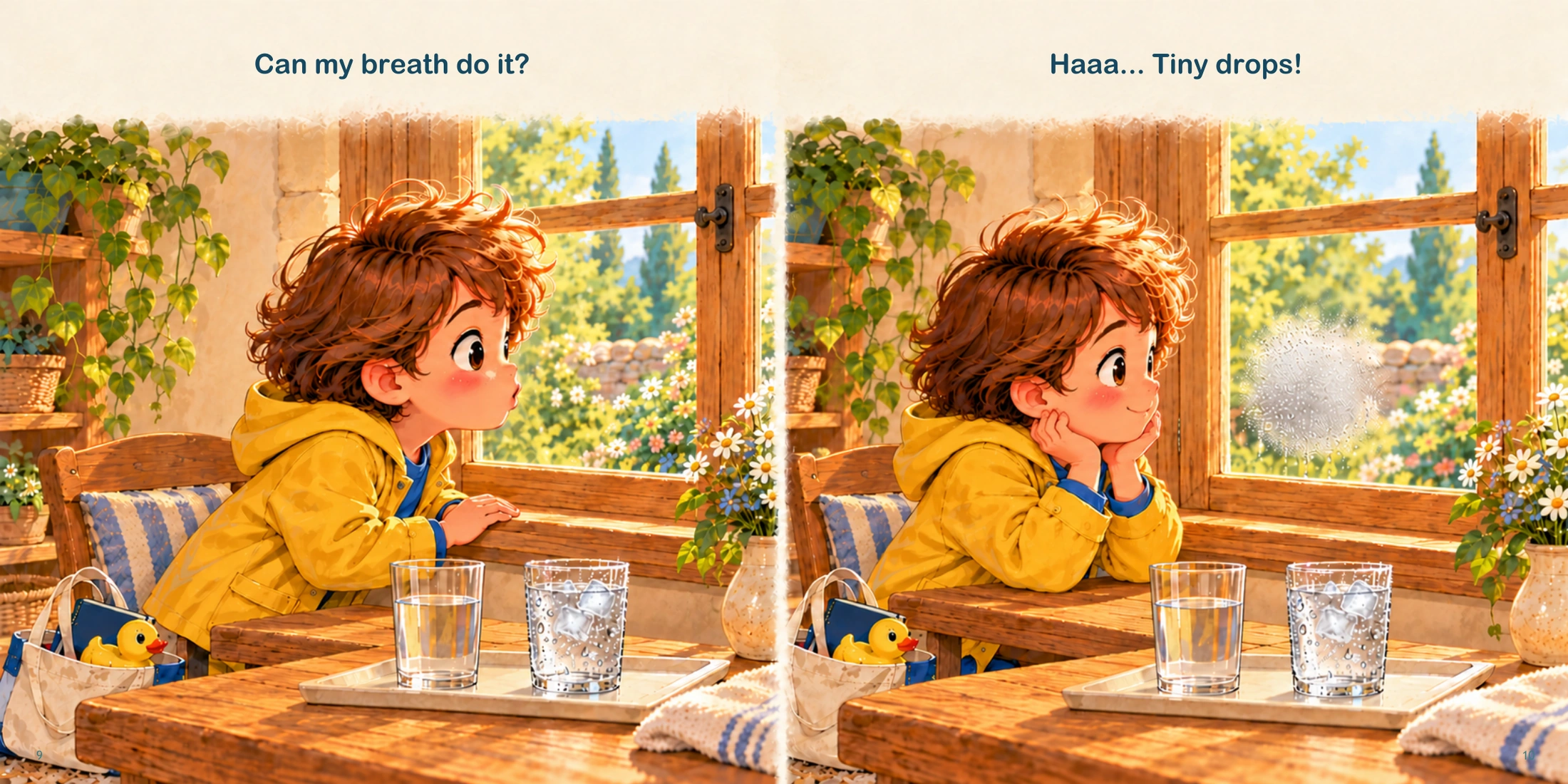
Can my breath do it? Haaa... Tiny drops!
Explore together · Water in a breath
Vince leans toward the window, then looks at a small cloudy patch on the glass. Breath contains invisible water vapor. On cool glass it can form tiny liquid drops that make a cloudy patch. The cloudiness is liquid on the glass; the water vapor itself is invisible.
Ask together: What changes in the view through the window?
Together, then down
Pages 11–12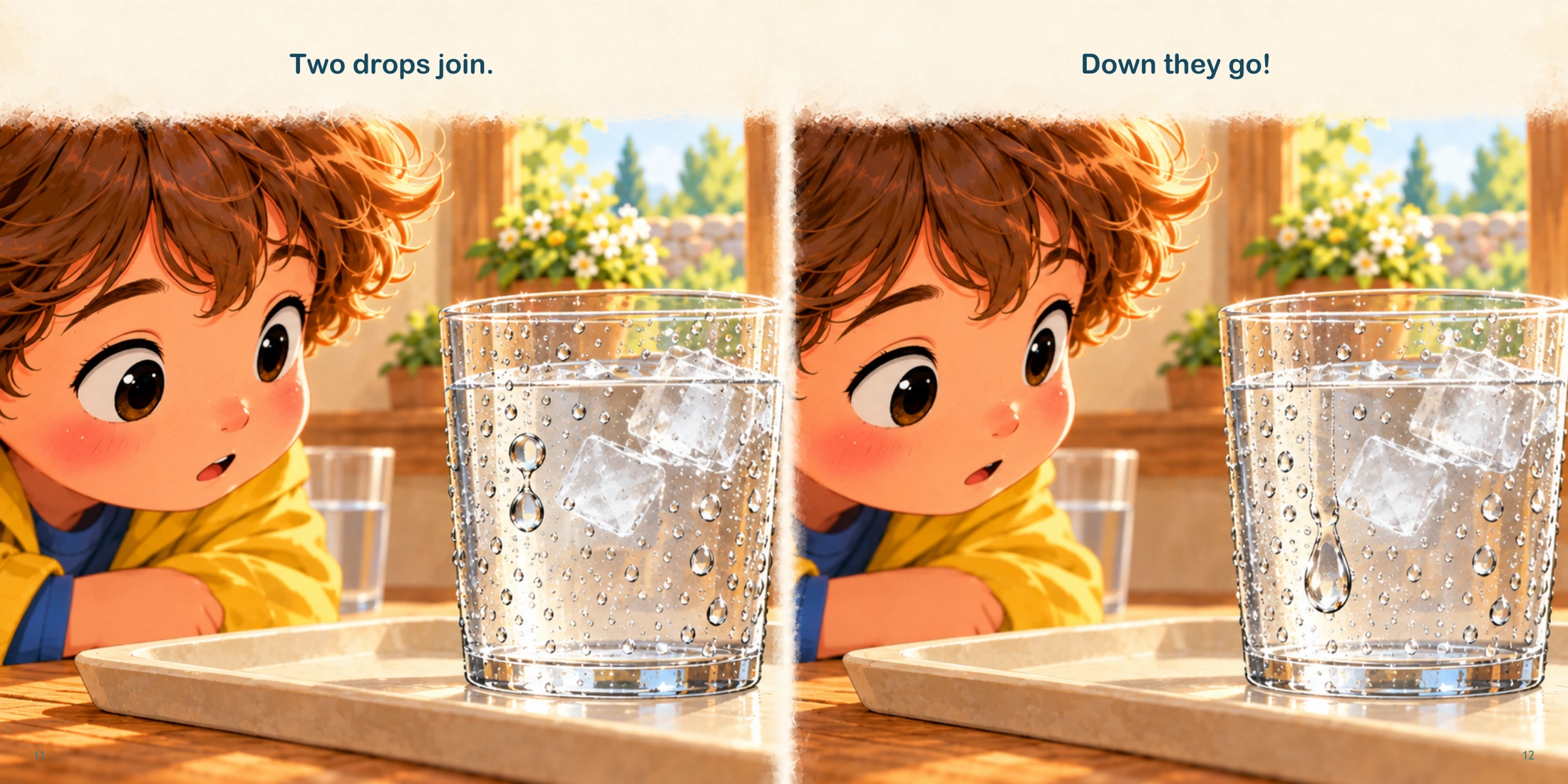
Two drops join. Down they go!
Explore together · Drops joining and moving
Two touching drops on the cold cup join. The next picture shows a larger drop lower down, with a thin wet trail above it. Touching drops can merge into a larger drop. Collected water can run down the cup, but the surface and amount of water affect whether a drop stays put or moves.
Ask together: How has the big drop changed between the two pictures?
Clear again
Pages 13–14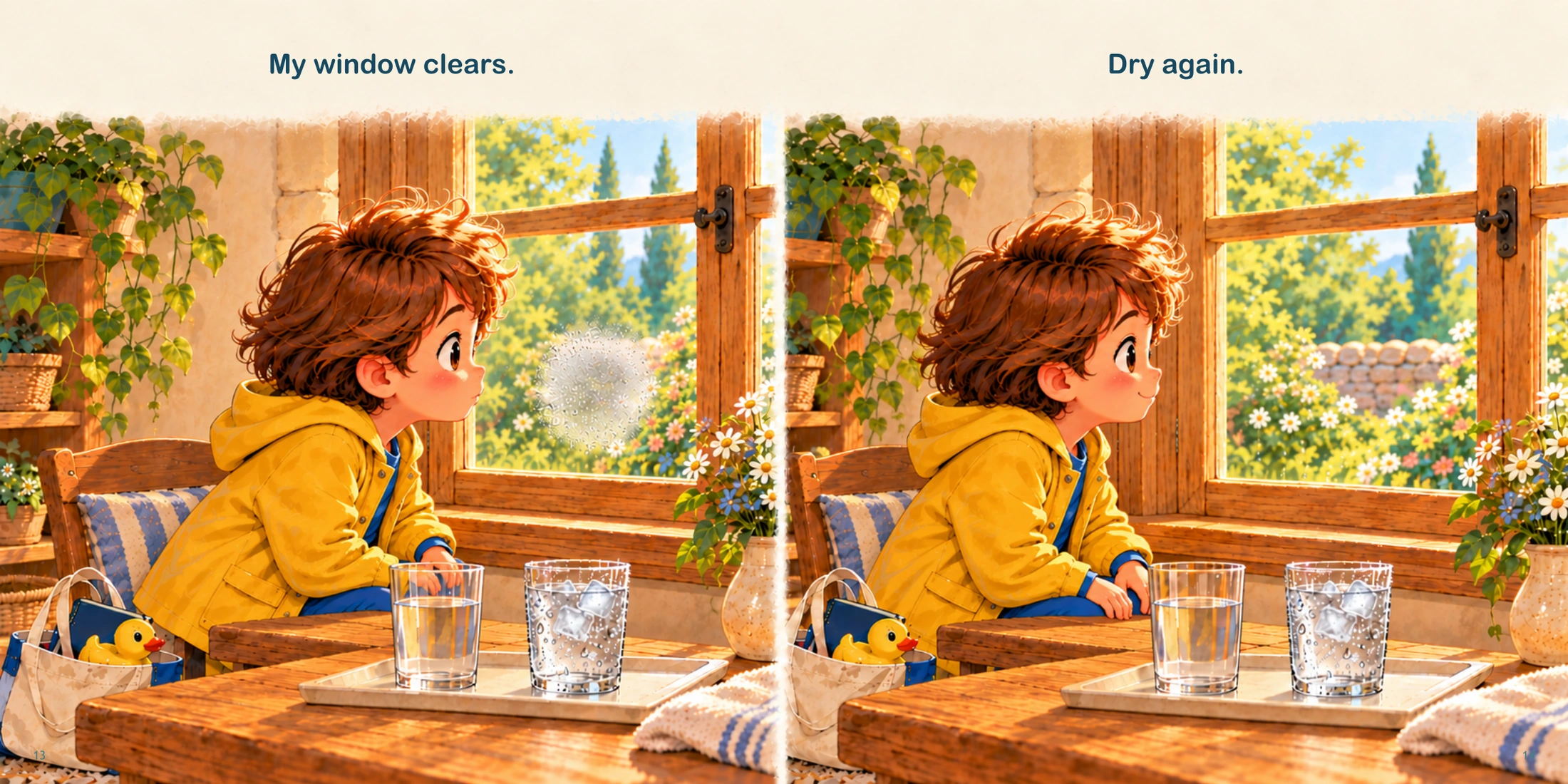
My window clears. Dry again.
Explore together · Evaporation
Vince keeps his hands away while the cloudy patch disappears from the window. Liquid water can become invisible water vapor in the air, leaving the glass visibly dry. The water has not been destroyed. Drying does not require wiping or boiling, and its speed depends on conditions.
Ask together: What can Vince see through the window now?
Another look
Pages 15–16
The grass is dry, too. I’ll look again tomorrow.
Explore together · Returning to an observation
Vince returns to the familiar leaf and grass, now dry, then looks back as he walks away. The return connects the window's drying with a change outdoors. Dew can evaporate later in the morning. Looking again tomorrow may reveal a different result; dew does not appear every morning.
Ask together: What is different from Vince's first visit?
Remembering the day
Pages 17–18
For grown-ups
Pages 19–20
For Grown-Ups Vince follows water that appears, joins and disappears. Water can be in the air as invisible water vapor. When vapor becomes liquid on a cool surface, we call it condensation. The beads and cloudy patches in these pictures are liquid water. 1–2, 15–16 Morning drops Dew can form when a surface cools enough for water vapor to condense on it. Later, it may dry. Not every drop on a leaf is dew: rain, spray and water released by the plant can also wet leaves. Tomorrow may bring a different morning. 3–8 A cold surface The matching cups begin dry outside. In this room, the ice-water cup becomes wet outside while the other stays dry. Water vapor from the surrounding air condenses on the colder surface; it does not leak through the cup. Wiping removes the liquid, but more can form while the cup stays cold enough. 9–10 Water in a breath Breath contains invisible water vapor. A gentle breath on cool glass may leave tiny liquid drops that make the glass look cloudy. The cloudiness is on the glass. We cannot see the water vapor itself. 11–12 Together, then down Touching drops can join into a larger drop. On the cold cup, collected water runs downward. The surface and the amount of water affect whether a drop stays put or moves; not every drop will run. 13–16 Back into the air A wet patch can dry without being wiped. Liquid water changes into invisible water vapor: evaporation. Water has not vanished from existence. The pictures show the visible change; they cannot show the invisible gas. Look together With a grown-up, use two matching unbreakable cups on a tray: room-temperature water in both, with ice added to one. Dry the outsides after filling and watch them together. Results depend on humidity, temperature and the cups. In dry air, little may happen. No hot water is needed. A grown-up handles ice and any glass. Do not breathe on or share drinking rims. Sources: American Chemical Society, Changing State—Condensation and Changing State—Evaporation; USGS, Condensation and the Water Cycle; Argonne APS, How Two Drops Become One; NOAA/NWS, Dew and Frost Development.
Open these pages in the readerSources and evidence
Water vapor in air can condense as liquid droplets on a sufficiently cool surface.
American Chemical Society, Lesson 2.3: Changing State—Condensation
USGS Water Science School, Condensation and the Water Cycle
Water vapor is invisible. Visible beads and cloudy patches are liquid water on a surface.
In the illustrated humid room, the ice-water cup becomes wet outside while the matching room-temperature cup remains visibly dry.
American Chemical Society, Lesson 2.3: Changing State—Condensation
American Chemical Society, Condensation Station
USGS Water Science School, Condensation and the Water Cycle
The cup comparison depends on humidity, temperature and the cups. Start with matching intact cups, similar water levels and dry outsides; keep their surroundings comparable. In very dry air, little may happen. No fixed time or amount is promised.
Wiping liquid from a cold cup does not prevent more condensation while suitable conditions persist.
American Chemical Society, Lesson 2.3: Changing State—Condensation
USGS Water Science School, Condensation and the Water Cycle
More condensation can form after wiping while the surface remains cold enough and surrounding air supplies moisture. Wiping alone does not establish every possible source of wetness.
Exhaled breath contains water vapor that can form tiny liquid drops on cool glass.
American Chemical Society, Lesson 2.3: Changing State—Condensation
A gentle breath may leave a cloudy patch on cool glass. The patch consists of liquid drops on the surface, not visible water vapor in the air. A grown-up handles any glass; do not breathe on or share drinking rims.
Two touching water drops can merge into a larger drop, and collected liquid can run down a vertical surface.
Argonne Advanced Photon Source, How Two Drops Become One
Drop shapes and movement vary with surface conditions and the amount of water. Not every drop will run, and no exact size, speed or threshold is claimed.
Liquid water can evaporate from a surface, leaving it visibly dry; the water becomes invisible vapor in the air.
American Chemical Society, Lesson 2.2: Changing State—Evaporation
Evaporation can occur at room temperature. The pictures show a visible drying change; they cannot show the invisible gas. There is no fixed drying time or requirement for sunshine.
Dew can form on cool grass or leaves under suitable conditions and later evaporate.
NOAA/National Weather Service, Dew and Frost Development
Dew depends on suitable cooling and moisture conditions. Not every drop on a leaf is dew: rain, spray and plant-released water can also wet leaves. Tomorrow may bring a different morning.
A story worth keeping?
Read it here as often as you like. The physical edition is coming soon.