THE COMPLETE BOOK · FREE TO READ
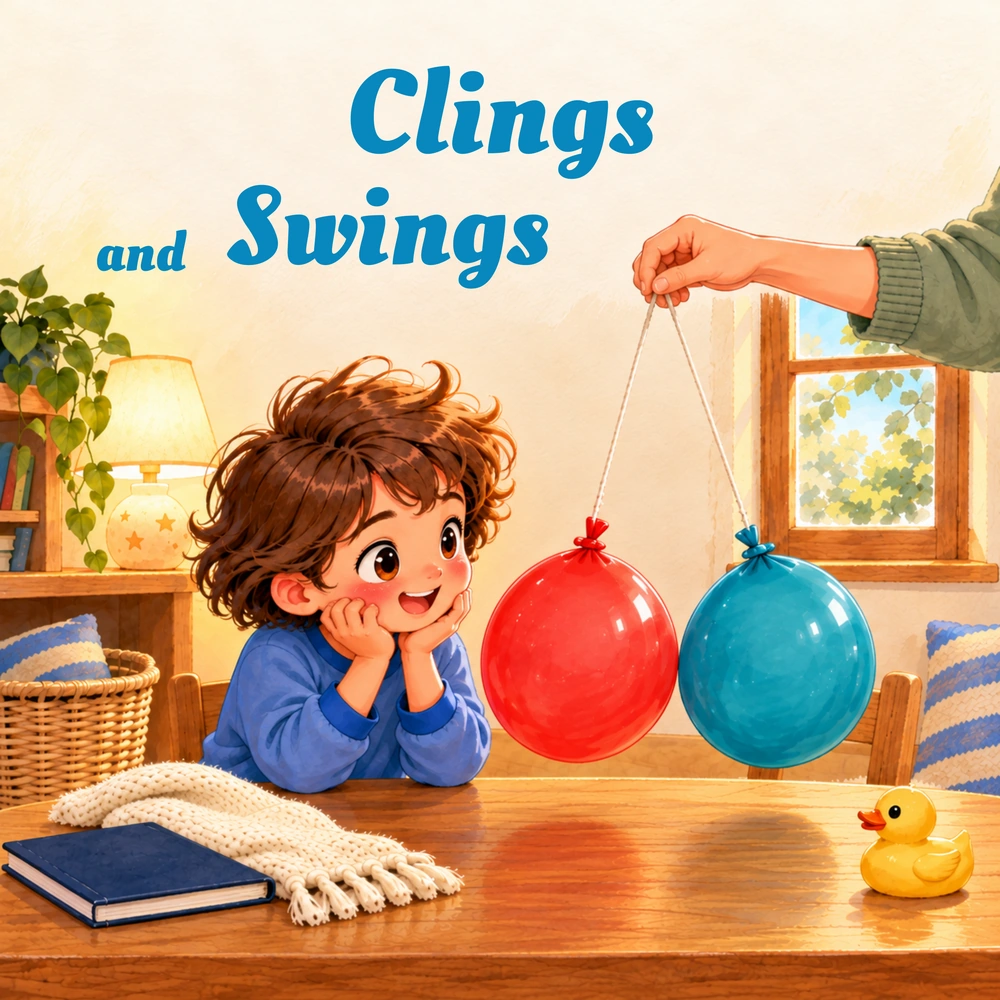
Clings and Swings
Join Vince as a rub changes what his balloons do: paper lifts, a balloon stays on a wall, and a hanging pair swings apart. Compare what happens after a damp wipe and another try.
Turn the pagesOr scroll to readA balloon that falls
Pages 1–2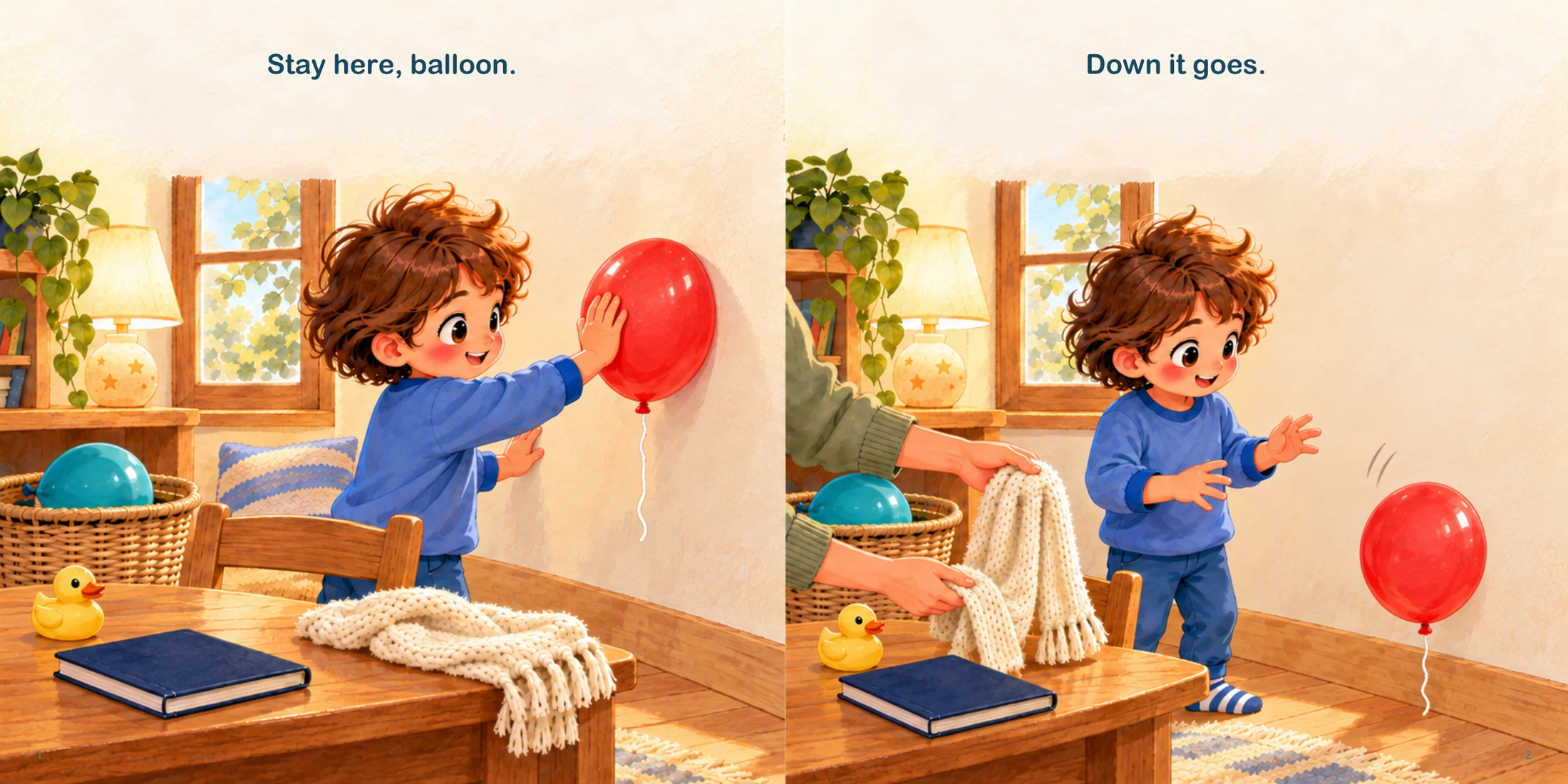
Stay here, balloon. Down it goes.
Explore together · A first observation
Vince holds a red balloon against the wall, then watches it fall when he lets go. This first try gives Vince something to compare with later. A falling balloon is not proof that it has no electric charge.
Ask together: What changes when Vince takes his hand away?
Paper lifts before a touch
Pages 3–4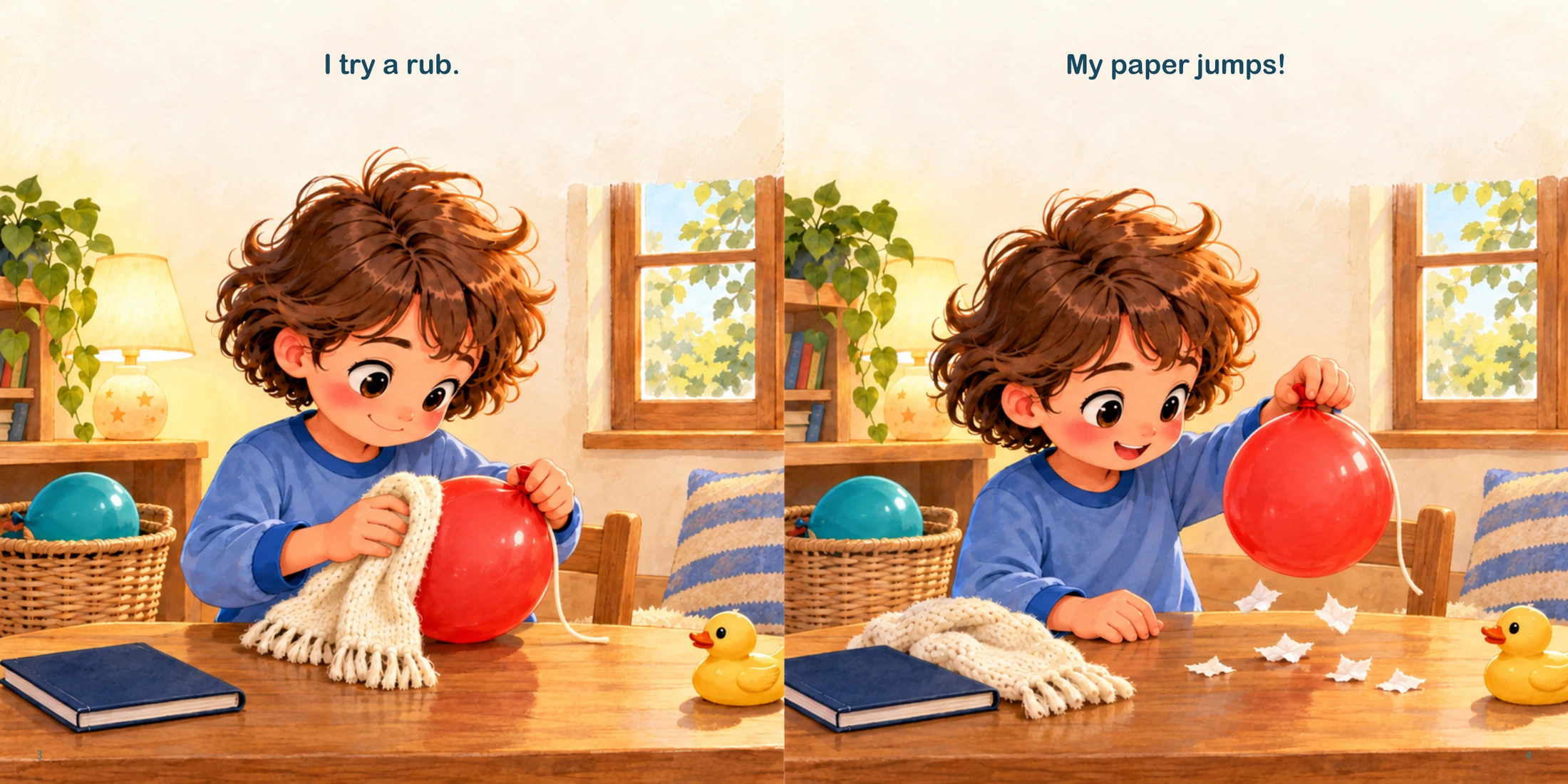
I try a rub. My paper jumps!
Explore together · Attraction across a gap
Vince rubs the red balloon with wool, then small tissue scraps lift across a gap beneath it. Rubbing suitable dry materials can leave a balloon charged. It can attract very light paper before contact; attraction alone does not mean the paper has opposite overall charge.
Ask together: What do you notice in the space between the paper and balloon?
Another try at the wall
Pages 5–6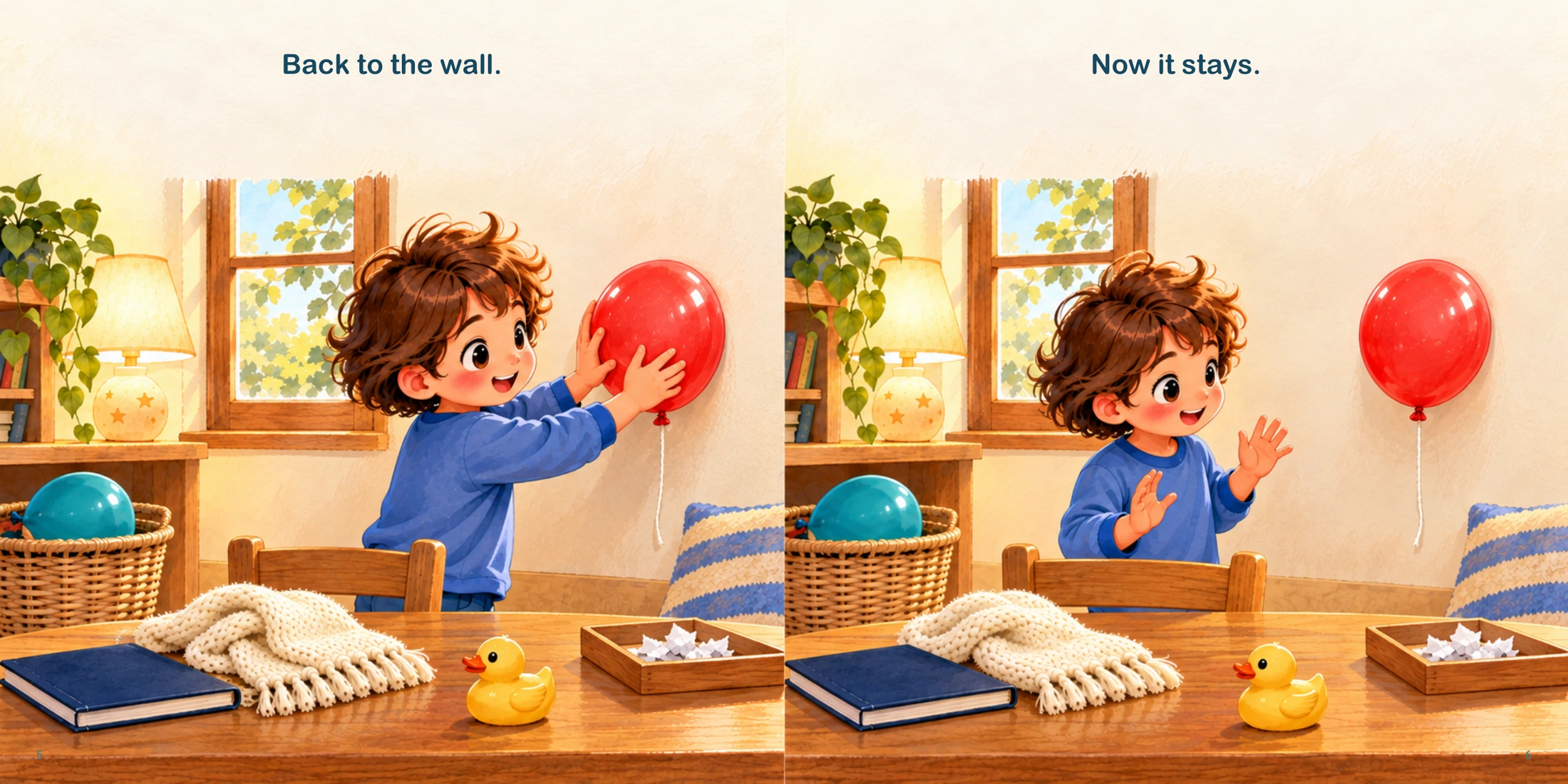
Back to the wall. Now it stays.
Explore together · Clinging to a wall
Vince places the rubbed balloon against the wall; it stays after his hands move away. A sufficiently charged light balloon can cling to a suitable wall. It touches the wall rather than floating freely, and the result depends on the surface and conditions.
Ask together: What is different from Vince’s first wall try?
A rub for the second balloon
Pages 7–8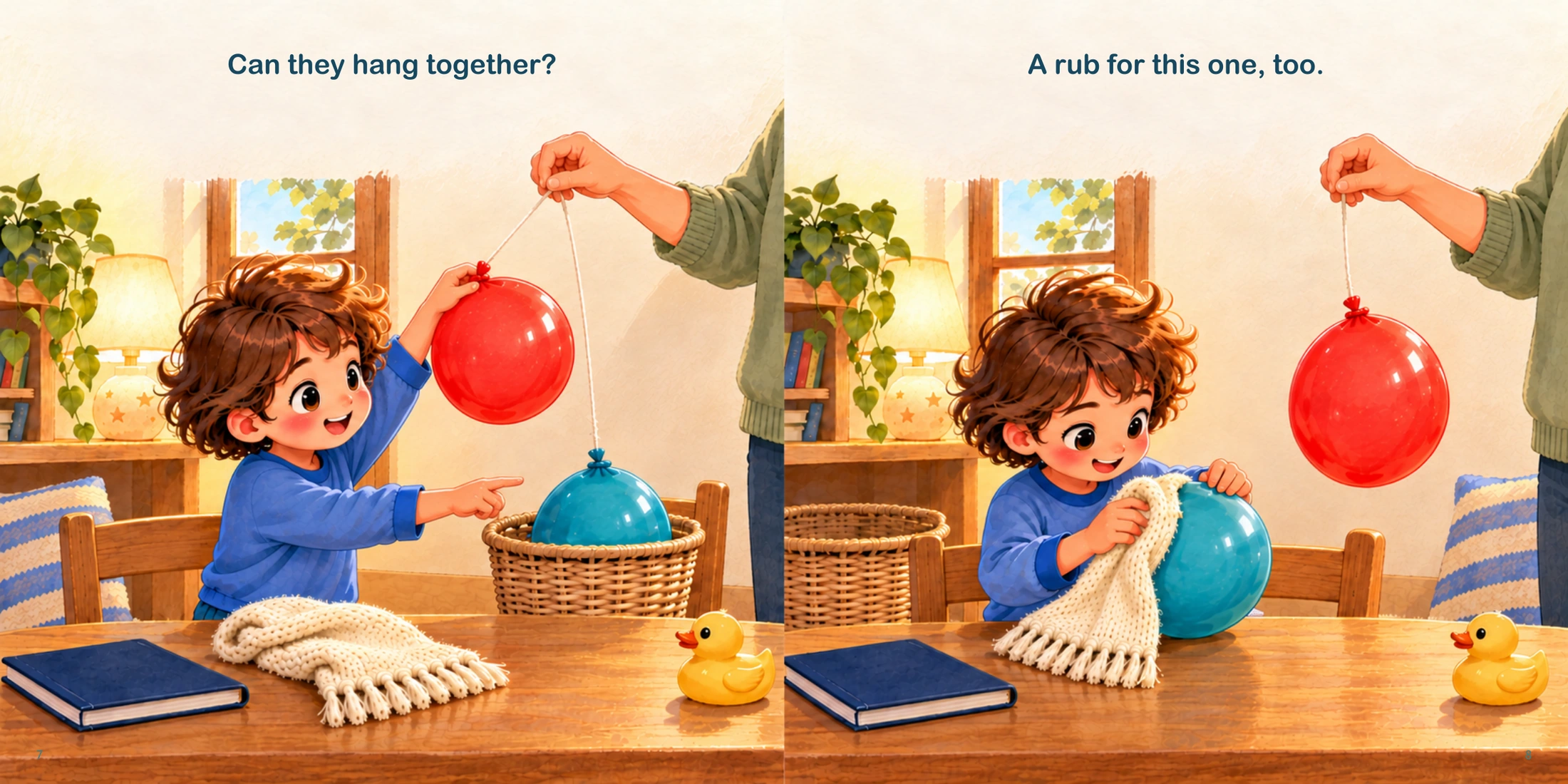
Can they hang together? A rub for this one, too.
Explore together · Preparing a comparison
Vince lifts the red balloon while the teal one waits in the basket, then rubs the teal balloon with wool. Treating two comparable balloons with the same cloth can give them the same kind of charge. Their colours do not determine their electrical behaviour.
Ask together: What is Vince trying with the second balloon?
The pair swings apart
Pages 9–10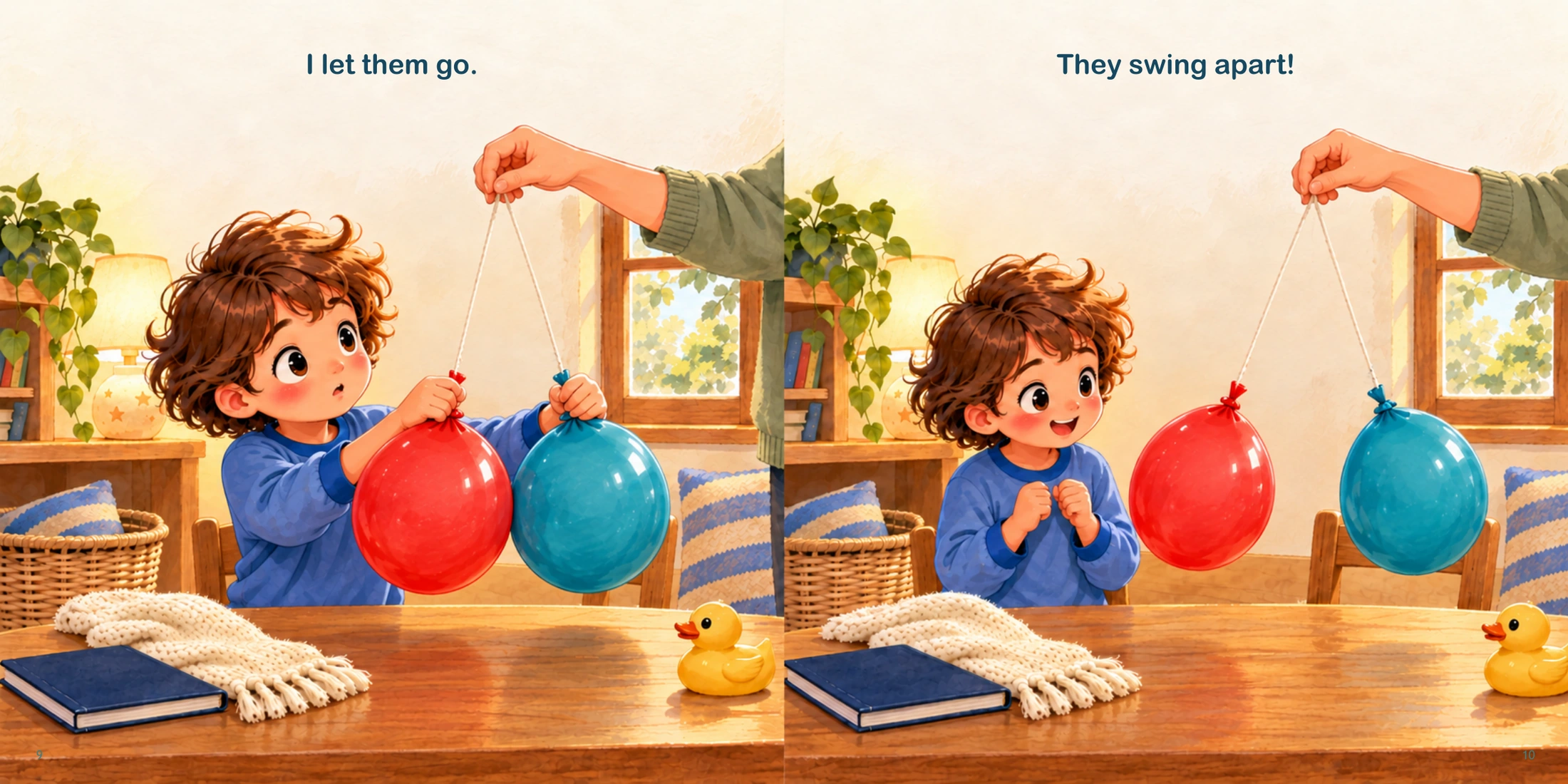
I let them go. They swing apart!
Explore together · Repulsion with free movement
A grown-up holds both threads from above. Vince releases the balloons, and they hang apart with his hands clear. Similarly charged balloons can repel. The threads support their weight and allow sideways movement; no hand is holding the lower balloons apart.
Ask together: Where are the hands and threads when the balloons move apart?
A damp wipe changes the gap
Pages 11–12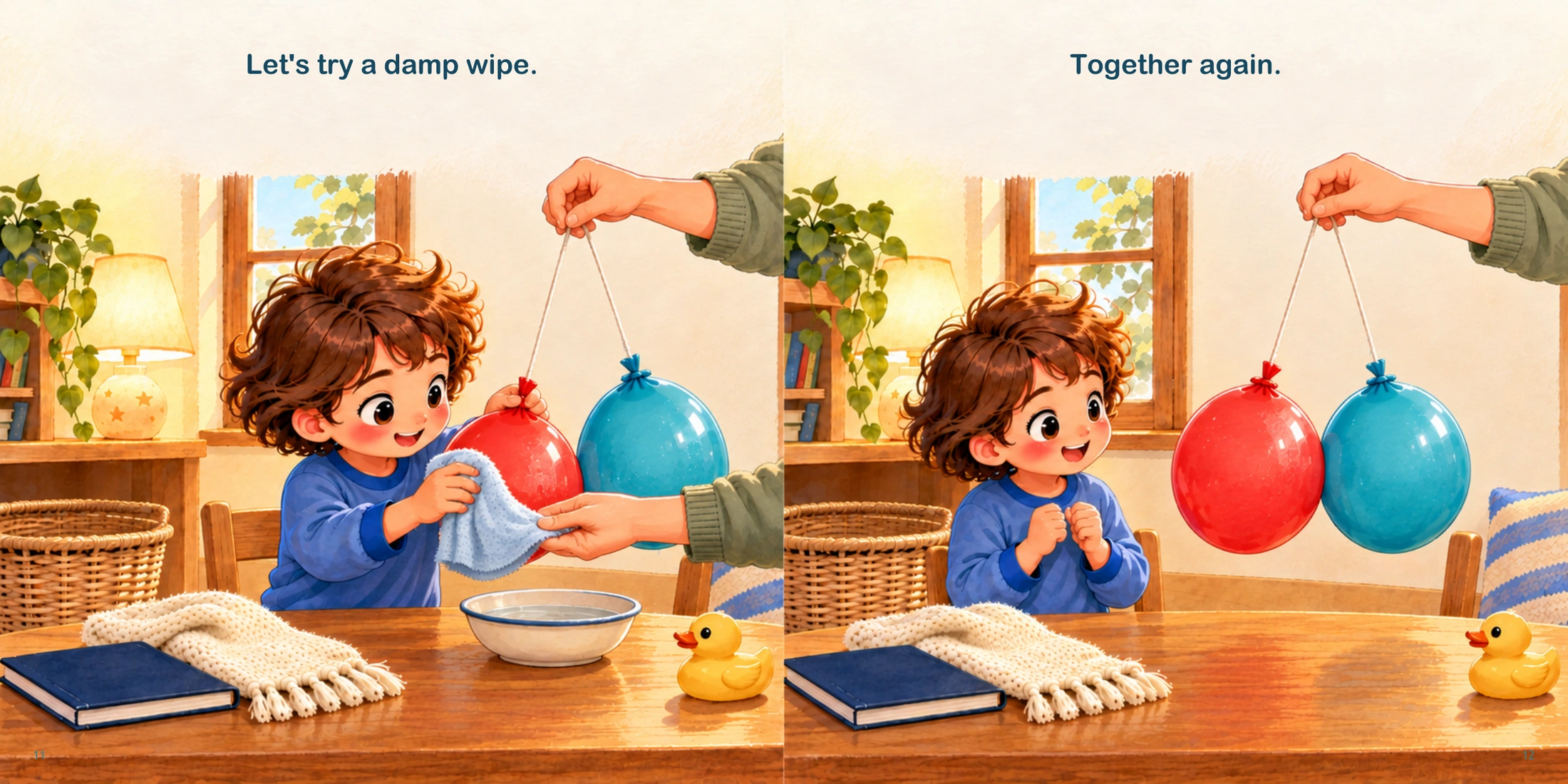
Let's try a damp wipe. Together again.
Explore together · Reducing repulsion
A damp cloth wipes the red balloon; in the following view the suspended pair hangs together again. Damp wiping can reduce electric charge and repulsion. The story includes wiping both balloons, with one representative wipe pictured. Coming together does not prove attraction or complete removal of every charge.
Ask together: What changes before the pair hangs together again?
A place for each
Pages 13–14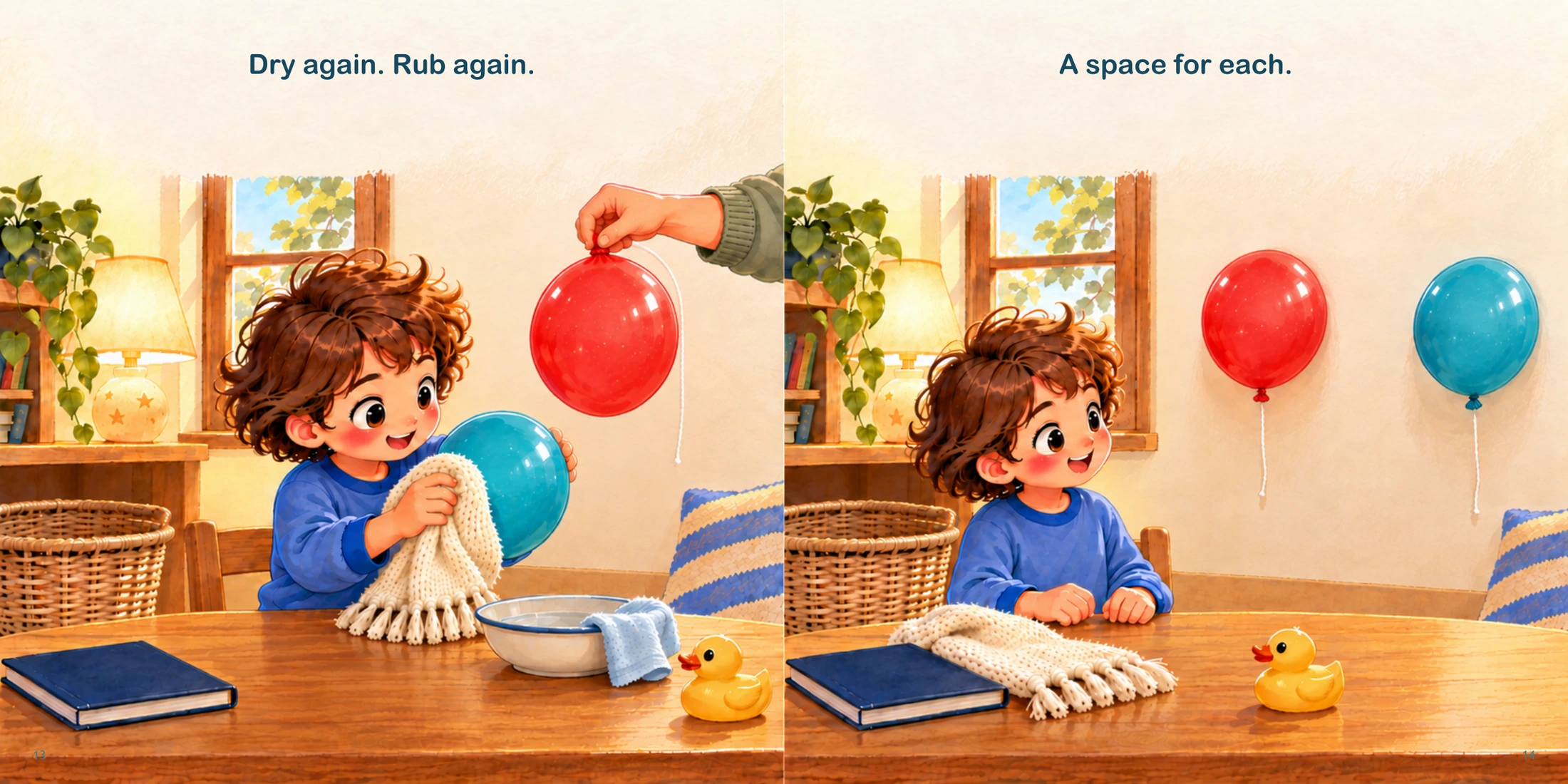
Dry again. Rub again. A space for each.
Explore together · Trying again and comparing
After drying and rubbing again, Vince gives the red and teal balloons separate places against the wall. Drying and re-rubbing can restore observable effects. These are chosen wall positions with loose strings below; the gap is not a measurement of the earlier freely suspended repulsion.
Ask together: How is this last wall scene different from the beginning?
A quiet drawing
Pages 15–16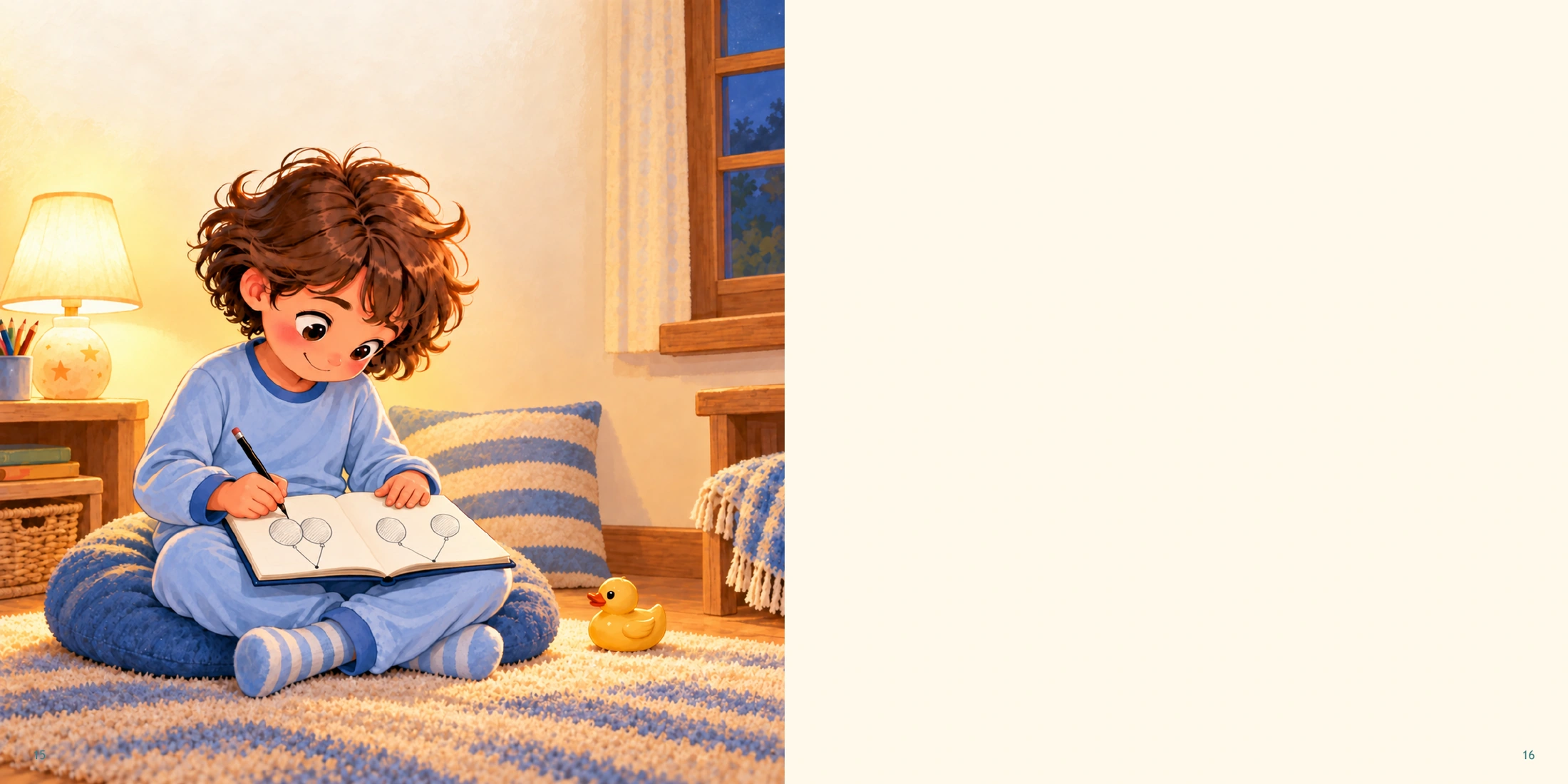
For grown-ups
Pages 17–18
For Grown-Ups Vince changes what his balloons do. Look at the rubbing, the gaps and the strings. The pictures show one set of results; different materials or damp weather can change them. Rubbing and attracting Rubbing suitable materials together can leave an imbalance of electric charge. A charged balloon can attract very light paper before touching it. Charges within an electrically neutral object can shift slightly, so attraction does not mean both objects have opposite overall charges. A sufficiently charged, lightweight balloon can cling to a suitable clean wall. It must touch the wall; it is not floating freely. The effect does not last forever, and some surfaces work better than others. Together and apart Two latex balloons rubbed with the same wool cloth commonly acquire the same kind of charge and repel. Their colours do not cause the difference. The threads hold their weight and let them move sideways; nobody is pulling their lower ends apart. A damp wipe can help charge leave the balloons and reduce the repulsion. In the story, both are wiped, then allowed to dry before the wool is tried again. Touching once may not remove charge from every part of a balloon. Notice together What moves before anything touches? Where do the threads hold the balloons? What changes before the pair comes together again? Compare the beginning with the last wall scene. If a grown-up demonstrates You can explore the pictures without using balloons. Balloons and broken pieces can choke. Follow product age guidance; a grown-up inflates, ties and handles the materials. Keep loose balloons, fragments and tissue away from young children and mouths; discard fragments immediately. Keep strings away from necks and sleeping spaces. Avoid latex if allergic. For a demonstration, use clean, dry materials in still air and test a small effect first. Wall material, handling and humidity matter. A different result is something to notice, too. Source notes and activity conditions accompany the online edition.
Open these pages in the readerSources and evidence
Rubbing suitable dry latex balloons with wool can leave them electrically charged; dry re-rubbing can restore observable effects after discharge.
Balloon Electroscope — Science World
Shocking Static Electricity — Science North
Material pair, cleanliness, humidity and handling matter; results are not guaranteed.
Rubbing redistributes charge rather than creating it from nothing; different material pairs can behave differently.
A rubbed balloon can attract very light dry tissue scraps across a small air gap before contact; neutral objects can be attracted by polarization.
Investigating static electricity — Northumbria University NUSTEM
Very light, separated dry tissue and still air make the small effect easier to observe; not every scrap will lift.
Attraction alone does not establish opposite overall charges. Contact can change what happens next.
A sufficiently charged light balloon can cling to a suitable clean wall after the hand is removed.
Shocking Static Electricity — Science North
Electrostatic charges / Forces due to electric charges — Institute of Physics
Wall surface, weight, charge and humidity matter; no particular duration or all-surface result is promised.
The balloon touches the wall. The first fall is a comparison episode, not a measurement of zero charge.
Two comparable balloons rubbed with the same wool cloth can repel when freely suspended near each other.
Balloon Electroscope — Science World
Electrostatic charges / Forces due to electric charges — Institute of Physics
Both comparable balloons need sufficient charge; colour does not determine the effect.
Threads support the balloons and permit sideways movement. Keep them clear of surfaces and airflow; the picture is not a measured angle.
Damp wiping can reduce the balloons’ charge so the suspended pair no longer stays apart; after drying, rubbing can make the effect observable again.
Shocking Static Electricity — Science North
Balloon Electroscope — Science World
Wipe both surfaces. A touch at one point may leave charge elsewhere, and a smaller gap does not prove complete neutralization.
Allow the balloons to dry before rubbing again. Conditions and handling can change the result.
These activities depend on materials, humidity and handling, and need grown-up handling of balloons and strings.
Investigating static electricity — Northumbria University NUSTEM
Shocking Static Electricity — Science North
Pictures can be explored without handling balloons. Follow product age guidance; a grown-up inflates, ties and handles the materials.
Balloons and fragments can choke. Keep loose balloons, fragments and tissue away from young children and mouths; discard fragments immediately. Keep strings away from necks and sleeping spaces. Avoid latex if allergic.
A story worth keeping?
Read it here as often as you like. The physical edition is coming soon.